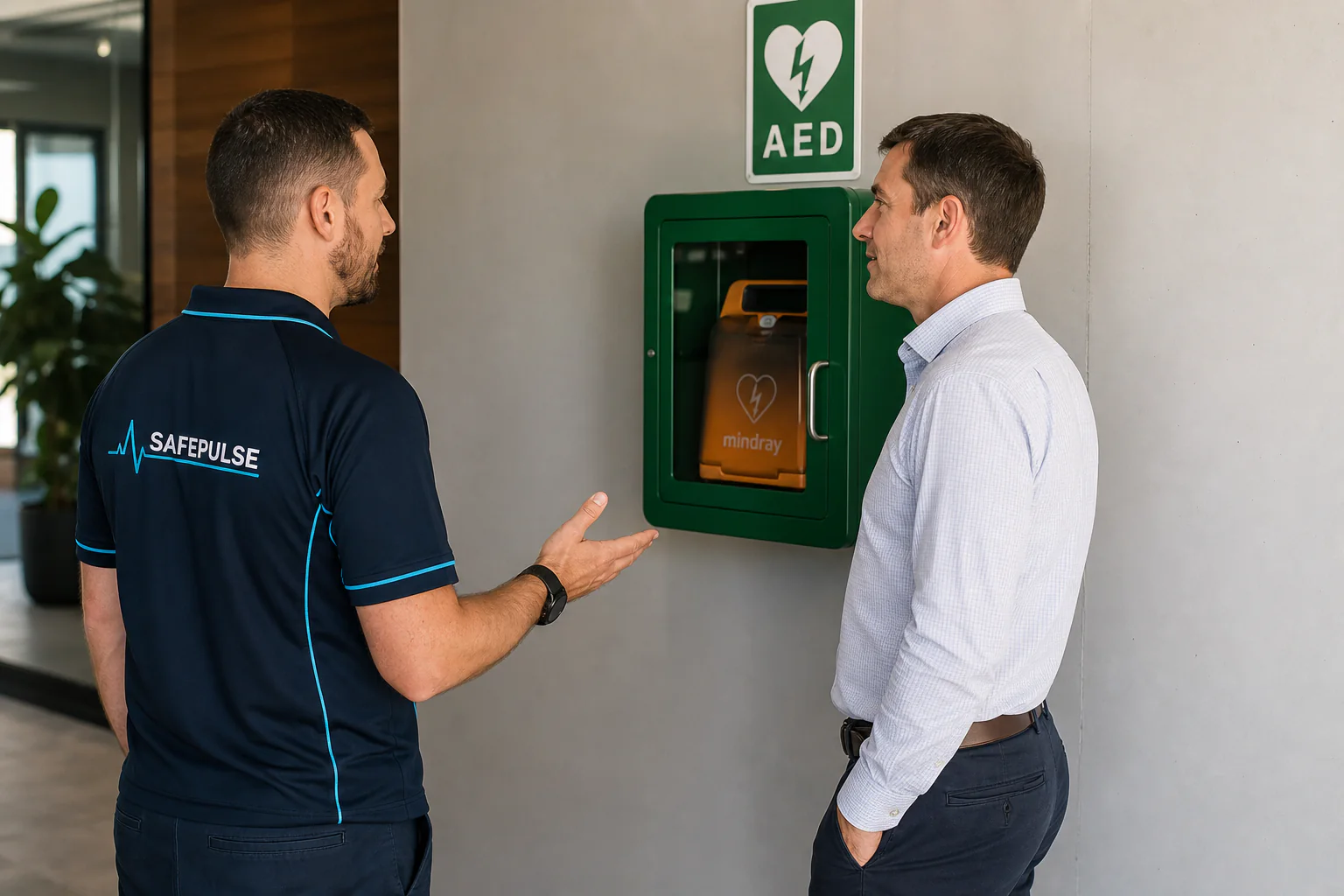
If you manage commercial property in South Australia, the Automated External Defibrillators (Public Access) Act 2022 has likely crossed your desk. You may have heard about the January 2026 deadline for privately owned buildings. You might even have a rough idea that some of your properties need AEDs installed.
But the detail that catches most landlords off guard is this: under the Act, the responsibility for AED compliance in Adelaide sits with the building owner, not the tenant.
This distinction has significant implications for how you manage your portfolio, structure your leases, and budget for the year ahead.

When It Comes To AED Compliance, The Property Owner Carries the Obligation
The SA AED Laws are clear: the duty to install and maintain an AED falls on the owner of a designated building or facility. This applies regardless of whether the building is tenanted, owner-occupied, or managed by a third party.
For property managers overseeing leased commercial spaces, this raises an immediate question. If the tenant controls the premises, why is the landlord responsible?
The answer lies in how the legislation frames public safety. Because tenants come and go, placing the obligation on the owner ensures continuity of compliance. A tenant vacating shouldn’t mean the AED disappears with them.In practical terms, landlords need to factor AED installation into their property management responsibilities alongside fire safety, accessibility, and other building compliance requirements.
Which Buildings Are Affected
Not every commercial property falls under the Act. According to SA Health’s publicly available guidance, the requirements generally apply to buildings used for commercial purposes with more than 600 square metres of publicly accessible floor space. This captures office buildings, shopping centres, retail complexes, medical centres, gyms, and mixed-use developments.
Multi-storey buildings add another layer. Where each floor exceeds 1,200 m² of publicly accessible space, AED installation may be required on each level.
If you manage a diverse portfolio across Adelaide, the first step toward AED compliance is identifying which properties are subject to the new AED requirements and calculating how many units each property requires.
Passing Costs Through as Outgoings
One of the most common questions from landlords is whether AED installation and maintenance costs can be recovered from tenants. The short answer: potentially, yes, but it depends on your lease terms.
Under most commercial leases, landlords can recover certain building compliance and safety costs as outgoings, provided the lease permits it. AED installation, registration, signage, and ongoing maintenance could reasonably fall into this category, similar to fire safety equipment.
However, lease agreements vary. Some older leases may not contemplate this type of expenditure. If you’re managing properties with long-standing tenants, review the lease documentation before assuming costs can be recovered.
For new leases or renewals, consider including explicit provisions for AED-related costs. This provides clarity for both parties.
SafePulse does not provide legal or financial advice, so we recommend consulting with your property lawyer to confirm what exactly applies to your specific arrangements.

Multi-Tenancy Buildings and Common Areas
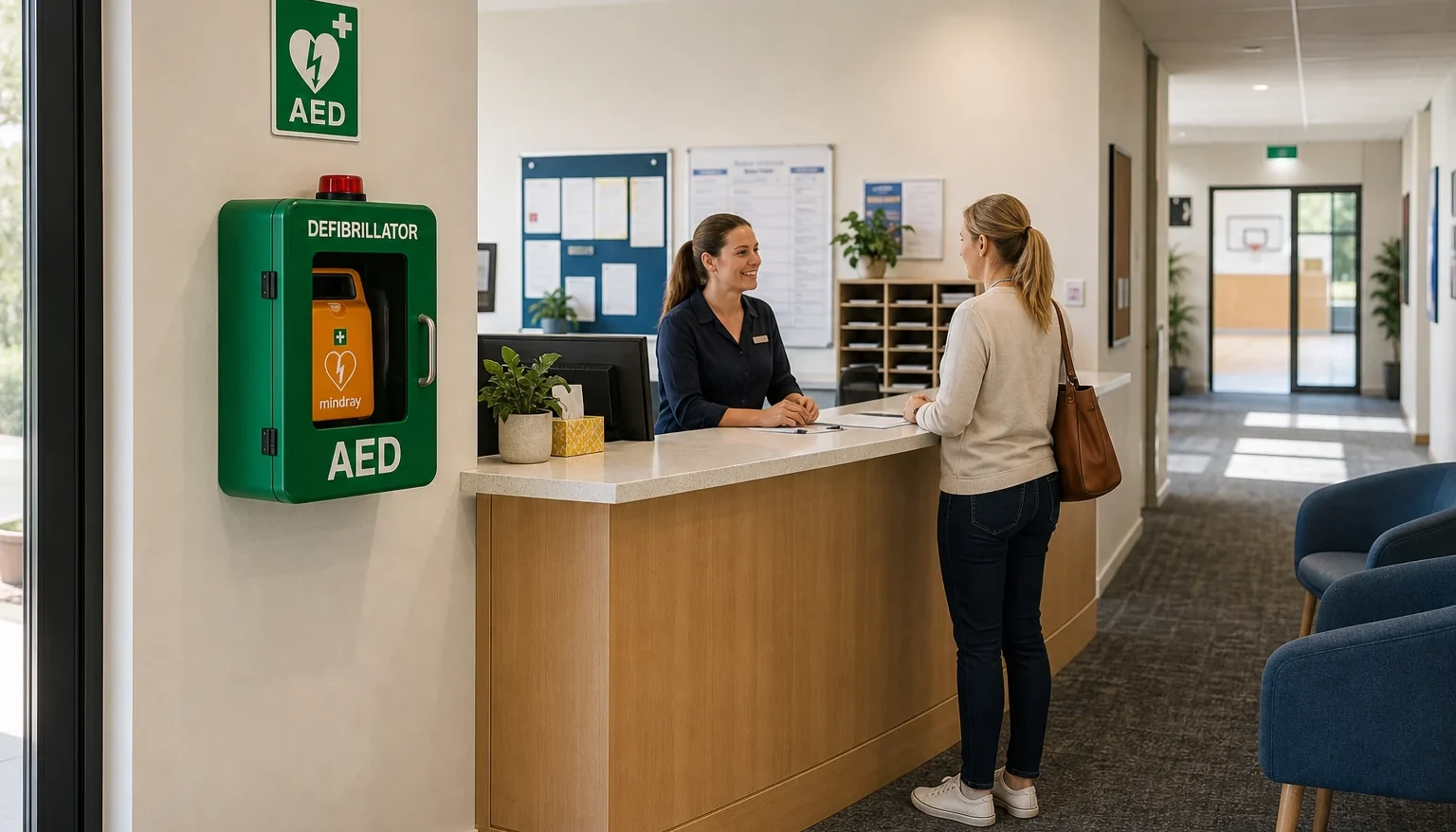
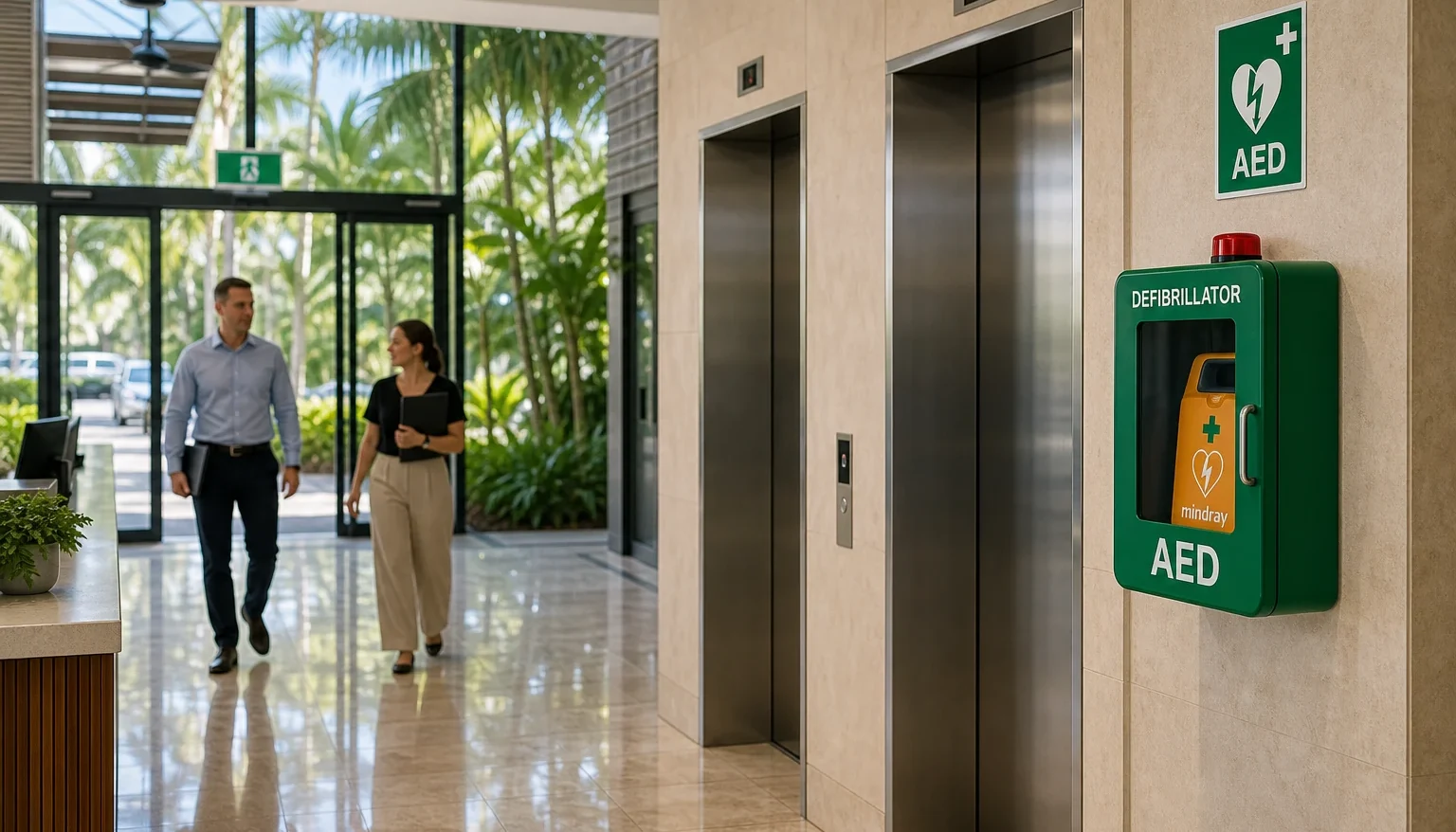
In buildings with multiple tenants, AED placement becomes a coordination exercise. The Act does not require tenants to install AEDs within their individual tenancies. The obligation rests with the building owner, and the logical placement is typically in common areas: foyers, lobbies, shared corridors, or near main entry points.
This approach has practical advantages. AEDs in common areas are accessible to everyone in the building, including visitors and emergency responders. They’re also easier to maintain when managed centrally.
For property managers, this means working with your facilities team to identify optimal locations based on foot traffic, visibility, and proximity to high-occupancy areas.
Strata and Body Corporate Considerations
For strata-titled properties, the responsibility typically falls on the body corporate rather than individual lot owners. Common property areas are the natural location for AEDs, and costs would ordinarily be covered through the administrative or sinking fund.
If you’re a strata manager or sit on a body corporate committee, AED compliance should be on the agenda well before January 2026. Decisions about equipment selection, placement, and funding may require approval at a general meeting, and these processes take time.
AED Registration, Signage, and Maintenance
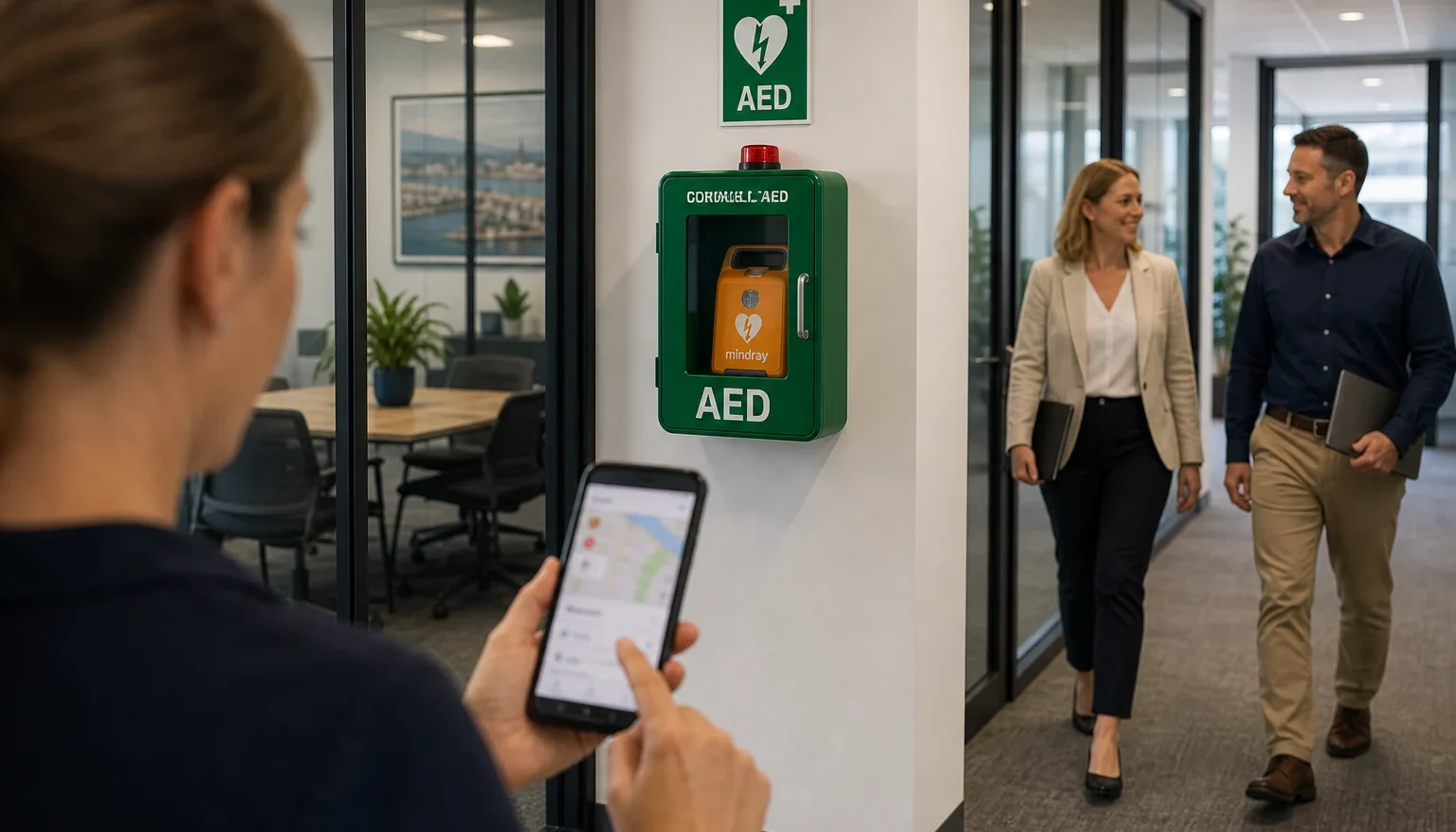
Installing an AED is only part of the compliance picture. The Act requires building owners to register each device with the SA Ambulance Service AED Register within two weeks of installation.
Signage requirements add another layer. AEDs must be clearly marked at the device location and at building entrances. Non-compliance with signage requirements can attract penalties of up to $2,500.
Ongoing maintenance is the landlord’s responsibility as well. AEDs require regular checks, and consumables like electrode pads and batteries have expiry dates that must be monitored.For property managers overseeing multiple buildings, tracking AED registration, signage, and maintenance across a portfolio can become complex. Working with a provider like SafePulse that provides an end to end service, from site assessment to AED installation, registration, signage and ongoing maintenance and documentation simplifies this significantly.
Getting Ahead with AED Compliance
The AED compliance deadline for privately owned buildings is 1 January 2026. SafePulse works with landlords, property managers, and body corporates across Adelaide to streamline this process. From initial site assessments through to installation and ongoing maintenance, we handle the practical details so you can focus on managing your properties.
AED compliance in Adelaide doesn’t need to be complicated. With the right approach, it’s simply another part of responsible property management, with potentially life-altering benefits.
Do you need help coming up to speed with AED compliance? SafePulse provides Adelaide workplaces and properties with an end-to-end service, from site assessment, to AED installation and ongoing management of units across your portfolio. Not just an AED or a boxed ticked, but complete peace of mind.