
In case you missed it, AED Compliance has recently changed in South Australia.
When the Automated External Defibrillators (Public Access) Act 2022 came into effect in South Australia, many South Australian business and commercial property owners saw it as another compliance box to tick. Another regulation. Another cost.
But here’s what the legislation alone doesn’t tell you: an AED isn’t just a legal requirement. It’s one of the most effective pieces of life-saving equipment you can have in any workplace.Every year, more than 25,000 Australians experience an out-of-hospital cardiac arrest. Fewer than one in ten survive. With early CPR and rapid defibrillation, survival rates can increase to 70 per cent or higher, according to St John Ambulance Australia. The key word is “rapid” because when someone’s heart stops, every minute without intervention reduces their chance of survival by roughly 10 per cent.
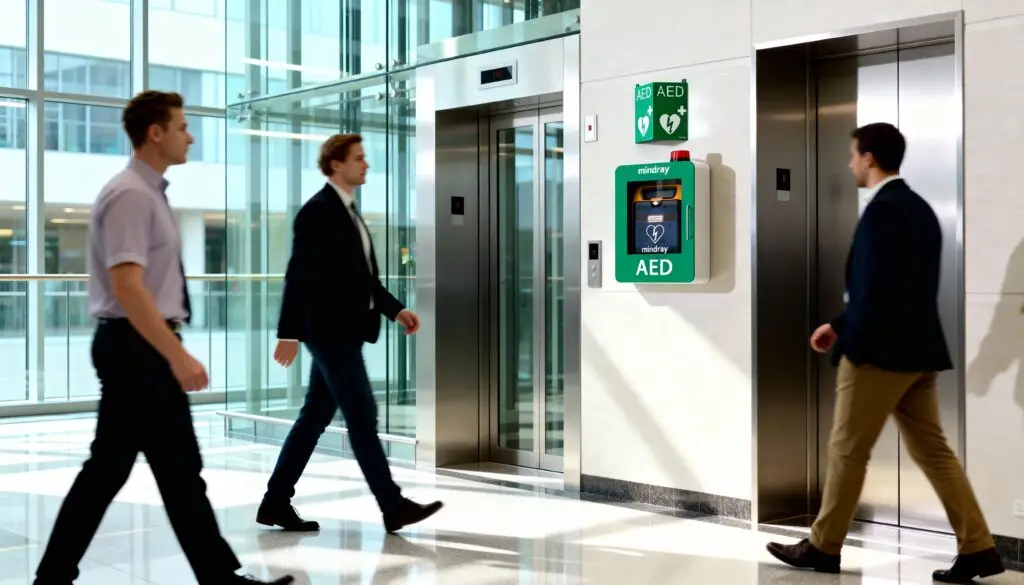
Understanding the Chain of Survival
Medical professionals refer to the “Chain of Survival” when discussing cardiac arrest response. The Australian Resuscitation Council describes it as a sequence of actions that give a person the best possible chance of surviving: early recognition and calling for help, early CPR to maintain blood flow, early defibrillation to restore the heart’s rhythm, and early advanced care from paramedics.
The first three links can be performed by anyone. The fourth requires professional medical intervention.
In metropolitan Adelaide, the average ambulance response time is around 10 to 12 minutes. In regional South Australia, it can be significantly longer. When brain damage begins within four to six minutes of cardiac arrest, waiting for an ambulance is often not fast enough. This is precisely why having an AED installed on site changes the equation entirely.
Reason 1: Survival Rates Increase Dramatically With Early Defibrillation
Sudden cardiac arrest is caused by an electrical malfunction that causes the heart to quiver erratically rather than pump blood effectively. This abnormal rhythm, known as ventricular fibrillation, can only be corrected by an electrical shock.
CPR keeps oxygenated blood circulating to the brain, but it cannot restart the heart. Only defibrillation can do that. When defibrillation occurs within the first three to five minutes of cardiac arrest, survival rates can reach 50 to 70 per cent. Compare that to less than 10 per cent when people must wait for emergency services, and the value of a workplace defibrillator becomes undeniable.
Reason 2: Cardiac Arrest Doesn’t Discriminate
One of the most dangerous misconceptions is that cardiac arrest only affects the elderly or those with obvious heart conditions. In reality, sudden cardiac arrest can strike anyone, at any age, regardless of fitness level.
Young athletes have collapsed on playing fields. Office workers have experienced cardiac events at their desks. These aren’t rare occurrences confined to hospitals. They happen in gyms, retail stores, warehouses, schools, and everyday workplaces across Adelaide.
The unpredictability of cardiac arrest is precisely why preparedness matters.
Reason 3: AEDs Are Designed for Untrained Users
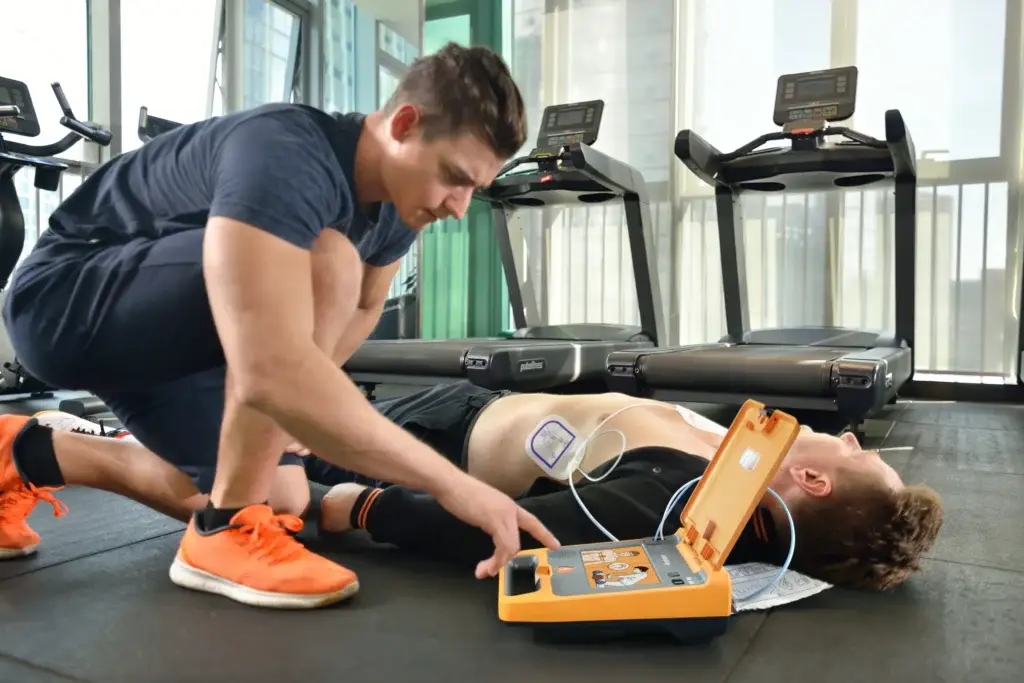
A common hesitation is the assumption that AEDs require specialised training. Modern automated external defibrillators are specifically designed for people with no medical background.
When you open an AED, it provides clear voice prompts and visual instructions. The device analyses the heart rhythm automatically and will only deliver a shock if it detects a shockable rhythm. You cannot accidentally shock someone who doesn’t need it.The Australian and New Zealand Committee on Resuscitation (ANZCOR) confirms that AEDs can be used safely and effectively without prior training. For South Australian workplaces, this means any staff member can potentially save a life.
Reason 4: Good Samaritan Laws Protect Those Who Help
Fear of legal liability prevents some people from acting during cardiac emergencies. South Australia, like all Australian states, has Good Samaritan legislation that protects people who provide emergency assistance in good faith.
If you use an AED on someone experiencing cardiac arrest, you are protected from civil liability, provided you act reasonably. These laws exist specifically to encourage bystanders to intervene without fear of legal repercussions.
Reason 5: AED Compliance Is Just the Starting Point
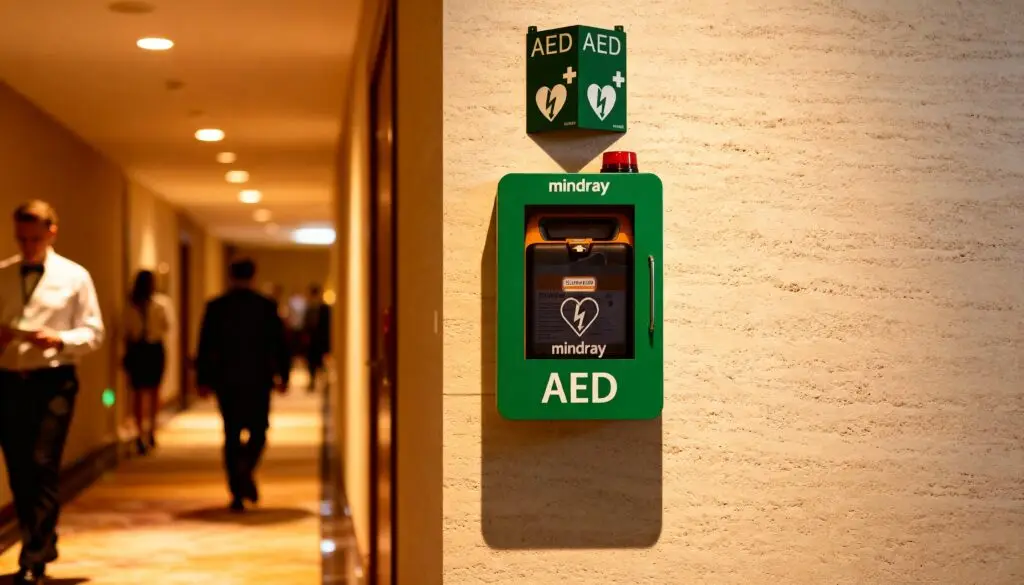
Yes, the SA AED Act requires certain buildings to install and maintain defibrillators. According to SA Health’s AED requirements guidance, from 1st January 2026, commercial properties over 600 square metres, multi-storey buildings, and various public facilities are expected to have at least one AED in a visible, accessible location. Penalties for non-compliance can reach $20,000.
But framing AED installation purely as a compliance exercise misses the point. The legislation exists because cardiac arrest is a leading cause of death, and public access to defibrillators saves lives.
Forward-thinking South Australian businesses are recognising that AEDs represent a genuine duty of care, and an opportunity at a life-altering emergency intervention, not just a legal obligation.
Reason 6: An AED Supports Your Entire Emergency Response Plan
A defibrillator in your workplace doesn’t work in isolation. It’s part of a broader emergency response capability that includes first aid awareness, clear communication protocols, and a workplace culture of safety.
When a workplace invests in an AED, it often prompts a review of other emergency procedures. Staff become more aware of where safety equipment is located. Some businesses use AED installation as an opportunity to refresh first aid training or run awareness sessions.
This ripple effect strengthens overall workplace safety.
Reason 7: The Cost of Not Having an AED Is Immeasurable
The financial cost of purchasing, installing, and maintaining an AED is relatively modest. But the cost of not having one when it’s needed cannot be calculated.
Consider the scenario: a colleague collapses in your workplace. They’re unresponsive and not breathing normally. The nearest ambulance is eight minutes away. Without an AED, all you can do is perform CPR and hope. With an AED, you have a genuine chance of restarting their heart before permanent damage occurs.
An AED doesn’t guarantee survival in every case, but it provides the best possible chance. That chance is worth far more than the cost of the device.
Taking The Next Step
For South Australian businesses preparing for the January 2026 AED compliance deadline, now is the time to act. But more importantly, now is the time to recognise that AED installation isn’t about avoiding fines. It’s about being ready to save a life.
SafePulse provides AED installation and ongoing maintenance, for properties across Adelaide and parts of South Australia. Our team can help you understand what your workplace needs and ensure your defibrillator is registered, maintained, and ready for use at all times.
AED compliance costs less than a staff morning tea each month. The return however, could be immeasurable.
At SafePulse, we proudly service properties all over Adelaide and many South Australian regional areas. Click here to request a free AED Site Audit and quote with SafePulse.