If you own or manage a multi-tenant office building in the Hobart or Launceston CBD, an AED is one of those decisions with no deadline pushing it — which is exactly why it drifts. There’s no Tasmanian law forcing your hand, but the case is solid, the duty is real, and a multi-tenant building has a few placement questions a single-occupier site never deals with. Here’s the practical version: who’s responsible, where the device goes, and how to make sure it’s on the map.
No Tasmanian mandate — but a real WHS duty
Start with the legal floor. Tasmania has no AED-specific legislation, and no AED Bill has surfaced in the Tasmanian Parliament. There’s no requirement to install a defibrillator in a Tasmanian commercial building, and no penalty for not having one.
What you do have is a general first aid duty under the Work Health and Safety Act 2012 (Tas). WorkSafe Tasmania’s First Aid in the Workplace Code of Practice gives that duty practical content, and on AEDs it follows the national model wording: you should consider providing one where there’s a risk of electrocution, a likely delay in ambulance arrival, or large numbers of members of the public present.
For a CBD office building, the “large numbers of the public” trigger is the one that fires. A multi-tenant building has a steady population of workers, tenants and visitors moving through the lobby and lift lobbies you control — and that’s enough to make a cardiac event foreseeable across the working week.
Who’s responsible in a multi-tenant building
This is the question that makes multi-tenant different, and it’s worth being explicit about because it actually makes your decision simpler.
- You — the building owner or manager — are the PCBU for the common areas. Main lobby, lifts, lift lobbies, shared corridors, carpark, end-of-trip facilities, plant rooms. Your staff, your contractors and every visitor to the building pass through these spaces.
- Each tenant is the PCBU for their own demised premises and runs their own first aid arrangements inside their tenancy.
So your AED program runs to the common areas, not to each tenant’s floor. You’re not deciding whether to provide a device for every tenant — you’re deciding whether to put one (or two) in the shared spaces. The building’s device covers your duty toward your own staff and the visitors moving through, and as a practical matter it gives the whole building a resource if someone collapses inside a tenancy and a colleague runs for help.
That’s a cleaner, smaller question than it first looks.
Where the AED goes
Placement in a multi-storey building comes down to distance and visibility. In cardiac arrest, the time it takes to fetch a device is time off the clock, so the goal is simple: nobody in the building should be far from one.
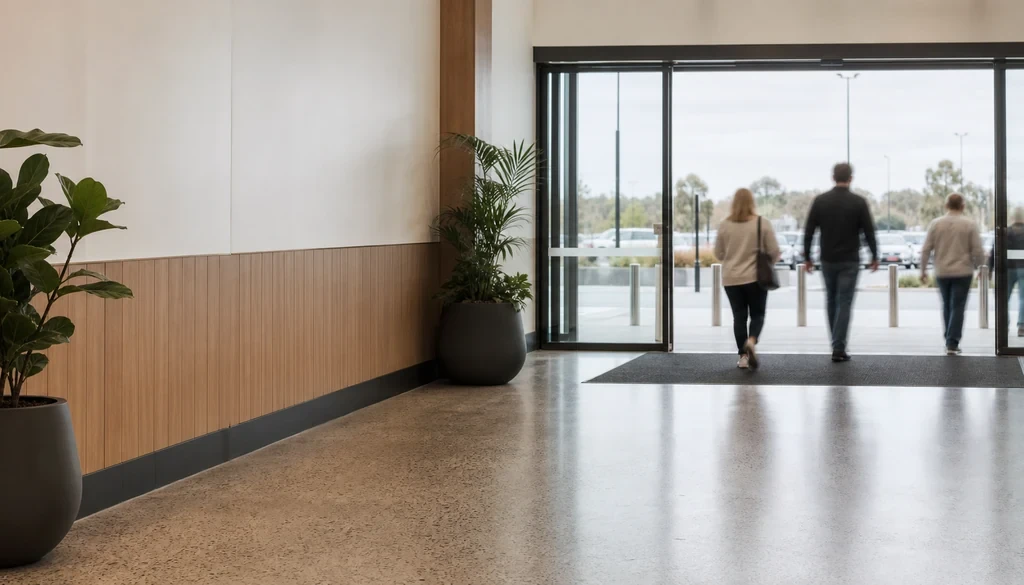
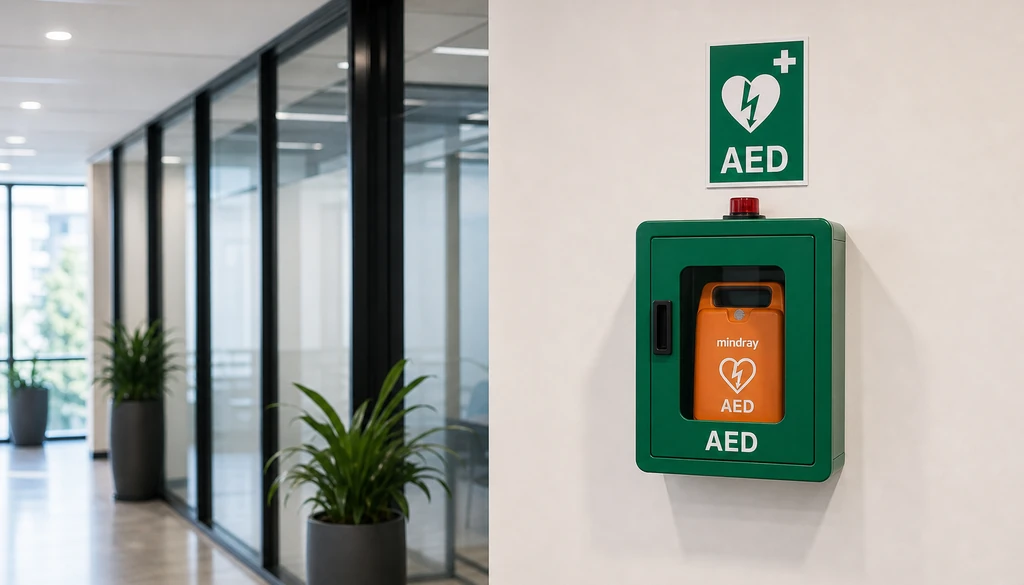
- Primary device in the ground-floor lobby, on the wall near the lifts at chest height (1.2–1.4m from the floor), in a publicly accessible cabinet, visible from the main entrance. High traffic, easy to find, the natural first location.
- A second device for taller or larger buildings. If you’ve got more than a few floors, a single lobby device can be minutes away from the top floor. A second unit on a mid-level lift lobby halves the worst-case distance.
- Don’t lock it away. The cabinet shouldn’t need a key or code that delays access. Mark it with the Australian Resuscitation Council AED symbol, put a sign above it, and add a sign at the main entrance pointing to where the device is.
- Name a responsible person — building manager or caretaker — and put the device on your maintenance schedule.
The principle is the same one that drives every placement decision: shortest path from the most people to the nearest device.
Registration and the public map
Tasmania does something most states don’t do as well — it puts registered AEDs on a public map, and the state already has more than 1,300 publicly accessible devices registered. That’s a network worth being part of.
Registration is free and voluntary, through Ambulance Tasmania’s GoodSAM platform at goodsamapp.org/TAS_AED. Once registered, your device shows up two ways: in the GoodSAM Responder app, and on the public LISTmap AED layer (the Land Information System Tasmania map). Only the location is public — your contact details stay private.
For a CBD building, being on that map means a Triple Zero call-taker or a nearby responder can point someone to your lobby device during an emergency in or around your building. Given Tasmania’s strong public-access culture, an unregistered device in a busy CBD building is a gap worth closing. Register each device separately so every location is mapped.
Maintenance and the cool-climate note
Two things keep the program honest:
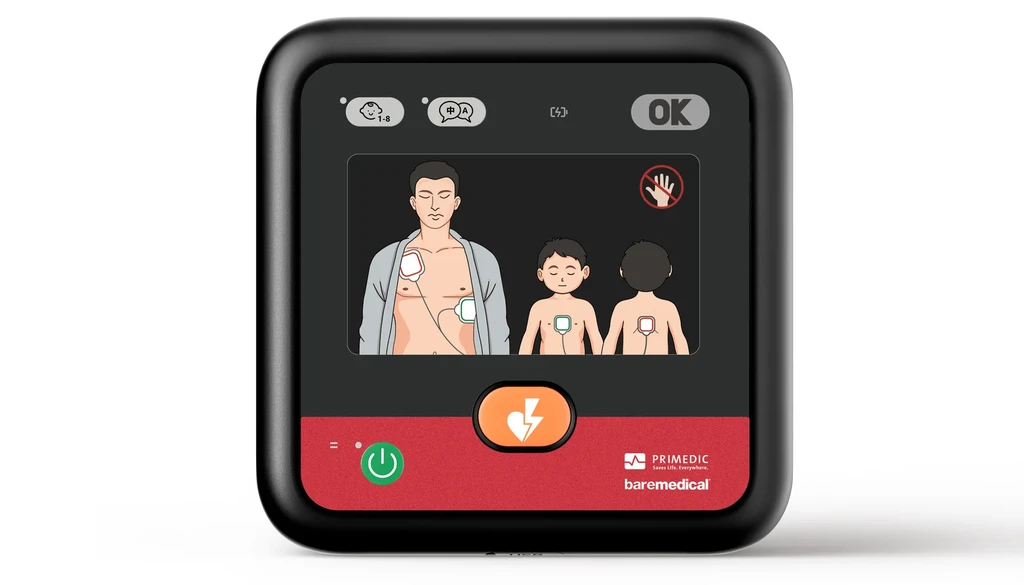
- Keep the device ready. Pads and battery in date, status light green, checked regularly. A registered device with expired pads is worse than no device — it tells the map there’s a working unit where there isn’t. Tie a quick monthly check to whoever already does your building walk-around.
- Mind the humidity on anything outdoor. Tasmania doesn’t have the extreme-heat problem the mainland north deals with — an indoor lobby device sits in comfortable temperatures year-round. But if you ever place a device in an exposed or semi-exposed spot (an external entrance, a coastal-facing walkway), use a proper outdoor-rated cabinet at IP55 or above to keep coastal moisture out. For the standard indoor lobby and lift-lobby placements, that’s not a concern.
One more thing worth knowing: Tasmania runs a Community AED Fund that places free devices with eligible community and not-for-profit groups. It’s competitive and aimed at community organisations rather than commercial premises, so a CBD office building will generally buy its own — but it’s the reason Tasmania’s public AED network is as dense as it is, and it’s good context for why being on the map matters here.
A sensible program for a Hobart or Launceston building
- Decide on common-area coverage — one device for a smaller building, two for a taller one, placed on the lobby and a mid-level lift lobby.
- Mount accessibly at chest height, marked, signed and never locked.
- Register each device on GoodSAM so it lands on LISTmap and in the responder app.
- Name a responsible person and put it on a maintenance schedule.
- Brief your building staff — manager, caretaker, security — on where the devices are and the basics of using one.
Where SafePulse fits
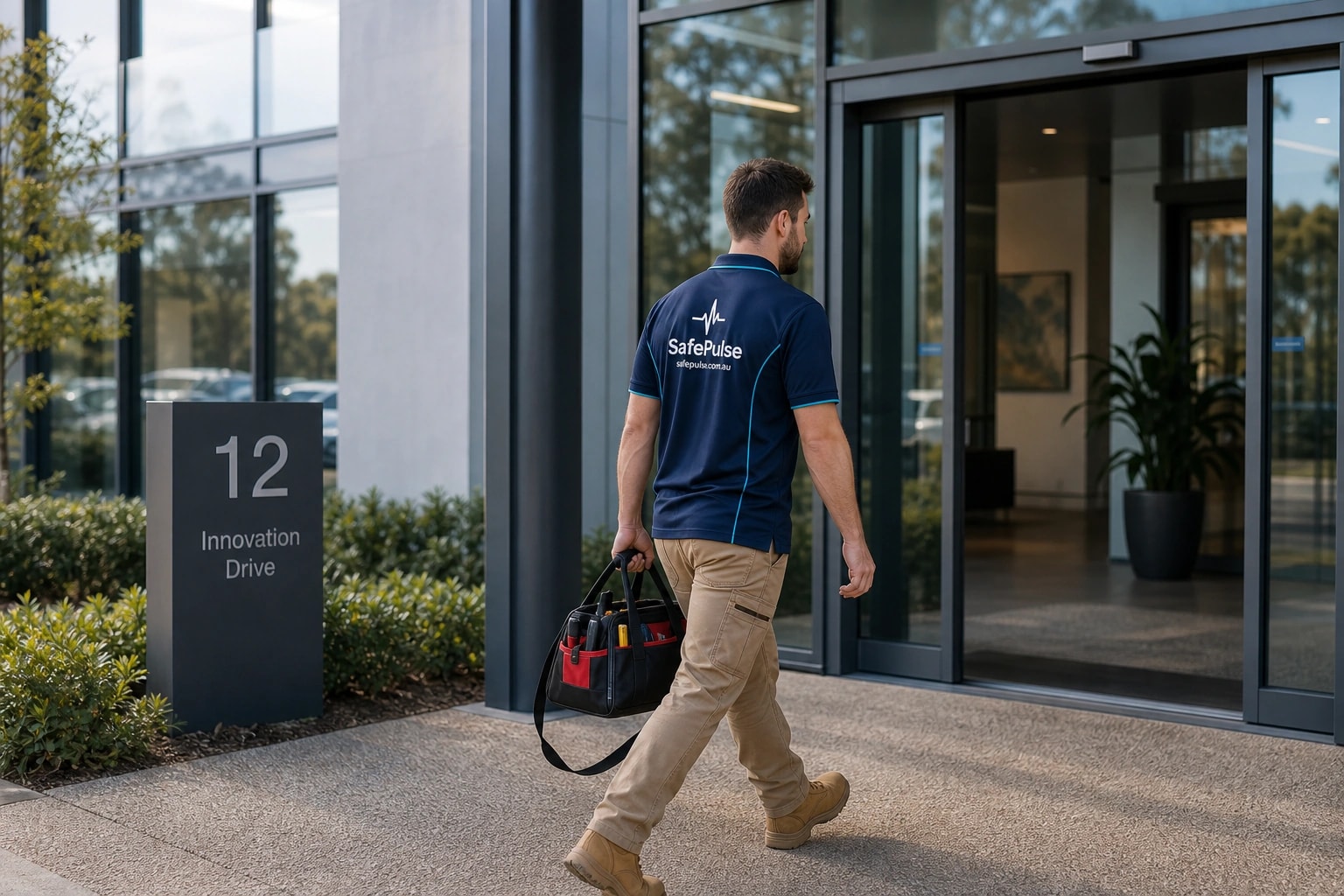
We supply, install and maintain AEDs across Tasmania, including multi-tenant CBD buildings in Hobart and Launceston. We’ll work out the right number and placement for your building, mount and sign it properly, register each device with Ambulance Tasmania so it shows on LISTmap, and keep pads and batteries in date on a maintenance plan so the device is ready every time.
For the legal backdrop, see do Tasmanian commercial buildings need an AED in 2026, and for why Tasmania already has an unusually dense public network, the $500K Community AED Fund. Our Tasmanian AED page has more.
If you’re putting an AED program to a building owner or a body corporate committee, we can supply a one-page quote you can drop straight into the meeting paper. Get in touch at safepulse.com.au/tasmania/.