
If you manage a gym, community centre, club, or venue in Adelaide, the question of whether your site is AED ready is worth taking seriously right now. South Australia’s Automated External Defibrillators (Public Access) Act 2022 came into effect in January 2026, and SA Health has published public guidance supporting AED access across many building types. Whether you run a small fitness studio in Thebarton or a large community hall in Marion, getting your site ready before that date makes good practical sense.
This plain-language checklist is designed to walk you through what AED readiness actually looks like — from the number of units you might need, to where they go, to how you keep them working.
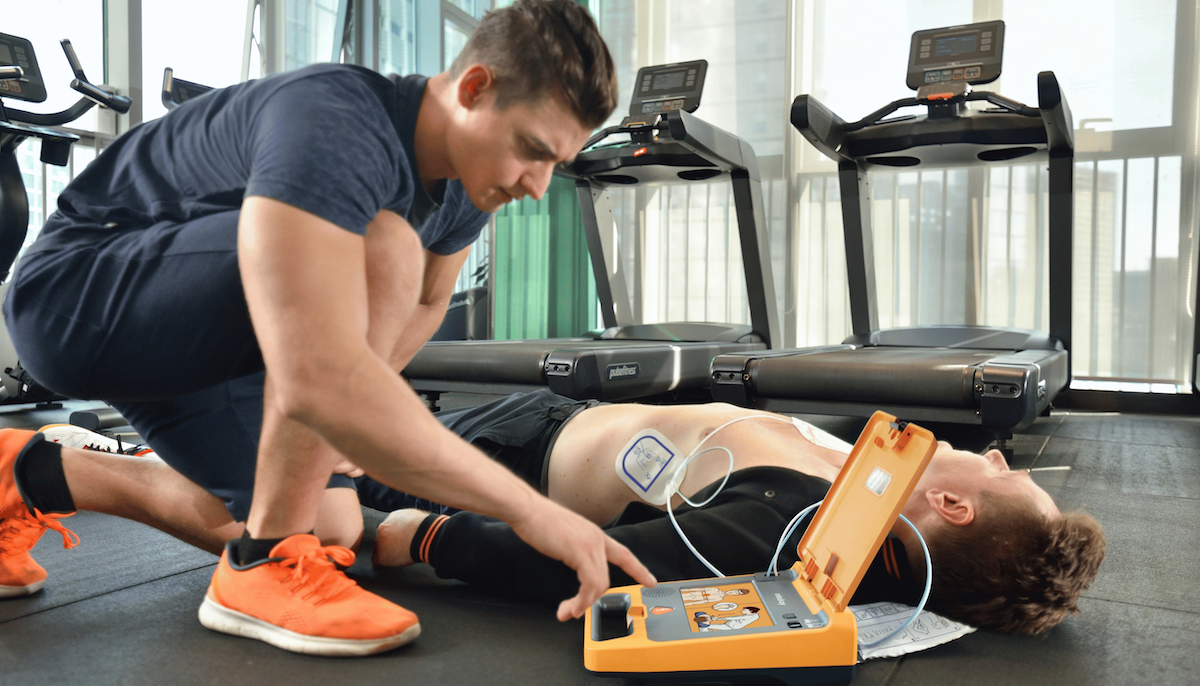
What Does AED Ready Actually Mean?
Being AED ready means more than just having a defibrillator sitting in a back room somewhere. It means the right device is installed in the right location, is properly maintained, and that staff or members can actually find and use it if a cardiac emergency happens.
Sudden cardiac arrest can occur without warning. The Australian Resuscitation Council notes that early defibrillation is one of the most critical factors in survival outcomes. Every minute matters, which is why placement and accessibility matter just as much as ownership.
Here is a straightforward way to assess where you stand.
Step 1 — Do You Have an AED on Site?
This is the starting point. If you do not yet have a unit, AED installation in Adelaide is the first step. If you already have one, move to the next steps to check whether your existing setup meets current good practice.
According to SA Health’s publicly available guidance, from January 2026, the South Australian Government requires AEDs to be installed and maintained in many workplaces. As a general rule, this includes large commercial properties with 600 square metres of publicly accessible floor space. For multi-storey or multi-tenant buildings, or high risk or public-facing sites, the required number of AEDs may increase.
If you are still unsure how many AEDs your building needs, check out our Practical Guide here, written for SA businesses.
—
Step 2 — Is Your AED Registered with SA Ambulance?
SA Ambulance Service maintains an AED register. Registering your unit means emergency dispatchers can direct bystanders to the nearest device in an emergency. SA Health’s publicly available guidance indicates that registration is a straightforward and practical step for any public-access site.
You can find information on AED registration through the SA Ambulance Service website. Alternatively, when you use a SafePulse AED technician for your installation, we take care of the SA Ambulance registration for you.
Step 3 — Is the AED Positioned Correctly?
Placement is one of the most commonly overlooked parts of AED readiness. A unit installed behind a locked counter or inside a staff-only room may not be accessible during an emergency.
AED placement guidelines in Australia generally support the following:
- Mounted in a clearly visible, publicly accessible location
- Installed near a main thoroughfare, reception area, or entry point
- At a height accessible to most adults
- Clearly signed so it can be located quickly under stress
- Protected from tampering or theft with an alarmed cabinet where appropriate
For gyms, a position near the main workout floor or entry is standard. Community halls most commonly place their AED near the main entrance or stage area. For multi-storey venues, each level generally warrants a unit.
Naturally, professional installation by a SafePulse AED technician will ensure your AED is positioned appropriately.
Step 4 — Is Your AED Being Maintained?
An AED that has not been serviced is not a reliable piece of emergency equipment. Batteries and electrode pads expire. Firmware may need updating. Physical wear can affect the device over time.
According to manufacturer recommendations, most AEDs should be inspected at least every six months. That typically includes checking battery charge and expiry, pad condition and expiry dates, physical integrity of the unit, and ensuring the device powers on and self-tests correctly.
If you are unsure when your AED was last checked, that is a gap worth closing. AED maintenance carried out by a qualified SafePulse AED technician removes that uncertainty and gives you a clear servicing record.
A basic AED maintenance checklist should include:
- Battery status and expiry date confirmed
- Electrode pads in date and sealed
- Device powers on and completes self-test
- No visible damage to case, leads, or screen
- Cabinet or wall mount secure and signed
- Servicing record updated for full compliance
Step 5 — Do Your Staff Know Where It Is and How to Use It?
Equipment alone is not enough. Staff awareness is a core part of being AED ready. This does not mean every staff member needs to be an advanced first aider. Modern AEDs are designed to guide a user through each step with clear voice prompts. However, staff should know where the unit is, how to access it quickly, and that calling 000 first is always the priority.
The Heart Foundation supports community CPR and AED awareness as part of improving cardiac survival rates across Australia. Basic CPR and AED familiarisation training is widely available in Adelaide through providers such as St John Ambulance SA.
Even a short briefing at a staff meeting can make a meaningful difference.
Step 6 — Do You Have a Record-Keeping System?
For venues and facilities operating under duty-of-care obligations, having a paper trail matters. A servicing log, installation record, and registration confirmation give you documented evidence that your site has taken reasonable steps toward AED readiness.
For multi-site operators, a portfolio-level approach makes this more manageable. Rather than tracking each location separately, a single maintenance partner who covers all your sites and provides consolidated records simplifies the process considerably.
SafePulse is proud to partner with Adelaide property managers including Ray White, LJ Hooker Commercial, ProRealty Property Consultants, MastraCorp Commercial and more, to provide a portfolio-wide AED management service that simplifies AED readiness across their portfolios.
Quick Summary: AED Readiness Checklist
Here is a one-page version you can print and use for a self-audit:
- AED installed on site
- Registered with SA Ambulance Service
- Positioned in a publicly accessible, clearly signed location
- Batteries and pads in date
- Last serviced within the past six months
- Staff know where it is and how to access it
- Servicing records up to date and accessible
If you can tick all seven, your site is in good shape. If there are gaps, the good news is that each one is straightforward to resolve.
What Comes Next with the SA AED Act?
The Automated External Defibrillators (Public Access) Act 2022 (SA) came into effect in January 2026. SA Health has published public guidance indicating that many public venues and buildings will be expected to have AEDs accessible to the public. The specific requirements will depend on your building type and use.
For formal legal confirmation of what applies to your site, SafePulse recommends seeking independent legal advice. What we can tell you is that getting your site AED ready now means you are ahead of the curve rather than scrambling later.
If you would like a free site assessment to understand exactly what your venue needs, and how to be AED Ready, SafePulse offers no-obligation assessments across Greater Adelaide, including Adelaide CBD, Adelaide Hills, Fleurieu Peninsula and even the Barossa Valley.
Frequently Asked Questions
How many AEDs does a building need?
A common benchmark is one AED per floor or zone, positioned so any person in the building can reach it within 90 seconds on foot. Larger venues, multi-level buildings, or high-occupancy sites generally benefit from more than one unit. A free site assessment by a SafePulse AED technician can give you a specific recommendation for your layout.
Does my AED need to be registered in South Australia?
SA Ambulance Service operates a voluntary AED register. Registering your unit means dispatchers can direct bystanders to the nearest device during a cardiac emergency. SA Health’s publicly available guidance supports registration as a practical step for public-access sites.
How often does an AED need to be serviced?
According to manufacturer recommendations, most AEDs should be inspected at least every six months. This typically covers battery and pad expiry, firmware status, and physical condition. A qualified technician can carry this out and provide a servicing record.
When do AED pads and batteries need to be replaced?
Electrode pads and batteries have expiry dates printed on the packaging. Pads typically expire within two to four years depending on the model. Batteries generally last two to five years in standby mode. Both should be replaced before expiry, not after.
What does the SA AED Act mean for my venue?
If the checklist turns up gaps, the fixes are written up individually: signage requirements, SA Ambulance registration, and what maintenance the Act requires. Our South Australian AED compliance overview ties them together.
The Automated External Defibrillators (Public Access) Act 2022 (SA) came into effect in January 2026. SA Health has published public guidance indicating that many public venues will be expected to provide AED access. The specifics depend on your building type. For advice on your AED obligations, contact our team today.


