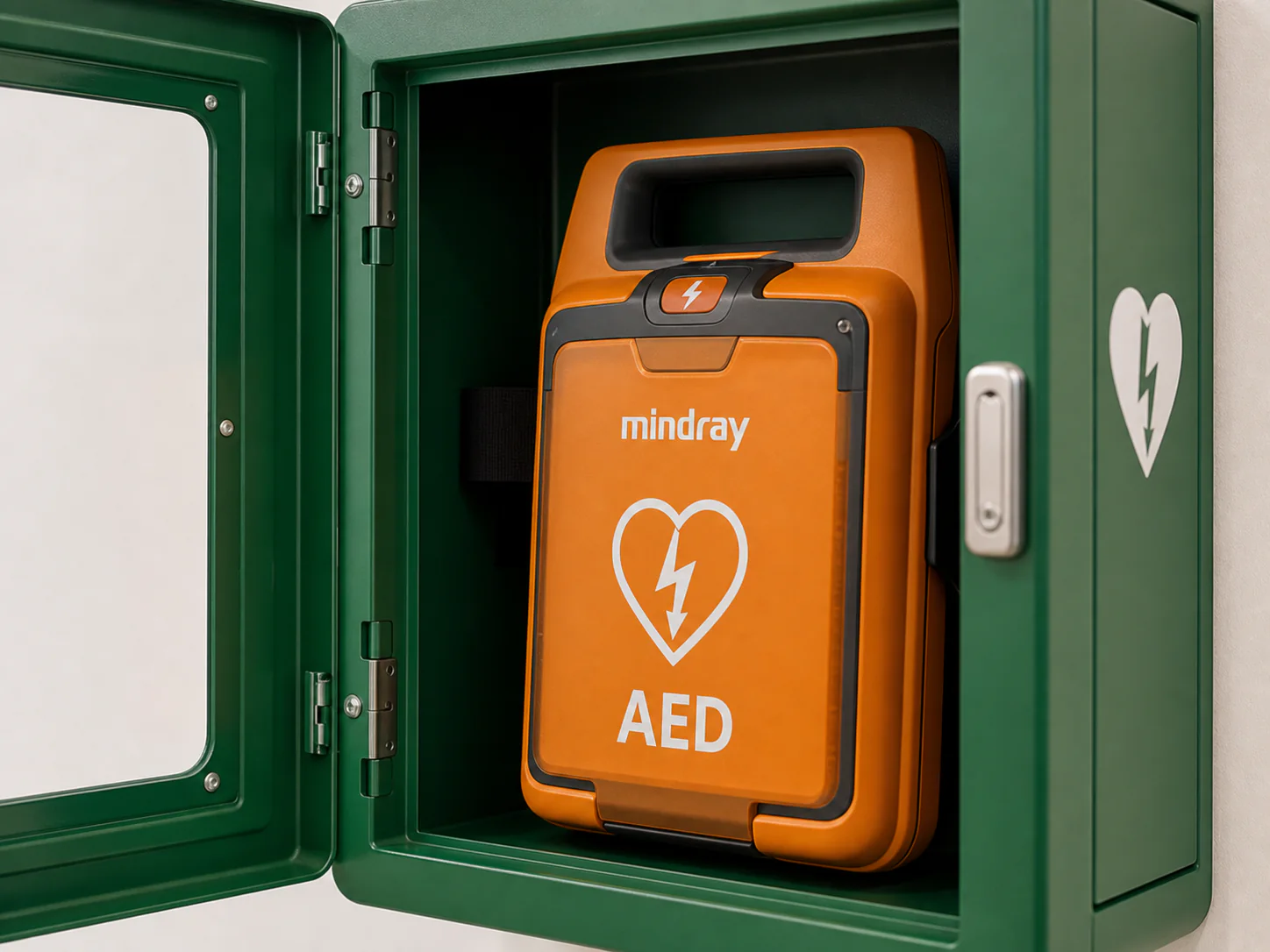
When you’re responsible for AED installation across a commercial portfolio, the device you choose matters just as much as where you place it. SafePulse installs Mindray AEDs across Greater Adelaide because they consistently deliver what our commercial clients need — proven reliability, straightforward operation, and manageable ownership costs.
We’ve worked with property managers, school principals, aged care directors, and facility operators who share the same practical concerns. They want a device that works when called upon, can be used confidently by untrained bystanders, and won’t burden their maintenance budget with expensive consumables or complicated service intervals.
This article explains why we’ve standardised on Mindray for our commercial AED installations in Adelaide, what makes these devices a practical choice for multi-site portfolios, and what you should consider when evaluating AED options for your property.
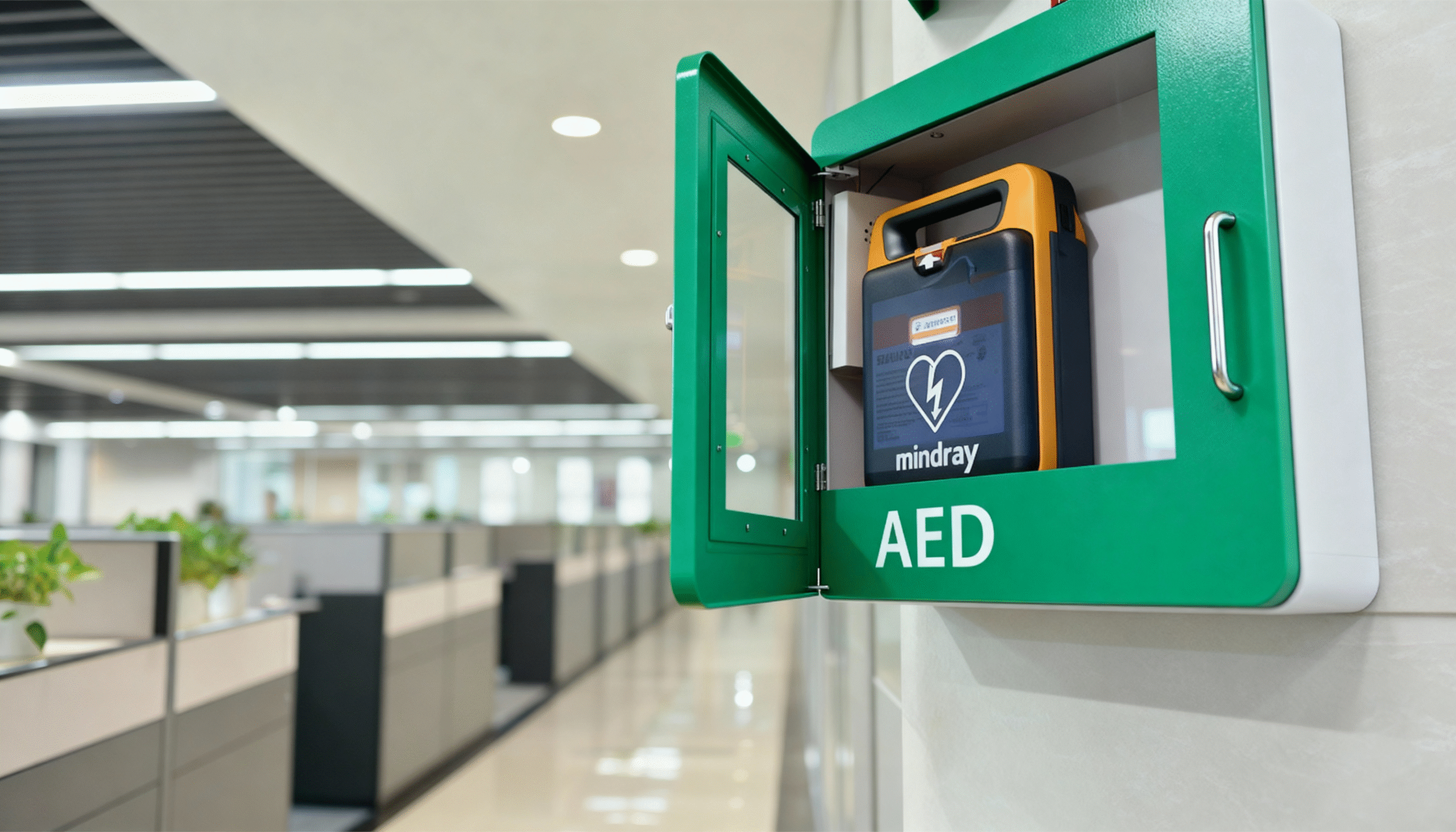
What Makes Mindray AEDs Suited to Commercial Environments
Mindray is a global medical equipment manufacturer with devices approved by the Therapeutic Goods Administration (TGA) for use in Australia. Their AED range has been deployed across hospitals, commercial buildings, schools, and public spaces throughout South Australia.
Three characteristics make Mindray particularly well-suited to commercial sites:
1. Clear Voice Prompts and Visual Guidance
Mindray AEDs deliver simple, step-by-step voice instructions from the moment you open the lid. The device guides users through pad placement, advises when to stand clear, and delivers a shock only when appropriate. Visual indicators on the pads themselves show exactly where to place them on the patient’s chest.
This matters in a commercial environment where the person responding may have no medical training. The device needs to work for the receptionist, the cleaner, or the visitor who happens to be closest when someone collapses.
2. Long-Life Consumables
Batteries and electrode pads have finite lifespans. Mindray AEDs use consumables with extended shelf life, which reduces replacement frequency and lowers the total cost of ownership over the device’s operational life.
For property managers overseeing multiple buildings, this translates to fewer service callouts and more predictable budgeting. Our AED maintenance programme tracks consumable expiry dates across your entire portfolio and schedules replacements before items expire, giving your complete peace of mind.
3. Proven Reliability in Australian Conditions
Mindray devices perform consistently across the temperature and humidity variations common in Adelaide commercial buildings. They don’t require climate-controlled storage, which gives you more flexibility in placement — near building entries, in reception areas, beside lifts, or in shared corridors.
We most commonly install the 4G-enabled Mindray units with active Smart Monitoring. These devices run automatic self-checks to verify readiness. If a problem is detected, our team will receive a live system alert and be able to act accordingly, ensuring AED readiness in the case of an emergency.
How Mindray AEDs Perform During an Emergency
When someone suffers sudden cardiac arrest, every minute without defibrillation reduces their chance of survival by approximately 10%, according to the Australian Resuscitation Council. The AED needs to analyse the heart rhythm quickly and deliver treatment without delay.
Mindray devices begin rhythm analysis within seconds of pad placement. If a shockable rhythm is detected, the device charges automatically and prompts the user to press the shock button. If the rhythm is non-shockable, the device instructs the user to continue CPR.
The voice prompts adjust based on what the device detects. If the user hesitates or pads lose contact, the device provides additional guidance. This responsive instruction set helps untrained users maintain appropriate treatment until paramedics arrive.
Ambulance services across South Australia are familiar with Mindray AEDs. When paramedics arrive, they can quickly review the device’s event log and continue treatment based on the shocks delivered and the patient’s response.
Cost Considerations for Multi-Site Installations
Total cost of ownership extends beyond the initial device purchase. You need to account for installation, ongoing maintenance, pad and battery replacement, and any service callouts over the device’s operational life.
Mindray AEDs offer a lower total cost compared to some premium brands without compromising on functionality that matters in a commercial setting. The devices deliver the same core capability — rapid defibrillation when needed — at a price point that makes sense when you’re equipping multiple buildings.
Our clients typically see better value with Mindray when they’re installing across:
- Commercial office buildings with multiple tenancies
- Educational campuses with several buildings
- Aged care facilities with multiple wings or separate buildings
- Shopping centres or business parks with distributed high-traffic areas
We provide transparent pricing during your free site assessment and can prepare quotes for portfolio-wide installations that include device supply, wall-mount cabinets, signage, AED installation, and initial staff familiarisation.
Maintenance Requirements and Service Intervals
Mindray AEDs require routine maintenance every six months. During these service visits, our technicians verify device function, check consumable expiry dates, test the battery, inspect electrode pads for damage, and confirm the unit is running its self-checks correctly.
This service interval aligns with manufacturer recommendations and industry best practice. It gives you a documented maintenance record for your files and ensures devices remain ready between inspections.
We track service dates across all your sites and send reminders before inspections are due. For clients with multiple buildings, we can schedule coordinated service days to minimise disruption and reduce the administrative load on your team.
Between scheduled services, the devices monitor themselves. If you notice a red indicator or hear an alert tone, contact us for an unscheduled inspection. These callouts are uncommon but the self-monitoring system provides early warning of issues before they become critical.
Alternatively, our Smart Monitoring Maintenance Package allows SafePulse to track the status of your site’s defibrillator in real time. Rather than relying on physical inspections, the AED communicates its condition via Wi-Fi or 4G to our centralised dashboard for complete visibility and peace of mind.
What SA Health Guidance Says About AED Readiness
The Automated External Defibrillators (Public Access) Act 2022 (SA) came into effect in January 2026. SA Health’s publicly available guidance indicates that many building types should consider AED access as part of their emergency preparedness planning.
Our commercial clients across Adelaide increasingly view AED installation as a standard component of workplace health and safety infrastructure, similar to fire extinguishers or first aid kits.
Having a device installed, properly maintained, and accessible during business hours helps sites become AED-ready and demonstrates practical commitment to occupant safety, and ensures AED compliance in South Australia.
How We Approach AED Installation for Adelaide Commercial Properties
Our AED installation process begins with a site visit. We walk through your building with you, identify high-traffic areas and potential cardiac arrest scenarios, and recommend placement locations based on accessibility and response time.
We consider factors such as:
- Distance from any point in the building to the nearest AED
- Visibility and signage requirements
- Environmental conditions at each proposed location
- Security and access control during and after business hours
- Integration with your existing emergency response procedures
Once you approve the plan, we schedule the installation at a time that suits your operations. We mount the device in a wall cabinet with appropriate signage, test all functions, register the device with SA Ambulance Service, and provide a brief familiarisation session for your nominated staff.
You receive documentation including device serial numbers, consumable expiry dates, maintenance schedule, and emergency contact details. We also provide simple instructions that can be posted near the device or distributed to occupants.
After installation, we remain your single point of contact for service, consumable replacement, and any questions that arise. Our technicians are based in Adelaide and can respond to service requests across the Greater Adelaide area including the CBD, inner metro, Thebarton, Keswick, Mile End, Brighton, Marion, Morphett Vale, Prospect, Campbelltown, Findon, West Lakes, and surrounding business parks.
Why Our Clients Choose Mindray for Their Adelaide Sites
When property managers and facility operators compare AED options, the decision usually comes down to three questions: Will it work when needed? Can untrained people use it confidently? Does the total cost make sense for our budget?
Mindray devices answer yes to all three.
They’re TGA-approved, proven in Australian commercial environments, and supported by a local maintenance network. They’re intuitive enough for bystanders with no medical training. And they deliver the core functionality commercial sites require at a cost point that works for multi-site portfolios.
We’ve standardised on Mindray because our clients consistently report positive experiences. Devices remain ready between service visits. Staff feel confident they could use the device if needed. And maintenance stays predictable and affordable.
If you’re evaluating AED options for your commercial property, aged care facility, school, or community venue, we’re happy to discuss whether Mindray would suit your specific circumstances. We don’t push a single solution onto every site, but for typical commercial applications across Adelaide, Mindray offers the reliability and value most clients are looking for.
Frequently Asked Questions
How long do Mindray AED batteries last before replacement?
Mindray AED batteries typically last four to five years under normal conditions. The device monitors battery status continuously and displays alerts if charge drops below acceptable levels. During six-monthly maintenance visits, our technicians test battery function and replace units approaching end of life before they expire.
Can anyone use a Mindray AED or do they need training?
Mindray AEDs are designed for use by untrained bystanders. The device provides voice prompts and visual guidance from the moment you open it. While training can increase user confidence, the Australian Resuscitation Council advises that untrained individuals can successfully operate an AED by following the device’s instructions.
How often do electrode pads need replacing on Mindray devices?
Electrode pads for Mindray AEDs have expiry dates typically two to three years from manufacture. Pads must be replaced after use on a patient or when they reach their expiry date. We track pad expiry dates for all devices under our maintenance programme and replace them before expiration.
What happens if a Mindray AED detects a fault between service visits?
Mindray AEDs run automatic self-checks regularly. If the device detects a problem — low battery, pad issue, or technical fault — it displays visual alerts and may emit audible tones. If you notice any alert indicators, contact SafePulse immediately. We’ll arrange an inspection and resolve the issue to restore device readiness.
Alternatively, for complete peace of mind, ask us about installing an AED that includes Smart Monitoring and we can monitor your device’s readiness remotely.
Do Mindray AEDs work for both adults and children?
Mindray AEDs can be used on adults and children. Some models have a paediatric mode or accept paediatric electrode pads for children under eight years or under 25 kilograms. During your site assessment, we’ll discuss whether paediatric capability is relevant for your facility and recommend appropriate pad configurations.
Get Started with AED Installation for Your Adelaide Property
If you’re responsible for a commercial building, educational facility, aged care site, or community venue across Greater Adelaide and you’re considering AED installation, SafePulse can help you evaluate your options and plan an appropriate installation.
We provide free site assessments with no obligation. We’ll consult with you around your specific circumstances, recommend device placement and quantities, and provide transparent pricing for supply, installation, and ongoing maintenance.
Choosing the device is one decision among several — how many you need, how it has to be signed, and what keeping it compliant involves all follow from the Act. Our South Australian AED compliance overview sets out the whole picture.
Contact SafePulse today to arrange your free site assessment and discuss how Mindray AEDs could suit your Adelaide commercial site for AED compliance.


