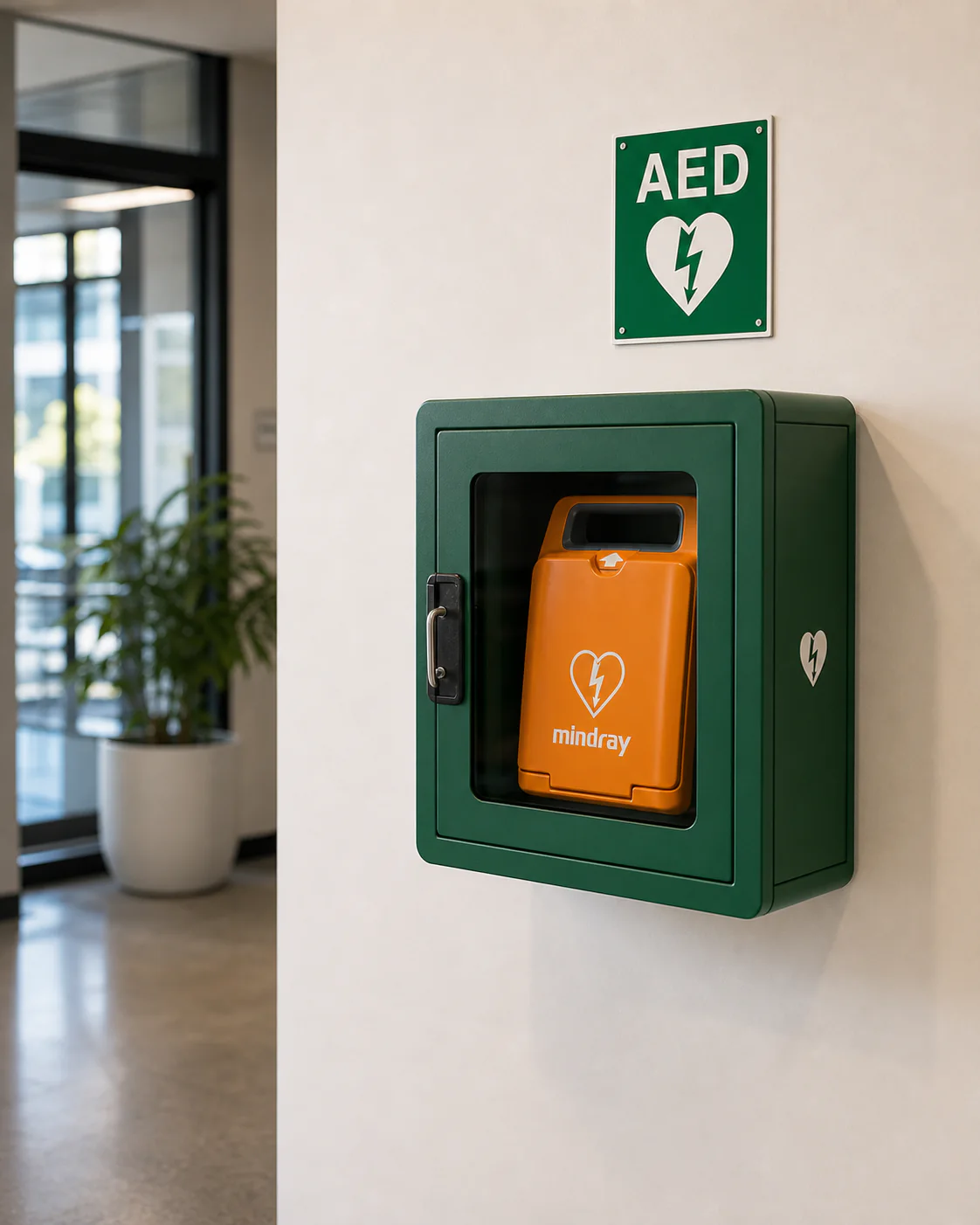
Installing an automated external defibrillator (AED) across your Adelaide property portfolio doesn’t need to be complicated. Whether you manage a single office building in the CBD or a network of sites across Greater Adelaide, understanding the installation process helps you plan ahead and avoid surprises. This guide walks through what actually happens during an AED installation, what you’ll need to prepare, and how to choose the right setup for your building type.
Why Commercial Properties in Adelaide Are Installing AEDs Now
The Automated External Defibrillators (Public Access) Act 2022 (SA) came into effect in January 2026. SA Health’s publicly available guidance indicates that many commercial building types may benefit from improved AED access. Property managers and building owners across Adelaide are now assessing their sites, determining how many units they need, and planning AED installations that align with manufacturer recommendations and industry best practice.
An AED (abbreviated from Automated External Defibrillator) provides the fastest possible response when someone experiences sudden cardiac arrest on your property. Every minute without defibrillation reduces survival chances by approximately 10 percent, according to Australian Resuscitation Council guidelines. Having a device accessible within three minutes of any occupied area is a common benchmark for commercial sites.
Step 1: Site Assessment and AED Placement Planning
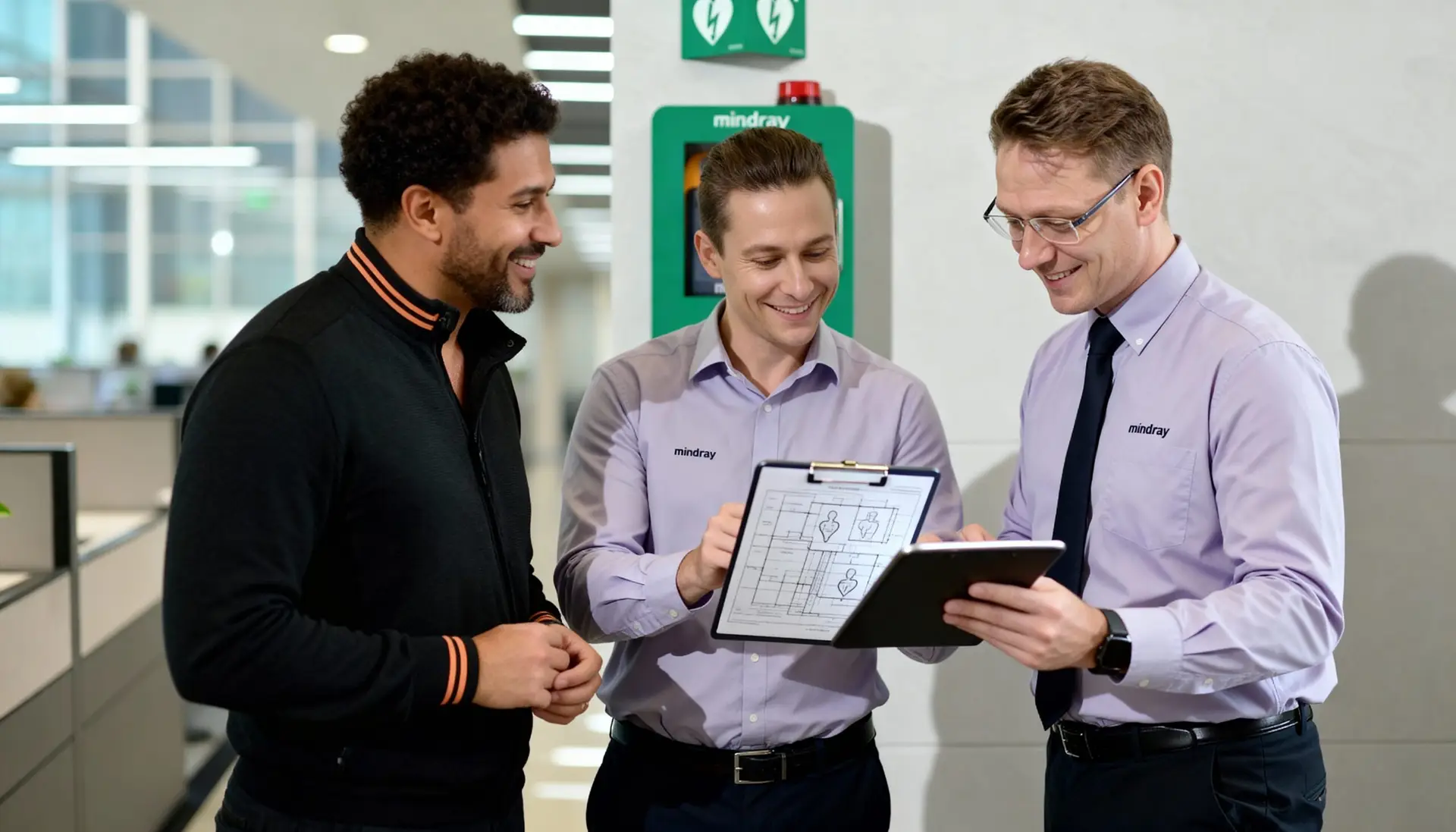
The first step in any AED installation is understanding your building layout and occupancy patterns. A professional site assessment identifies where devices should be placed to meet response time goals.
For most Adelaide properties, the initial assessment happens remotely. You’ll have a conversation with a qualified SafePulse technician over the phone or via video call. This preliminary discussion covers your building type, occupancy numbers, floor layouts, and any specific concerns or requirements you have.
During this conversation, the technician will ask about:
– Building size and floor plate dimensions
– Number of floors and typical occupancy levels
– Locations of high-traffic areas such as lobbies, gyms, or communal zones
– Existing first aid stations or emergency equipment
– Environmental factors such as outdoor areas, temperature-controlled spaces, or areas exposed to the elements
– Access patterns, including public versus staff-only areas
– Any multi-building portfolio considerations if you manage several sites
For straightforward commercial properties with standard layouts, this remote assessment is often sufficient to determine how many AEDs you need and recommend initial placement locations. The technician can provide pricing, suggest suitable device models and cabinet types, and outline next steps.
If your property has complex layouts, multiple buildings, or unusual access requirements, an on-site visit may be recommended to confirm final placement locations. This is common for large portfolios, aged care facilities, schools with multiple buildings, or properties with specific compliance requirements.
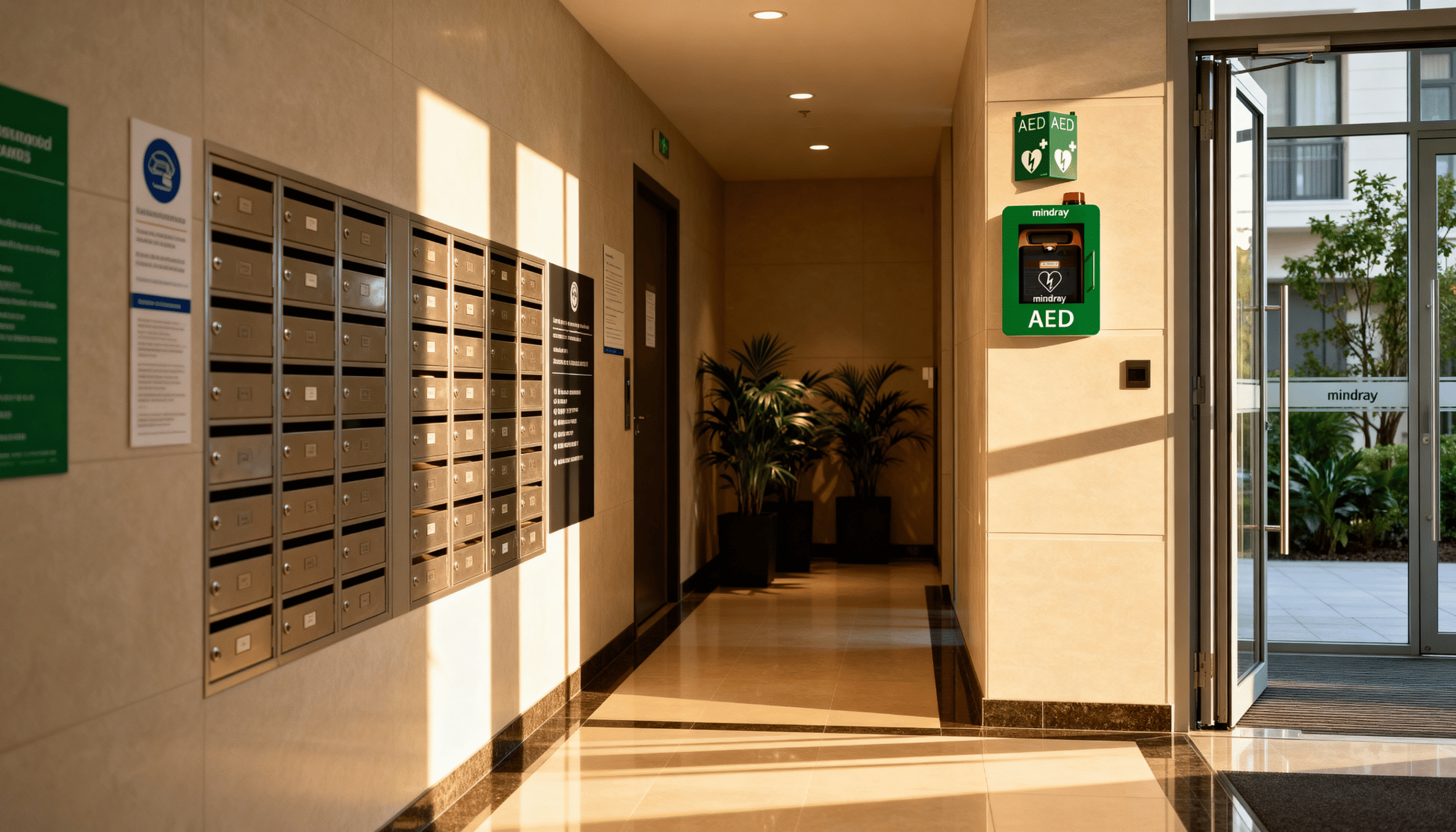
For properties across Adelaide’s CBD and inner metro areas, typical placement includes main lobbies, ground floor corridors, gym or wellness facilities, and high-traffic communal zones. Multi-storey buildings may need one unit per floor or per wing, depending on floor plate size.
SafeWork SA guidance supports accessible placement of emergency equipment, and recommends that workplace health and safety planning includes clear access to first aid resources.
If you’re uncertain how many AEDs your building needs, a free site assessment helps you make an informed decision based on your specific layout and occupancy.
Step 2: Choosing the Right AED Model and Cabinet
Not all defibrillators suit every environment. The site assessment informs which model and housing option works best for your property.
AED Model Selection
Most commercial properties choose between semi-automatic and fully automatic models. Semi-automatic units require the responder to press a shock button after the device analyses the patient’s heart rhythm. Fully automatic units deliver the shock without further input. Both are effective. The choice often comes down to training preference and budget.
Devices suitable for Adelaide’s climate need to operate reliably across varying temperatures, particularly in buildings without 24-hour climate control. Most commercial-grade AEDs operate within a range of 0°C to 50°C, which suits Adelaide conditions.
Cabinet and Mounting Options
AEDs can be installed in several ways:
- Wall-mounted cabinets: The most common choice for commercial properties. Cabinets protect the device from tampering and environmental factors while remaining visible and accessible. Many include alarms that sound when the cabinet door opens, alerting nearby staff.
- Heated or cooled cabinets: Necessary for outdoor installations or areas exposed to temperature extremes, such as loading docks or outdoor sports facilities.
- Carry cases: Less common in fixed commercial installations but suitable for sites where the AED may need to move between locations.
Cabinets should be clearly marked with internationally recognised AED signage. Green and white symbols ensure the device can be located quickly during an emergency.
Step 3: Professional AED Installation and Mounting
Once you’ve selected the device and cabinet, the physical installation begins. Professional AED installation ensures the unit is securely mounted, correctly positioned, and immediately operational.
What Happens During Installation
A qualified technician will:
- Arrive at the scheduled time with all necessary tools and mounting hardware
- Confirm the exact mounting location with the building manager or designated contact
- Install the cabinet securely to the wall using appropriate fixings for the wall type (brick, concrete, plasterboard)
- Check cabinet level and alignment
- Install the AED inside the cabinet and verify it powers on correctly
- Connect any optional features such as alarm systems or visual alerts
- Affix appropriate signage at the installation location and along access routes
- Test the cabinet alarm (if fitted) and provide instructions on deactivation procedures
- Provide a handover briefing covering device operation, cabinet access, and maintenance schedule
- Register your device with SA Ambulance Service AED Registry, so it is visible to emergency services
AED installation for a single unit typically takes 30 to 60 minutes depending on site access and wall type. Portfolio installations across multiple buildings are coordinated to minimise disruption and ensure consistent placement standards across all sites.
For a detailed look at what happens on installation day, see our step-by-step walkthrough.
Step 4: Staff Briefing and Access Procedures
Installing the device is only part of the process. People need to know where it is and how to access it.
After installation, the technician can provide a brief orientation for building staff or facility managers. This typically covers:
- Exact location of each AED unit
- How to open the cabinet and retrieve the device
- Basic operation overview (though AEDs are designed to be used by untrained responders, familiarity helps)
- Who to notify after the device has been used
- What ongoing AED management will look like
Operating an AED does not require any specific training or first aid qualification. The devices provide clear voice prompts that guide the responder through every step. Staff awareness of device locations is often more critical than detailed training.
Step 5: Registration with SA Ambulance Service
According to SA Health guidance, AED owners are encouraged to register their devices with the SA Ambulance Service. Registration ensures that emergency call-takers can direct bystanders to the nearest available AED during a cardiac emergency.
Registration involves providing:
- Device location (street address and specific placement within the building)
- Access hours (24/7 or restricted)
- Contact details for the building manager or responsible person
- Device make and model
Some AED installers, including SafePulse, can assist with registration as part of the installation service. Registration is typically completed online through the SA Ambulance Service portal.
Ongoing Maintenance and Servicing
An AED is only useful if it’s ready when needed. Regular maintenance ensures the device remains operational, and that your property or workplace remains up to date with AED compliance requirements.
SafeWork SA and Australian Standards recommend documented maintenance schedules for all workplace safety equipment. Keeping records of inspections, servicing, and consumable replacements supports your duty of care obligations.
For Adelaide properties, an AED maintenance program removes the administrative burden from property managers and ensures nothing is missed.
Common Questions Property Managers Ask
How long does AED installation take for a multi-building portfolio?
For a typical commercial portfolio across Greater Adelaide, installation scheduling depends on building access and the number of units. A single technician can install three to five units per day. Larger portfolios can be coordinated over multiple days to suit building access and minimise disruption. Site assessments are usually completed first, followed by a planned rollout once all devices and cabinets are confirmed.
Can we install AEDs ourselves to save costs?
You can, but professional AED installation offers several benefits. Technicians ensure cabinets are securely mounted to suit the wall type, positioned at the correct height for accessibility, and that devices are operational before handover. Professional installation also includes registration assistance, staff briefing, and integration into a maintenance schedule. For properties preparing for the SA AED Act, professional installation provides documentation and consistency across multiple sites.
What happens if someone uses the AED?
After an AED has been used, the electrode pads need replacing immediately. The battery may also need replacement depending on usage. Most AEDs have a status indicator that changes colour after use, making it obvious the device needs attention. A good maintenance provider offers rapid turnaround on post-use servicing, often within 24 hours, to return the device to operational status quickly.
Do we need to notify anyone after installation?
You should register the device with SA Ambulance Service and notify building occupants of the new AED location. Some commercial lease agreements or building management plans may also require notification to tenants. SafePulse can provide signage templates and sample communication to help inform tenants and visitors.
Where should the AED be placed in a multi-storey office building?
Industry best practice generally supports placement so that any person in the building can reach an AED within three minutes. For multi-storey buildings, this often means one device per floor in larger floor plates, or one device per two floors in smaller buildings with open stairwells. Central lift lobbies or main corridors are common locations. A professional site assessment provides specific recommendations based on your building’s layout and occupancy.
How much does AED installation cost in Adelaide?
AED installation costs vary depending on the number of devices, cabinet type, and site complexity. The best way to get accurate pricing is through a site assessment where the provider can see your specific requirements.
What does AED installation in Adelaide typically involve?
AED installation covers more than mounting a device to a wall. A complete installation generally includes a site assessment to identify the best placement locations, supply of the AED and cabinet, secure wall mounting, signage, and registration with SA Ambulance Service. SafePulse handles all of these steps as part of every AED installation in Adelaide, so there’s no need to coordinate multiple contractors.
Do I need an electrician for AED installation?
In most cases, no. AEDs are battery-powered and don’t require a mains connection. Standard AED installation involves mounting a cabinet to the wall and placing the device inside. Some alarm-equipped cabinets run on batteries too. If you choose a cabinet model that requires a hardwired alert system, a licensed electrician would be needed for that component only. Your installer can advise on this during the site assessment.
How long do AED batteries and pads last?
It depends on the device. The Mindray BeneHeart C1A, for example, has a manufacturer-stated life cycle of up to five years for both the battery and electrode pads. Other brands vary. The expiry date is printed on the packaging and should be checked regularly. After any use in an emergency, pads must be replaced immediately. A maintenance program tracks expiry dates across all devices and schedules replacements automatically.
Can AEDs be installed outdoors?
Yes, with the right cabinet. Outdoor installations are common at sports facilities, building entry points, and car parks across Adelaide.
Outdoor AED installation requires a cabinet rated to protect the device from dust, moisture, and temperature variation. Look for cabinets with at least an IP55 weather resistance rating, which is the same standard the Mindray BeneHeart C1A is built to. Talk to SafePulse and enjoy the peace of mind of knowing your AED installation is in line with SA Health’s Guidance, even if needs outdoors.
How many AEDs does my site need?
A widely used benchmark is one AED per 1,200 m² of accessible area, with placement so the device can be reached within three minutes. Multi-storey buildings, large outdoor areas, or sites with high foot traffic may need additional units. SA Health’s publicly available guidance emphasises visibility and quick access. A free site assessment is the most reliable way to work out the right number and placement for your specific building.
What to Look for in an AED Installation Provider
Choosing the right installation partner makes the entire process smoother. Look for providers who:
- Conduct a full site assessment before recommending device numbers or placement
- Offer professional AED installation with secure cabinet, mounting and testing
- Provide clear documentation of installation details and device specifications
- Include AED registration assistance with SA Ambulance Service
- Offer ongoing maintenance programs with reminders and consumable replacement
- Operate locally across Adelaide and can respond quickly for servicing or support
For property managers responsible for multiple sites across Adelaide’s CBD, inner metro, and surrounding commercial precincts, a single provider who can manage your entire AED program reduces complexity and ensures consistency. Ongoing smart monitoring across the portfolio is often great peace of mind for property managers overseeing a portfolio of sites.
Getting Started with AED Installation in Adelaide
If you’re responsible for a commercial property in Adelaide and need to plan AED installations in light of the January 2026 deadline, starting with a site assessment is the most practical first step. The assessment clarifies how many devices you need, where they should go, and what the total project will involve.
SafePulse offers free site assessments across Greater Adelaide, including the CBD, Thebarton, Keswick, Mile End, Brighton, Marion, Morphett Vale, Prospect, Campbelltown, Findon, West Lakes, and surrounding business parks. We handle the entire process from start-to-finish.
Two things worth settling before the install date: how many devices the building needs, per how many AEDs your building needs, and who carries the duty if the building is tenanted, per multi-tenancy AED responsibility. Our South Australian AED compliance overview covers the obligations the install has to satisfy.
Contact SafePulse to arrange a no-obligation site assessment and discuss your property’s AED requirements.


