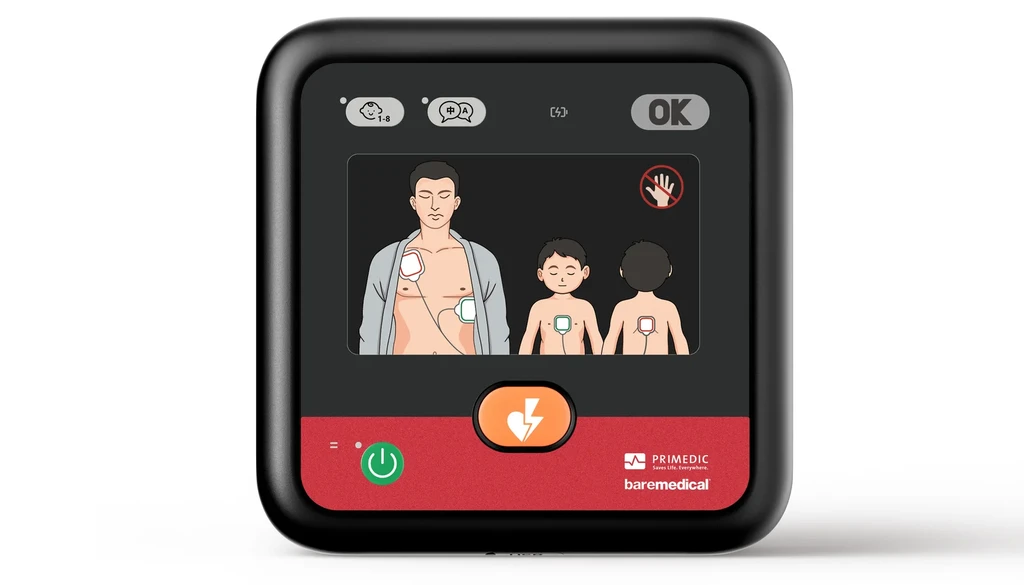
Tasmania has done better than most states at getting defibrillators into community hands. More than 1,300 publicly accessible AEDs are registered across the state, and a good number of them arrived through government and charity funding rather than club budgets.
Which is exactly why club committees ask us the same question: can we get one funded? The honest answer, as at late July 2026, is that both of Tasmania’s headline AED grant routes are currently closed — and that’s worth knowing before you build a plan around one.
Here’s the real state of play, what’s still worth applying for, and what to do in the meantime.
First, the legal position — because it isn’t the reason to act
Tasmania has no AED legislation. No Act, no compliance deadline, no penalties, and no Bill before the Tasmanian Parliament. We re-checked the 2026 Bills index before writing this and found nothing mentioning defibrillators or AEDs.
Your club’s obligation is the general first-aid duty under the Work Health and Safety Act 2012 (Tas), detailed in WorkSafe Tasmania’s First Aid in the Workplace Code of Practice (effective 27 May 2020). That Code says you should consider providing an AED where there’s a risk of electrocution, where ambulance arrival would be delayed, or where large numbers of members of the public are present.
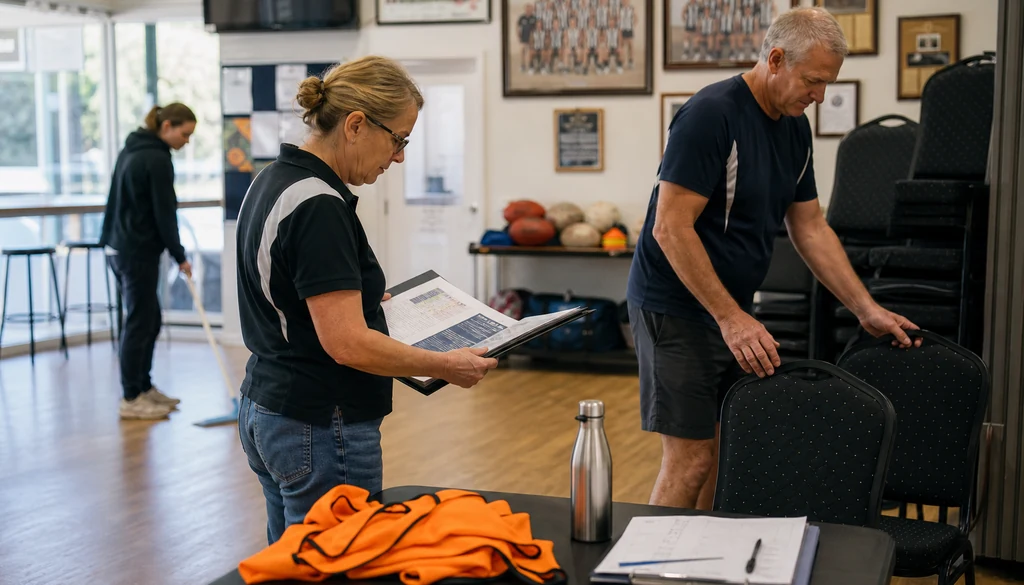
For a sporting club, factors two and three do the work. Match days bring crowds. Many Tasmanian clubs sit well outside Hobart and Launceston, where ambulance response is a longer proposition. Nobody is legally required to have a device — the foundation piece on that is do Tasmanian commercial buildings need an AED in 2026 — but the risk-assessed case at a country footy or cricket club is about as clear as it gets.
Worth adding the part clubs sometimes miss: the highest cardiac risk on a Saturday usually isn’t the players. It’s the adults on the sideline, in the canteen and in the clubrooms — older, less conditioned, and there in numbers.
Route 1: The Tasmanian Government Community AED Fund — currently allocated
The Community AED Fund is the state’s flagship program: a $500,000 commitment delivering 180 free AEDs to community organisations over two financial years, with priority for rural, regional and remote locations. Recipient devices are registered with GoodSAM on installation.
Status as at July 2026: Round 2 opened in December 2025 and closed 31 January 2026, covering the second tranche of 90 devices. In late April 2026 the Government announced those units were rolling out, completing the 180-device commitment. We’ve found no announcement of a further round.
So there’s nothing to apply for right now. That’s not necessarily permanent — Tasmania has funded community devices repeatedly since 2014, so further rounds are plausible rather than guaranteed. Practically, register interest and watch for an announcement rather than treating the Fund as your procurement plan. The Department of Health’s AED pages and the Premier’s newsroom are where rounds get announced.
Two things to be clear-eyed about if one opens. It’s competitive, not entitlement-based, and applications are assessed on location, accessibility — ideally 24/7 public access — and your capacity to maintain the device. And it’s community and not-for-profit oriented, so a commercially operated club is likely outside scope. We covered the Fund’s impact in Tasmania’s $500K Community AED Fund.
Route 2: St John Ambulance Tasmania’s Safe Community grant — also closed
St John Ambulance Tasmania runs its own program, separate from the government Fund, providing a free AED plus training to community groups and charities. Historically it’s run multiple rounds a year, preferring organisations that can install the device externally so the wider public can reach it.
Status as at July 2026: St John Tasmania’s AED grant funding is fully committed and applications are closed. Their published position is that future opportunities will be announced on their community safety page if funding becomes available.
If you do get a St John device later, know the obligations: your club pays for ongoing consumables, and St John covers replacement pads only where the AED has actually been used in an emergency. The device can’t be sold or transferred, and recipients take part in promotional activity. Reasonable terms for a free defibrillator — but the consumables bill is the one clubs forget to budget for.
Route 3: Active Clubs — the live option, but confirm eligibility first
Active Tasmania’s Active Clubs Program is the general sport-and-recreation equipment grant. The 2025–26 round was published with a pool of $815,000 and grants up to $10,000, aimed at helping clubs buy or replace equipment used to deliver community sport.
“Safety, health and/or protective equipment” is a listed category, which is why AEDs come up. Here’s the caveat we won’t paper over: AEDs are not explicitly named in the published categories. Whether a defibrillator qualifies under the current guidelines is a question for Active Tasmania, not for us or a supplier’s website. Contact them on info@active.tas.gov.au or 1800 252 476 and get it in writing before building an application around it.
Confirm the current round status directly too. Timing shifts with the financial year and a program page can lag behind reality, so check applications are actually open before you start drafting.
What isn’t an AED funding pathway
Worth naming these, because they get suggested to clubs and they waste time:
- Levelling the Playing Field — historically a capital program for female-friendly facilities like change rooms and amenities. Facilities, not equipment.
- Ticket to Play — vouchers towards children’s club membership fees. Not equipment funding of any kind.
- Junior Travel Assistance Program — travel costs for junior athletes.
If a supplier or a well-meaning committee member tells you one of these funds defibrillators, it doesn’t.
Local council community grant rounds are a genuine maybe — some Tasmanian councils have funded community devices — but they’re per-council and per-round, so you’d need to check your own.
The pathway most clubs end up taking
Here’s the pattern we see, and it isn’t a defeat. Clubs that decide a defibrillator matters usually stop waiting for a grant and fund it themselves — a season fundraiser, a local business sponsorship, or splitting the cost with a co-tenant club that shares the ground.
That works better than it sounds. A defibrillator is a one-off capital item with a modest ongoing consumables cost, and it’s an unusually easy thing to raise money for. Local businesses that hesitate over a scoreboard will often put their name to the device that could save someone in the clubrooms. If your ground is shared, one device between two clubs halves both the cost and the maintenance overhead.
The trap is the middle path: deciding you need one, applying for a closed round, and doing nothing for two seasons while you wait.
If you get one, get the rest of it right
Put it where the public can reach it. Clubrooms locked outside match days is the most common problem at community grounds — arrests happen at training, at working bees, and at the ground next door. An externally mounted, unlocked cabinet gets far more coverage than one in a locked canteen, and it’s what funding programs prefer anyway.
Register it. Ambulance Tasmania’s registration runs through GoodSAM, it’s free and voluntary, and registered devices also appear on the public LISTmap layer. That’s how a stranger or a Triple Zero call taker finds your device.
Budget the consumables. Pads have a shelf life from manufacture and need replacing on schedule; batteries last several years and go on date, not on warning light. Put a named person — an actual person, not “the committee” — on a monthly check that the indicator is green and the pads are in date, plus a proper service every six months.
Spec for the setting, and don’t wait for training. Outdoors or in an unheated shed, use an enclosure rated IP55 or above (best practice, not a Tasmanian regulation). And AEDs are built for untrained users — a training session makes volunteers faster and calmer, but it isn’t a reason to delay putting a device on the wall.
Where this leaves your club
As it stands: the Community AED Fund’s current commitment is fully allocated with no new round announced, St John Tasmania’s grant is closed, and Active Clubs is the live option — subject to confirming AED eligibility with Active Tasmania directly. Register interest with the closed programs, ask Active Tasmania the eligibility question, and in the meantime treat the device as something you can fund locally rather than something to wait for.
The regional ambulance-distance reasoning that makes this matter at country clubs is the same one we worked through for tourism operators in Tasmania’s wilderness and long-distance ambulance reality.
If you’d like help working out what your club actually needs — one device or two, where it should go, what the ongoing cost looks like — we install and maintain AEDs across Tasmania and we’re happy to talk it through without a quote attached. Start at our Tasmanian AED page.
Frequently asked questions
Can a Tasmanian sporting club get a free AED?
Sometimes, through competitive grant programs — but both headline routes are closed as at July 2026. The Tasmanian Government’s Community AED Fund closed Round 2 on 31 January 2026 and its 180-device commitment is now fully allocated, and St John Ambulance Tasmania’s AED grant funding is fully committed with applications closed. Watch for new rounds rather than planning around them.
Does the Active Clubs Program fund defibrillators?
Possibly. “Safety, health and/or protective equipment” is a listed category, but AEDs aren’t explicitly named in the published guidelines. Confirm eligibility and the current round status with Active Tasmania on info@active.tas.gov.au or 1800 252 476 before applying.
Is a sporting club legally required to have an AED in Tasmania?
No. Tasmania has no AED legislation and no Bill before parliament. The obligation is the general first-aid duty under the Work Health and Safety Act 2012 (Tas), and the Code of Practice says you should consider an AED where ambulance response would be delayed or large numbers of the public are present — which describes most community clubs on a match day.
Where should a club mount its defibrillator?
Externally where possible, in an unlocked, clearly signed cabinet the public can reach, rated IP55 or above if exposed. Clubrooms are locked most of the week, and arrests happen at training and working bees too. External mounting is also what the funding programs prefer.
What are the ongoing costs after we get an AED?
Pads and battery replacement, both on schedule rather than when a warning appears. If you receive a device through St John Tasmania, the club covers consumables, with St John replacing pads only where the device has been used in an emergency.