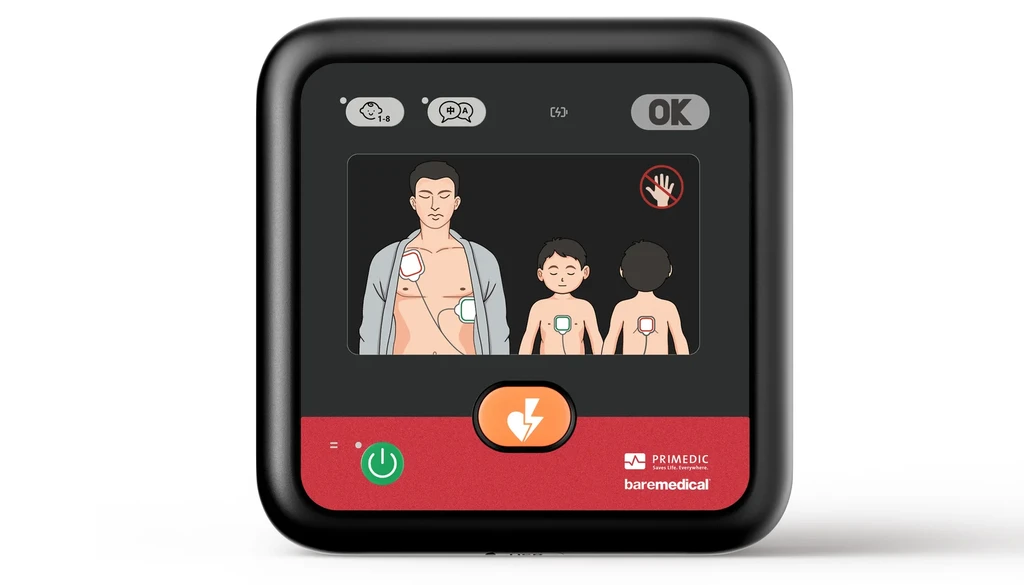
Aged care is the setting where the case for a defibrillator barely needs arguing. The residents are, by definition, in the demographic most likely to have a sudden cardiac arrest. So it surprises people to learn that in the ACT, nothing actually requires an aged care facility or a retirement village to have one.
That’s the honest starting point. Two regulators shape the decision — the territory’s workplace safety regime and the federal aged care system — and neither of them mandates the device by name. What they do, between them, is build about as strong a best-practice case as you’ll find anywhere. Here’s how the pieces fit.
No ACT mandate — and no federal one either
There’s no ACT AED legislation. A search of the ACT Legislation Register and the Assembly’s list of bills turns up nothing that requires defibrillators in commercial buildings, schools or care facilities. The closest the territory has come was a 2022 motion by Leanne Castley MLA to make AEDs mandatory in government schools, workplaces and buses — and the government amended it to strip the mandate out, committing only to “support” greater availability. No bill has reached the Assembly since.
Some people assume the federal aged care rules fill that gap. They don’t, at least not explicitly. The Aged Care Act 2024 (Cth) commenced on 1 November 2025, replacing the old 1997 Act, and it brought in strengthened Aged Care Quality Standards. Standard 5 (Clinical Care) requires providers to identify, monitor and respond to clinical deterioration in the people they care for. That’s a meaningful obligation — but the standard doesn’t name AEDs, and it would be wrong to tell an operator the Commonwealth requires them to install one. It doesn’t.
So the accurate position is: no ACT law and no federal rule specifically mandates an AED in an ACT aged care facility or retirement village. Anyone telling you otherwise is overselling it.
Where the actual duty comes from
An aged care facility is still a workplace, and the operator is still a person conducting a business or undertaking under the Work Health and Safety Act 2011 (ACT). That carries a general first aid duty — you have to provide first aid equipment, make sure people can access it, and ensure enough staff are trained.
The detail sits in the ACT’s First Aid in the Workplace Code of Practice (the 2020 adoption of the Safe Work Australia model code). The Code treats an AED as something to consider, not something you must have. It flags a defibrillator where there’s a risk of electrocution, a likely delay in ambulance response, or large numbers of workers or members of the public present. It also says an AED should be kept in a clearly visible, accessible location, not exposed to extreme temperatures, and maintained per the manufacturer’s specifications.
Aged care doesn’t tick the electrocution box. But it ticks the others in its own way — and there’s a factor the Code’s general triggers don’t fully capture, which is the resident population itself.
Why the clinical case is strongest here
The thing that makes aged care different from an office or a warehouse is who’s on site. Sudden cardiac arrest risk rises steeply with age and with underlying heart conditions, and an aged care facility concentrates exactly that population under one roof, around the clock. A retirement village does the same across its shared facilities and common areas.
Now layer the time factor on top. An AED works best in the first few minutes of a cardiac arrest, and survival falls fast with every minute of delay. Even in Canberra, the minutes it takes for a crew to arrive, get inside, and reach a resident’s room or a communal lounge are minutes the person can’t spare. A defibrillator already on site, in a known and accessible spot, is what covers that window.
Standard 5’s duty to respond to clinical deterioration and the WHS duty to provide reasonable first aid don’t name the device — but read them against a building full of the highest-risk age group, and having an AED is a very natural reading of both. It’s the setting where “should you consider one” has the most obvious answer.
The retirement village angle
Retirement villages sit in an interesting spot. They’re not always residential aged care in the clinical sense, so the Aged Care Act’s standards may not bite the same way. But the operator still runs the shared facilities — the community centre, the pool, the dining and function spaces — as a PCBU, and those are workplaces with the WHS first aid duty attached. The residents are, again, an older, higher-risk group.
Worth a contrast here: in South Australia, retirement villages with shared amenities and aged care facilities are designated under that state’s AED Act and legally need at least one device regardless of size. The ACT has nothing equivalent. So a village operator who runs sites in both places can’t assume the ACT works like SA — it’s a best-practice decision in Canberra, not a legal one. That difference is exactly the kind of thing that trips up multi-jurisdiction operators.
The ACT’s weak official infrastructure — and what to do about it
One quirk of the ACT worth knowing: it has the thinnest official AED infrastructure of any Australian jurisdiction. There’s no government or ambulance-run AED registry the way South Australia and NSW have. AED location data in the territory is held by St John Ambulance ACT — through the national St John register and First Responder app — and through the volunteer-run StreetBeat program that installs outdoor cabinets across Canberra suburbs.
For an aged care operator that means two practical things. First, if you install an AED, register it on the St John register so it shows up in the First Responder app. It’s voluntary, but it surfaces your device to responders. Be aware, though, that there’s no confirmed link between the St John register and the ACT’s Triple Zero system — so don’t assume a 000 call-taker will automatically direct a caller to your device the way they would in SA. Register it, but treat the on-site device as the thing your own staff rely on.
Second, the thin public network is itself an argument for having your own. In a jurisdiction where you can’t count on a nearby public AED turning up in an alert, the one on your wall is the one that counts.
What good looks like
If you decide the case stacks up — and in aged care it usually does — the fundamentals are straightforward. Choose a TGA-approved unit (mandatory for any AED sold in Australia). Mount it in a visible, accessible, unlocked location that staff know — near a nurses’ station or a main communal area works well. Keep it out of extreme heat or cold. And put a maintenance routine behind it, because pads and batteries expire and a unit with dead consumables is worse than useless — it looks like a control while being none. Training is worthwhile but not a prerequisite; anyone can follow an AED’s voice prompts.
The honest bottom line
No ACT law and no federal aged care rule requires a defibrillator in your facility or village. But the WHS duty is real, Standard 5’s clinical-care obligation is real, and the resident population makes the risk about as foreseeable as it gets. Put those together and the case isn’t a legal one — it’s a duty-of-care one, and it’s strong. In a territory where the public AED network is still thin, having your own is the responsible call.
No ACT law requires a device, which is the position set out in do ACT commercial buildings need an AED in 2026. Worth knowing too that the territory has no government AED register — what that actually means. Our ACT AED page covers the wider picture.
At SafePulse we install and maintain AEDs for care and community settings, including the placement and maintenance discipline that keeps a device genuinely rescue-ready. If you run an ACT aged care facility or retirement village and want to think it through properly, we’re glad to help.