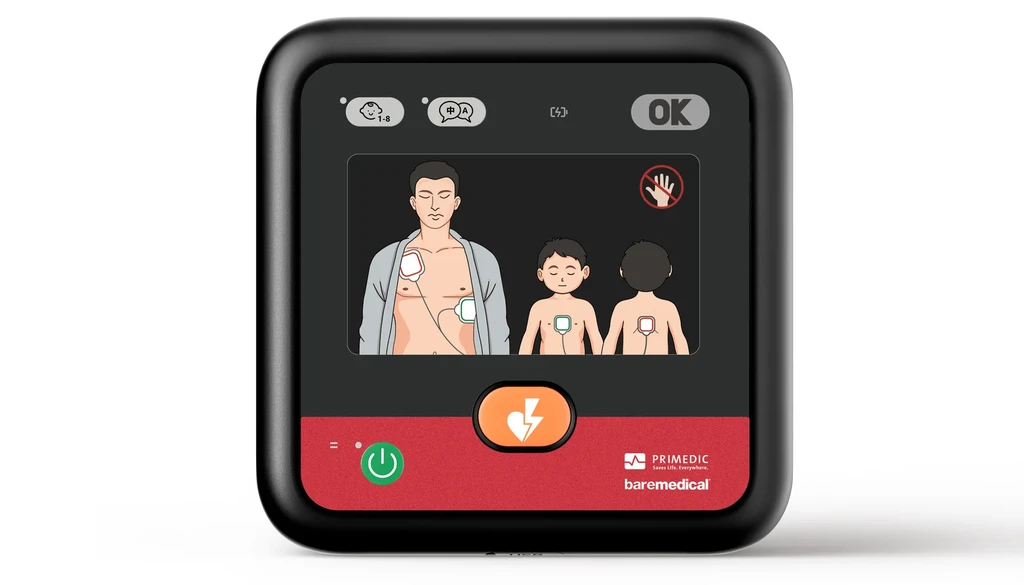
If you run a school in South Australia, the AED question isn’t a maybe. Schools are named in the legislation, which puts them in a different position to most commercial buildings — the size thresholds that catch office towers don’t apply, but the obligation to have a device does. This is the practical version: what the SA Act actually requires of a school, who carries the duty, and where sensible schools go past the legal minimum.
Schools are designated facilities under the SA Act
The Automated External Defibrillators (Public Access) Act 2022 (SA) lists certain building and facility types as “designated” — they require at least one AED regardless of how big or small they are. Schools are on that list, alongside training facilities, universities, TAFE and vocational colleges.
That’s the key point for a school business manager. A standalone café under 600m² isn’t caught by the Act. A small primary school is — not because of its floor area, but because it’s a school. The designation does the work, not the size.
This has been in force for a while now. The Act commenced for Crown-owned buildings on 1 January 2025 and for privately owned (non-Crown) buildings on 1 January 2026. Both dates have passed, so every school in scope is now legally required to have a device installed.
One AED minimum — the size scaling doesn’t apply to schools
For most commercial buildings, the Act ramps the number of AEDs up with floor area once you cross 1,200m² of publicly accessible space. A large shopping centre might need several.
Schools are deliberately carved out of that scaling. Primary and secondary schools are excluded from being treated as “for commercial purpose,” which is the trigger that turns on the size table. The result is simple: a school needs one AED minimum, regardless of how large the campus is.
So a sprawling secondary college with multiple buildings has the same legal floor as a small primary school — one device. That’s the compliance minimum. Whether one device is actually the right number for a big campus is a separate question, and a good one, which we’ll come back to.
Who carries the duty — government, independent and Catholic schools
The obligation under the Act sits with the owner of the building or facility, not the occupier. For schools that splits along ownership lines:
- Government schools sit on Crown land, so the Crown is the owner and the 1 January 2025 commencement applied. The Department for Education has been working through this for its sites.
- Independent and Catholic schools are generally privately owned (non-Crown), so the 1 January 2026 date applied to them, and the duty falls on the owning entity — the school, the diocese, or the association that holds the land.
If you’re a business manager at an independent or Catholic school, that ownership point matters. The duty is yours, not the Department’s, and not a tenant’s. It’s worth confirming exactly which entity holds title to your site so the responsibility is clear on paper.
Where the AED goes
Placement is where schools most often get it wrong, usually by being too cautious. The Act says an AED can’t be installed in a cabinet or container that needs a key or access code to open — anything that stops someone reaching it immediately in an emergency defeats the point.
For a school, the front office or reception is the natural home for the primary device. It’s staffed, it’s central, it’s visible, and the public-accessibility requirement is met because someone can request the device at reception. Mount the cabinet at 1.2–1.4m from the floor, mark it with the Australian Resuscitation Council AED symbol, and make sure office staff know exactly where it is and that it’s never locked away in a back room.
One thing to watch on a school site: the highest cardiac-risk moments often aren’t in the front office. They’re on the oval during sport, in the gym, at a carnival. The legal minimum is one accessible device; the practical reality is that a single AED at the front gate can be a long run from the back oval.
The bits people miss — registration, signage, maintenance
Installing the device is the visible step. Three smaller obligations trip schools up after the fact:
- Registration. Every AED installed under the Act must be registered on the SA Ambulance Service AED Register within two weeks of installation, and updated within two weeks if the location or access hours change. Triple Zero call-takers use that register to point callers to the nearest device.
- Signage. You need a sign near the AED and a sign at or near the building entrance indicating a device is nearby. On a large campus, floor and building signage pointing to the nearest AED is sensible.
- Maintenance. The Act requires the device to be maintained per the manufacturer’s instructions. In practice that means keeping pads and the battery in date and confirming the unit is ready — a flat battery or expired pads turn a compliant install into a device that won’t help when it’s needed.
None of these are onerous, but they’re all offences to skip under the Act, and they’re the ones that quietly lapse once the install is done and forgotten.
Compliance vs best practice — where good schools go further
The Act gives schools a low legal floor: one device, registered, signed, maintained. A lot of schools choose to go past it, and the reasons are practical rather than legal.
A campus of any real size benefits from more than one AED simply because of distance. If your ovals, gym and main buildings are minutes apart on foot, a second or third device cuts the time to first shock — and in cardiac arrest, time is the whole game. Sport, PE and community use of school facilities after hours all raise the foreseeability of someone needing one.
Schools can install additional AEDs voluntarily, and many do. There’s no penalty for having more than the minimum, and the case for it on a big site is easy to make to a governing council. Training is the other piece worth adding — there’s no legal requirement to be trained to use an AED, and the device talks any user through it, but staff who’ve handled one in a training session move faster and with more confidence when it counts.
A sensible approach for an Adelaide school
If you’re a business manager working out where you stand:
- Confirm you have at least one accessible, registered, signed and maintained AED. That’s the legal minimum and it’s not optional for a school.
- Check who owns the site so the duty is clearly assigned — especially for independent and Catholic schools.
- Walk the campus and time it. If the oval or gym is a long way from your one device, plan a second.
- Put the device on a maintenance schedule so pads and battery never lapse.
- Run a short staff session so the people most likely to grab it have used one before.
Where SafePulse fits
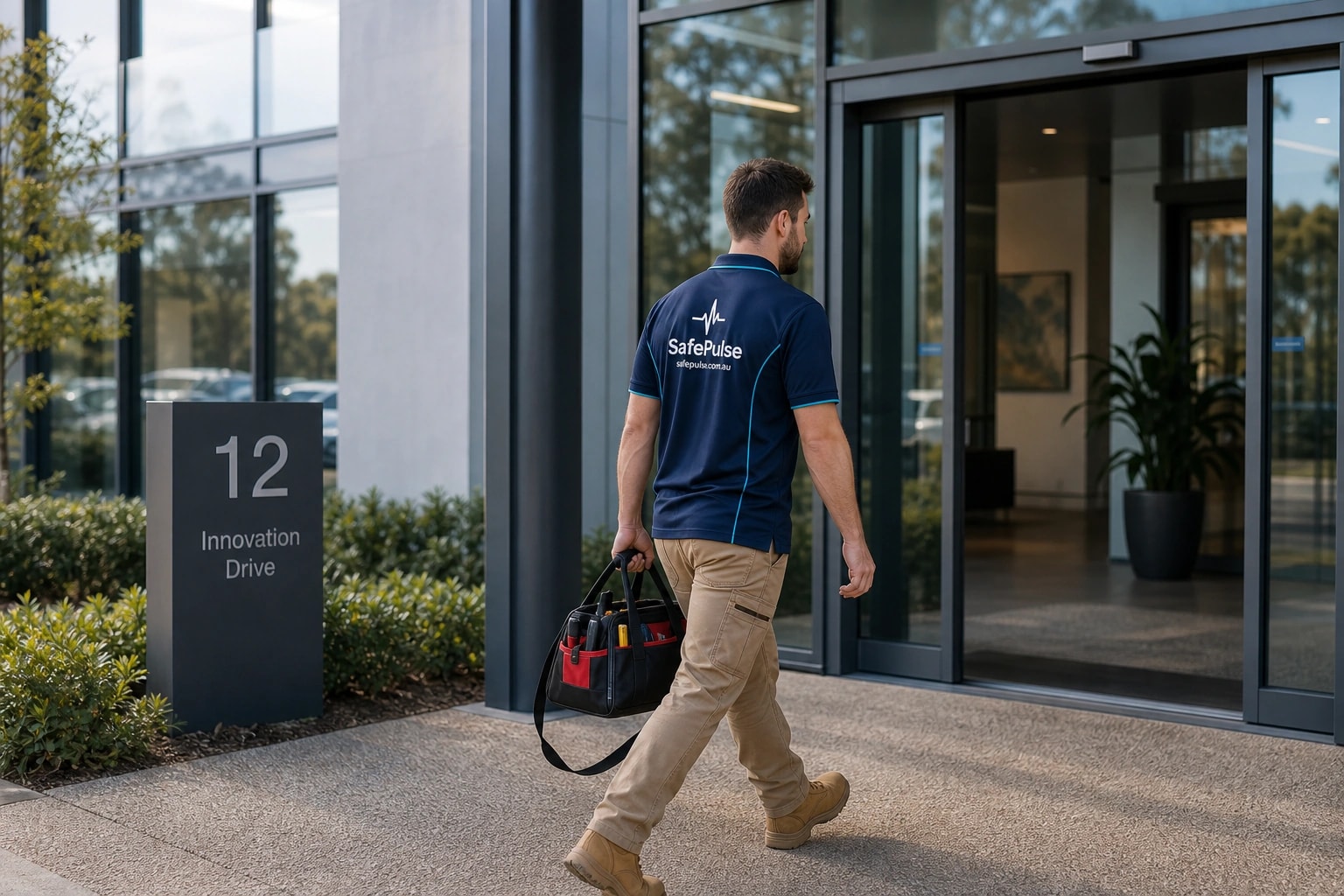
We install and maintain AEDs across South Australia, including school sites, and we handle the parts that are easy to let slide — SA Ambulance registration within the two-week window, compliant signage, and a maintenance plan that keeps pads and batteries in date so the device is ready every term, not just on install day.
Schools sit outside the "commercial purpose" test, so the size scaling doesn’t apply — the general version of that calculation is in how many AEDs your building needs. Once a device is installed, registration with SA Ambulance follows within two weeks. Our South Australian AED compliance overview has the full duty set.
If you’re working out how many devices your campus actually needs, or you just want to confirm your one device ticks every box under the Act, we’re happy to walk the site with you. You can reach us at safepulse.com.au.