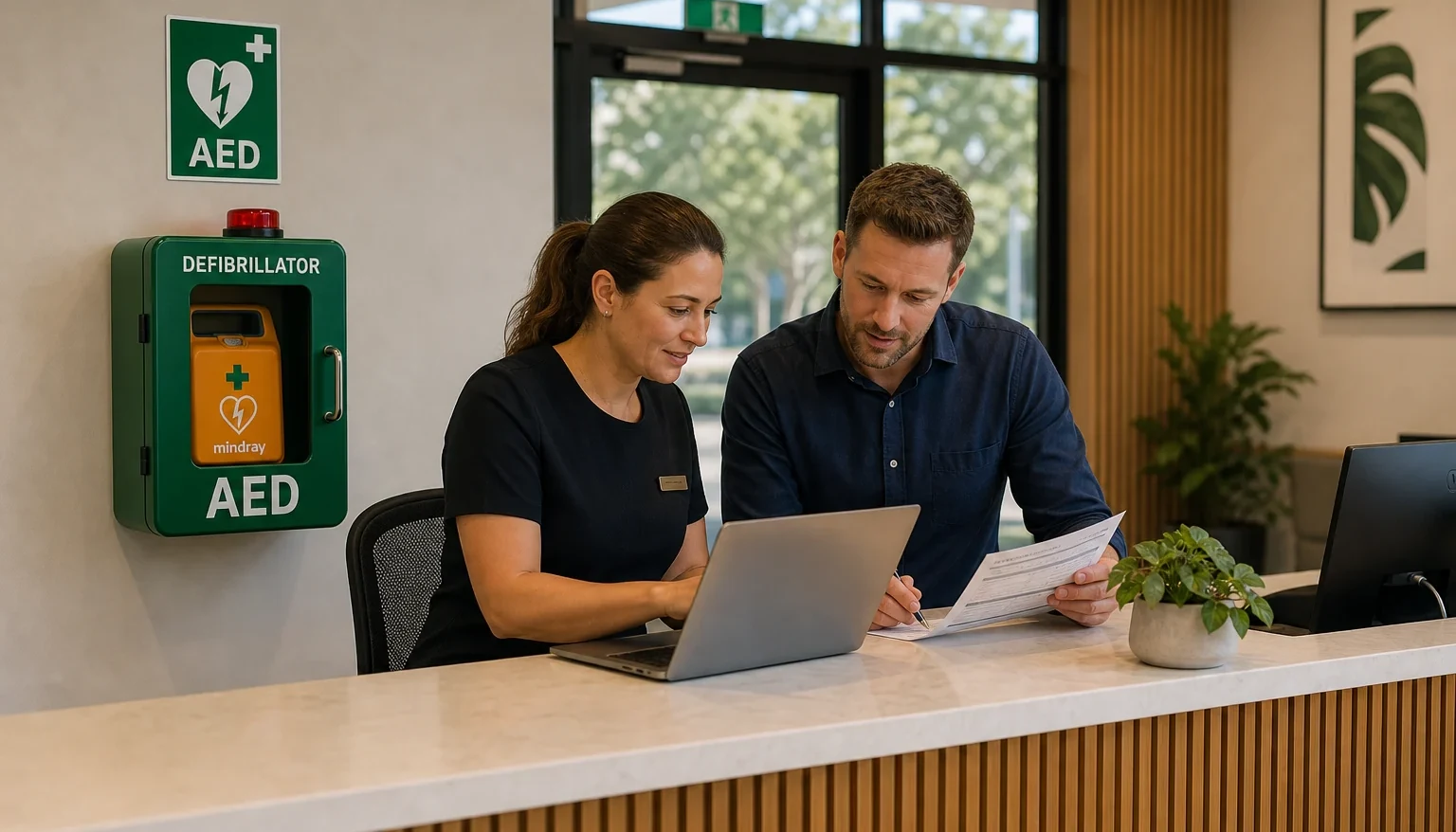
You’ve installed your AED. The cabinet’s on the wall, the signage is up, your staff know where it is. There’s one more step the South Australian legislation requires, and it’s the one people most often miss: registering the device with the SA Ambulance Service. You’ve got two weeks from installation to do it, and unlike every other state, it’s not optional here.
This is the practical walkthrough — what the register is, why it exists, exactly what you need to have on hand, and how to keep it current after the fact.
Why registration matters (and why SA is different)
When someone calls Triple Zero (000) during a cardiac arrest, the call-taker can direct the caller to the nearest registered AED. That only works if the device is on the register. An AED bolted to a wall that nobody knows about doesn’t help the person who needs it three minutes from now.
Every state encourages AED registration. South Australia is the only one that requires it by law. Under the Automated External Defibrillators (Public Access) Act 2022 (SA), an in-scope owner must register the device, and failure to register is listed as an offence in the Act alongside failing to install, failing to maintain, and failing to put up signage.
So in SA, registration isn’t a nice-to-have or a best-practice gesture. It’s part of the same legal obligation that put the AED on your wall in the first place. If you’ve done the install to comply with the Act, the registration is the step that finishes the job.
The two-week clock
The Regulations require registration within two weeks of installation. That’s a real deadline, not a guideline. If your AED went up on a Monday, you want it on the register before the Monday two weeks later.
The same two-week window applies to changes. If you later move the device to a different location, or the hours it’s publicly accessible change, you’ve got two weeks to update the register so the information stays accurate. An out-of-date register entry can send a 000 caller to a device that’s no longer there — which is worse than no entry at all.
What you need before you start
Registration is quick if you’ve got the details in front of you. Gather these first:
- The exact location of the AED. Not just the street address — where in the building. “Ground floor, main reception, mounted on the wall left of the front desk.” The more precise, the faster a responder finds it.
- The hours the AED is publicly accessible. If your building is open to the public 8am–6pm weekdays and locked otherwise, that’s what goes on the register. If the device is accessible 24/7 because it’s in an external cabinet, say so. This is one of the two pieces of information the Act specifically requires.
- A contact for the site. So the register holder can reach the responsible person if something needs checking.
- Basic device details. Brand, model, and ideally the pad and battery expiry dates, so the register reflects a device that’s actually in service.
Having the accessibility hours sorted before you register is the bit people trip on. Think it through honestly. If the AED is behind a reception desk that’s only staffed during business hours, it isn’t publicly accessible at 11pm, and the register should reflect that.
How to register, step by step
-
Confirm the install is complete. The device is mounted in its permanent location, signage is up, and the pads and battery are in date. Register the device as it actually sits, not as you plan it to be.
-
Pull together the details above. Location, accessibility hours, site contact, device details.
-
Contact the SA Ambulance Service AED Register. Registration enquiries go to health.saasaedregister@sa.gov.au. This is the channel for getting a device onto the register and for asking any questions about the process. The SA Ambulance Service site at saambulance.com.au is the broader starting point.
-
Submit the device details. Provide the location, the publicly accessible hours, and the device and contact information.
-
Keep the confirmation. File the registration confirmation with your building compliance records, alongside your install documentation and signage photos. If an authorised officer ever asks, you want the paper trail in one place.
-
Diarise the review. Set a reminder to check the entry annually, and a standing note to update it within two weeks if anything changes.
Keeping the register current
The register isn’t a set-and-forget. The Act’s two-week update rule covers two common situations:
- You move the AED. A fit-out, a reception redesign, a tenancy change — anything that relocates the device means the register entry is now wrong. Update it.
- The accessibility hours change. You extend trading hours, you move to 24/7 access, you close a public entrance. Each of these changes what a 000 caller can actually reach. Update it.
It’s also worth re-checking the entry whenever you replace pads or the battery, simply because you’re already touching the device and its records. A device that’s “registered” but has expired pads isn’t really ready, and the register is a good prompt to keep the whole package current.
Multiple devices and multiple sites
If your building needs more than one AED — which it does once the publicly accessible floor area passes 1,200 m² on commercial land, with the count scaling up from there — each device is a separate register entry. The register is tracking physical devices and their locations, so a building with three AEDs has three entries, each with its own precise location and accessibility hours.
The same goes for a portfolio. If you manage several in-scope buildings across South Australia, every device in every building needs to be on the register, and every one carries the two-week clock from its own installation date. It’s worth keeping a single tracking sheet — device, building, location, install date, registration date, pad and battery expiry — so nothing slips through when you’re managing compliance across a number of sites at once.
The admin scales linearly, but it’s not complicated. The trap isn’t difficulty, it’s forgetting one device in one building because the install happened on a different day to the others.
How this fits with the rest of your SA obligations
Registration is one of five things the SA Act asks of an in-scope owner. The full set is worth keeping in view:
- Install a compliant, TGA-approved AED in the right number for your building
- Place it somewhere publicly accessible — not locked behind a key or code
- Sign it, with a sign near the AED and a sign near the building entrance
- Maintain it per the manufacturer’s instructions
- Register it with the SA Ambulance Service within two weeks, and keep that entry current
Get all five right and you’ve discharged the obligation. Registration is the one that’s easiest to overlook because it happens after the visible work is done — but it’s also the one that makes the device findable in an emergency, which is the entire point.
Where SafePulse fits
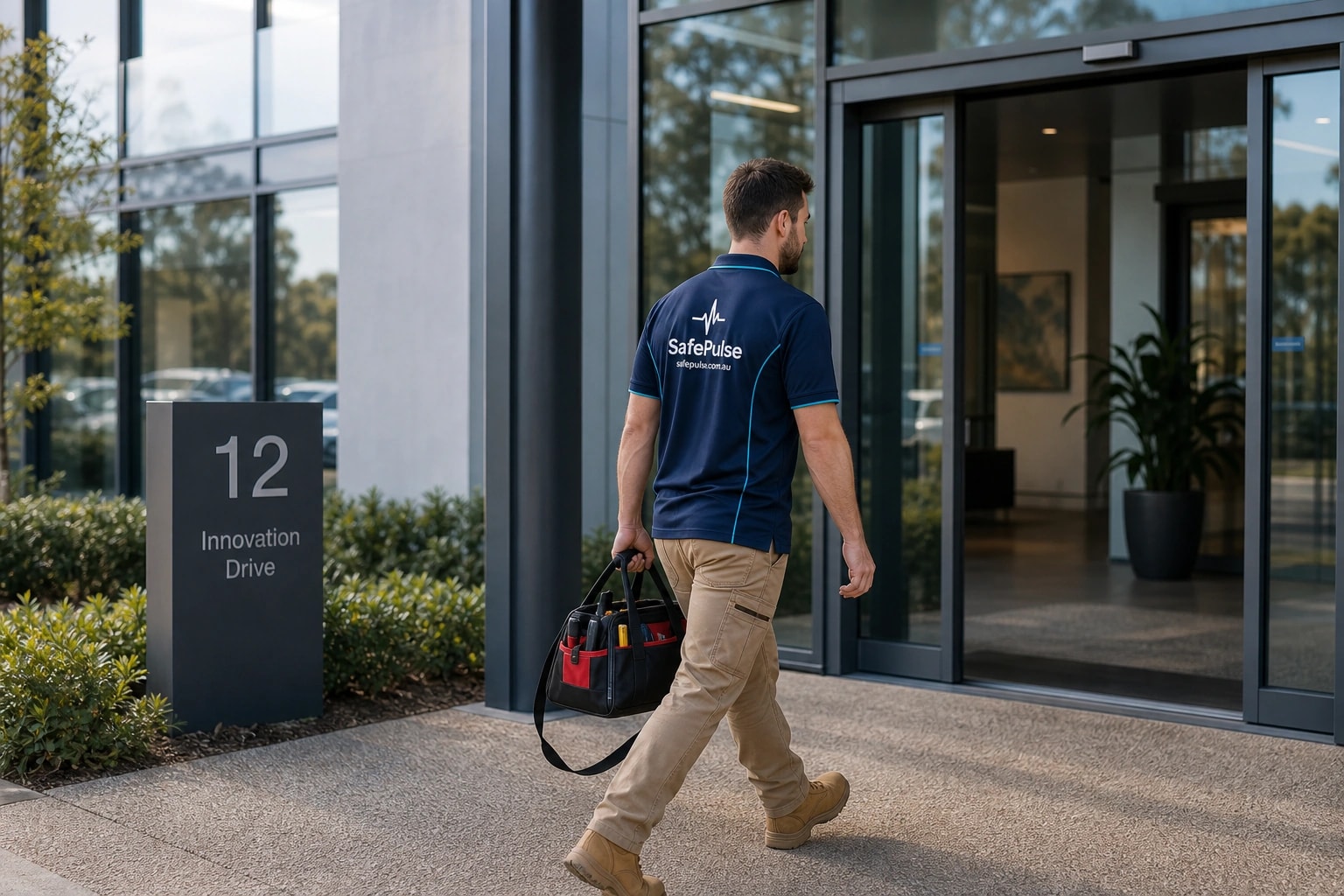
We install AEDs across South Australia, and we handle the SA Ambulance Service registration as part of the install. When our technician finishes mounting and commissioning the device, the registration goes in within the two-week window, with accurate location and accessibility details, and the confirmation lands in your compliance file. You don’t have to chase the deadline yourself.
Registration is one of four things the Act asks of you after the device is on the wall — the others being signage, maintenance, and keeping the register entry current if anything changes. Our South Australian AED compliance overview sets out the full set of duties.
If you’ve installed an AED and you’re not sure whether it’s been registered — or you’ve moved a device and need the entry updated — we can check the status and sort it. Get in touch at safepulse.com.au.