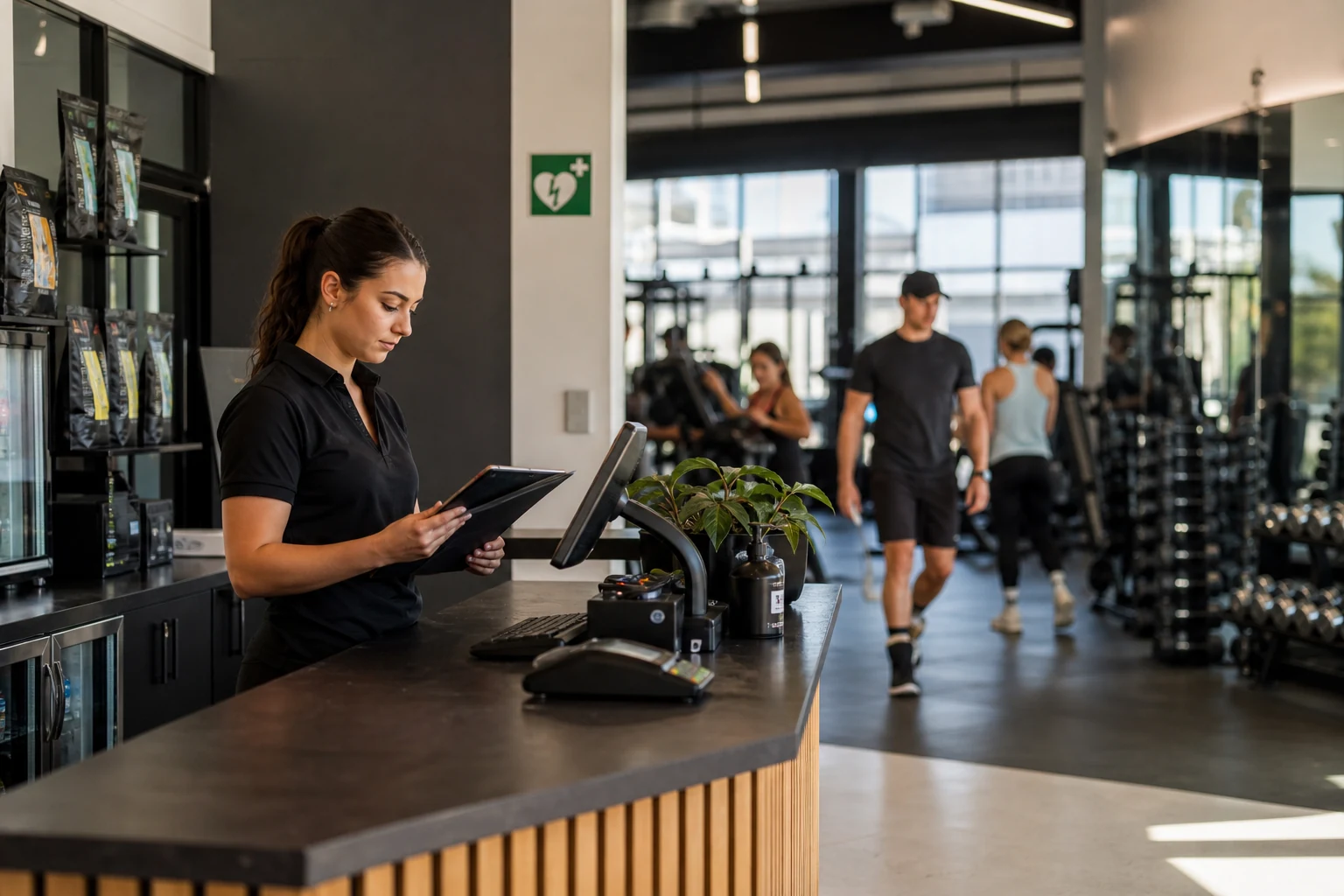
If you run a sporting club or gym in Sydney, the AED question sits in an awkward middle ground. There’s no NSW law that orders you to install one. There’s also no question that physical-exertion settings are exactly where sudden cardiac arrest is most likely to happen, and where the few minutes between collapse and ambulance arrival decide everything.
This article walks through what NSW actually requires of sporting facilities, where the duty-of-care line sits, what the NSW Office of Sport grant has historically funded, and the practical path forward for a Sydney club or gym that’s weighing this up in 2026.
Is an AED legally required in NSW sporting facilities?
No. NSW has no AED-specific legislation in force as of May 2026.
The South Australian Automated External Defibrillators (Public Access) Act 2022 is the only AED Act in Australia that’s currently in force. NSW has had three private member’s Bills introduced by Gareth Ward MP (Member for Kiama) since March 2024 — all three have lapsed without passage. Nothing equivalent has been tabled by the NSW Government.
That means a Sydney sporting club or gym in 2026 is not breaking any AED-specific law if it doesn’t have one. But that’s not quite the end of the story.
Where the duty-of-care line actually sits
Every NSW sporting club, gym and fitness facility is a workplace under the Work Health and Safety Act 2011 (NSW). That makes it a Person Conducting a Business or Undertaking (PCBU) with a duty to provide first aid equipment, facilities and trained responders proportionate to the risks of the work being done.
The relevant document is the First Aid in the Workplace Code of Practice, commenced in NSW on 31 January 2020. On AEDs specifically, the Code says (paraphrased):
“An AED may be provided to reduce the risk of fatality from cardiac arrest where there is a risk to your workers from electrocution, a delay in the arrival of ambulance services or where there are large numbers of members of the public at your workplace.”
That’s discretionary language — “may be provided” — informed by a risk assessment. Three flagged trigger factors:
- Risk of electrocution to workers
- Likely delay in ambulance arrival
- Large numbers of members of the public
For Sydney sporting clubs and gyms, the third trigger is the obvious one. Many also tick the second — a Sunday afternoon at a community oval out past Hornsby, or a 5am Pilates class on a public holiday, sit in the window where ambulance response times stretch.
The Code stops short of mandating AEDs for sporting facilities. But the same Code is what a court would point to if a club faced a negligence claim after a cardiac arrest fatality where a reasonable AED placement could have changed the outcome. That’s the duty of care framing — not “must”, but a clear “should consider”.
The cardiac arrest case in physical exertion settings
The case for AEDs in sporting facilities isn’t a legal one. It’s a clinical one, and it’s strong.
Sudden cardiac arrest in apparently healthy people happens disproportionately during or after exertion. The window where defibrillation can restore a normal rhythm is roughly 3–5 minutes from collapse. Australian metropolitan ambulance response times are typically longer than that — even in central Sydney, average urgent response is around 8–11 minutes, and that’s an average not a guarantee.
A defibrillator placed at the front desk of a gym can be on a collapsed member’s chest inside 90 seconds. The same call placed without an on-site AED is waiting on the ambulance.
This is why peak bodies like the Heart Foundation, Royal Life Saving and the Australian Resuscitation Council have been recommending AEDs for high-exertion settings for over a decade — well before SA’s Act, well before NSW’s lapsed Bills. The clinical recommendation hasn’t changed.
The NSW Office of Sport Grant Program
The NSW Government runs a Local Sport Defibrillator Grant Program through the Office of Sport. The program is a useful piece of the funding picture for community clubs.
What it offers
Grants of up to $3,000 toward an approved AED package — covering the unit, cabinet, signage, training and registration components from a panel of approved providers.
Who’s eligible
Eligible sporting clubs and facility owners. The 2025/26 round prioritised applicants in the five most-disadvantaged SEIFA-ranked postcodes or those demonstrating financial hardship. Applicants are limited to one grant per financial year.
Status as of May 2026
The 2025/26 round closed on 1 December 2025 (or earlier if funds were exhausted). The 2026/27 round had not been announced at the time of writing. The Office of Sport publishes round details at sport.nsw.gov.au/grants — worth bookmarking and checking in mid-2026.
The program has now placed more than 2,400 defibrillators across NSW sport and recreation facilities since it began. Whether your club fits the eligibility criteria for the next round depends on the criteria of that round. The grant is competitive, not guaranteed.
What this means in practice
If your club is in scope for the next round, the grant covers a meaningful portion of an AED package — not all of it for a smart-monitored unit, but a useful subsidy. If your club doesn’t fit eligibility (commercial gyms, larger metro clubs that don’t meet hardship criteria), the grant probably isn’t the funding answer.
A few clubs we’ve worked with in NSW have used the grant as the trigger to install one AED, then funded a second unit themselves once they saw what the first one was doing. The grant’s value is partly the device, partly the permission it gives a committee to commit.
What about commercial gyms?
Commercial gyms — the F45s, Anytime Fitnesses, Goodlifes, boutique Pilates and reformer studios — sit outside the Office of Sport grant pool. They’re businesses, not community sporting clubs.
For commercial gyms, the analysis is straightforward:
- The WHS duty of care applies fully (workers + members of the public)
- All three Code of Practice trigger factors are arguably present (large number of public, possible ambulance delay outside core hours, occasional electrical equipment risk in plant rooms)
- The clinical case in exertion settings is at its strongest
Most franchise networks now require AEDs as a brand standard regardless of state law. If you’re an independent operator and you don’t have one, that’s the most defensible single-investment first aid upgrade you can make. A standard install is a few hours of work and lasts 8 years on a properly maintained unit.
Comparison: NSW sporting facility vs SA sporting facility
| Factor | NSW | South Australia |
|---|---|---|
| AED legally required at sporting facilities? | No (WHS duty applies) | Yes — sporting facilities are designated under the Act |
| Government grant program | Yes — Office of Sport (~$3,000) | No state grant; Act compels installation |
| Mandatory registration | No (voluntary GoodSAM) | Yes — SAAS register, within 2 weeks |
| Mandatory signage | No | Yes |
| Mandatory maintenance | No | Yes — per manufacturer |
For a multi-state sporting club operator, the practical conclusion is to align to the higher standard (SA’s). That gets you compliant in SA, ahead of any future NSW law, and squarely within best practice everywhere.
Choosing the right AED for a sporting facility
A few things to think about beyond just the unit itself:
- TGA approval. Required basis. Reputable Australian suppliers are TGA-approved by default.
- IP rating. Outdoor sporting facilities need IP55 or above. A sideline AED at a soccer club running in winter sits in real weather.
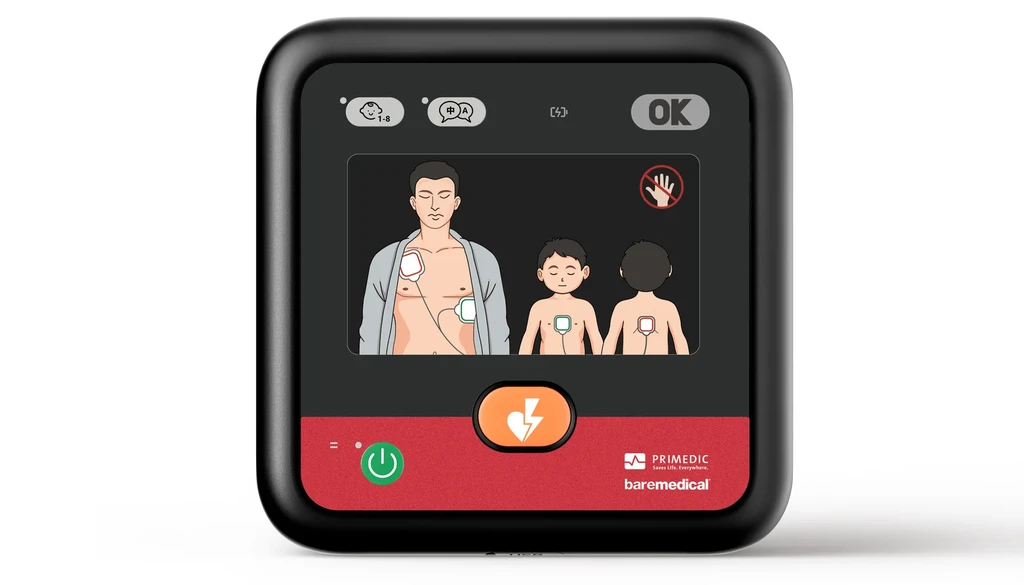
- Adult and paediatric capability. Junior clubs see kids on the field. Look for units with selectable paediatric mode or paediatric pads — most modern AEDs handle both.
- Daily self-test and monitoring. A fully automatic AED running daily self-checks is the floor. Smart-monitored units that report status to a dashboard add another layer — useful for clubs with limited volunteer capacity to physically check the unit.
- Cabinet placement. Front desk, gym entrance, near the change rooms — somewhere visible and unobstructed. Not behind a locked door, not in a manager’s office. The AED has to be reachable in seconds.
Registration with NSW Ambulance via GoodSAM
Voluntary, free, and worth doing. Once installed, register the AED via the GoodSAM Responder app so Triple Zero call takers and nearby trained volunteers can locate it during an emergency.
For a single AED, register through the app. For multiple units (a club with several locations, or a gym chain), email the registry directly: AMBULANCE-AEDRegistry@health.nsw.gov.au.
This isn’t a legal requirement in NSW, but it’s the right thing to do. A registered AED is the only AED a 000 caller can be told about.
Practical approach for a Sydney club or gym
If your committee or management has decided this is the year to sort it:
- Run a quick risk assessment. Document your worst-case scenario — Saturday afternoon match, full grandstand, oldest player. That document is what the AED responds to.
- Decide funding. Office of Sport grant if eligible (community sport, 2026/27 round when announced). Club levies, sponsor partnership, or simple capital purchase otherwise.
- Pick the unit. TGA-approved, appropriate IP rating, paediatric-capable if you have juniors. Don’t optimise for cheapest — optimise for the unit that’ll still be working in year seven.
- Pick the placement. Front desk, foyer, or fixed wall mount near the main pedestrian entry. Visible, signposted, unlocked.
- Train responders. Optional under the law, but a 90-minute CPR/AED session for committee members and senior staff makes the device much more likely to get used confidently.
- Register on GoodSAM. Free, ten minutes.
- Schedule maintenance. Pads typically two-yearly, battery four-yearly, plus monthly visual checks.
Where SafePulse fits
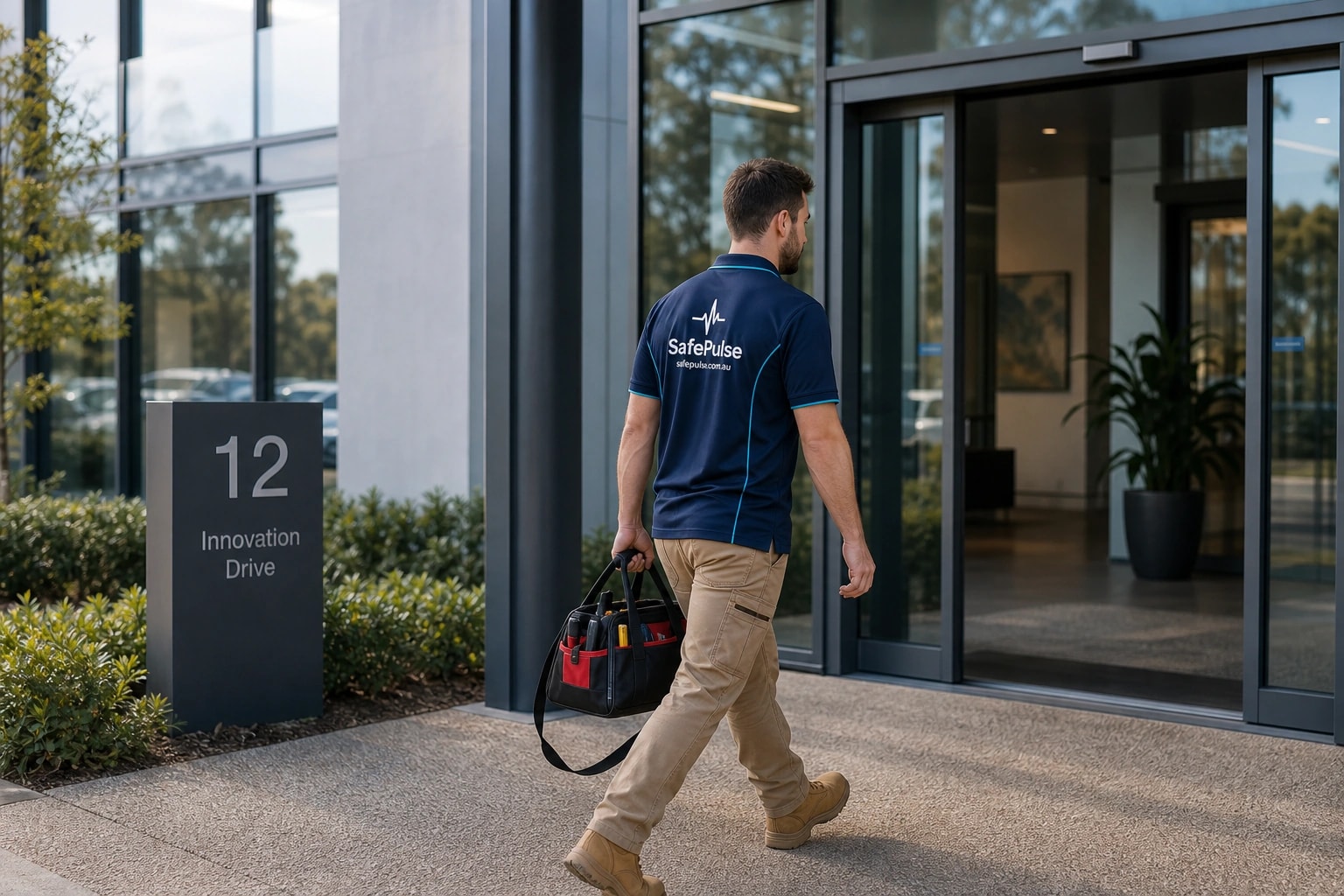
We install AEDs for sporting clubs, gyms and commercial facilities across NSW. We’re SA-based but our standard install package and 8-year warranty travel — same TGA-approved Mindray units, same SafePulse technicians on the ground, same ongoing maintenance plan. We’ve worked with clubs that received the Office of Sport grant and clubs that funded themselves. The install itself is straightforward and compliance-led.
If you’re scoping this for your club or facility, take a look at our NSW AED solutions for what’s involved, or send us your details and we’ll come back with a scope.
Where to from here
NSW law isn’t going to make this decision for you any time soon. Three lapsed Bills suggest the political appetite for an SA-style mandate isn’t there yet. That doesn’t change the cardiac arrest case, the WHS duty of care framing, or the clinical reality that the AED is the only intervention proven to bring someone back from ventricular fibrillation in the field.
Schools can access the same grant program on similar terms — see AEDs in NSW schools. For the duty that applies regardless of funding, there’s NSW WHS duty of care: first aid and AED obligations, and our New South Wales AED page.
For Sydney sporting clubs and gyms, this is a discretionary decision that’s increasingly hard to defend leaving on the “we’ll get to it” pile. Either the funding is there through the grant, or the case stands on its own.