Victorian sporting clubs sit at the intersection of three angles on AEDs: a real cardiac risk in physical exertion settings, an OHS duty under the Occupational Health and Safety Act 2004 (Vic), and a small but genuine grants pathway through Sport and Recreation Victoria. None of those make an AED legally mandatory at a Victorian sporting club. Taken together, they make the case for installing one harder to argue against.
This is the practical guide. It covers what the law actually requires (and doesn’t), where the grants stand right now, and what good operational practice looks like for clubs and community sport associations across the state.
Is an AED legally required at a Victorian sporting club?
No. Victoria has no AED-specific legislation in force as of May 2026, and no Bill has ever been tabled in the Victorian Parliament on the topic. There’s no Victorian equivalent to South Australia’s Automated External Defibrillators (Public Access) Act 2022.
What does apply is the Occupational Health and Safety Act 2004 (Vic) and the Occupational Health and Safety Regulations 2017 (Vic), under which an employer must ensure — so far as is reasonably practicable — that the workplace is safe and without risks to health. Section 21(2)(d) of the OHS Act specifically requires employers to provide adequate facilities for the welfare of employees.
The detail on first aid sits in WorkSafe Victoria’s Compliance Code: First Aid in the Workplace, issued under the OHS Act and effective from 4 November 2021. The Code is the document a WorkSafe Victoria inspector or a court would look at in working out whether an employer has discharged its duty.
What the Code says about AEDs
The 2021 Compliance Code addresses AEDs directly — a change from the 2008 version, which didn’t mention them. The relevant passage (paragraphs 149–152) states employers “should consider whether it is reasonably practicable to have an automated external defibrillator in the workplace as these are not difficult to use and save lives.”
WorkSafe Victoria’s own AED-in-the-workplace guidance reinforces the placement standard:
“AEDs should be installed in well-known, visible and accessible locations. They should not be locked.”
And on registration:
“Registration of AEDs in the workplace with Ambulance Victoria helps reduce the time taken to find an AED in an emergency.”
The language is discretionary throughout — “should consider”, not “must install”. That’s the outer edge of the legal requirement in Victoria.
Where it bites for sporting clubs is the “reasonably practicable” test. A club whose members and visitors include older participants, where exertion is structurally part of the activity, where ambulance response can be slower outside metropolitan Melbourne — the AED question has to be considered, and the answer has to be defensible. Not having considered it at all is the riskier compliance position than installing one.
Why sporting clubs are an obvious fit for the OHS case
Three factors stack in favour of AEDs at sporting clubs even without legislation:
Cardiac risk under exertion. The act of physical exertion can trigger underlying cardiac events. Veterans’ competitions, masters football, social netball, social cricket, golf, lawn bowls, rowing, lap swimming — older and middle-aged participants are common across community sport.
Public-traffic exposure. Clubrooms host functions, presentations, junior development sessions, training nights and weekend competition. The membership base is one population; the visitor base on a typical weekend can be several times larger.
Ambulance response variability. Inner-metro Melbourne response times are tight; outer-metro, regional and remote response times are not. Clubs in regional Victoria sit squarely inside the “delayed ambulance response” framing that WorkSafe Victoria treats as a legitimate trigger for first-aid risk controls.
None of that turns into a “must install” under Victorian law. It turns into a “considered and acted on” position that the club’s committee can document, defend, and live with.
Victorian grants — what’s actually open
Victoria doesn’t have a dedicated single-purpose AED grant program like NSW’s Local Sport Defibrillator Grant Program. What it has are several Sport and Recreation Victoria streams where AEDs are eligible items.
Sporting Club Grants Program
- Administered by: Sport and Recreation Victoria
- Grant amount: Up to $1,000 under Category 1 (safety, injury prevention, and first-aid equipment)
- AED eligible: Yes — explicitly listed as first-aid equipment
- Eligibility: Not-for-profit, non-government sporting organisations (incorporated associations, companies limited by guarantee, or indigenous corporations) delivering sport or active recreation programs
- 2025–26 round: Closed 7 April 2026; outcomes expected June 2026
Important: The 2025–26 round is closed. The 2026–27 round had not been announced as of this draft. Clubs should monitor sport.vic.gov.au/funding for the next round opening.
Emergency Sporting Equipment Grant Program
- Administered by: Sport and Recreation Victoria
- Grant amount: Up to $2,000
- AED eligible: Yes — defibrillators are explicitly listed as equipment for “immediate attention to injury”
- Purpose: Reactive grant for urgent safety equipment needs following an incident occurring between 1 June 2025 and 31 May 2026
- Note: This is an incident-triggered program. Clubs apply after an incident where safety equipment proved inadequate or insufficient.
Country Football and Netball Program
- Maximum grant: Up to $250,000 to Local Government Authorities (LGAs) in rural, regional, and outer metropolitan Victoria
- AED pathway: Clubs in eligible LGAs can request AED inclusion as part of a broader facility upgrade. The application is made by the LGA, not the club directly.
- Best for: Larger facility upgrades where an AED is one line item among many.
The honest picture
The combined Victorian grants picture for sporting clubs is materially smaller than NSW’s $4,000-per-AED dedicated program. Most Victorian clubs paying for their first AED out of the Sporting Club Grants Program at $1,000 will be carrying the balance from their own funds. The Emergency Sporting Equipment Grant Program is incident-triggered — useful, but reactive.
For clubs that don’t fit the grant timing or eligibility, the practical answer is to budget the install through standard club funds. A SafePulse Basic Install at $2,490 per unit, GST free, with maintenance from $40/month, sits inside most community sporting club budgets — particularly when shared across a season’s membership levy. The Smart Install at $2,790 per unit, GST free, with maintenance from $25/month, adds 24/7 monitoring through AED Alert 2.0, which suits clubs where day-to-day inspection responsibility is ambiguous or shared.
Placement and operational standards for sporting clubs
Standard AED operational practice for Victorian sporting clubs:
- TGA approved. Required as a baseline. All AEDs sold by reputable Australian suppliers meet this.
- IP rating. IP55 or above for any outdoor or semi-outdoor placement — pavilion exteriors, ground-side cabinets, change-room verandas. Indoor clubroom placements have less environmental exposure but still need protection from spilled drinks, condensation, and incidental knocks.
- Two sets of pads, shears, razor in the cabinet.
- Adult and paediatric pad compatibility where junior development is part of the club’s activities.
Placement specifics:
- Visible. Clubroom entry, foyer, or the main social area. Not in a committee office, not behind the bar where staff have to be asked.
- Accessible. Not locked. The Code says explicitly: AEDs “should not be locked.”
- Mount height. 1.2 to 1.4 m from the floor for cabinet placement.
- Signage. Near the AED and prominently visible from the main entry. For larger clubs with multiple buildings, signage from each entry pointing to the AED’s location.
- Multi-building clubs. A single AED in the clubrooms may not cover an outfield pavilion or detached gym. The relevant design constraint is the cardiac response window — under five minutes from collapse to first shock for materially improved survival.
Registration with Ambulance Victoria
Ambulance Victoria runs a free, voluntary AED registry integrated with the GoodSAM platform. Registration is at registermyaed.ambulance.vic.gov.au, or via the form at goodsamapp.org/AV_AED. The owner provides device details, expiry dates and accessibility information. Registered AEDs become visible to:
- Triple Zero (000) call takers, who can direct callers to the nearest AED
- GoodSAM Trusted Responders, who receive real-time alerts including AED locations when a nearby cardiac arrest is reported
Registration is not legally required in Victoria — but it’s the difference between an AED that’s on the wall and an AED that an emergency dispatcher knows about. Worth doing.
Ambulance Victoria’s post-use support is also worth knowing about: device recommissioning is arranged after any public-emergency use, patient data is downloaded and provided to the treating hospital, the device is returned within 72 hours, and free replacement electrode pads are provided after use in a public emergency.
Training and maintenance
AEDs don’t require trained users — the device’s voice and visual prompts guide anyone through the steps. Training builds confidence to act, which is the more important question at a sporting club, where the first responder will likely be a teammate, parent, club volunteer or coach rather than a paramedic.
Maintenance is the failure mode that catches most community AEDs. Flat batteries. Expired pads. A unit moved between buildings and never put back. The Code requires maintenance per manufacturer specifications, and WorkSafe Victoria flags maintenance lapses as a Code compliance issue.
For a community sporting club with volunteer staffing and shared inspection responsibility, a monitored unit removes most of the under-maintenance risk. SafePulse’s Smart Install package includes daily status reporting, live tamper alerts and GPS theft tracking — relevant for clubs where the cabinet is in a publicly accessible location overnight or across the off-season.
Comparison: VIC sporting club AED picture vs SA and NSW
| Factor | South Australia | New South Wales | Victoria |
|---|---|---|---|
| AED Act in force | Yes (Act 2022) | No (three Bills lapsed) | No (no Bill ever tabled) |
| Sporting facilities required to have AEDs | Yes (designated facility, at least one) | No (voluntary) | No (voluntary) |
| Dedicated sport AED grant | No (Act compels it) | Yes (Local Sport Defibrillator Grant Program) | No — multiple eligible streams, none dedicated |
| Maximum grant amount per AED | N/A | $4,000 | $1,000 (Sporting Club Grants); $2,000 (Emergency Sporting Equipment) |
| OHS / WHS duty applies | Yes | Yes | Yes (OHS Act 2004) |
| Code of Practice addresses AEDs | N/A (Act covers it) | SafeWork NSW (Jan 2020) | WorkSafe Vic Compliance Code (Nov 2021) |
| Registry platform | SAAS register (mandatory) | GoodSAM via NSW Ambulance | GoodSAM via Ambulance Victoria |
The funding pathway in Victoria is the weakest of the three. The legal pathway is also the weakest — but the OHS duty under the 2004 Act and the 2021 Compliance Code still creates a defensible “we considered and acted” expectation. The same Code-driven AED triggers apply: exertion-linked cardiac risk, ambulance delay outside the inner metro, and public-traffic exposure on competition days.
Practical approach for Victorian sporting clubs
- Document the OHS risk assessment. Apply the three trigger factors from the Compliance Code — electrocution risk (relevant if the club has plant or pump rooms), delayed ambulance response, and large numbers of members of the public. Most community clubs hit at least two.
- Check current grant rounds. sport.vic.gov.au/funding — Sporting Club Grants (closed 2025–26, monitor for 2026–27), Emergency Sporting Equipment (incident-triggered). LGA partnership for Country Football and Netball Program if the club is in an eligible LGA.
- Budget the balance. Most clubs will need to carry some or all of the install cost. SafePulse Basic Install at $2,490 GST free, Smart Install at $2,790 GST free, maintenance from $25–40/month.
- TGA-approved unit, IP55+, mounted 1.2–1.4 m from floor. Visible clubroom or pavilion location. Not locked.
- Signage near the AED and from main entry points. Multi-building clubs need signage from each building.
- Register with Ambulance Victoria via GoodSAM. Free and voluntary.
- Set up the maintenance schedule. A monitored package removes the volunteer-inspection failure mode.
- Provide CPR/AED training to committee, coaches, and key volunteers. Builds confidence; doesn’t change the device’s usability.
Where SafePulse fits
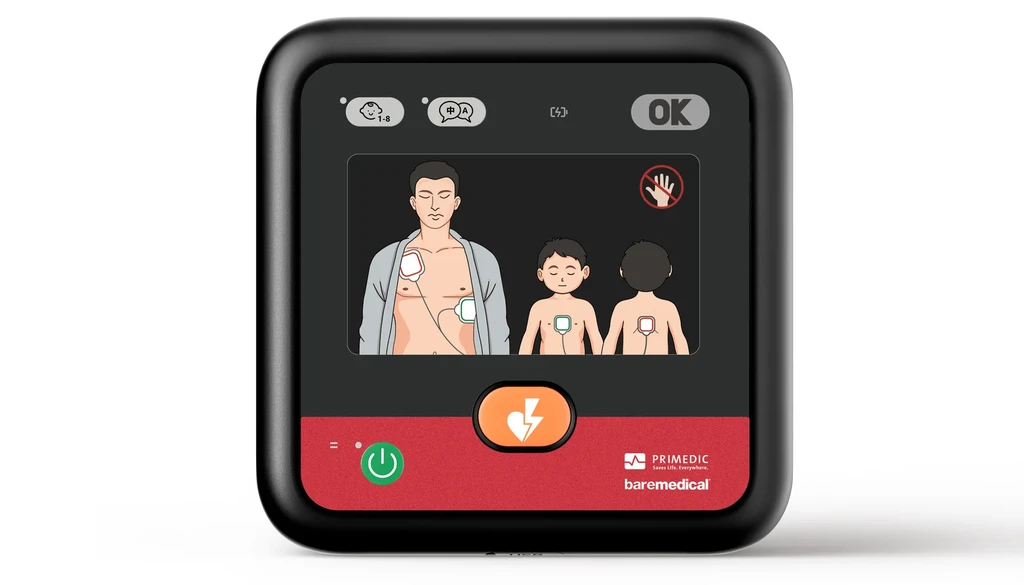
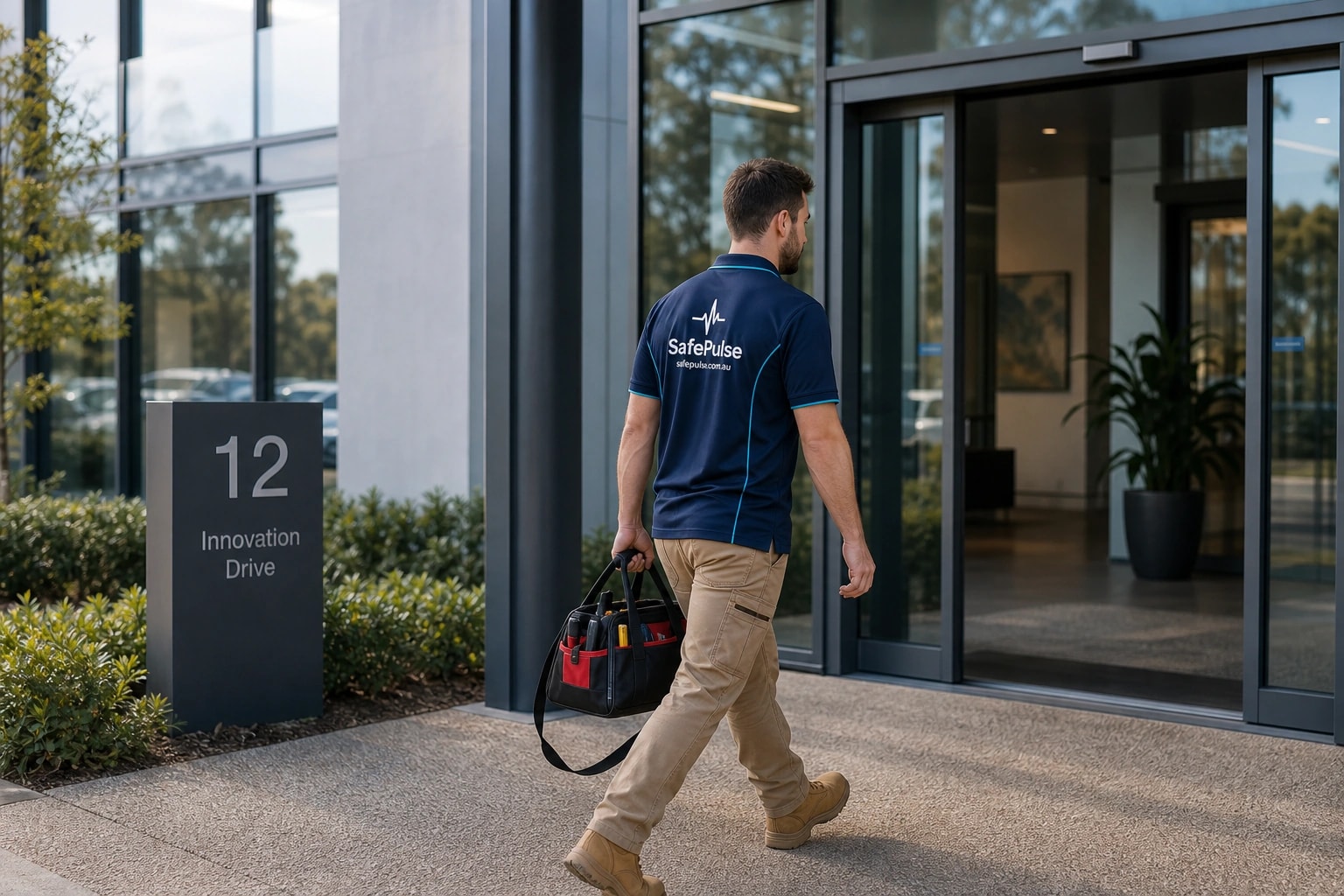
We install AEDs at sporting clubs, community pavilions and recreation venues across Victoria. Each install is a TGA-approved Mindray AED, IP-rated cabinet, signage, mounting and registration with Ambulance Victoria via GoodSAM, with an 8-year warranty and a maintenance plan. The Smart package adds AED Alert 2.0 monitoring — daily status reporting, tamper alerts, GPS theft tracking — which fits community clubs where day-to-day inspection responsibility is ambiguous.
If you’re scoping AED provision for a Victorian club or association, see our Victoria AED solutions or send us the club details and we’ll come back with a scope.
The bottom line
Victorian sporting clubs aren’t legally required to have an AED. The Compliance Code’s discretionary “should consider” framing, combined with the genuine cardiac and ambulance-response risk profile of community sport, means the OHS-defensible position is to have considered the question, acted on it where reasonably practicable, and documented the decision either way.
The grants pathway is real but modest — $1,000 from Sporting Club Grants, $2,000 from the Emergency Sporting Equipment program — and timing-dependent. For clubs whose round timing or eligibility doesn’t fit, budgeting the install through club funds remains the straightforward path, with a 24/7 monitored unit removing the maintenance risk that catches most community AEDs out.
Grant rounds open and close, but the underlying obligation doesn’t change — it’s the OHS duty in Victorian OHS duty of care, read with the WorkSafe Victoria Compliance Code. Our Victorian AED page has more on the state position.
Verify current grant rounds at sport.vic.gov.au/funding before relying on a specific program. Programs open and close annually, and the 2025–26 picture won’t be the 2026–27 picture.