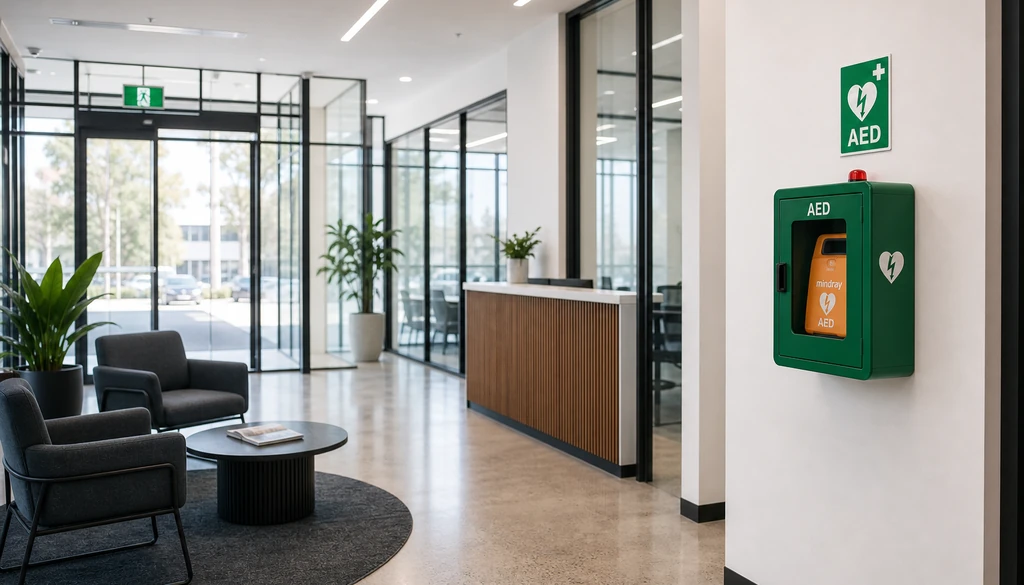
A busy Friday night in a Canberra club, a packed function room in Civic, a brewery taproom in Fyshwick on a long weekend — these are rooms full of people, often later in the evening, frequently with a crowd that skews a bit older and a few drinks in. No ACT law says you need a defibrillator in any of them. But the work health and safety duty you already carry points fairly clearly toward having one, and the reasons are worth laying out plainly for anyone running a licensed venue in the Territory.
First, the honest legal position
The ACT has no AED-specific legislation. There’s no Act requiring defibrillators in commercial buildings, hospitality venues or anywhere else, and there’s no Bill currently before the Legislative Assembly proposing one. The closest the Territory has come was a 2022 motion calling for mandatory AEDs in government schools, workplaces and buses — and the government amended it to strip the mandate out, committing only to “support” greater availability. So nobody is going to fine your pub for not having a device, and we won’t pretend the law says otherwise.
What you do have is a duty under the Work Health and Safety Act 2011 (ACT). As a person conducting a business or undertaking, you must ensure — so far as is reasonably practicable — the health and safety of your workers and other people at your venue, which plainly includes your patrons. The first-aid detail of that duty lives in the ACT’s First Aid in the Workplace Code of Practice, which adopts the national model code.
The Code treats an AED as discretionary, to be considered where particular triggers are present. For a licensed venue, two of those triggers line up neatly.
The trigger that fits: large numbers of people
The model code points toward an AED where there are large numbers of workers or members of the public at the workplace. A licensed venue is, almost by definition, a high-occupancy room. A club, a pub on a match day, a function centre at capacity, a live-music venue — these aren’t quiet offices with a dozen staff. They’re some of the highest-footfall private settings in any suburb.
More people in a room simply means a higher chance that, on any given night, one of them has a cardiac event. It’s not about your venue being dangerous. It’s arithmetic — and the Code names exactly this circumstance.
The trigger that quietly matters more: response time
The second trigger is a likely delay in ambulance arrival, and it’s worth thinking about in the specific context of how venues operate.
Cardiac arrest is a stopwatch problem. Survival drops by roughly ten percent for every minute that passes without defibrillation. A metropolitan ambulance might reach you in eight or ten minutes on a good run — already a long time for a stopped heart. But licensed venues do their busiest trade at night and on weekends, when road conditions, demand on the ambulance service and the simple logistics of getting a crew through a crowded venue to the right person all stretch that window. By the time paramedics are at the patient’s side, the outcome has often already been decided.
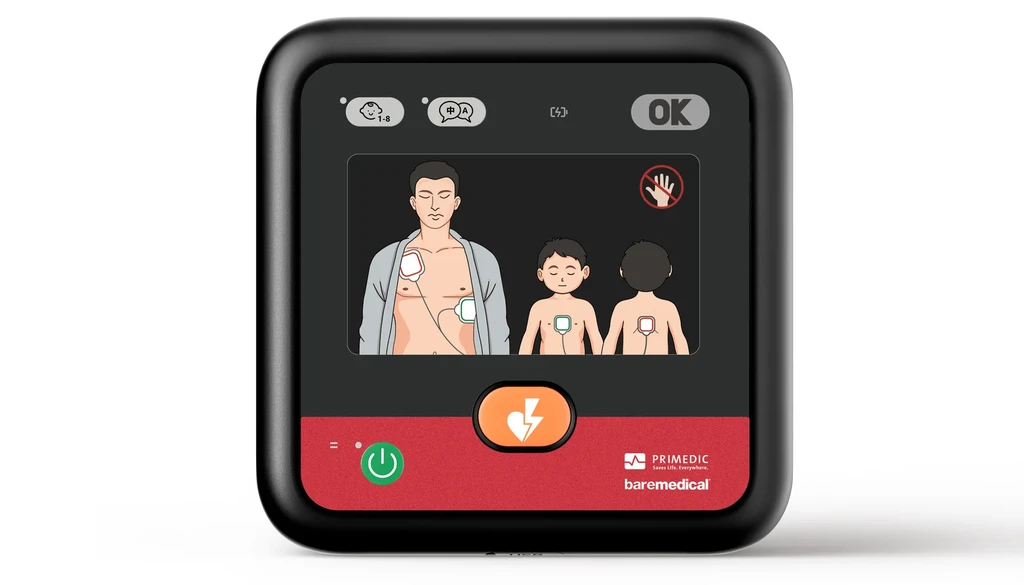
An on-site AED is the thing that fills that gap. Used in the first few minutes by a staff member or a bystander — and modern devices talk you through it, step by step, no training required — it’s frequently the only intervention that changes the result before the ambulance arrives.
There’s also the demographic point, made without melodrama: licensed venues serve an adult crowd, often skewing older, in a setting involving alcohol and sometimes exertion on a dance floor. That’s not a judgement, it’s a risk profile, and it’s a reason the case for a device is stronger here than in a lot of low-occupancy workplaces.
Canberra has a specific gap worth knowing about
Here’s an ACT-specific reason this matters more, not less. The Territory is comparatively under-served by publicly accessible AEDs, and it doesn’t run a government AED registry the way South Australia or NSW do. AED location data in the ACT is held by St John Ambulance ACT — through the national St John register and First Responder app — and by the volunteer-driven StreetBeat program putting outdoor cabinets into Canberra suburbs.
That patchwork is improving, but it means you can’t assume there’s a public device nearby when you need one. For a venue, that strengthens the case for having your own rather than relying on something down the street that may or may not exist and may or may not be accessible at 11pm.
Doing it properly
If you put a device in, a few things make the difference between an AED that saves a life and one that’s just decoration:
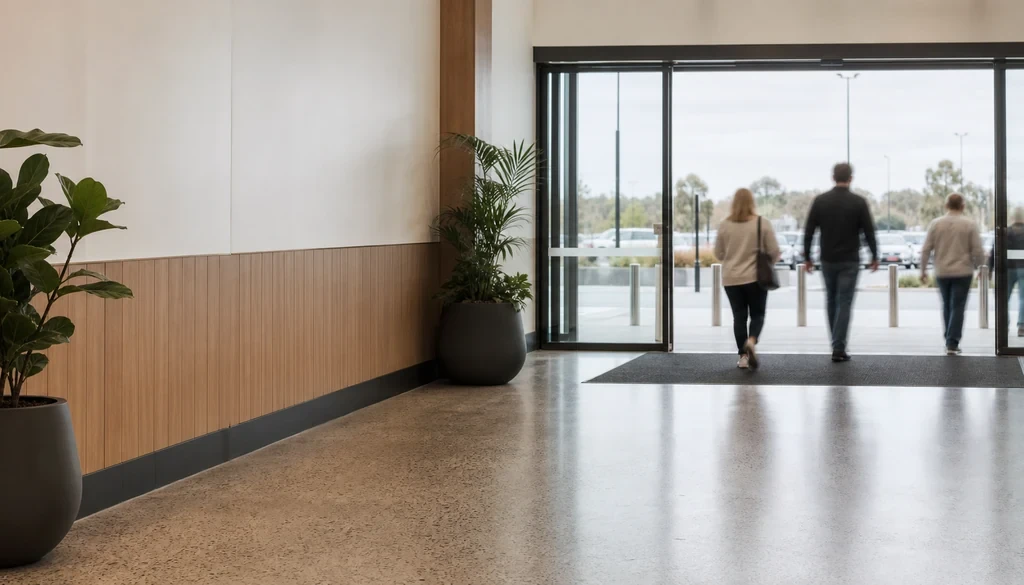
- Place it where staff can grab it fast. Front-of-house near the bar or the main entrance is usually best — visible, central, and staffed. The Code says keep it in a clearly visible, accessible location and out of extreme temperatures. A cabinet at about 1.2 to 1.4 m off the floor is the standard.
- Don’t lock it away. A device in a locked office that the duty manager has the only key to isn’t accessible when it counts. A cabinet is fine; a locked cupboard defeats the purpose.
- Make sure your team knows it exists and where it is. Put it in your venue’s emergency procedure and your staff induction. On a busy night, the person who reaches it might be a glassie or a security guard, not the manager.
- Register it on the St John ACT register through the First Responder app. It’s free and voluntary. One honest note for the ACT specifically: unlike SA, there isn’t a confirmed link between that register and the Territory’s Triple Zero call-taking, so treat registration as making your device findable through the St John app and community responders — a real benefit — rather than something that guarantees an emergency operator will direct callers to it.
- Keep it rescue-ready. Pads and batteries expire. A device that’s sat on the wall for three years with dead pads is worse than none, because everyone assumes it works.
A practical approach for venue operators
- Write down the risk assessment. High occupancy plus late-night response time is your reasonably-practicable case in two lines.
- Buy a TGA-approved device and a suitable cabinet.
- Place it front-of-house, visible, unlocked, at 1.2–1.4 m.
- Train the floor lightly and put it in your emergency plan so any staff member can act.
- Register it with St John ACT and put it on a maintenance plan.
No ACT law requires any of this. The work health and safety duty you already carry, applied honestly to a room full of people late on a Saturday, gets you to the same place.
Where SafePulse fits
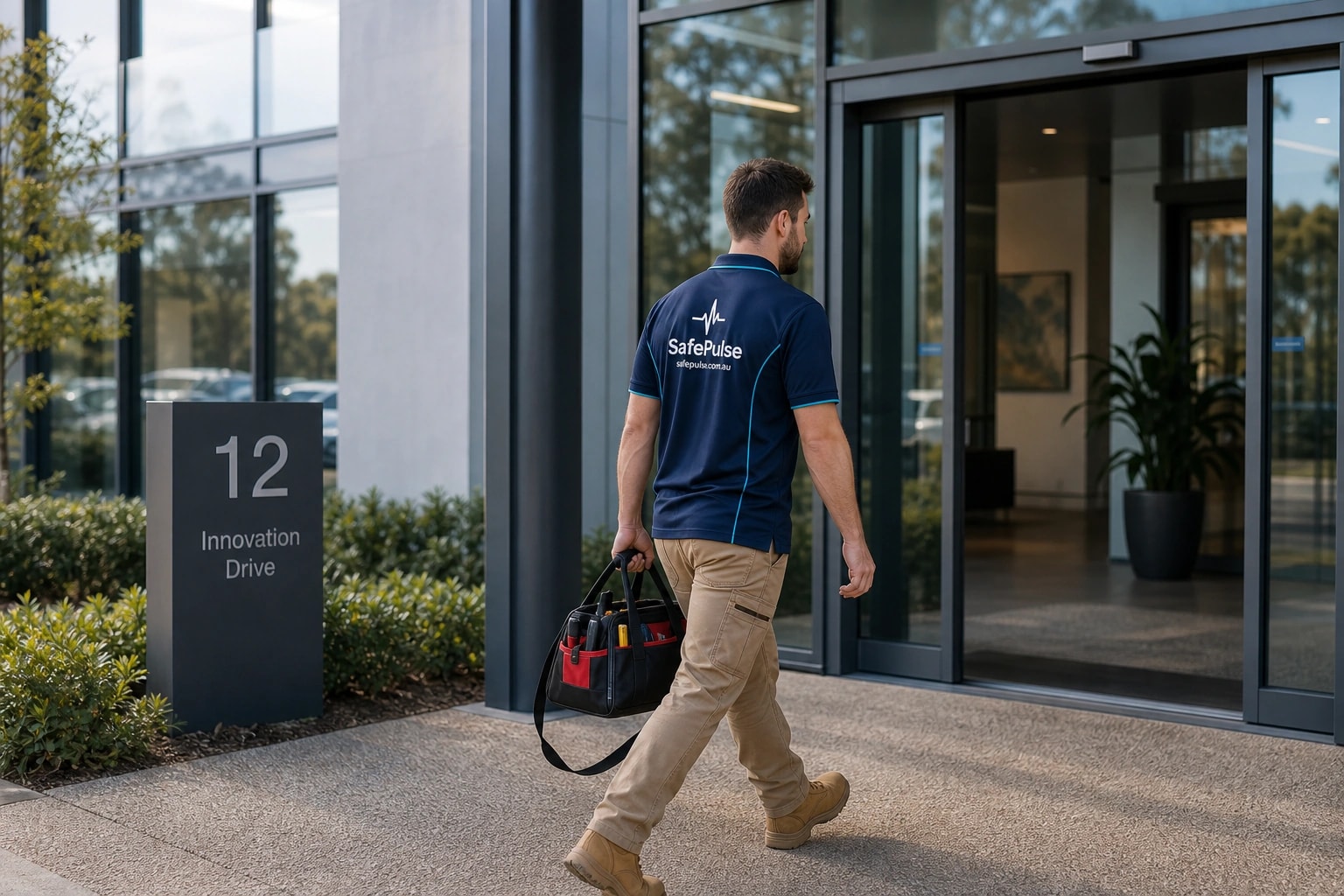
We supply, install and maintain AEDs for ACT businesses, including the hospitality and licensed-venue settings where the high-occupancy and response-time case is strongest. We’ll help you choose the right device, place it where your team can reach it across a busy floor, register it with St John ACT, and keep it maintained so it’s ready when it’s needed.
The territory-wide legal position is in do ACT commercial buildings need an AED in 2026, and the reason getting a device found is harder here than interstate is covered in the ACT has no government AED registry. More at our ACT AED page.
If you run a Canberra pub, club, bar or function venue and want the AED question handled properly, start with our ACT AED page. For the legal baseline, whether ACT commercial buildings need an AED in 2026 sets out the WHS framing, and the ACT’s lack of a government AED registry explains the registration picture in more detail.