The Australian Capital Territory is small by population but unusually dense in commercial floor space. Around 40% of the ACT workforce is Commonwealth-employed, sitting under federal Comcare regulation rather than territory law. The rest sits under the ACT WHS framework. For property managers across Civic, Barton, Belconnen, Tuggeranong and Gungahlin, the AED question runs through both regulatory regimes — and neither one mandates installation.
This piece walks through what ACT and federal law actually require, the local political history (which is more interesting than most states), and the practical path forward in 2026.
Is an AED legally required in ACT commercial buildings?
No. The ACT has no AED-specific legislation in force as of May 2026.
A search of the ACT Legislation Register and the ACT Legislative Assembly’s Summary of Bills (Eleventh Assembly, No 17, 27 March 2026) returns no Acts, regulations or pending Bills containing “defibrillator” or “AED”. The closest the Assembly has come is a 2022 motion that didn’t survive in its original form (more on that below). The federal Work Health and Safety Act 2011 (Cth), which covers Commonwealth workplaces in the ACT, also doesn’t mandate AED installation.
That means an ACT commercial building in 2026 is not breaking any specific AED law if it doesn’t have one. The general WHS duty still applies — and that’s where the substantive obligation sits.
The 2022 Castley motion: the closest the ACT has come
This is worth knowing because it’s the most concrete signal of where ACT politics sits on AEDs.
On 23 March 2022, Shadow Health Minister Leanne Castley MLA (Liberal) moved a motion in the ACT Legislative Assembly calling for AEDs to be made mandatory in ACT government schools, workplaces and on ACTION buses. The motion was supported in principle by the Australian Red Cross, the Heart Foundation and St John Ambulance ACT.
The Labor–Greens government, through then-Health Minister Rachel Stephen-Smith, amended the motion to strip out the mandate. The amended motion committed only to “support government schools and agencies to increase the availability of defibrillators in their facilities.” Per Hansard:
“the government … is not supportive of the legislation mandate for AEDs in all government facilities.”
Adrian Watts, then CEO of St John Ambulance ACT, called the amended motion “a really soft acceptance” and said it omitted “the funding of defibrillators in every public building operated by the ACT Government” (Canberra Weekly, 24 March 2022).
No subsequent ACT Bill has reached the Assembly to mandate AEDs. The political appetite for an SA-style mandate isn’t there. That’s worth understanding when assessing whether to wait for legislation or act on the WHS case as it stands today.
What ACT workplaces are required to do
The Work Health and Safety Act 2011 (ACT) and the Work Health and Safety Regulation 2011 (ACT) set out the general duty: a PCBU must provide first aid equipment and ensure each worker has access to it, provide first aid facilities where appropriate, and ensure adequate trained first aiders.
The practical content of that duty is set out in the Work Health and Safety (First Aid in the Workplace Code of Practice) Approval 2020, notified on 7 September 2020 and commencing 8 September 2020. The ACT Code is the Safe Work Australia model code, adopted as a notifiable instrument under section 274 of the WHS Act.
The Code treats AEDs as discretionary, not mandatory. In substance, it states an AED may be considered where there is:
- A risk of electrocution to workers
- A likely delay in ambulance response
- Large numbers of workers or members of the public present at the workplace
The model code further states AEDs:
- Should be located in clearly visible, accessible areas
- Should not be exposed to extreme temperatures
- Should be maintained per the manufacturer’s specifications
Failure to install an AED isn’t, in itself, an offence under WHS law in the ACT. Failure to discharge the broader first aid duty could be — but that depends on facts and a workplace risk assessment, not a specific AED rule.
Commonwealth workplaces: a real Canberra-specific issue
This is the most important point for ACT property managers. Roughly 40% of the ACT workforce is employed by the Commonwealth or ACT public sectors. Commonwealth public service workplaces — APS agencies, Commonwealth statutory authorities — are regulated by the Work Health and Safety Act 2011 (Cth), administered by Comcare, not WorkSafe ACT.
Comcare’s published first aid guidance recommends AED training and accessibility, with explicit advice that an AED be readily accessible — “not locked in a cupboard or in a person’s office.” But Comcare doesn’t mandate AED installation in Commonwealth buildings. There’s no Commonwealth equivalent of the SA Act.
For an ACT landlord leasing to Commonwealth tenants, the practical position is:
- The WHS duty applies (under both the Cth and ACT WHS Acts depending on the regime)
- Neither regime mandates an AED specifically
- But the landlord still has obligations as a PCBU to the people in the building’s common areas
If you manage a multi-tenant office tower with mixed Commonwealth and private tenants, the AED in the foyer is often the cleanest answer — it covers the shared duty without depending on which tenant’s regulatory regime applies.
ACT Ambulance and AED registration: a genuine gap
Most Australian states have a government or ambulance-service-run AED registry. The ACT doesn’t.
The ACT Ambulance Service (ACTAS), part of the ACT Emergency Services Agency, doesn’t operate an AED registry. The ESA’s public-facing AED page provides instructions on AED use only — it doesn’t reference a registry, doesn’t require registration, and doesn’t link to GoodSAM.
In practice, ACT AED locations are tracked through three non-government channels:
- St John Ambulance Australia AED register at aed.stjohn.org.au — the national St John registry. This is where most ACT AEDs end up registered.
- St John First Responder app — the same data, surfaced as a free public app.
- StreetBeat at streetbeat.life — the publicly-funded outdoor AED program run by St John Ambulance ACT, with cabinets installed across Canberra suburbs (32 deployed and growing as of mid-2025).
Registration is voluntary. There’s no confirmed integration between the St John register and the ACT Triple Zero call-taking system equivalent to SA’s. Worth flagging that explicitly in client conversations: registering doesn’t necessarily mean a 000 caller will be automatically directed to your AED, the way SAAS handles it. Even so, the St John register surfaces your AED to first responders and the public via the app — still worth doing.
ACT funding for community AEDs
There’s no dedicated ACT Government AED grant program equivalent to NSW’s Local Sport Defibrillator Grant Program or SA’s earlier subsidy schemes.
The closest available pathway is the Sport and Recreation Investment Scheme — Club Enhancement Program (up to $20,000 per club). The published eligible expenditure list doesn’t explicitly name AEDs, but does include “training/safety equipment.” An AED would arguably fit under that category, but eligibility isn’t confirmed — community clubs should contact ACT Sport and Recreation directly to confirm before relying on it.
The leading community-AED model in the ACT is St John ACT’s StreetBeat / Defib in Your Community program: community fundraising (target ~$2,500 per AED) to install publicly accessible 24/7 outdoor cabinets across Canberra suburbs. The April 2025 Canberra Times report noted three were installed with funding for 28 more, supported by Bendigo Bank, Service One Mutual and Capital Chemist. The ambition is one AED in each of Canberra’s 121 suburbs.
For an ACT sporting or community club that isn’t going to win one of the limited grant or donation rounds, the practical funding answer is the club committing to fund it themselves — typically through capital fundraising or a specific levy.
Comparison: ACT vs SA vs NSW
| Factor | Australian Capital Territory | South Australia | New South Wales |
|---|---|---|---|
| AED-specific Act in force | No | Yes (Act 2022, regs 2024) | No (three Bills lapsed) |
| AED-specific Bill before parliament | No (only 2022 motion, watered down) | N/A — already law | Yes (Ward MP, lapsed three times) |
| Mandatory installation in commercial buildings | No | Yes (>600 m²) | No |
| Compliance deadline | None | 1 January 2026 | None |
| Government-run AED registry | No (handled by St John ACT, an NGO) | Yes (SAAS register) | Yes (NSW Ambulance / GoodSAM) |
| Triple Zero integration | Not confirmed for ACT | Yes | Yes (via GoodSAM) |
| Mandatory registration | No (voluntary, St John national register) | Yes (SAAS) | No (voluntary, GoodSAM) |
| Mandatory signage | No | Yes | No |
| Mandatory maintenance | No (recommended only) | Yes (per manufacturer) | No |
| Penalties tied to AED | None (general WHS only) | Yes (under the Act) | None |
| Commonwealth workplaces | Comcare-regulated, no mandate | Comcare-regulated, no mandate | Comcare-regulated, no mandate |
| Sport/community AED funding | No dedicated grant; Club Enhancement Program (eligibility unclear); StreetBeat | No (Act compels installation) | Yes (Office of Sport) |
The ACT’s official infrastructure for AEDs is the weakest of the three — no government registry, no dedicated grant, watered-down political commitment. That’s a content opportunity, not a problem to gloss over. Canberra is materially under-served on 24/7 outdoor publicly accessible AEDs, and StreetBeat is filling the gap that government hasn’t.
Where AEDs make most sense in the ACT
Even without legal compulsion, the workplaces and properties where the WHS case is strongest:
- Multi-tenant commercial offices in Civic, Barton, Belconnen, Tuggeranong and Gungahlin
- Body corporates managing Commonwealth-tenanted office buildings
- Sporting clubs and gyms (especially those not picked up by St John donations)
- Aged care, retirement villages and disability services
- Construction sites (electrocution risk)
- Schools and tertiary education — particularly independent and Catholic schools not captured in ACT public school programs (per October 2020 figures, only 38 of 89 ACT public schools had AEDs)
- Industrial workplaces with electrical hazards
- Hospitality venues with significant public throughput
Practical approach for ACT property managers and employers
- Run a documented WHS risk assessment. Apply the three trigger factors. Document the decision either way.
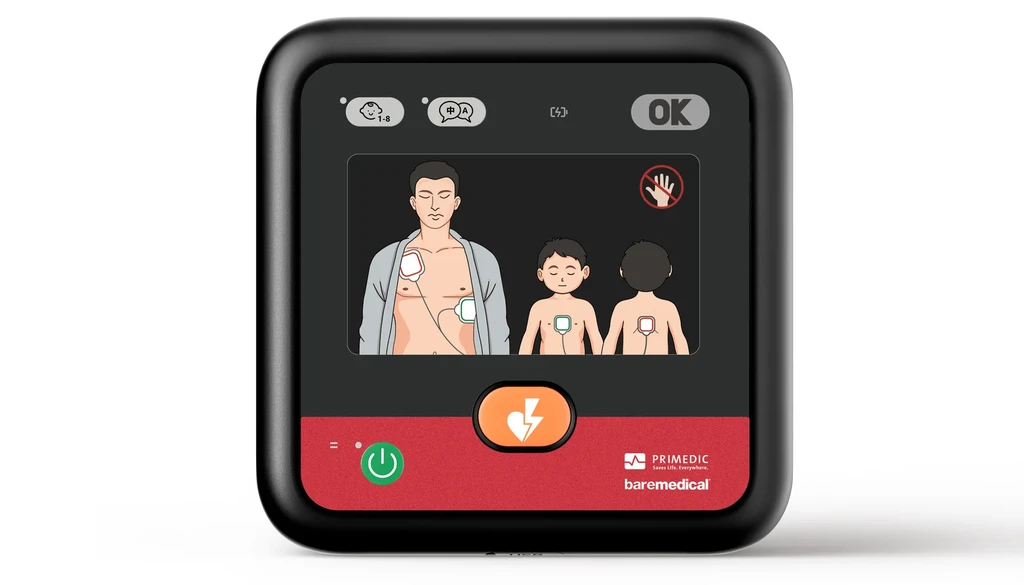
- Pick a TGA-approved unit. Required basis. IP55+ for outdoor settings. Mount 1.2–1.4 m from floor.
- Place it well. Visible, accessible, unlocked. Foyer or staffed reception is the default. The Code explicitly says AEDs shouldn’t be locked or hidden in offices.
- Register with the St John national AED register. Free, ten minutes, via aed.stjohn.org.au. Surfaces your AED through the First Responder app even if not directly tied to ACTAS dispatch.
- Train responders. Optional but materially improves the chance the AED gets used confidently.
- Maintain per manufacturer instructions. Pads typically two-yearly, battery four-yearly, plus monthly self-test verification.
- Document the decision. Whether you install or not, the documented risk assessment is your defence if anything goes wrong.
Where SafePulse fits
We install AEDs in commercial buildings, sporting clubs and workplaces across the ACT. SA-based, but the install package travels — TGA-approved Mindray units, 8-year warranty, signage, registration on the St John national register, and an ongoing maintenance plan included.
If you’re scoping this for an ACT site, see our ACT AED solutions or send us the site details and we’ll come back with a scope.
Where to from here
The ACT’s regulatory position is unlikely to move quickly. The 2022 Castley motion was the test, and the government’s amendment showed the political appetite for a mandate isn’t there. That said, the StreetBeat rollout shows where the genuine activity is — community-funded, 24/7 publicly accessible, suburb-by-suburb.
Two things make the ACT unusual beyond the legal position. There’s no government AED register at all, which the ACT has no government AED registry unpacks, and a large share of the workforce sits under Comcare rather than WorkSafe ACT — covered in AEDs in Commonwealth-government-tenanted buildings. More at our ACT AED page.
For ACT property managers and employers, the question isn’t “are we required to?” — it’s “is the AED on the wall, registered, and ready, and have we documented the decision?” The legal floor is the WHS first aid duty. The practical answer for most workplaces with significant public footfall or vulnerable populations is yes.