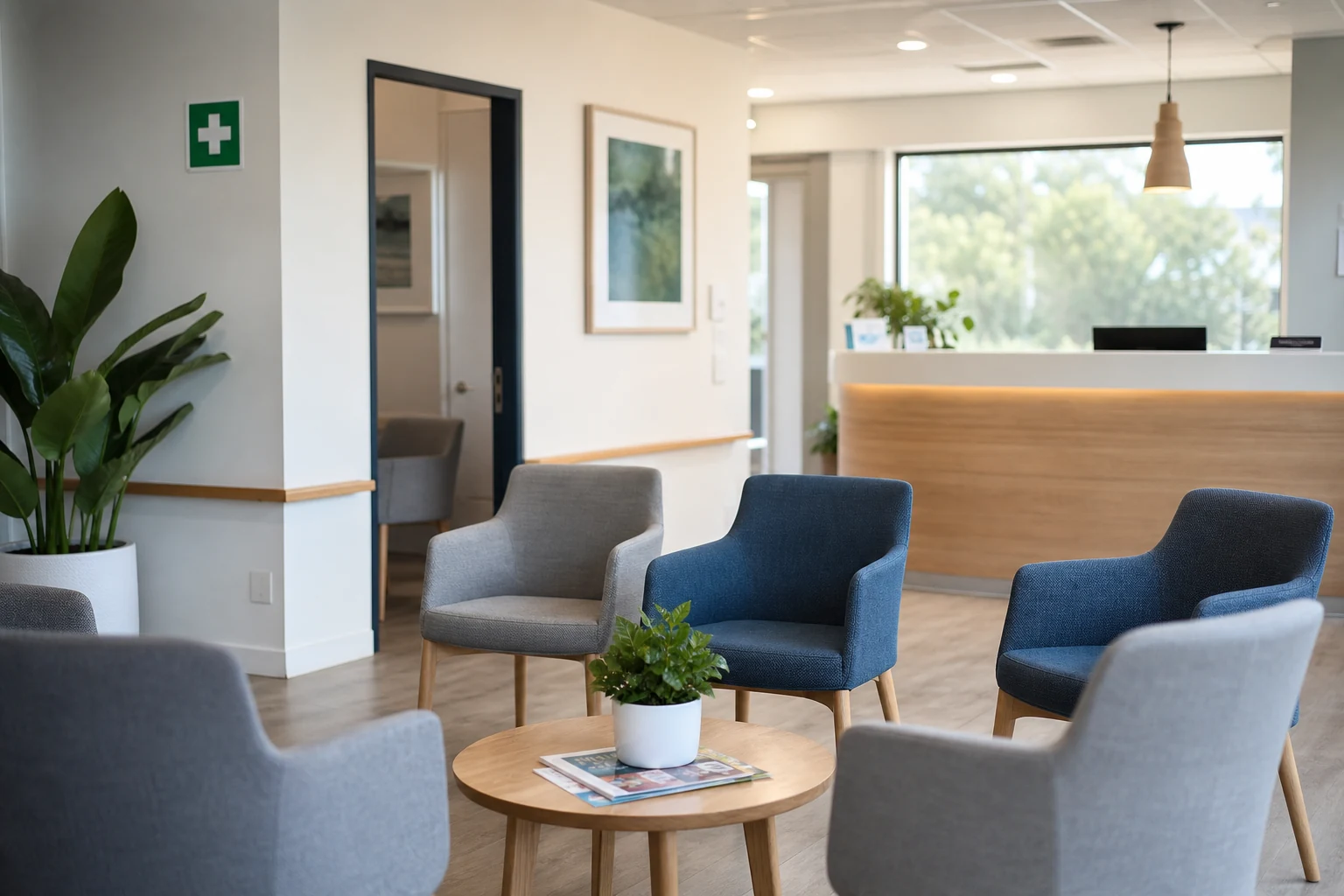
Aged care is the setting where the case for AEDs writes itself. Older residents, higher cardiac arrest rates, a population that’s already on-site 24/7, and a staff base trained to respond. Nothing in the demographic or operational profile argues against having a defibrillator on the wall.
What makes aged care confusing for NSW operators isn’t whether to have one. It’s the regulatory layering. Aged care in Australia is federally regulated under the Aged Care Act 1997. The buildings sit in NSW, under the state’s WHS framework. Operators end up answering to two regimes — and as of May 2026, neither one specifically mandates an AED. The case is built on duty of care, accreditation standards, and clinical judgement, not a single rule with a tick-box.
This piece walks NSW aged care operators through what’s required, what’s strongly recommended, how the two regulatory regimes interact, and how to set up an AED program that holds up under both. It’s written for facility managers and clinical leads — the people who actually make the call.
Where the regulation actually sits
Federal: the Aged Care Act and the Quality Standards
Residential aged care providers in Australia are approved providers under the Aged Care Act 1997 and are regulated by the Aged Care Quality and Safety Commission. The current Quality Standards (the framework providers are accredited against) cover clinical care, personal care, the service environment, and organisational governance.
Critically: the Quality Standards do not specifically require an AED. The Commission’s published guidance treats clinical care and emergency response broadly — adequate clinical staffing, escalation procedures, access to acute care when needed — without naming AEDs as a required item. Where the Commission has commented on AEDs, it has framed them as a reasonable component of emergency clinical response, not a defined requirement.
That doesn’t make AEDs irrelevant to accreditation. It means an AED program forms part of a provider’s broader emergency response capability — something an assessor would look at as evidence under standards covering clinical care, the service environment and risk management, rather than against a stand-alone “AED” criterion.
State: NSW WHS and the SafeWork NSW Code
The building itself, and the staff working in it, sit under the Work Health and Safety Act 2011 (NSW). The First Aid in the Workplace Code of Practice (commenced in NSW 31 January 2020) is the governing instrument. The Code’s wording on AEDs is consistent with the model code:
“An AED may be provided to reduce the risk of fatality from cardiac arrest where there is a risk to your workers from electrocution, a delay in the arrival of ambulance services or where there are large numbers of members of the public at your workplace.”
For an aged care facility, the third trigger — “large numbers of members of the public” — applies in the everyday sense (residents, family visitors, staff, contractors). The Code is discretionary — “may be provided” — not mandatory. Failure to install an AED is not, in itself, an offence under NSW WHS law.
The duty that does bite is the broader one: a PCBU must ensure, so far as is reasonably practicable, the health and safety of workers and others. In a setting where cardiac events are foreseeable on the resident demographic alone, an AED is one of the cheaper, more obvious controls available.
What this means in practice
Two regimes, neither mandating an AED. The case for one in NSW aged care isn’t built on “you must” — it’s built on:
- Clinical risk profile of the resident population
- Reasonable and foreseeable cardiac event rate
- Ambulance response times (especially in regional NSW)
- Duty of care to residents, staff, visitors and contractors
- Accreditation evidence under clinical care and emergency response
The next sections work through how each of those argues for a program, and what the program should look like.
Why the clinical case is strong
Cardiac arrest rates climb sharply with age. The residents of a typical NSW residential aged care facility sit firmly inside the demographic at highest risk. That alone makes a cardiac arrest event more foreseeable than in almost any other commercial setting.
Two qualifiers worth being honest about:
Not every aged care cardiac arrest is shockable. A meaningful share of cardiac arrests in elderly residents present in non-shockable rhythms where defibrillation isn’t indicated. An AED won’t help in every event. What it does is detect the rhythm and only deliver a shock when appropriate — so the question of “will it help this patient” is one the device answers automatically.
An AED doesn’t replace a clinical response. It complements it. The AED gets used in the first few minutes while a registered nurse or paramedic is en route. CPR and pad placement are what the device needs from the responder; the device handles the analysis.
Where the case lands, then, is: cardiac arrest is foreseeable, the device is one of the few interventions that materially shifts survival in shockable arrests, and the cost of having one is small relative to the cost of a preventable death the operator has to defend.
How many AEDs, and where
For a single-building NSW residential aged care facility, the rule of thumb is one AED per wing where the wings are physically separated, plus one in any high-traffic communal area (dining room, activity room, reception).
The driver isn’t a regulation — there isn’t one — it’s response time. The general clinical target is to deliver a shock within three to five minutes of collapse. That sets a practical upper bound on the distance between any resident bed and the nearest AED. A long single corridor with one AED at the nurses’ station will, in practice, leave some beds beyond useful reach. Two AEDs spaced thoughtfully will not.
For multi-storey facilities, one AED per floor is the conservative default. For campus-style facilities (separate residential, day-care and admin buildings), one per building.
Placement principles:
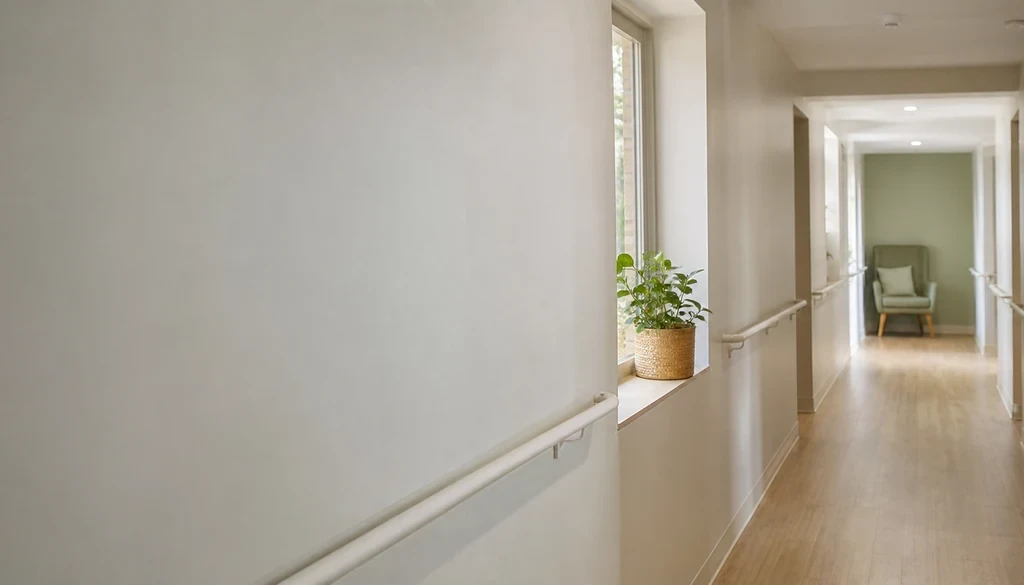
- Highly visible. Nurses’ stations are obvious; main corridors near intersections are better than tucked behind doors.
- Not locked. A locked cabinet that requires a key in an emergency adds minutes that don’t exist. Tamper alerts on a smart-monitored cabinet give visibility without obstructing access.
- Mounted at 1.2–1.4 m from the floor. General AED best practice — reachable for any responder including those with mobility limitations.
- Out of resident reach where vulnerable residents (dementia, BPSD) might disturb the cabinet. This is the one aged-care-specific consideration — a cabinet on a wall in a secure dementia unit needs to weigh accessibility for staff against the risk of resident interference.
Federal regulation: the bits that matter
Two specific federal touchpoints worth flagging for NSW operators:
Accreditation evidence. When the Commission visits, an AED program — device on the wall, signage, maintenance records, staff training, registration with NSW Ambulance — forms part of the evidence base for emergency response capability. Not having one isn’t an automatic finding, but having a well-run program is evidence that supports several standards at once.
Clinical incident reporting. Cardiac arrests, especially with adverse outcomes, are clinical incidents. Documentation of the emergency response — including AED use, time-to-shock and outcome — feeds into the provider’s clinical governance and continuous improvement loop. An AED with a download capability (most modern devices store ECG and event data) makes that documentation cleaner.
Maintenance, training and registration
Three operational pieces sit underneath any aged care AED program:
1. Maintenance. Pads expire (typically every 2–4 years), batteries expire (typically every 4–5 years), and the device runs daily self-tests. A documented maintenance schedule — visual check monthly, full service per manufacturer’s schedule — is what keeps the device functional when it’s called on. Smart-monitored cabinets that report battery and pad status remotely save the visual-check time and give the facility manager a single dashboard view across multiple units.
2. Training. No NSW or federal rule requires AED training, and modern AEDs talk responders through the process. But in aged care, where the responder is going to be a clinical or care staff member who’ll then have to document and report the event, baseline familiarisation training is worth running annually. CPR refreshers usually pair with AED orientation in the same session.
3. Registration. NSW Ambulance maintains the AED public registry, integrated with the GoodSAM Responder app. Registration is voluntary, free, and worth doing — it lets Triple Zero call-takers direct any caller (a visitor, a contractor, a family member) to the nearest device. For a multi-AED aged care facility, the registration process is by email to AMBULANCE-AEDRegistry@health.nsw.gov.au rather than the individual GoodSAM app.
What this looks like at scale
For a larger NSW aged care group — multiple facilities across the state — the same logic scales but the operational overhead grows. Three things help:
1. Standardised device selection. Same brand, same model across all sites. Maintenance, training and pad/battery stock all simplify. The same staff member can move between facilities without having to re-learn a different device.
2. Smart monitoring. Daily status reporting across all units in one view means the central team sees flat batteries, expired pads, tampered cabinets and offline devices without a site visit. For multi-site operators this is where the operating cost falls — one person can manage 30 AEDs more easily than 30 people each managing one.
3. Central registration management. Multi-AED bulk registration with NSW Ambulance is straightforward, but for group operators it’s worth assigning ownership to a single person (typically the group clinical lead or risk manager) so the registry stays accurate as devices are added, moved or replaced.
What to do about it
If you operate a NSW residential aged care facility and don’t have an AED program:
- Walk the building. Where would a resident collapse, and how far is it to the nearest viable AED location? If that distance gives you more than three to five minutes of response time, you need a unit closer.
- Decide the count. One per wing as a default; one per floor for multi-storey; one per building for campuses.
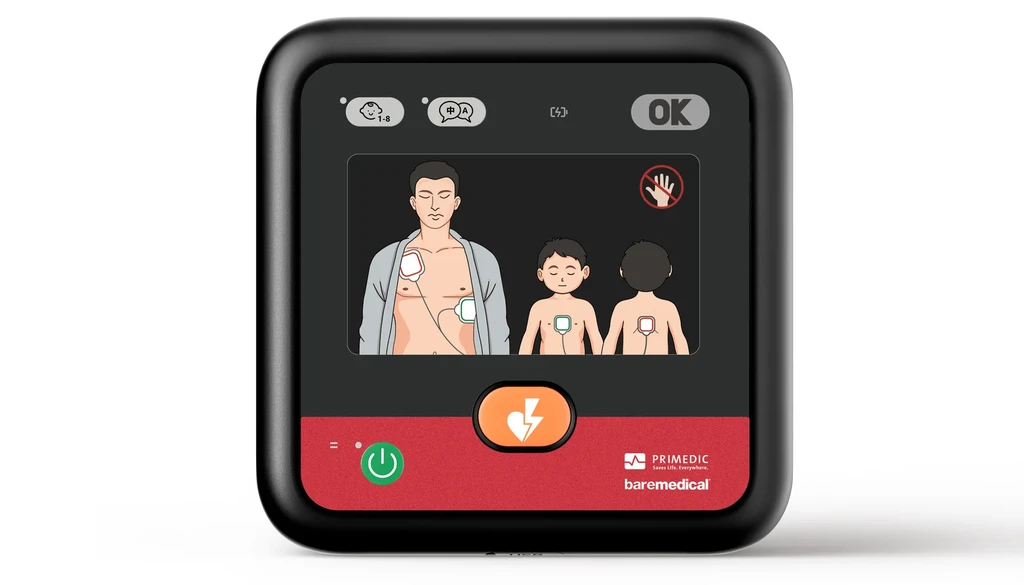
- Pick a device. TGA-approved, IP55+ for any cabinet near outdoor or semi-outdoor access, paediatric capability if you operate any service for grandchildren or visiting children.
- Plan the maintenance. Either an internal monthly check schedule or a managed-service arrangement that does the inspections and replaces pads/batteries on a documented cycle.
- Register with NSW Ambulance. Email the registry for multi-unit setups; individual GoodSAM registration for single sites.
- Train the team. Annual CPR/AED refreshers, slotted into existing mandatory training.
There’s no NSW law requiring a device here, so the case rests on the WHS duty — set out in NSW WHS duty of care: first aid and AED obligations. Registering the device with NSW Ambulance via GoodSAM puts it on the map for Triple Zero callers. Our New South Wales AED page has the wider picture.
SafePulse installs and maintains AED programs for aged care providers across NSW. Our standard package includes the device, the cabinet, signage, NSW Ambulance registration, and a maintenance schedule that documents itself — so the file the Commission sees on accreditation visits is already up to date. If you want a walk-through of what an AED program would look like in your facility, get in touch.