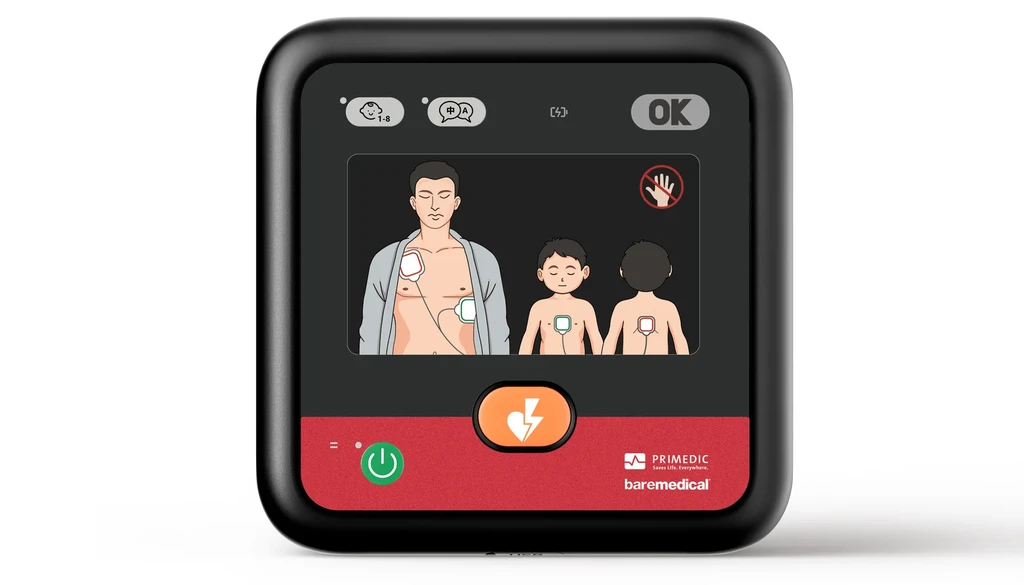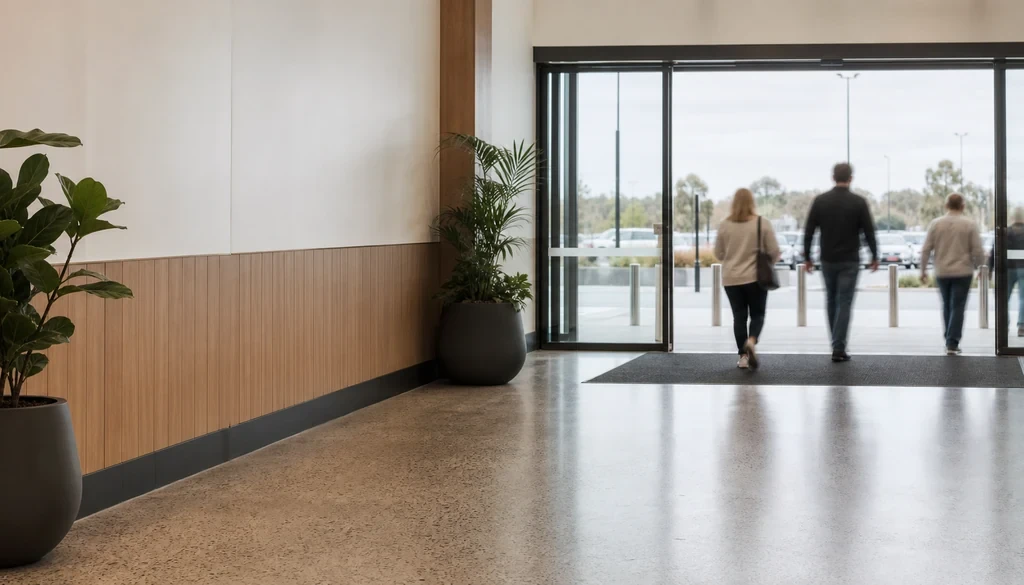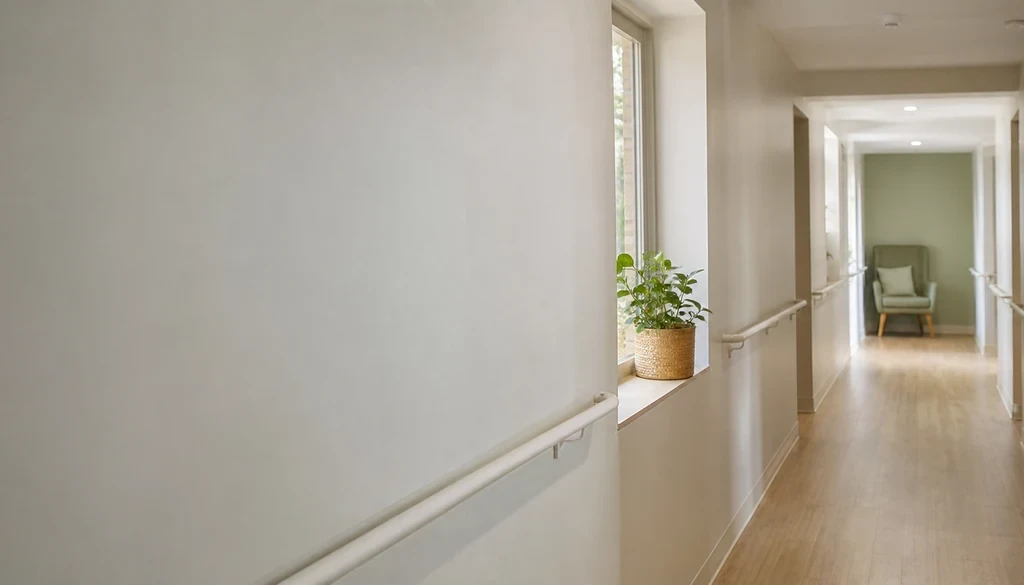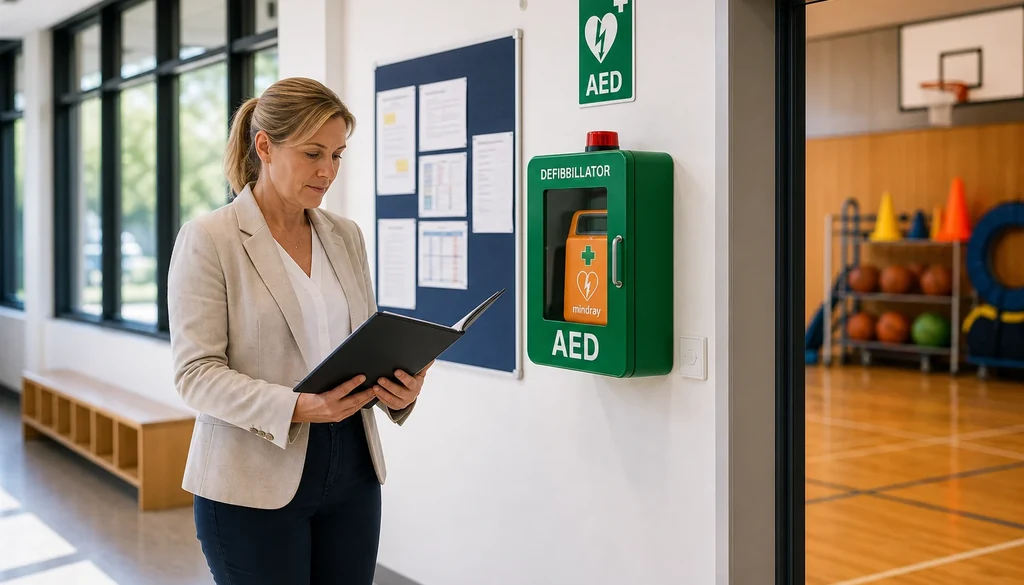
Schools in New South Wales sit in an odd middle ground for AED programs. There’s no legal requirement to have one — unlike South Australia, where schools are designated facilities under the Act — but every other signal points to schools as obvious AED sites. High public foot traffic on weekends, an ageing parent and visitor population, kids running on ovals, P&C events in halls. If you’re a school business manager, principal or P&C committee member, this is the piece that puts it together.
What NSW law actually requires of a school
NSW has no AED-specific legislation in force. The closest you get is the Work Health and Safety Act 2011 (NSW) and the First Aid in the Workplace Code of Practice that commenced 31 January 2020. Under that Code, a Person Conducting a Business or Undertaking (in this case, the school) has a duty to provide adequate first aid equipment and facilities.
The Code names AEDs as an option to consider — not a requirement. It flags three trigger factors that should push a workplace toward AED provision:
- Risk of electrocution to workers — typically not the dominant factor in a school setting, though it applies to maintenance staff and workshop teachers
- Likely delay in ambulance arrival — the dominant factor in rural and regional NSW schools, where response times stretch well beyond metropolitan averages
- Large numbers of members of the public present — the strongest factor for schools. A primary school of 600 students plus staff plus parents at pickup is exactly the foot traffic profile the Code is written for
So while the law doesn’t say “schools must have AEDs”, the Code creates an expectation that a school has at least considered the question, and can show what their decision was based on. That’s the formal regulatory floor. Most of what follows lives above it.
What NSW Health says
NSW Health treats AEDs as recommended best practice. Its guidance page for organisations sets out what it expects an organisation that chooses to install an AED to do:
- Buy a TGA-approved unit
- Specify an IP rating of IP55 or above for outdoor use
- Appoint a responsible person for monitoring and maintenance
- Provide CPR and AED training to staff and volunteers
- Voluntarily register the device with NSW Ambulance via the GoodSAM app
Nothing in here is school-specific. NSW Health doesn’t carve out schools as a category, doesn’t set a school-specific spec, and doesn’t run a school AED program. The Department of Education hasn’t issued a separate AED policy either — schools follow the WHS Code like every other workplace.
The NSW Office of Sport Local Sport Defibrillator Grant
There is, however, money on the table for schools that operate community sporting facilities or hire their grounds out to community sport.
The Local Sport Defibrillator Grant Program, run by the NSW Office of Sport, has been the most accessible AED funding pathway for community sport in NSW for several years. The grant subsidises the cost of an AED package — device, cabinet, signage and training — for eligible organisations.
Schools sit at the edge of this program. The grant is explicitly aimed at sporting clubs and not-for-profit community sporting organisations. A school’s P&C, a school sport club affiliated with a state sporting association, or a community group that hires the school grounds for weekend sport, can sometimes apply where the school itself can’t. The Department of Education isn’t the applicant — the affiliated community sporting body is.
Status as of May 2026: the 2025/26 round closed 1 December 2025. The 2026/27 round had not been announced at the time of writing. Programs of this kind run on annual cycles, so the right move is to monitor sport.nsw.gov.au for the next round opening and have your P&C or community sporting partner ready to apply on day one.
If you’re a school looking to fund an AED through this route, the practical sequence is:
- Identify the community sporting organisation that uses your grounds and is eligible to apply
- Coordinate with that organisation on the application
- Specify that the device will live at the school in a publicly accessible cabinet — that 24/7 community access is part of the case for funding
For schools that don’t have an affiliated sporting body, the grant isn’t the right route. The next sections cover the alternatives.
Where a school AED actually pays for itself
The case for an AED at a school isn’t usually about the school day. Kids are biologically very unlikely to need defibrillation. The case is about everyone else.
- Parents at pickup and drop-off — a sustained twice-daily concentration of adults, often older grandparents, in the 50–70 age bracket where cardiac risk steps up sharply
- Community sport on weekends — adult competitive sport on school ovals and in school halls means adults exerting themselves, often without a paid first aider on site
- P&C events — fetes, fundraisers, parent nights, performances. Large public gatherings on school grounds, often after hours
- Maintenance and trade contractors — particularly relevant for older staff who do most of the unsupervised after-hours work on a campus
- Staff — a typical NSW school has 30–100 staff in the cardiac-risk window. The expected long-term annual probability of a cardiac arrest in any sufficiently large adult population is not zero
Cardiac arrest survival drops by roughly 10% per minute without defibrillation. Even a metro NSW ambulance response time of eight minutes is enough to drop survival into single digits. The school’s job in those eight minutes is to get the heart back into a workable rhythm — and an AED is the only tool a layperson can use to do that.
What a sensible NSW school AED program looks like
For a typical NSW primary or high school, the program design isn’t complicated.
Where to put it
- Reception or front office as the primary location — staffed, accessible, hot in summer cooled in winter, visible from the carpark
- Sports hall or gym as the second location if the school regularly runs adult community sport. Mounted near the change rooms or main hall entrance
- Larger campuses (more than one main building, or spread across multiple street blocks) should plan for one device per major precinct
How to mount it
- Wall-mounted at 1.2–1.4 m from the floor
- In a standard alarmed AED cabinet (not a locked-with-key cabinet — must be accessible 24/7 if outside, or accessible during opening hours if inside)
- Signage at eye level above the cabinet
- A second sign at the main entrance pointing to the AED’s location
Who’s responsible
- Nominate a school business manager or first-aid officer as the responsible person on the device
- Add the AED to the maintenance schedule — pads expire every 2–4 years, batteries every 4–5 years depending on model
- Train at least one staff member per shift in CPR and AED use. AEDs talk people through it themselves, but trained staff are faster and more confident under pressure
Register it
- Voluntarily register the device with NSW Ambulance via the GoodSAM app — for multiple AEDs, email AMBULANCE-AEDRegistry@health.nsw.gov.au. This makes the device visible to Triple Zero call-takers and nearby GoodSAM responders
Comparing the funding routes
For a NSW school weighing how to pay for an AED program:
| Route | What it covers | Suitable for |
|---|---|---|
| Office of Sport Local Sport Defibrillator Grant (via affiliated community sporting body) | Subsidised AED package, device + cabinet + signage + training | Schools where a community sporting club uses the grounds and can apply |
| P&C fundraising | Full purchase price | Schools without an affiliated sporting body |
| Operational budget | Full purchase price | Larger schools where the device fits inside a normal compliance or facilities budget |
| Insurance / risk management saving | Indirect — installing an AED is increasingly viewed favourably by insurers | All schools, as a downstream argument |
The grant is the cheapest route if it fits. If it doesn’t, the device itself is not an expensive line item — most NSW schools that decide to put a program in place self-fund. A Basic Install through SafePulse sits at $2,490 GST free with a maintenance plan included, which is well inside what a P&C raises at an average fete weekend.
What schools shouldn’t claim
Two things to be careful about in any school AED communications to the school community:
- Don’t claim the school is “compliant” with NSW AED law — there is no NSW AED law for schools to be compliant with. The school is meeting a best-practice standard, not a legal requirement
- Don’t promise the AED guarantees a save — it improves the odds substantially, but cardiac arrest survival still depends on bystander CPR, time to first shock and the underlying rhythm. The AED gets you a credible shot; it doesn’t guarantee an outcome
Where SafePulse fits
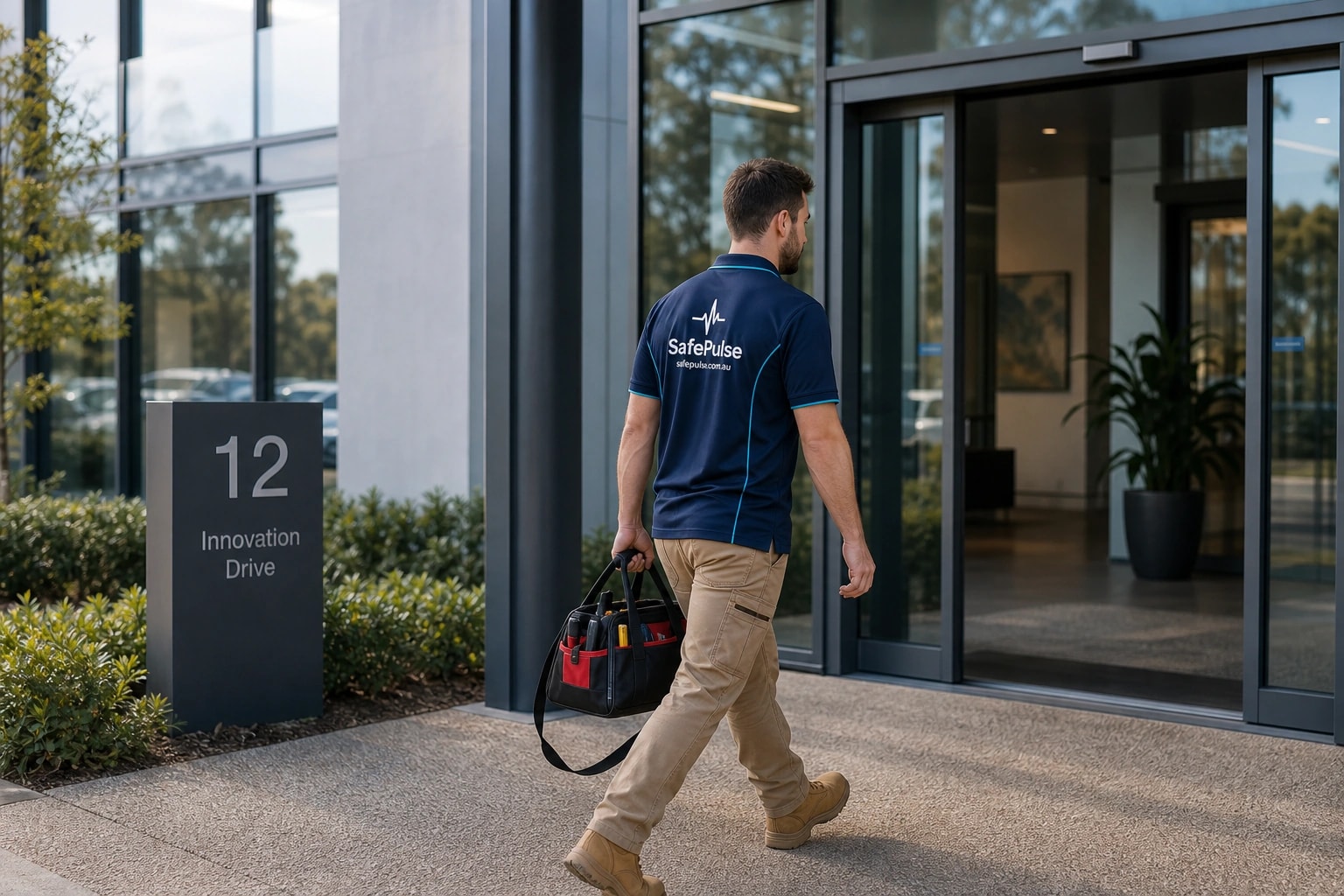
We supply, install and maintain AEDs in NSW. We’ve worked with schools that fund through P&C, through Office of Sport grants, and through facilities budgets. The install itself takes about an hour, including signage and registration with NSW Ambulance.
Sporting clubs and gyms can apply through the same Office of Sport route — see AED requirements for Sydney sporting clubs and gyms. Whatever the funding path, the underlying obligation is the WHS duty covered in NSW WHS duty of care, and devices should be registered with NSW Ambulance. Our New South Wales AED page has more.
If your school is at the “we’ve talked about this for years” stage, the next step is a brief site walk to identify the right one or two locations on campus. Reach out via safepulse.com.au and we’ll come out, scope the install and talk through whether the grant route is viable for your sporting partner.