If you manage commercial property across the eastern states, the AED rules feel like they should be consistent. They’re not. South Australia, New South Wales and Victoria sit in three genuinely different places, and a policy written for one will either over-promise or under-deliver in the others. Here’s the honest side-by-side, written for someone running a portfolio rather than a single building.
The one-line version
Only one of these three states has an AED law in force. South Australia does. New South Wales and Victoria don’t — they sit under their general workplace safety duties, where an AED is recommended and risk-assessed, not mandated.
That single fact drives everything below. Get it wrong in either direction and you either spend money chasing a rule that doesn’t exist, or you assume you’re covered when your strongest building obligation is in the one state you treated as optional.
| South Australia | New South Wales | Victoria | |
|---|---|---|---|
| AED-specific law in force | Yes — AED (Public Access) Act 2022 | No | No |
| Mandatory for commercial buildings | Yes — designated/relevant buildings, 600m²+ | No | No |
| Compliance deadline | 1 Jan 2026 (now passed) | None | None |
| Registration | Mandatory (SA Ambulance register) | Voluntary (GoodSAM) | Voluntary (Ambulance Victoria / GoodSAM) |
| Signage | Mandatory | Not required | Not required |
| Maintenance | Mandatory (per manufacturer) | Recommended | Recommended |
| Penalties for not having one | Yes, under the Act | None AED-specific (general WHS duty applies) | None AED-specific (general OHS duty applies) |
| Governing instrument | The Act + Regulations | SafeWork NSW First Aid Code (2020) | WorkSafe Vic Compliance Code (2021) |
South Australia: the only one with a law in force
SA passed the Automated External Defibrillators (Public Access) Act 2022, and the commercial compliance date — 1 January 2026 — has now passed. For privately owned buildings in scope, having a device isn’t best practice anymore. It’s the law.
The obligation falls on the building owner, not the tenant. Designated facilities (schools, sporting facilities, aged care, caravan parks and others) need at least one device regardless of size, and any “relevant building” of 600m² or more is caught. Once a commercial building’s publicly accessible floor area passes 1,200m², the number of required devices scales up.
SA also mandates the parts that the other states leave optional: registration with the SA Ambulance Service within two weeks of installation, signage near the device and at the entrance, and ongoing maintenance per the manufacturer. There are offences under the Act for skipping any of them.
If your portfolio touches SA, this is the state to start with — it’s the one carrying a hard legal obligation.
New South Wales: no law, but three attempts that lapsed
NSW is where the confusion usually creeps in, because it has come closer to legislating than anywhere except SA. Gareth Ward MP introduced an Automated External Defibrillators (Public Access) Bill three separate times across 2024. All three lapsed without becoming law. The government did not take up a mandate, and as of mid-2026 there’s no AED Act in force in NSW.
So what does a NSW building owner actually owe? A general first aid duty under WHS law. The SafeWork NSW First Aid in the Workplace Code of Practice says an AED “may be provided” where there’s a risk of electrocution, a likely delay in ambulance arrival, or large numbers of the public present. That’s discretionary and risk-assessed — not a blanket requirement, and failure to install a device isn’t an offence in itself.
Registration with NSW Ambulance through GoodSAM is voluntary, and worth doing because it helps Triple Zero call-takers and nearby responders find your device. But it’s a recommendation, not a rule.
For a multi-state operator, the practical read on NSW is: no deadline, no mandate, but a real duty-of-care case in higher-risk and high-footfall buildings.
Victoria: no law, no Bill, OHS duty only
Victoria sits a notch further back than NSW. There’s no AED Act, and unlike NSW, no AED Bill has ever been tabled in the Victorian Parliament. The position rests entirely on the Occupational Health and Safety Act 2004 and WorkSafe Victoria’s Compliance Code: First Aid in the Workplace (November 2021).
The Code’s language is the key. It says employers should “consider whether it is reasonably practicable” to have an AED — note “should consider,” not “must have.” That’s the outer edge of the obligation in Victoria. The same three risk factors apply: electrocution risk, ambulance delay, and large numbers of the public.
Registration with Ambulance Victoria, again via GoodSAM, is voluntary. There are no AED-specific penalties. The duty is real but soft — an employer with a foreseeable cardiac risk who hasn’t even considered an AED is on weaker ground under the “reasonably practicable” test, but there’s no rule saying every building needs one.
St John Ambulance Victoria has publicly pushed for mandatory legislation, which is worth keeping an eye on. For now, though, Victoria is the most discretionary of the three.
What this means if you manage property across all three
The trap for a national or multi-state portfolio is writing one AED policy and applying it everywhere. It doesn’t fit:
- Treat SA as a compliance obligation. Buildings in scope need devices, registration, signage and maintenance, full stop. This is where audit risk actually lives.
- Treat NSW and VIC as risk-managed best practice. No deadline forces your hand, but your duty of care is real — especially in large buildings, high-footfall sites, and anywhere with electrical or isolation risk.
- Don’t import SA’s rules into NSW or VIC in your documentation. Telling a Melbourne building manager they’re “legally required” to register an AED is simply wrong, and it erodes trust in the rest of your compliance program.
- Don’t import NSW/VIC’s optionality into SA. “We assess it case by case” is fine in Melbourne and Sydney. In Adelaide it can leave a building non-compliant.
A consistent standard across the portfolio is a good idea. A consistent legal justification is not — because the law genuinely differs.
A practical approach for a multi-state portfolio
- Map your buildings by state first. Your SA sites carry a legal obligation; your NSW and VIC sites carry a duty of care. Sort them accordingly.
- Make SA airtight. Confirm device counts against floor area, registration, signage and a maintenance plan for every in-scope SA building.
- Risk-assess NSW and VIC consistently. Use the same three triggers — electrocution, ambulance delay, public numbers — and document the decision either way. A documented “we considered it” is exactly what the VIC Code asks for.
- Standardise the device and the servicing, even where the legal driver differs. One supplier, one maintenance regime and one registration habit across the portfolio is far easier to manage than a patchwork.
- Keep a watching brief on NSW and VIC. Both have visible advocacy for mandates. The position can move, and you’d rather be ahead of it.
Where SafePulse fits
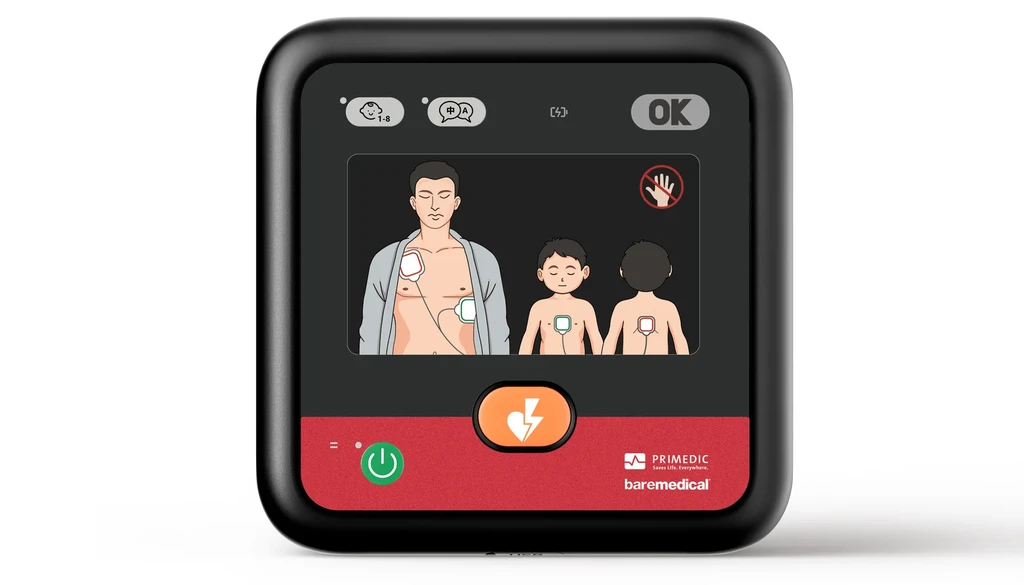
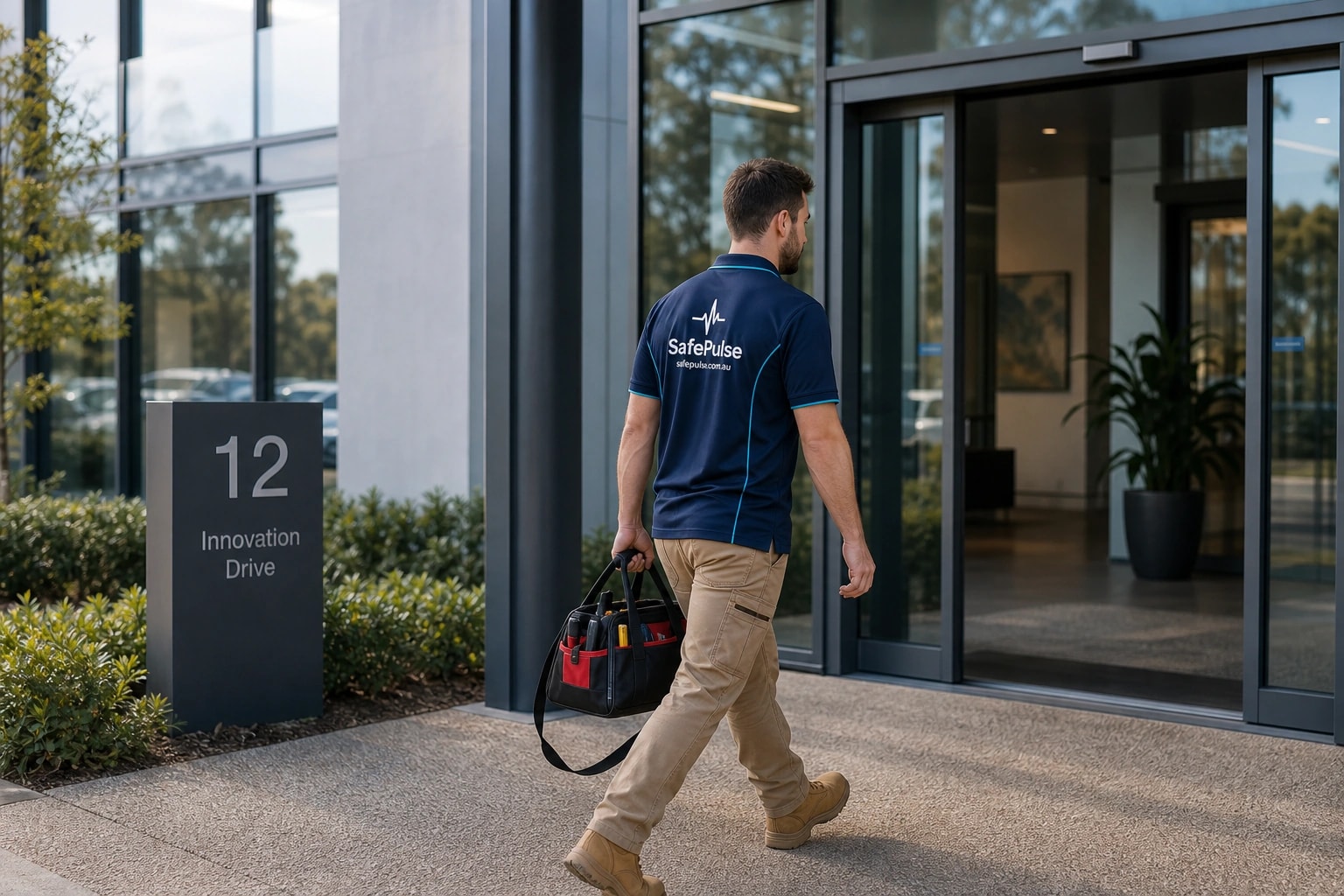
We supply, install and maintain AEDs across South Australia and interstate, which means we deal with all three of these regimes every week. For your SA buildings we handle the compliance end-to-end — correct device counts, SA Ambulance registration, signage and maintenance. For your NSW and VIC sites we’ll help you make and document a sensible risk-based call, register voluntarily through GoodSAM, and keep the devices serviced on one schedule.
Each column has its own deep dive: what the SA AED laws mean for landlords and property managers, NSW WHS duty of care, and Victorian OHS duty of care. Our New South Wales AED page covers the NSW position in full.
If you manage property across more than one state and want a single, honest AED standard that respects what each state actually requires, get in touch at safepulse.com.au.