Victoria has no AED-specific Act. There’s no compliance deadline, no mandatory installation rule for commercial buildings, no penalties tied directly to whether or not an AED is on the wall. Plenty of Victorian property managers read that and tick the box as “not our problem.”
That’s a misread. The duty of care under Victoria’s OHS framework still applies, and WorkSafe Victoria’s Compliance Code says employers should consider whether an AED is reasonably practicable for their workplace. This piece walks through what Victorian law actually requires of you when it comes to first aid and AEDs — and where the line sits between what’s compulsory and what’s just sensible.
What Victorian law actually says
The governing Act is the Occupational Health and Safety Act 2004 (Vic). Section 21(1) requires every employer to provide and maintain — so far as is reasonably practicable — a working environment that’s safe and without risks to health. Section 21(2)(d) specifically requires “adequate facilities for the welfare of employees.”
The Occupational Health and Safety Regulations 2017 (Vic) give that duty practical content for first aid. Importantly, neither the Act nor the Regulations name AEDs as required equipment. Specific first aid detail is left to WorkSafe Victoria’s Compliance Code: First Aid in the Workplace, issued under the Act and effective from 4 November 2021.
That Compliance Code is the document Victorian employers are measured against in practice. It’s not a piece of legislation, but it’s the operating manual WorkSafe inspectors use to judge whether you’ve discharged your duty.
What the Compliance Code says about AEDs
Paragraphs 149–152 of the 2021 Code introduced AED-specific guidance that wasn’t in the previous (2008) version. The headline language:
Employers should “consider whether it is reasonably practicable to have an automated external defibrillator in the workplace as these are not difficult to use and save lives.”
WorkSafe Victoria’s published guidance reinforces the point in plainer language:
“Employers must provide ‘a safe and without risks to health’ working environment. Employers should consider whether it is reasonably practicable to have an AED on site as a risk control measure.”
That’s discretionary language — “should consider” — informed by your workplace’s risk profile. It’s not “must install.” But it’s also not “ignore.”
The “reasonably practicable” test
This is the phrase that does most of the work. Under the OHS Act, an employer’s duty is to do what’s reasonably practicable to control risk. WorkSafe and Victorian courts assess “reasonably practicable” against:
- The likelihood of the hazard or risk eventuating. Cardiac arrest is rare on any given day, but population statistics make it foreseeable in any workplace with significant headcount or public footfall.
- The degree of harm if it does eventuate. Sudden cardiac arrest is fatal within minutes without defibrillation. The harm side of the equation is as severe as it gets.
- What the person knows, or ought reasonably to know, about the hazard and ways of eliminating or reducing the risk. AEDs have been the standard intervention for ventricular fibrillation in the field for over two decades. This is well-known.
- The availability and suitability of ways to eliminate or reduce the risk. Modern AEDs are TGA-approved, cheap relative to other safety equipment, and usable by an untrained bystander.
- The cost of those ways. A standard AED install runs in the low thousands. Maintenance is monthly self-test plus pads/battery replacement. Compared to other workplace safety investments, the per-life-saved cost of an AED is exceptionally low.
When the test reads like that, “we didn’t bother” is a hard position to defend in front of WorkSafe after a preventable cardiac arrest fatality. It’s also a hard position to defend in front of your own people — most workforces that find out their employer has thought about this and chosen not to act don’t react well.
Trigger factors the Code flags
The Compliance Code aligns with the Safe Work Australia model wording. There are three workplace factors that elevate the AED case:
- Risk of electrocution to workers. Anywhere with switchboards, high-voltage equipment, electrical contractors, or workshop environments.
- Likely delay in ambulance arrival. Outer-metro Melbourne, regional Victoria, isolated worksites, weekends and after-hours operations. Ambulance Victoria’s metro response averages around 15 minutes for code 1; longer in regional areas. Defibrillation needs to happen in 3–5 minutes to be effective.
- Large numbers of members of the public present. Shopping centres, hospitality venues, gyms, sporting facilities, large offices, hotels, function venues.
If your workplace ticks one of these factors, the “reasonably practicable” test pulls hard toward installation. If it ticks two or three, the position that you’ve considered AEDs and chosen not to install becomes increasingly difficult to support.
How the Code says AEDs should be set up
The Code addresses placement and operation as well as the install decision:
“AEDs should be installed in well-known, visible and accessible locations. They should not be locked.”
“Registration of AEDs in the workplace with Ambulance Victoria helps reduce the time taken to find an AED in an emergency.”
The placement rule matters. An AED in a back office, a locked cabinet, or “in the manager’s drawer” doesn’t satisfy the spirit of the Code. It needs to be where someone can grab it, fast, without unlocking anything. Staffed reception desks are fine. Foyer wall mounts are fine. Drawer-stashing is not.
The registration recommendation is voluntary but firmly endorsed. Ambulance Victoria runs a free GoodSAM-integrated registry. Triple Zero call-takers see registered AEDs. A registered AED is the only AED a 000 caller can be directed to.
Comparison: VIC vs SA vs NSW
| Factor | Victoria | South Australia | New South Wales |
|---|---|---|---|
| AED-specific Act in force | No | Yes (Act 2022, regs 2024) | No (three Bills lapsed) |
| Mandatory installation in commercial buildings | No | Yes (>600 m²) | No |
| Compliance deadline | None | 1 January 2026 | None |
| Governing first-aid instrument | OHS Act 2004 + Compliance Code (Nov 2021) | AED Act 2022 + Regs 2024 | WHS Act 2011 + Code of Practice (Jan 2020) |
| Mandatory registration | No (voluntary, Ambulance Victoria/GoodSAM) | Yes (SAAS register, 2 weeks) | No (voluntary, GoodSAM) |
| Mandatory signage | No (Code recommends) | Yes | No |
| Mandatory maintenance | No (Code recommends per manufacturer) | Yes (per manufacturer) | No |
| Penalties tied to AED | None (general OHS penalties apply for unsafe workplaces) | Yes (under the Act) | None |
Victoria is materially weaker than SA on the legal compulsion side. It’s stronger than NSW on guidance — the 2021 Compliance Code is more direct about AEDs than NSW’s 2020 Code. For multi-state operators, the practical play is to align to SA’s standard everywhere. That gets you SA-compliant, ahead of any future VIC or NSW law, and squarely within best practice.
What this means in practice
If you manage a Victorian commercial property, manage a workplace, or run a sporting or hospitality venue, the practical reading of Victorian law is:
- You don’t have to install an AED to comply with a specific Victorian Act.
- You do have to discharge the OHS duty of care, which in many workplaces means installing one is the “reasonably practicable” answer.
- If you choose not to install, that decision should be documented — risk assessed, reasoning recorded, alternatives considered.
- If you do install, place it visibly, leave it unlocked, register it with Ambulance Victoria, train a few staff, and maintain per the manufacturer.
WorkSafe Victoria isn’t currently doing routine AED audits the way SA Health is. But the Compliance Code is what they’d point to in a workplace death investigation, and what a court would look at in a negligence claim. The risk isn’t “we got fined for not having an AED” — it’s “we got named in a coronial inquiry because someone died on our premises and the AED conversation hadn’t been had.”
Where AEDs make most sense in Victoria
Even without legal compulsion, the workplaces where the OHS case is strongest:
- Multi-tenant commercial offices in Melbourne CBD, Southbank, Docklands and major suburban centres
- Shopping centres, retail precincts and hospitality venues with significant public footfall
- Hotels and function venues
- Sporting clubs, gyms and recreation facilities
- Aged care, retirement villages and disability services
- Construction sites (electrocution risk in particular)
- Industrial workplaces with electrical equipment or isolated work
- Schools, universities and TAFEs
- Outer-metro and regional workplaces where ambulance response stretches
This isn’t an exhaustive list — most workplaces with more than a handful of people on-site can make a defensible case. The question to ask is whether the “reasonably practicable” test pulls toward or away from installation in your specific context.
Practical approach for Victorian employers
- Document the OHS risk assessment. Run the workplace through the three trigger factors. Record what you find.
- Apply the “reasonably practicable” test. Map likelihood, severity, knowledge, options and cost. This document is what protects you if anything goes wrong, install or not.
- Decide whether to install. Most workplaces with significant footfall, plant, or vulnerable populations will land on yes.
- Pick a placement. Visible, accessible, unlocked. Foyer or staffed reception is the default.
- Register with Ambulance Victoria. Free, ten minutes, via the GoodSAM platform.
- Train responders. Optional but materially improves the chance the AED gets used confidently.
- Maintain per the manufacturer. Pads typically two-yearly, battery four-yearly, plus monthly visual or smart-monitoring checks.
Where SafePulse fits
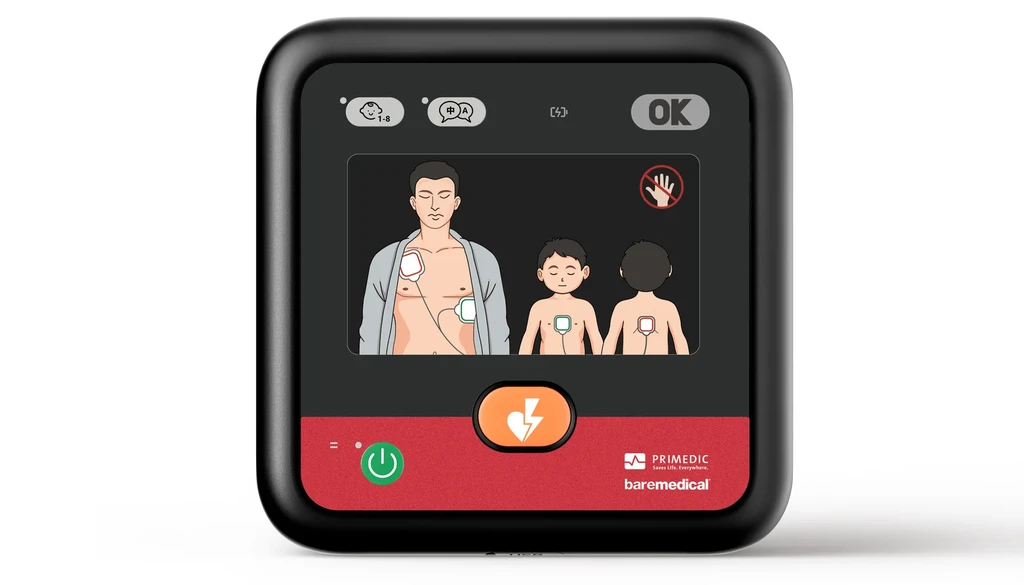
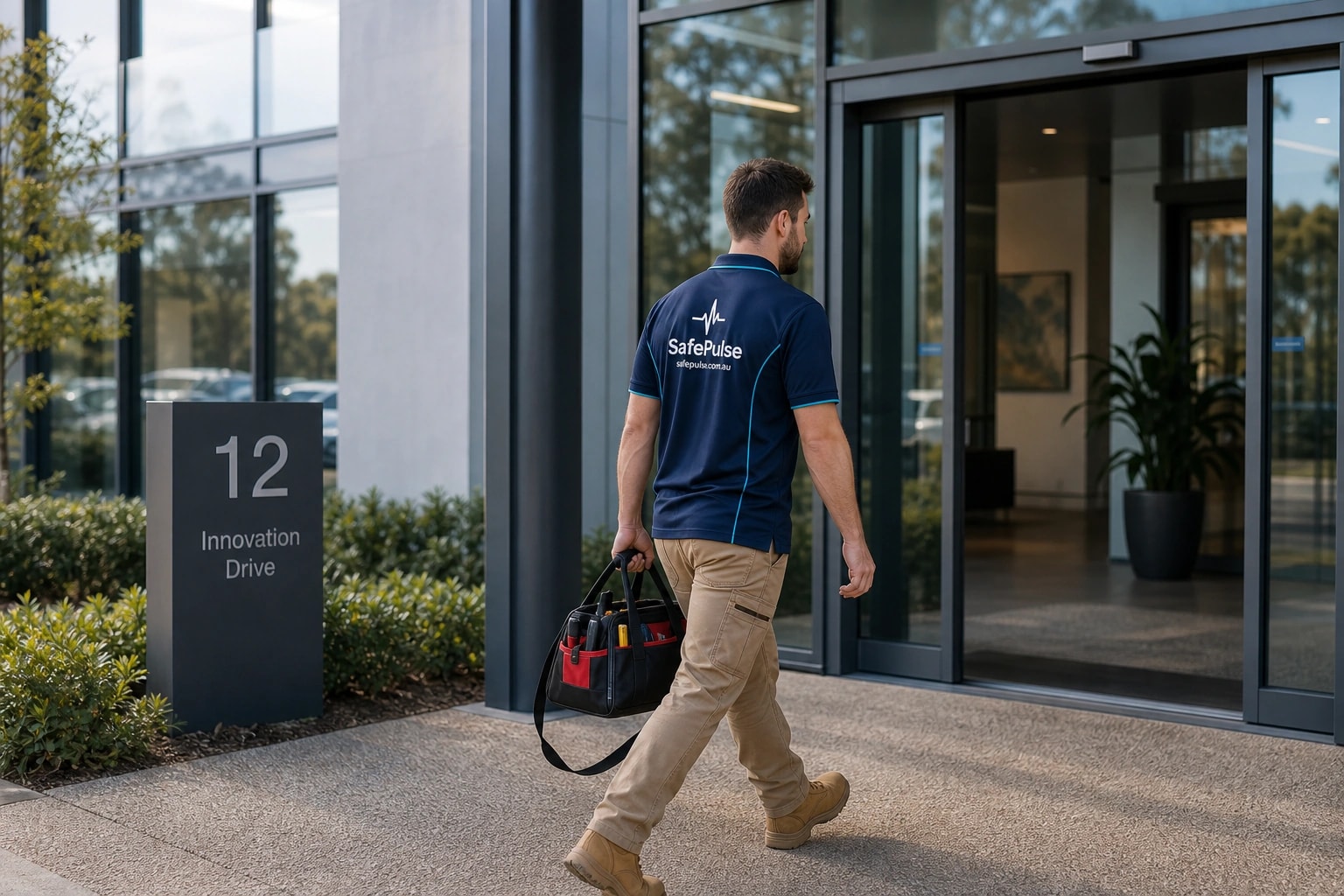
We install AEDs in Victorian commercial buildings, sporting facilities, hospitality venues and industrial sites. SA-based, but our standard install package and 8-year warranty are the same wherever we install. TGA-approved Mindray units, professional placement, signage, registration with Ambulance Victoria, and an ongoing maintenance plan included.
If you’re working through your OHS duty for a Victorian site, see our Victoria AED solutions or send us the building details and we’ll come back with a scope.
Where to from here
Victoria’s regulatory position will probably move at some point. St John Ambulance Victoria has been publicly lobbying for mandatory workplace AEDs, citing research that only three in ten Victorian workers know whether their workplace has one. Whether that becomes a Bill in the next two years is anyone’s guess.
The Compliance Code is where that duty gets its practical content, quoted in full in what the WorkSafe Victoria Compliance Code actually says about AEDs. For where the duty bites hardest, there’s industrial workplaces and electrocution risk. Our Victorian AED page covers the state position.
In the meantime, the question for Victorian property managers and employers isn’t “is this required?” — it’s “have we considered it, and does the answer hold up?” If the answer is yes and the AED is on the wall, you’re done. If the answer is yes and it isn’t, that’s a documented decision you can defend. The position you don’t want is the one where the question hasn’t been asked at all.