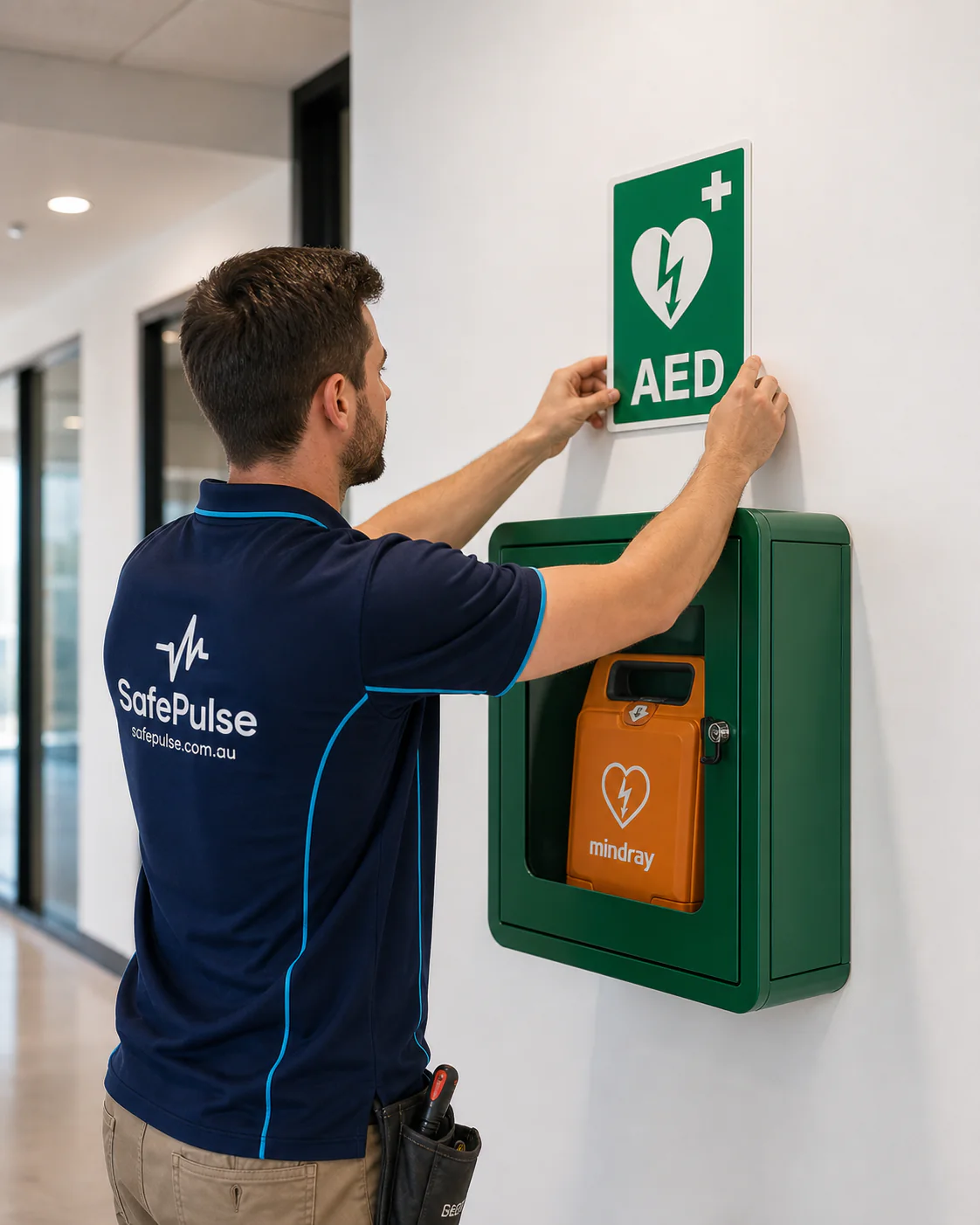
Most AED guidance you’ll read across Australia treats cabinet placement as a check-box item — visible, accessible, mounted at 1.2 to 1.4 m, signed properly, not locked. That’s the standard playbook, and in most of the country it covers the field.
In the Northern Territory, it doesn’t. The NT First Aid in the Workplace Code of Practice explicitly says AEDs “should be located in an area … not exposed to extreme temperatures.” That single clause makes cabinet placement and cabinet specification a real engineering decision in NT workplaces — not a default one. The Code knows what Top End summers and Centre-region heat do to consumer electronics and pad gels. The cabinet has to keep the device inside its operating range, year-round, in environments most of the rest of the country never sees.
This piece walks through what the heat actually does to an AED, what the Code requires, how cabinet selection should work in NT, and the practical placement decisions that follow. It’s a technical piece — written for property managers, WHS officers and facility managers who carry the day-to-day responsibility for keeping the device on the wall functional.
What the NT Code actually says
The NT First Aid in the Workplace Code of Practice was approved by the Attorney-General and Minister for Justice on 29 January 2020 and published in the Northern Territory Government Gazette on 4 March 2020. Verbatim, from the section titled “Automated external defibrillators”:
“They should be located in an area clearly visible, accessible and not exposed to extreme temperatures. They should be clearly signed and maintained according to the manufacturer’s specifications.”
The “not exposed to extreme temperatures” phrase doesn’t appear in the equivalent SA, NSW or Victorian guidance with the same emphasis. It’s there for a specific reason: the NT’s climate is materially harder on the equipment than most Australian working environments.
The Code is discretionary — “should”, not “must” — but it sets the standard a WorkSafe NT inspector or court would refer to in working out whether a duty-holder has discharged their first-aid duty. If an AED is unusable because the cabinet sat in direct sun for three months and the pad gel degraded, that’s the kind of operational failure that would be looked at against the Code’s plain words.
What the heat does to an AED
Three components are particularly heat-sensitive:
1. Electrode pad gel. AED pads use a conductive gel to make electrical contact with the patient’s skin. The gel has a manufacturer-specified expiry — typically 2 to 4 years — but that expiry assumes the pads are stored within the manufacturer’s specified temperature range. Sustained heat above that range accelerates gel degradation. By the time you see drying, separation or surface tackiness, the pads are well past usable.
For NT outdoor placements, pads stored in a cabinet exposed to direct sun can hit cabinet internal temperatures well above the device’s rated operating range during a summer afternoon. The pad expiry date printed on the packaging assumes ideal storage; real-world storage in NT heat can shorten effective life materially.
2. Battery. AED batteries — typically primary lithium chemistry — degrade faster at elevated temperatures. Manufacturer-specified shelf life assumes storage within rated range. Sustained heat shortens the standby battery life, which is what powers the device’s self-tests and keeps it ready when called on.
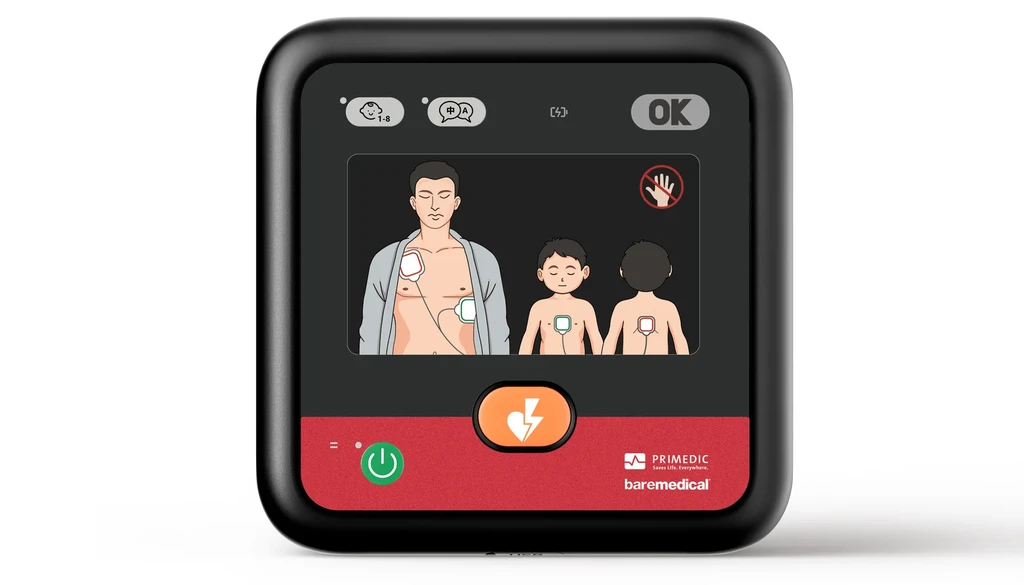
3. The device itself. Most consumer-grade AEDs have an operating temperature ceiling around 50°C. Pad gel can degrade in sustained high heat. In ambient temperatures above the operating range, the device may self-test as faulty, or — worse — may not detect that it’s out-of-spec until it’s needed in an emergency.
The NT Code’s “extreme temperatures” clause isn’t an abstract concern. It’s a direct response to the failure modes that heat exposure introduces.
Where temperatures actually get extreme
Three categories of NT workplace need particular thought:
Outdoor wall-mounts in direct sun. A cabinet on a north or west-facing exterior wall in Darwin, Palmerston, Katherine or Alice Springs can sit in full sun for several hours daily. Surface temperature of the cabinet itself can run materially higher than ambient, and internal temperature follows. Without thermostatic control, a metal cabinet in summer sun can cook its contents.
Unconditioned warehouses, sheds and outbuildings. Tin-roofed sheds, unconditioned warehouses, packing rooms without aircon — Northern Territory commercial premises with this kind of infrastructure are extremely common, particularly in pastoral, agricultural, transport and remote-site contexts. Internal temperatures can sustain 45°C+ for hours during summer.
Vehicles and vehicle-mounted units. Service vehicles, work utes, fishing charter boats, remote-area access vehicles. A glove box or storage compartment in a parked vehicle in Darwin sun can hit 70°C+ internally. AEDs in vehicle storage need either active cooling, shaded placement, or a cabinet specifically rated for vehicle use.
The Top End wet season. Separate to heat: humidity, intense rainfall, occasional cyclonic conditions. IP rating matters here — and IP rating addresses water and dust ingress, not heat. The two specs run in parallel; both need to be specified properly.
Cabinet specification — what to actually buy
Cabinet selection in NT comes down to four parameters:
1. IP rating. IP55 is the floor for any outdoor or partially exposed placement. IP56 or higher is appropriate for sustained tropical wet-season exposure, coastal salt-air environments, and outdoor placements in pastoral, agricultural and remote contexts. The first digit (dust) and the second digit (water) both matter in different NT environments.
2. Thermostatic control. For exterior placements in direct sun, a cabinet with thermostatic control — typically a heater for cool conditions and a cooler/vent for hot conditions, sometimes both — keeps the internal temperature inside the device’s operating range. This isn’t a luxury feature in NT outdoor settings; it’s the part of the cabinet doing the work the Code asks for.
3. Material and finish. Powder-coated steel is the standard for outdoor cabinets in Australia. Light-coloured powder coat reflects more heat than dark; matters more in the NT than anywhere else. Stainless steel is appropriate for coastal placements.
4. Internal volume and access. The cabinet has to fit the device, both sets of pads, accessories (shears, razor), and an inspection panel for the maintenance contractor. Cramped cabinets create operational problems even when the temperature spec is met.
For indoor placements in conditioned spaces — air-conditioned offices, retail premises, hotel foyers — a standard internal cabinet without thermostatic control is generally fine. The conditioned space is doing the temperature work. But “the office has aircon” isn’t the same as “the AED is in the conditioned space” — a unit mounted in an unconditioned vestibule or loading-dock entry is exposed to outdoor temperatures even if the office behind it isn’t.
Placement decision tree for NT workplaces
A few questions to work through when siting an NT AED:
Is the location air-conditioned 24/7?
- If yes, standard internal cabinet, mounted 1.2–1.4 m from floor, visible and accessible.
- If no, treat as outdoor placement.
Is the location indoors but unconditioned? (sheds, warehouses, outbuildings, loading docks)
- Use a cabinet rated for the temperature range that location actually experiences. For a shed regularly hitting 45°C+ in summer, that’s outdoor-spec.
Is the location exterior?
- IP55+ cabinet minimum. IP56+ for tropical wet-season or coastal exposure.
- Thermostatically controlled if any direct sun exposure.
- Light-coloured powder coat finish, or stainless for coastal.
- Mount on a shaded wall where the building allows it.
Is the location vehicle-mounted?
- Vehicle-specific cabinet, or active cooling. Don’t store an unprotected AED in a vehicle in NT sun.
- Consider whether the vehicle’s use pattern means the AED is sometimes hours from any service location.
Maintenance under NT conditions
Heat accelerates the failure modes the Code already flags. Pad and battery replacement schedules should follow manufacturer instructions, but the effective replacement cadence in sustained-heat NT environments can be shorter than the printed expiry.
WorkSafe NT and the Code both treat under-maintenance as a real workplace concern. The standard failure modes — flat batteries, expired pads, devices not visible/accessible — are amplified in NT by heat exposure.
A monitored maintenance package removes most of the manual inspection load and adds verification: SafePulse’s Smart Install package includes AED Alert 2.0 monitoring with daily status reporting and live alerts when the device flags any issue. For NT workplaces — particularly remote sites where physical inspection is logistically expensive — that’s a meaningful operational benefit. The maintenance differential ($25/month Smart vs $40/month Basic) effectively pays back through removed inspection load.
The duty argument in plain English
NT workplaces aren’t legally required to install an AED. The duty under the Work Health and Safety (National Uniform Legislation) Act 2011 (NT) is general — ensure, so far as is reasonably practicable, the health and safety of workers and others. The Code gives operational content to that duty for first aid; the three trigger factors apply (electrocution risk, ambulance delay, large numbers of members of the public), and for most NT workplaces at least one applies.
But once an AED is installed, the Code’s placement standard kicks in. A device sitting in a non-compliant location — exposed to extreme temperatures, locked, invisible — is arguably worse than no device at all, because it creates the impression of preparedness without the substance. A WorkSafe NT inspector reviewing a workplace’s first-aid arrangements would notice an AED in an unconditioned shed without thermostatic-cabinet support; that’s exactly what the Code’s “extreme temperatures” clause is there to address.
The practical answer is: if you’re going to install an AED, install it properly. That means cabinet specification that matches the placement, maintenance that accounts for accelerated heat-driven degradation, and signage that ensures the device is findable. The cost of doing it properly is small relative to the cost of not.
Practical approach for NT property managers and WHS officers
- Document the WHS risk assessment. Apply the three trigger factors from the NT Code. In remote NT, the ambulance-delay trigger almost always applies.
- Site survey before purchase. Identify the AED location, confirm its temperature exposure profile, and specify the cabinet accordingly. Don’t assume a generic indoor cabinet fits.
- TGA-approved unit, manufacturer operating range within the location’s actual temperature envelope. Most consumer AEDs cap at 50°C; verify against the specific site.
- Cabinet to match the placement. IP55+ outdoor floor, IP56+ for tropical/coastal exposure, thermostatic control for direct-sun placements, light-coloured finish.
- Mounting at 1.2 to 1.4 m from the floor. Visible, accessible, unlocked.
- Signage near the AED and from main entry points. Standard ARC AED symbol, plus directional signage on multi-building sites.
- Register with St John NT via the First Responder app. Free, voluntary, the NT-specific registry pathway. Not GoodSAM — NT uses St John’s own platform.
- Maintenance schedule accounting for heat-accelerated degradation. Pads and batteries may need replacement earlier than the printed expiry suggests. A monitored unit eliminates the manual-inspection failure mode.
- For remote sites: include the AED in the site’s emergency response plan with explicit reference to expected ambulance response time, including aerial evacuation arrangements where relevant.
Where SafePulse fits
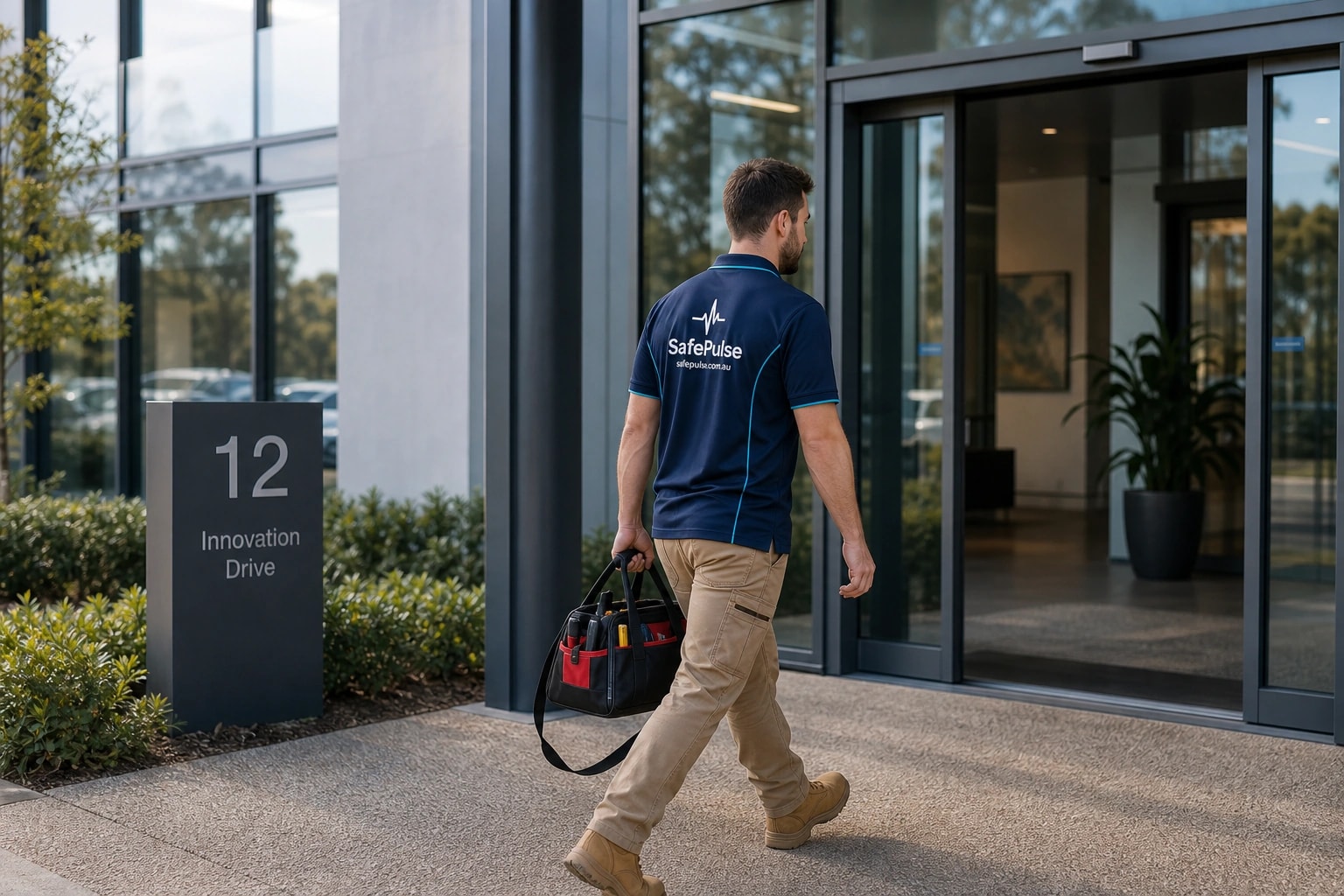
We install AEDs at commercial buildings, hospitality venues, mining and resources sites, tourism operators and industrial workplaces across the Northern Territory. Each install is a TGA-approved Mindray unit, climate-appropriate cabinet specification, mandatory signage, an 8-year warranty and registration with St John NT via the First Responder app.
The Smart Install package adds AED Alert 2.0 monitoring — daily status reporting, live tamper alerts, GPS theft tracking. In NT conditions, where temperature exposure can accelerate the standard failure modes and remote site access makes manual inspection expensive, that monitoring layer carries more weight than it does in cooler, more accessible jurisdictions.
If you’re scoping AED provision for an NT site or portfolio, see our Northern Territory AED solutions or send us the site details — we’ll come back with a scope that accounts for the placement’s actual temperature exposure.
The bottom line
The NT Code of Practice is explicit about extreme temperatures because NT temperatures are genuinely extreme. Cabinet placement and specification in the Territory isn’t a check-box item — it’s an engineering decision that determines whether the device on the wall actually works when it’s needed.
For NT property managers and WHS officers, the answer isn’t complicated, but it can’t be skipped: match the cabinet to the placement, account for heat-accelerated maintenance, register with St John NT, and document the WHS risk assessment that drove the install decision in the first place.
Cabinet discipline matters most on the sites furthest from help — AEDs in NT mining and resources and a practical AED guide for the Centre both work through that combination. For the legal position, see do Northern Territory commercial buildings need an AED in 2026. Our Northern Territory AED page has more.
An AED bought once and forgotten in a tin-roofed shed isn’t a first-aid device — it’s a compliance liability. The cabinet is the part of the install doing the work the Code asks for.