South Australia’s AED law has been fully in force for privately owned buildings since 1 January 2026. Most owners we deal with have heard of it by now. What surprises people isn’t the law itself — it’s discovering they’ve done the wrong thing while thinking they were compliant.
I’ve installed and serviced a lot of these units around Adelaide, and the same handful of mistakes come up again and again. None of them are silly. The Act has a few genuinely counter-intuitive edges, and it’s easy to land on the wrong side of one. Here are the ones worth checking against your own building.
Mistake 1: Assuming the tenant is responsible
This is the big one. Under section 3 of the Automated External Defibrillators (Public Access) Act 2022, the obligation sits with the owner of the building or facility — not the tenant, and not the occupier.
If you own a building and lease it out, the duty to install, register, sign and maintain the AED is yours. It doesn’t transfer to whoever’s running a business inside. Plenty of landlords assume their retail or office tenant will “sort out the safety gear,” and plenty of tenants assume the landlord has it covered. The law is clear on who carries it, and a lease clause saying otherwise doesn’t change your statutory obligation.
If you’re an owner, don’t wait for your tenant to raise it. Check it yourself.
Mistake 2: “We’re under 600m², so we’re exempt”
The 600m² figure gets quoted constantly, and it’s genuinely important — but it only applies to one category. A “relevant building” (a public building the size test applies to) is one with a total internal floor area of 600m² or more. Under that, an ordinary commercial building generally isn’t caught.
Here’s the trap: designated buildings and facilities need at least one AED regardless of size. Section 4 lists them, and the list is broader than people expect:
- Prescribed sporting facilities — gyms, yoga and Pilates studios, sporting clubs
- Schools, universities, TAFE and training facilities
- Retirement villages with shared amenities
- Aged care facilities
- Caravan parks and residential parks (12 or more residents)
- Theatres and performance venues
- Casinos and gambling venues
A 400m² ballet studio needs an AED. A small suburban gym needs one. The size floor simply doesn’t apply to these categories. If your building is on that list, “we’re too small” isn’t a defence.
Mistake 3: Measuring the wrong floor area
There are two different area calculations in this Act, and mixing them up is common.
To work out whether a building is a “relevant building” at all, you measure the total internal floor space — everything inside the exterior walls, including stairs, toilets, lifts and lift shafts, plus external balconies and rooftop terraces. Public accessibility doesn’t matter for this test.
To work out how many AEDs a large building needs, you measure only the publicly accessible floor area — the parts the public can reach without a key, security card, code or appointment. That figure drives the count table, and only when the building is used for commercial purposes and the publicly accessible area is more than 1,200m².
So a seven-storey office tower might have a huge total floor area but only a small publicly accessible foyer. Under the guide’s worked examples, a 7,800m² commercial tower with 900m² of public access needs just one AED. Get the two measurements the wrong way around and you’ll either over-buy or, worse, under-provide and think you’re fine.
Mistake 4: Locking the AED away
An AED that needs a key or an access code to reach isn’t compliant, full stop. The Act is explicit: it can’t be installed in a cabinet, container or structure that requires a key or code preventing immediate emergency access.
I see this one where a building manager is worried about theft and puts the unit in a locked cupboard, or behind a door that’s swipe-card only after hours. The intent is good. The result is a device nobody can grab in the ninety seconds that matter.
If theft or vandalism is a real concern, the answer isn’t a lock — it’s placement in a staffed, visible, CCTV-covered spot like a reception or security desk, or an alarmed cabinet that still opens instantly. A member of the public has to be able to get to it, or request it from someone right there.
Mistake 5: One AED when the building needs more
If your building is used for commercial purposes and the publicly accessible floor area tips over 1,200m², a single unit may not be enough. The Regulations set a sliding scale: one AED under 2,400m², two from 2,400m², three from 3,600m², and up from there.
A large shopping arcade, a big public-facing showroom, a sprawling recreation centre — these can need two, three or more, placed so someone can reach one quickly from anywhere in the public area. Buying one and calling it done is a genuine compliance gap on a big site.
One exception worth knowing: schools are excluded from being treated as “for commercial purpose,” so a primary or secondary school only needs one AED regardless of size. They can install more voluntarily, and many do.
Mistake 6: Skipping registration — or forgetting to update it
Every AED installed under the Act has to be registered on the SA Ambulance Service AED Register within two weeks of installation. That register is what Triple Zero call-takers use to point a caller toward the nearest device during a cardiac arrest. An unregistered AED can’t do that job.
The part people forget: if you later move the unit, or change the hours it’s publicly accessible, you have to update the register within two weeks as well. Relocate the cabinet during a fit-out and forget to tell SAAS, and the register now points 000 to the wrong spot. Registration enquiries go to health.saasaedregister@sa.gov.au.
Mistake 7: Signage gaps
The Act requires signage in two places, and people routinely do only one. You need a sign near the AED, and a second sign outside, near the building entrance, telling people an AED is on site.
The entrance sign is the one that gets missed. It matters because a bystander running in from the street, or an ambulance dispatcher talking someone through it, needs to know the device is there before they’ve found the cabinet. On larger buildings, floor-by-floor signage near lifts is recommended too. SA Health publishes templates, so there’s no excuse for a home-made effort that doesn’t meet the mark.
Mistake 8: Letting the pads or battery expire
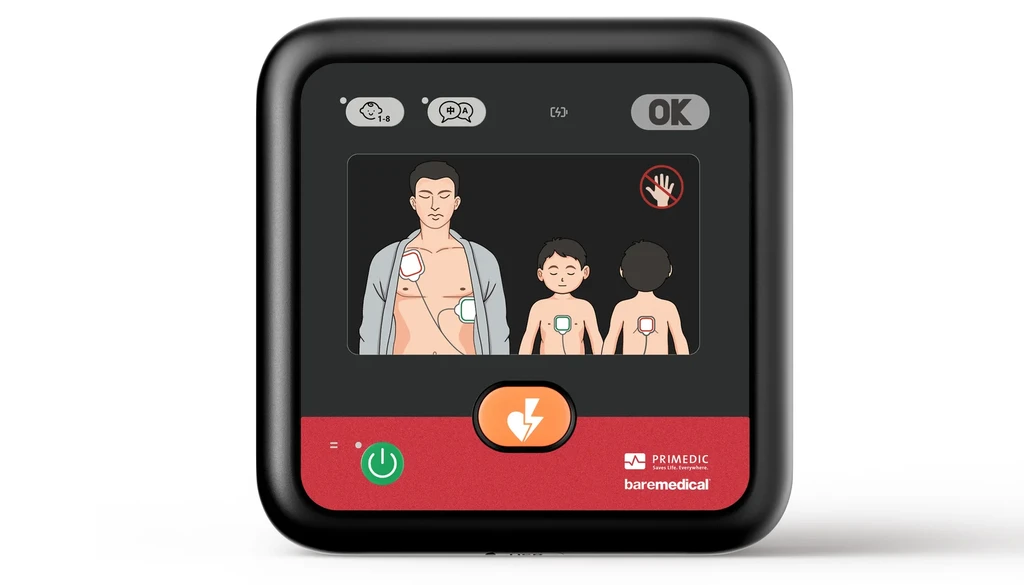
The Act requires AEDs to be maintained per the manufacturer’s instructions, and failure to maintain is listed among the offences under the Act. This isn’t a nice-to-have. Electrode pads have a shelf life, batteries have a shelf life, and a unit with expired consumables may not deliver a shock when it’s needed.
An AED bolted to the wall looks compliant. Whether it actually works depends on someone tracking pad and battery expiry and replacing them on schedule. That’s the quiet failure mode — the device that’s present, registered, signed, and dead. A maintenance routine, whether you run it yourself or have it managed, is what keeps the install honest.
Mistake 9: Thinking you need trained staff to have one
This one goes the other way. Some owners delay installing because they think they need to train and certify staff first. You don’t. There’s no requirement to be trained to use an AED in an emergency — the units talk you through it with voice prompts, and anyone can follow them. Training is worthwhile, but it’s not a prerequisite, and it’s certainly not a reason to leave the wall bare.
How to check yourself in five minutes
Run your building against this: Are you the owner (not assuming the tenant’s got it)? Is it a designated facility that needs one regardless of size? Have you measured both areas correctly? Is the unit reachable without a key? Do you have enough of them for the public floor area? Registered with SAAS within two weeks, and updated if it’s moved? Signed at the AED and at the entrance? Pads and battery in date?
If any of those gave you pause, that’s the gap to close. Most of these are quick fixes once you’ve spotted them — the hard part is knowing they’re there.
Three of the mistakes above have their own walkthrough if you want the detail: measuring publicly accessible floor area, registering with SA Ambulance inside the two-week window, and getting the two compulsory signs right. Our SA AED compliance overview covers the rest of the Act.
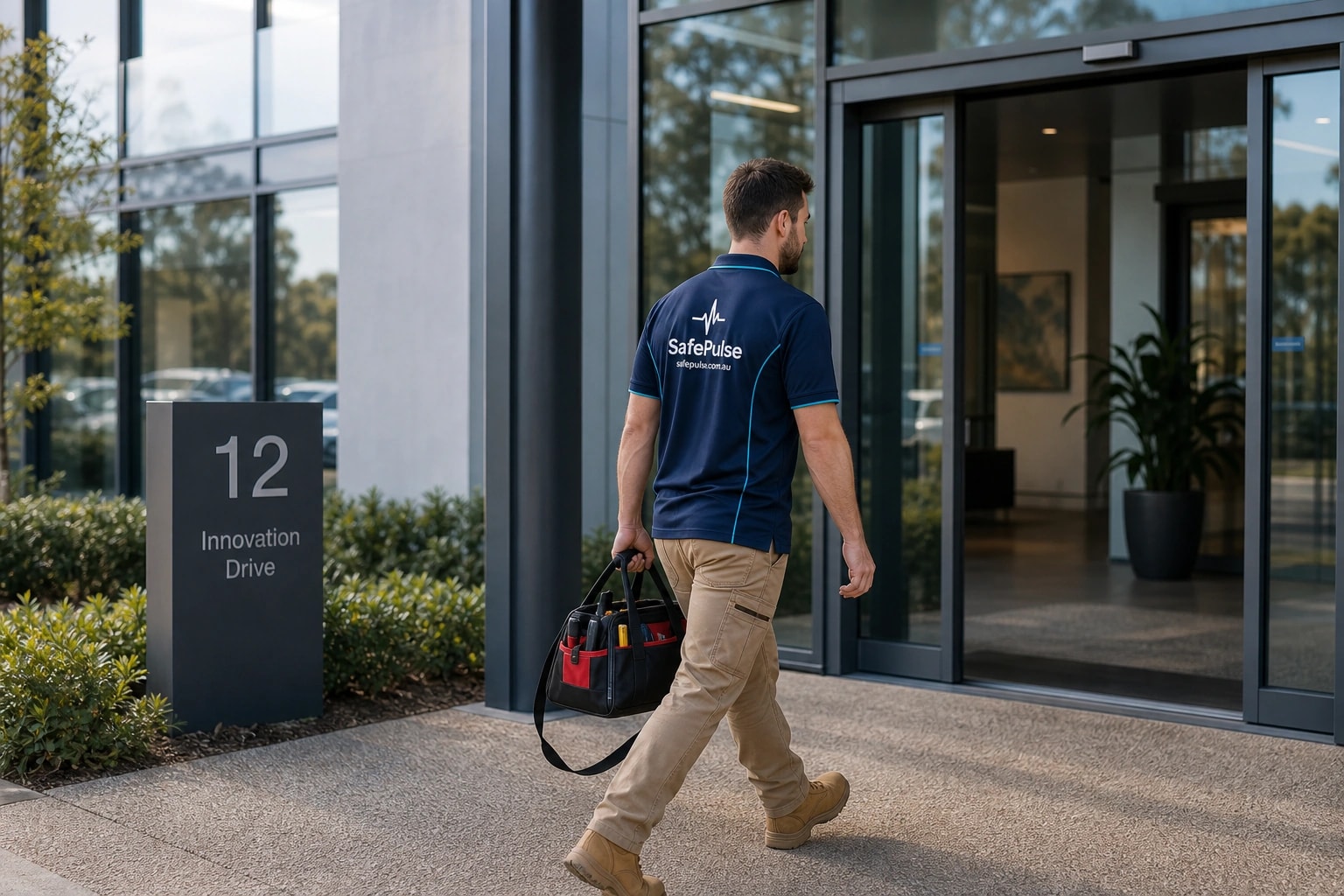
At SafePulse this is the everyday work: getting the count right, placing the unit so it’s compliant and actually usable, handling the SAAS registration and signage, and keeping the consumables in date so the device works the day it’s needed. If you’d like a set of eyes over a building you’re not sure about, that’s exactly the sort of thing we’re glad to walk through.