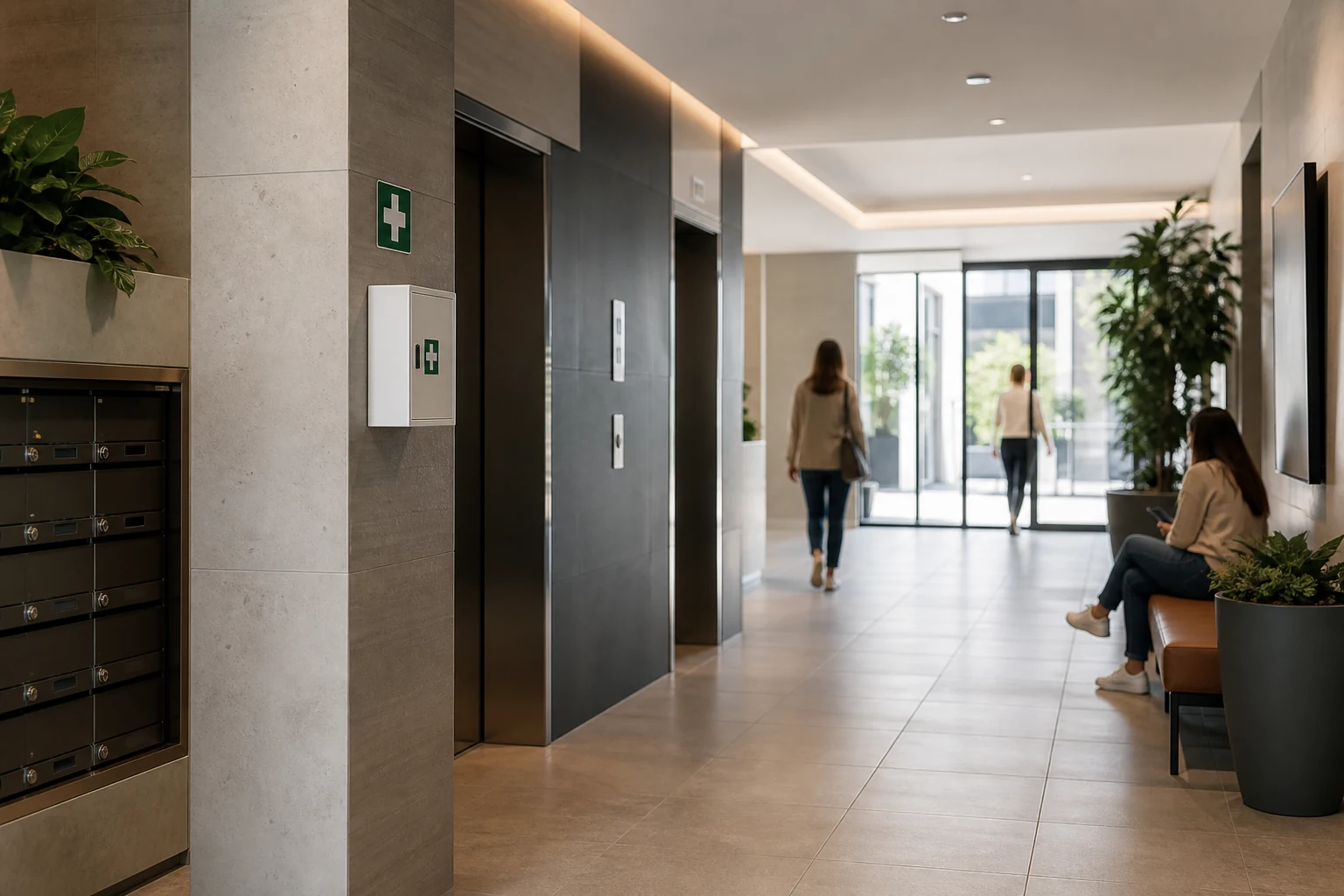
If you manage a strata-titled commercial building, a body-corporate-controlled office tower, or a residential retirement complex in South Australia, the AED question lands on your desk in a way that’s easy to misread. The Act is clear about who is responsible, but the practical reality of strata and body corporate ownership means the rules have to be translated before they’re useful.
This is the strata-specific guide. It walks through who carries the legal duty, how the common-area test works, what to do about levies and budgeting, and the worked examples that come up most often in the buildings we install in.
Why strata is its own conversation
The Automated External Defibrillators (Public Access) Act 2022 (SA) puts the obligation on the owner of the building. In most freehold commercial buildings, that’s a single entity and the answer is easy. In strata, freehold ownership is split — each lot is owned separately, and the common property (foyers, lifts, lobbies, shared driveways, gymnasiums, pool areas) is held collectively by the body corporate.
That structure doesn’t change the duty. It changes who carries it for which part of the building.
The Act’s definition of “owner” under section 3 references the holder of the estate in fee simple. For common property in a strata building, that’s the body corporate as a legal entity — not any individual lot owner, and not the strata manager (who acts on behalf of the body corporate but isn’t the owner).
So when you look at a strata building through the AED Act, you’re really looking at two distinct compliance pictures:
- Common areas — the body corporate’s duty
- Individual lots — each lot owner’s duty (if their lot independently triggers the Act)
In most strata commercial buildings, the action sits with the body corporate, because that’s where the public-access surfaces live.
When does the body corporate need an AED?
The Act’s tests apply to the building or facility, not to ownership structure. Two tests matter for strata:
Test 1 — Designated building or facility. Section 4 of the Act lists building and facility types that always require at least one AED regardless of size. The categories most likely to apply in strata are retirement villages with shared amenities, aged care facilities, prescribed sporting facilities, residential parks with 12 or more residents, and any building defined as a “public building or facility” — including local government offices, town halls, and places of worship.
Test 2 — Relevant building threshold. A “relevant building” is one with a floor area of 600 m² or more. To calculate, you measure the total internal floor space of the entire building — every room, stair, toilet, lift and lift shaft, plus external balconies and rooftop terraces. The publicly accessible portion isn’t what counts here; the whole structure is. Most multi-storey commercial strata buildings clear 600 m² without effort.
If either test is met, the body corporate needs to install at least one AED on the common property. If the publicly accessible floor area is also more than 1,200 m² and the land is used for commercial purposes, the AED count scales up under the table in the Regulations.
The 1,200 m² scaling table — applied to strata
Once the building’s in scope, the number of AEDs is set by the publicly accessible floor area. Publicly accessible means areas the public can reach without obstruction — no key, no security code, no appointment-only access.
| Publicly accessible floor area | AEDs required |
|---|---|
| Less than 2,400 m² | 1 |
| 2,400 m² to less than 3,600 m² | 2 |
| 3,600 m² to less than 4,800 m² | 3 |
| 4,800 m² to less than 6,000 m² | 4 |
| 6,000 m² to less than 7,200 m² | 5 |
| 7,200 m² and beyond | Scales further — see the Regulations |
In a strata office tower, the publicly accessible floor area typically includes the ground-floor foyer, lift lobbies, shared bathrooms reachable without a swipe card, the building’s reception area, and any retail-style tenancies open to the public. It generally does not include the leased office floors above, where access is controlled by tenant security.
A worked example: a 7,800 m² strata-titled CBD office tower with a 900 m² ground-floor foyer (publicly accessible) and access-controlled office floors above. The common-area publicly accessible area is 900 m² — under the 1,200 m² scaling threshold — so the body corporate needs one AED on the common property. Individual lots above don’t trigger an additional installation under the Act because the public can’t access them.
What about individual lot owners?
A lot owner only has an AED duty if their individual lot independently passes the Act’s tests. In practice, that’s uncommon in a commercial strata setting. Most leased commercial lots aren’t publicly accessible — they’re behind tenant security — so they don’t count as a public building or facility on their own.
The exception is where a lot itself is a designated facility under section 4. A ground-floor strata lot operating as a yoga studio or sporting facility, a retail tenancy in scope as a public building, or a strata-owned gym for the building’s residents — these individually trigger the Act and the lot owner carries the duty for that lot.
Worth keeping straight: if a lot owner runs a designated facility from their lot, they’re the owner for AED purposes for that lot. The body corporate is the owner for the common property. Both can be in scope at the same time, and the AEDs need to be on the right side of the boundary.
Levies, capital works, and how to budget the install
AEDs are common-property infrastructure. Cost recovery follows the same pathway as any other common-area installation:
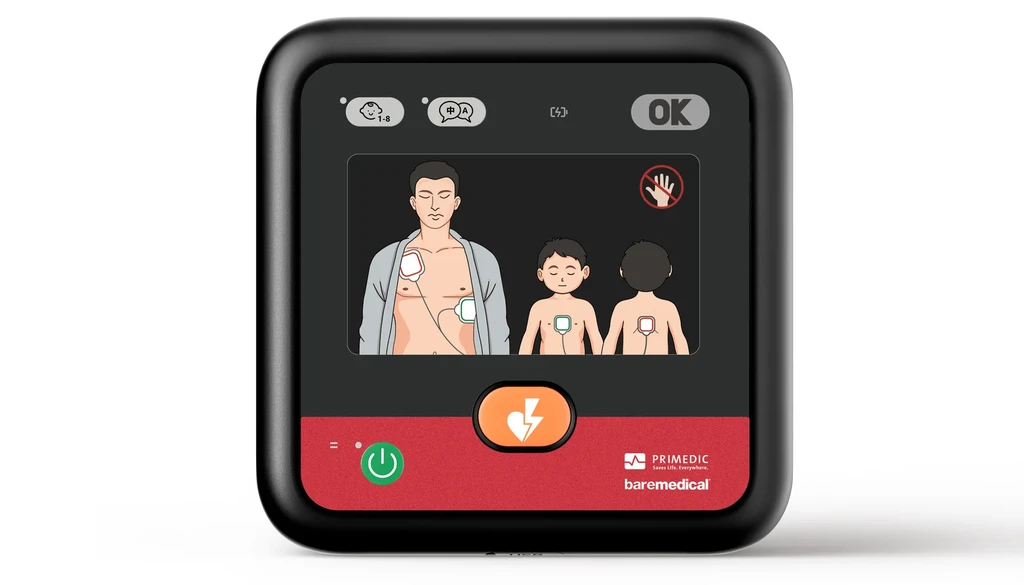
- Capital cost of the install sits on the body corporate’s capital works budget. SafePulse’s Basic Install package is $2,490 per unit, GST free, which includes a TGA-approved Mindray AED, cabinet, signage, install, registration with SA Ambulance Service, an 8-year warranty and a maintenance plan.
- Ongoing maintenance is part of the body corporate’s recurring expenses. Maintenance plans run at $40/month (Basic) or $25/month (Smart) per unit. The Smart package includes 24/7 monitoring (tamper alerts, GPS theft tracking, daily status reporting) which materially reduces the body corporate’s exposure to the most common failure mode — a unit with flat batteries or expired pads at the moment it’s needed.
- Lot owner contributions flow through the body corporate’s standard levy structure. The decision to install an AED to comply with the Act is not discretionary, and levies for compliance-driven works don’t usually require a special resolution — but check the by-laws and the Strata Titles Act 1988 (SA) for the specific scheme.
For buildings approaching the 1,200 m² scaling threshold, it’s worth getting the publicly accessible area measured properly before approving a single-unit install. The difference between one and two AEDs is a small line item over an 8-year warranty period, but the wrong call exposes the body corporate to a compliance gap.
Who’s responsible day-to-day?
The body corporate is the owner under the Act. In practice the day-to-day responsibility runs through three roles:
- The strata manager — usually the operational point of contact, responsible for ensuring the install happens, the AED stays registered, signage is in place, and maintenance is scheduled.
- The building manager or caretaker — where one exists, runs visual checks, replaces consumables when prompted, and is the on-site point of contact.
- The body corporate committee — approves the install, sets the budget, signs off on the maintenance contractor.
None of these roles displaces the body corporate’s underlying legal duty as the owner. If something goes wrong — an AED with expired pads, missing signage, or a unit that wasn’t registered with SA Ambulance Service inside the two-week window — the body corporate is the entity an authorised officer will engage with.
Common strata compliance mistakes
A handful come up repeatedly in the strata buildings we install in:
- Installing the AED inside a locked cabinet or behind a swipe-card door. The Act explicitly prohibits installation in a cabinet, container or other structure requiring a key or access code that prevents immediate emergency access.
- Mounting in the building manager’s office. Convenient for monitoring, useless in an emergency. The Act requires publicly accessible placement — a member of the public must be able to get to the AED themselves or request access (e.g. via a staffed security or reception desk).
- Skipping the SAAS registration step. The Act requires registration on the SA Ambulance Service AED Register within two weeks of installation. Triple Zero (000) call takers use that register to direct callers to the nearest AED.
- Missing the second AED. Buildings near the 2,400 m² publicly accessible threshold often install one and don’t revisit. If a future fit-out opens up a previously controlled area to the public, the scaling threshold can trip without anyone noticing.
- Treating signage as cosmetic. The Act requires signage near the AED and signage outside the entrance of the building indicating an AED is nearby. Both signs are mandatory.
A note on retirement villages
Retirement villages with shared amenities sit inside the designated-facility list under section 4. That’s a category mistake worth flagging, because retirement village strata schemes often assume residential rules apply.
Under the Act, “amenities” in a retirement village context means kitchens, toilets, gymnasiums, pools, and dining areas. Pathways, roads and driveways aren’t amenities. If the village has any of the included amenities, the body corporate is in scope and at least one AED is required regardless of the village’s total floor area.
Aged care facilities under the Aged Care Act 1997 (Cth) — including residential care — are also designated, with the additional carve-out that the public-accessibility placement requirement doesn’t apply to the AED location. That’s specific to aged care; it doesn’t extend to retirement villages where the public-access placement rule still bites.
Practical approach for body corporates
- Confirm the building is in scope. Run both tests — designated-facility list and the 600 m² total floor area threshold.
- Calculate the publicly accessible floor area properly. Not the total floor area, not the leased area — the area the public can reach without obstruction. Used for the 1,200 m² scaling table.
- Budget the install through capital works. SafePulse’s Basic and Smart install pricing is GST free; ongoing maintenance is a recurring expense.
- Get the install done. TGA-approved unit, mounted 1.2–1.4 m from the floor, in a visible publicly accessible location — typically the foyer or staffed reception. Not in a locked cabinet.
- Register within two weeks. SAAS AED Register, via health.saasaedregister@sa.gov.au or the SA Ambulance website.
- Install the signage. Near the AED and outside the building’s entrance.
- Set up the maintenance schedule. Per manufacturer instructions. A 24/7 monitored unit eliminates most of the failure modes that get strata schemes into trouble.
Where SafePulse fits
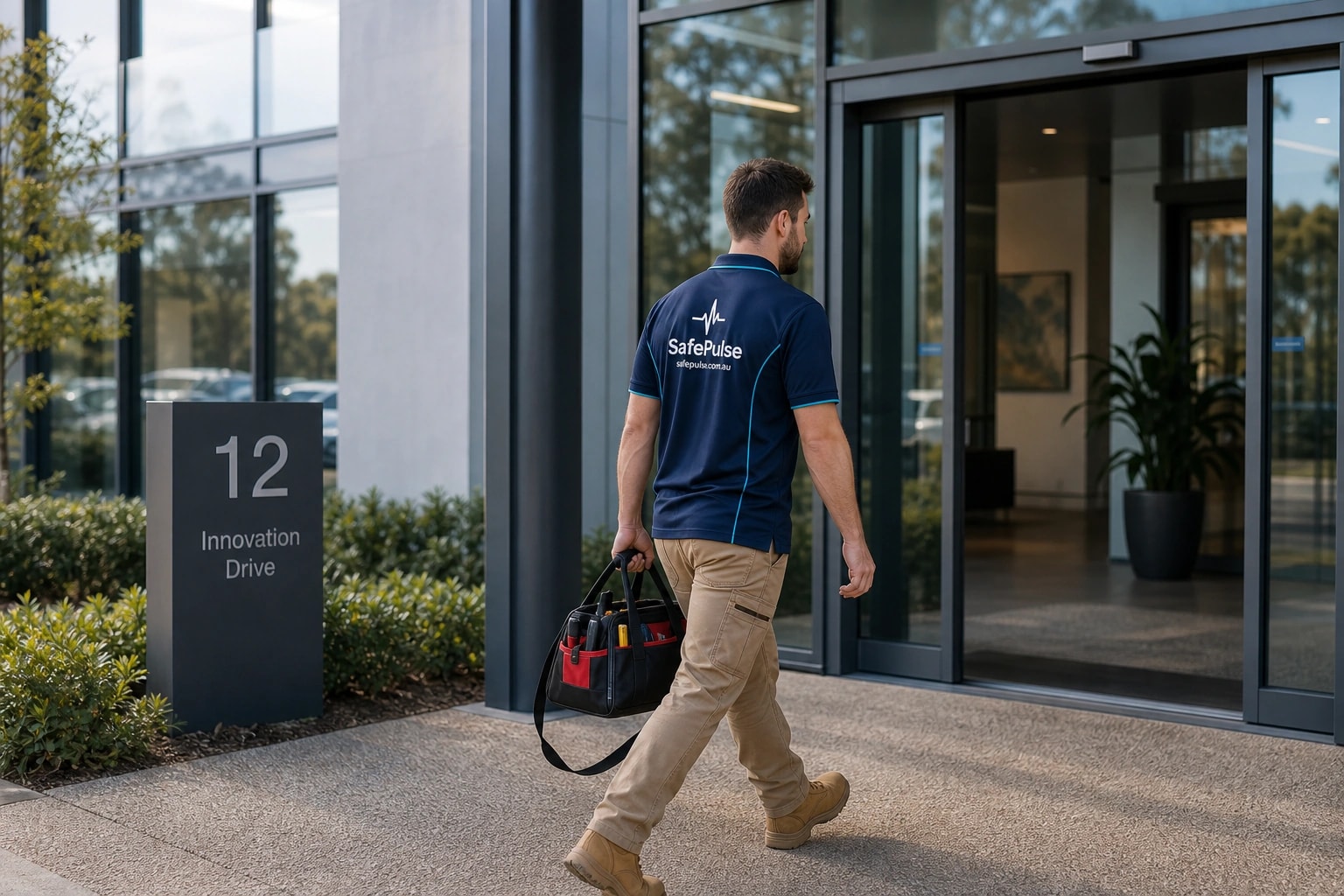
We install AEDs in strata-titled commercial buildings, retirement villages and body corporate complexes across SA. Each install includes the TGA-approved Mindray unit, cabinet, mandatory signage, mounting, SAAS registration and an 8-year warranty. The Smart package adds 24/7 monitoring through AED Alert 2.0 — daily status reports, tamper alerts, GPS theft tracking — which suits strata managers who want compliance visibility without standing in the foyer every fortnight.
If you’re a strata manager or body corporate committee member working through this, send us the building details and we’ll come back with a scope. See our South Australian AED solutions for the full package.
The bottom line
Strata doesn’t change the answer to the AED question — it changes who in the structure carries it. For common areas, the body corporate is the owner under the Act. For lots that independently trigger the tests, the lot owner is. The 1,200 m² scaling threshold is where most multi-storey strata buildings stop and breathe, because the publicly accessible portion of a tower’s foyer is usually well under that figure.
Mixed commercial tenancies raise the same duty question from a different angle — see who’s actually responsible in a multi-tenanted SA building. For what the Act asks of owners generally, there’s what the SA AED laws mean for landlords and property managers, and our SA AED compliance overview.
The most useful thing a strata manager can do this year is run the tests properly, get the install in place, register the unit, and put the maintenance plan on the recurring expenses schedule. The legal duty is the body corporate’s — the practical work is the strata manager’s.