Cross the border into South Australia and every school is legally required to have a defibrillator. In Tasmania, not one is. Same devices, same risk, very different rulebook — and it leaves Tasmanian school business managers and early-childhood operators with a genuine decision to make rather than a box to tick.
Here’s the honest picture: what the law does and doesn’t ask of a Tasmanian school, why the case for an AED is still strong, and how the funding routes actually work.
No Tasmanian AED law — for schools or anyone else
Tasmania has no legislation mandating AEDs in any building. There’s no Tasmanian equivalent to South Australia’s AED Act, and a check of the Parliament of Tasmania Bills lists — through 2024, 2025 and into 2026 — turns up no Bill mentioning defibrillators or AEDs at all. So a Tasmanian school is under no legal obligation to install one.
That’s the clean contrast with SA worth understanding, because it’s stark. Under South Australia’s Act, schools are designated facilities — they need at least one AED regardless of size, as a matter of law. Tasmania has simply never legislated in this area. A Tasmanian school sits in exactly the same position as a Tasmanian office or shop: covered by general workplace safety duties, not by any AED-specific rule.
What the WHS duty actually asks
Tasmanian schools do operate under the Work Health and Safety Act 2012 (Tas), which carries a general first-aid duty. The detail lives in WorkSafe Tasmania’s First Aid in the Workplace Code of Practice, effective since May 2020, which follows the national model wording.
On defibrillators, the Code is discretionary. It says you should consider providing an AED where there’s a risk of electrocution to workers, where there’d be a delay in ambulance services arriving, or where there are large numbers of members of the public. That word — “consider” — is doing real work. It’s not “must provide”. It’s a prompt to think it through as part of a risk assessment, and to be able to show you did.
Two of those three triggers are relevant to a school. A large primary or secondary school gathers substantial numbers of people — students, staff, parents at pickup, crowds at assemblies, carnivals and weekend sport. And a school in regional or rural Tasmania can face a real delay before an ambulance arrives, which is the trigger most likely to apply outside the main centres. Failing to install an AED isn’t an offence in Tasmania. But a school that has genuinely weighed the risk is on far firmer ground than one that never looked.
Why the case holds up even without a law
It’s tempting to read “not required” as “not necessary”. For schools, that’s the wrong conclusion, and here’s why.
Sudden cardiac arrest in children is rare but real, and when it happens it’s often exercise-related — the sports field, the gym, the swimming carnival. More to the point, a school isn’t only children. It’s a workplace full of adult staff, and it’s a community hub that draws parents, grandparents, visiting teams and spectators, many of them in the age bracket where cardiac arrest is most common. The person who collapses at a Saturday-morning game is statistically far more likely to be an adult on the sideline than a child on the field.
The clock is the same as it is anywhere: survival falls sharply with every minute before defibrillation. A device on site, usable by a teacher or a canteen volunteer with no medical training, is what covers the gap until paramedics arrive. In a rural school that gap can be long. That’s the substance behind the “should consider” — not a technicality, but a foreseeable event a school is well placed to respond to if it’s equipped.
Early-childhood and out-of-school-hours-care settings sit in the same frame. Fewer high-risk children, but still adult staff, parents at drop-off and pick-up, and the same first-aid duty. The device that protects the grown-ups in the building is the same one that’s there if a child ever needs it.
The funding routes — and how to read them honestly
Tasmania has an unusually active community-AED ecosystem, and some of it can help a school. Just be clear-eyed about what each route is and isn’t.
The Tasmanian Government Community AED Fund has rolled out free AEDs to community organisations across the state — 180 units over two years, with priority for rural and regional locations, as part of a broader program that’s put well over a thousand publicly accessible AEDs on the map statewide. It’s a competitive, community-oriented grant, not a blanket entitlement, and rounds open and close on a schedule. A school that can offer genuine public access to the device — mounted so the wider community can reach it outside school hours, not just staff and students — is the kind of applicant it’s aimed at. Worth watching for an open round rather than banking on.
St John Ambulance Tasmania’s Safe Community Grant Program is a separate, charity-run route that provides a free AED plus training to eligible community groups, again with a preference for devices installed so the public can access them. It runs multiple rounds a year.
The honest caveat on both: rounds come and go, and eligibility leans toward public-access community placement rather than locked-inside-the-office school use. Check the current round status before you count on either — don’t assume one is open because it was last year. And be wary of the general sport-and-recreation grants: programs like Ticket to Play or the various facility-upgrade funds are not AED-funding mechanisms, whatever a supplier might imply. If a route isn’t specifically an AED or safety-equipment program, treat a defibrillator claim with suspicion.
For many schools the practical answer is that a grant might cover a community-access device, but a defibrillator sited for the staff and students — inside, where your people are — will usually be a purchase. That’s fine. It’s a modest, one-off piece of safety equipment for the building.
Registering your AED in Tasmania
Wherever the device comes from, register it. Ambulance Tasmania runs AED registration in partnership with GoodSAM, and it’s voluntary and free. A registered AED shows up for Triple Zero call-takers and nearby responders, and it also feeds the public LISTmap layer so the community can find it. For a school that’s chosen to offer after-hours public access, registration is what makes that access actually count in an emergency.
The bottom line
No Tasmanian school is breaking any law by not having an AED — that’s the plain truth, and it’s the opposite of the position across the border in SA. But the risk a school carries doesn’t care which state it’s in. A large campus, a rural location, a community that gathers on the grounds every weekend — those are the exact conditions the WHS Code points to. Add the funding routes for public-access devices, and the case for a Tasmanian school to equip itself is a strong one, mandate or no mandate.
For the wider Tasmanian picture, our foundation piece on whether Tasmanian commercial buildings need an AED in 2026 sets out the state framework, and our look at Tasmania’s $500K Community AED Fund unpacks the funding side in detail. You can see the range of Tasmanian settings on our Tasmania page.
Where SafePulse fits
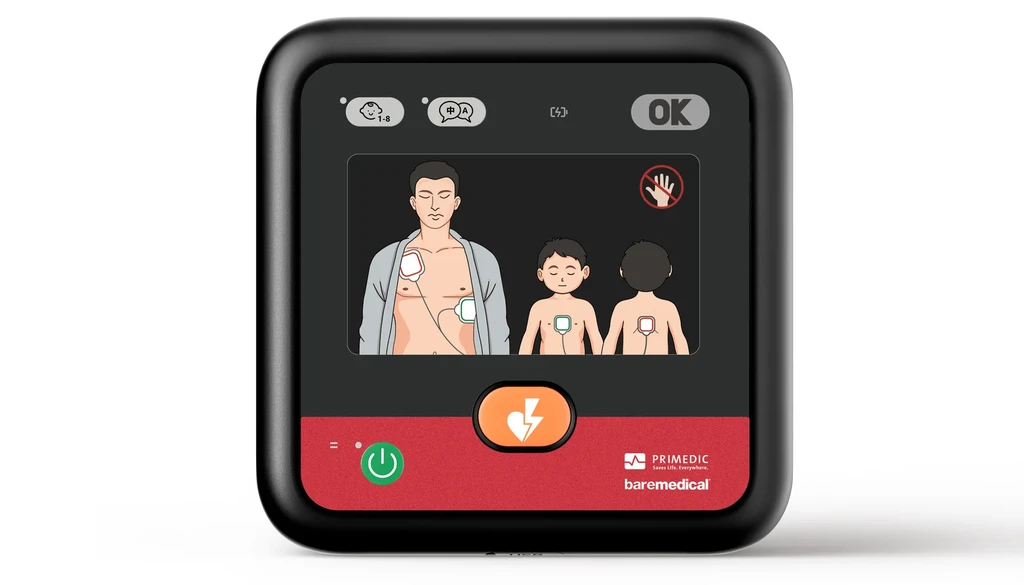
We supply, install and maintain AEDs for schools, care settings and commercial premises. For a Tasmanian school that means a TGA-approved device placed where it’s found fast, the right cabinet for where it lives — indoor foyer or outdoor, IP-rated wall — the signage, and a maintenance plan so pads and battery never quietly lapse between carnivals. We can also help you register the device with Ambulance Tasmania so it lands on GoodSAM and LISTmap. Our Smart installs add daily monitoring, which flags a fault the moment it happens rather than the day you need it.
The voluntary position follows the state-wide one in do Tasmanian commercial buildings need an AED in 2026. Community funding routes, and who they’re actually aimed at, are covered in Tasmania’s $500K Community AED Fund. More at our Tasmanian AED page.
If you’d like to weigh it up for your school, a site assessment is the simplest starting point.