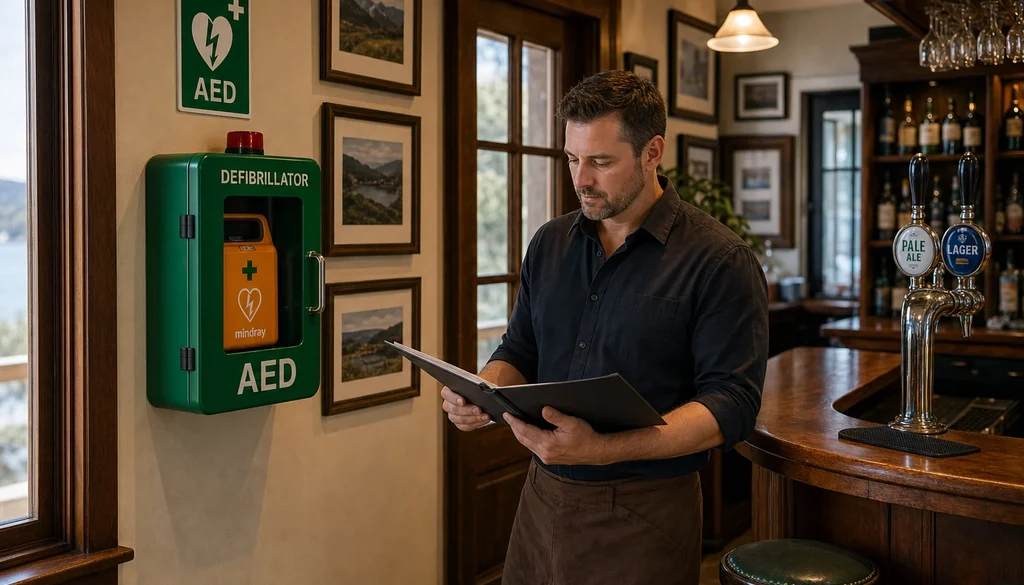
Tasmania’s pubs, clubs, hotels and hospitality venues sit inside a textbook case for AED provision under the state’s WHS framework. Public footfall, alcohol, late-night licensing, an older regular patron base, and — outside Hobart and Launceston — ambulance response times that stretch well beyond the metropolitan averages. There’s no AED legislation in Tasmania, but the WHS duty and the Code of Practice are clear about what a “reasonably practicable” first aid response looks like for a venue running this risk profile. This piece is for the operators working out what to do about it.
Where Tasmanian hospitality sits in the law
Tasmania has no AED-specific Act. A search of Parliament of Tasmania Bills for 2024, 2025 and 2026 returns no Bill containing “defibrillator”, “AED” or “Automated External” (re-verified before drafting). The framework that applies is the Work Health and Safety Act 2012 (Tas) and the Work Health and Safety Regulations 2022, with operational detail set out in WorkSafe Tasmania’s First Aid in the Workplace Code of Practice (effective 27 May 2020).
As a Person Conducting a Business or Undertaking, a Tasmanian pub or hospitality operator has a first aid duty under reg 42 — provide first aid equipment, facilities and trained workers, with workers having access. The Code translates that duty into practical content.
The Code adopts the Safe Work Australia model text on AEDs:
“You should consider providing an AED if there is a risk to workers at your workplace from electrocution, if there would be a delay in ambulance services arriving at the workplace, or where there are large numbers of members of the public.”
The three trigger factors:
- Risk of electrocution to workers — kitchen and cellar equipment, glass-washers, ice machines, fryers. Not the dominant factor but real
- Likely delay in ambulance arrival — the dominant factor outside Hobart and Launceston. Regional Tasmanian hospitality (East Coast, West Coast, the Highlands, the North-West) experiences ambulance response times that materially affect cardiac arrest survival
- Large numbers of members of the public present — the case that’s hardest to argue against for a licensed venue
Failure to install an AED is not, in itself, an offence under TAS WHS law. Failure to discharge the broader first aid duty could be — and the Code is what an inspector or coroner would point to when assessing whether the duty was met.
Why hospitality is the case that argues itself
The way the three Code triggers stack up in a hospitality setting:
Large numbers of members of the public
A regional Tasmanian pub on a busy Friday night runs 100–300 patrons through over the evening. A Hobart waterfront hotel runs more. The 1-in-1,000 annual cardiac arrest rate in the general adult population concentrates more sharply in licensed venues because of the age and behaviour profile of patrons.
Older patron demographic
Australian licensed venues skew older than the general population. The cardiac risk curve climbs sharply through the 50s, 60s and 70s. The median pub patron in regional Tasmania is in the cardiac-risk window.
Alcohol and exertion
Alcohol consumption, late nights, dancing at the front bar, the occasional argument. Cardiac arrest in licensed premises isn’t a rare event — it’s a recognised category of public-place arrests that AED registry data picks up regularly.
Ambulance delay outside the major cities
This is the Tasmania-specific factor that tips the case sharply. A pub in Strahan, Queenstown, Bicheno, St Helens, Scottsdale or Sheffield can be 30–60 minutes from the nearest paramedic response under normal conditions, longer in weather. Cardiac arrest survival drops by approximately 10% per minute without defibrillation. A 30-minute response without a bystander shock means a very high probability of fatality. A bystander shock in the first three minutes — using an on-site AED — restores survival into a credible range
Late-night operating hours
Licensed venues operate when ambulance staffing is lighter and response routes are longer. The Code-of-practice “delay in ambulance services” factor is materially worse at 1 am on a Saturday than 1 pm on a Wednesday.
For a Tasmanian hospitality operator working through the Code’s “reasonably practicable” test, the answer reaches “yes” without much resistance.
Where Tasmanian licensed venues actually need them
For different segments of Tasmanian hospitality, the placement decisions shake out a little differently.
Regional pubs (a single bar, a kitchen, a few beds)
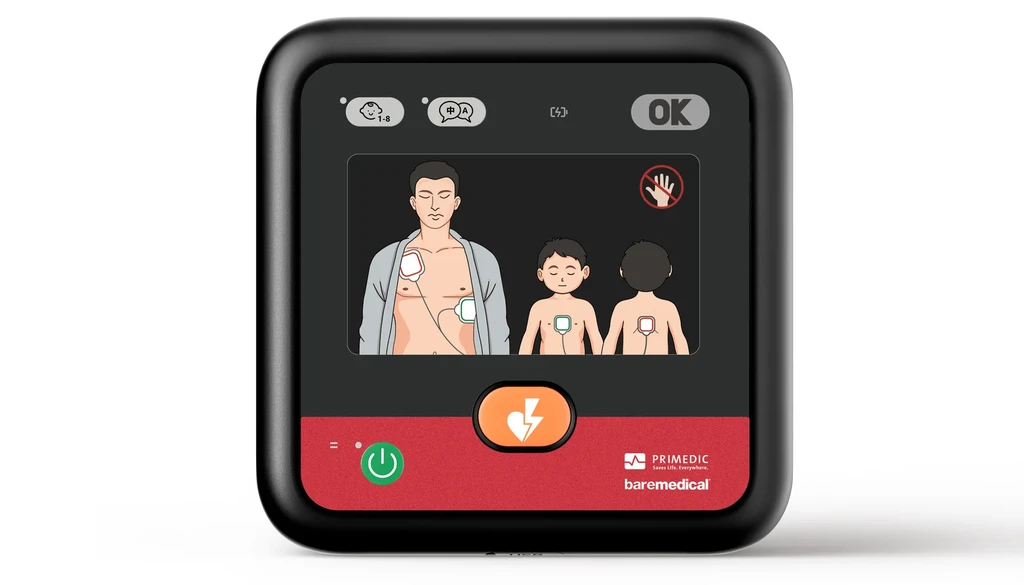
One device, mounted in the main public bar area at chest height, in a publicly accessible cabinet. Visible to anyone in the venue, retrievable by any staff member within 30 seconds. The cabinet should be inside the licensed area, not in a locked office or storeroom.
Hobart waterfront hotels and large urban hotels
Two devices, typically — one in the main lobby/reception area, one in the function/restaurant precinct. Larger hotels with significant back-of-house operations may add a third in the staff corridor.
Launceston and Devonport mid-size venues
One device in the main bar/restaurant area, accessible from the venue’s busiest zone. Some larger venues with separate function rooms upstairs benefit from a second device on the function level.
Wineries, distilleries, cellar doors
One device in the main cellar door / tasting room area. Often the same room is the function venue for events. Mount visibly, signage above, registration with Ambulance Tasmania.
Pubs with accommodation
Treat like a hotel — at least one device in the main public area, with consideration for a second near the accommodation entrance for after-hours guest access.
Wilderness lodges and remote eco-resorts
Different category — covered in the wilderness/tourism piece that goes deeper into long-distance ambulance reality and outdoor cabinet specs. Short version: outdoor IP55+ cabinet, mounted at the main building entrance, accessible to all guests.
Register with Ambulance Tasmania (it’s free)
Tasmania uses a free, voluntary AED registry operated by Ambulance Tasmania in partnership with GoodSAM. Register your device through the Department of Health AED page or directly via the GoodSAM TAS AED portal.
Registration achieves two things:
- Triple Zero call-takers can direct callers to your AED when a cardiac event occurs at the venue or nearby
- Registered devices appear on the publicly accessible LISTmap layer at thelist.tas.gov.au, in the GoodSAM Responder app, and on Ambulance Tasmania’s community AED locator
Tasmania has more than 1,300 publicly accessible AEDs registered as of April 2026, supported partly by the Tasmanian Government’s $500,000 Community AED Fund (which has delivered 180 free units to community organisations across 2024–25 and 2025–26). For context: that’s an unusually strong public-AED footprint for a state of Tasmania’s population. Your venue should be on the map.
What about the Community AED Fund — can a pub apply?
Quick honest framing on the Tasmanian Community AED Fund:
- What it is — a Tasmanian Government program providing free AEDs to community organisations, funded at $500,000 over two years (180 units across 2024–25 and 2025–26)
- Who it targets — community groups, charities, sporting clubs, councils, local businesses and not-for-profit organisations, with priority on rural, regional and remote locations and 24/7 public access
- Who it doesn’t target — commercial hospitality venues. Pubs, hotels and licensed venues are commercial entities. The Fund’s framing is community/NFP-oriented
- What this means — commercial hospitality should plan to self-fund. The Community AED Fund is not the route. It’s evidence that AED access matters in Tasmania, but it’s not the operator’s funding pathway
For Tasmanian hospitality, the self-fund cost is small. A Basic Install through SafePulse is $2,490 GST free, with maintenance bundled. That’s well inside what a venue spends on POS upgrades, signage refreshes or new tap heads.
The signage and “do I need a sign?” question
Tasmania has no statutory AED signage requirement. The Code of Practice recommends visible mounting and clear access. The practical layout:
- AED sign directly above the cabinet, using the Australian Resuscitation Council green-and-white symbol
- Cabinet markings — ARC symbol on the front of the cabinet
- A sign at the main public entrance pointing to the AED’s location is best practice for larger venues
For a regional pub with a single public bar, sign-above-the-cabinet is sufficient. For a Hobart waterfront hotel with multiple entrances and tens of thousands of public movements per year, full signage with entrance markers and floor-by-floor signs is the right spec.
Where to spec the cabinet
- TGA-approved AED unit (mandatory under federal Therapeutic Goods regulation — all Australian-sold AEDs meet this)
- IP55 or above if the cabinet sits outdoors, in a sheltered outdoor smoking area, or in a damp coastal interior
- Indoor cabinet for the main bar, lobby or function area in a climate-controlled venue
- Mounting height 1.2–1.4 m from the floor — accessible, visible, retrievable by any adult
- Two sets of pads, shears, razor, gloves in the cabinet
What Tasmanian venues should not claim
A few honest framings worth keeping:
- The venue isn’t “compliant with TAS AED law” — there is no TAS AED law to comply with. The venue is meeting a best-practice WHS standard
- The venue’s AED program doesn’t replace the duty to call 000. The AED is a bridge to ambulance arrival, not a substitute
- Registration with Ambulance Tasmania isn’t legally required. It’s strongly recommended and free
- The AED doesn’t guarantee a save. It substantially improves the odds. Survival depends on rapid recognition, bystander CPR, time to first shock and the underlying rhythm
A practical sequence for an operator
If you run a Tasmanian pub or hospitality venue and you’ve been meaning to put a program together:
- Decide where the device(s) will go. The main public bar or function area for a single-device venue; lobby + function area for a larger hotel
- Choose the spec. TGA-approved AED, appropriate cabinet, signage. SafePulse handles all of this in a Basic or Smart Install
- Train two to four staff per shift in CPR and AED use. Most hospitality operators include this in their existing first aid training cycle
- Register the device with Ambulance Tasmania via GoodSAM once installed
- Add the device to the venue’s maintenance cycle — pads every 2–4 years, batteries every 4–5 years, six-monthly inspection visit if you’re on a SafePulse maintenance plan
Where SafePulse fits
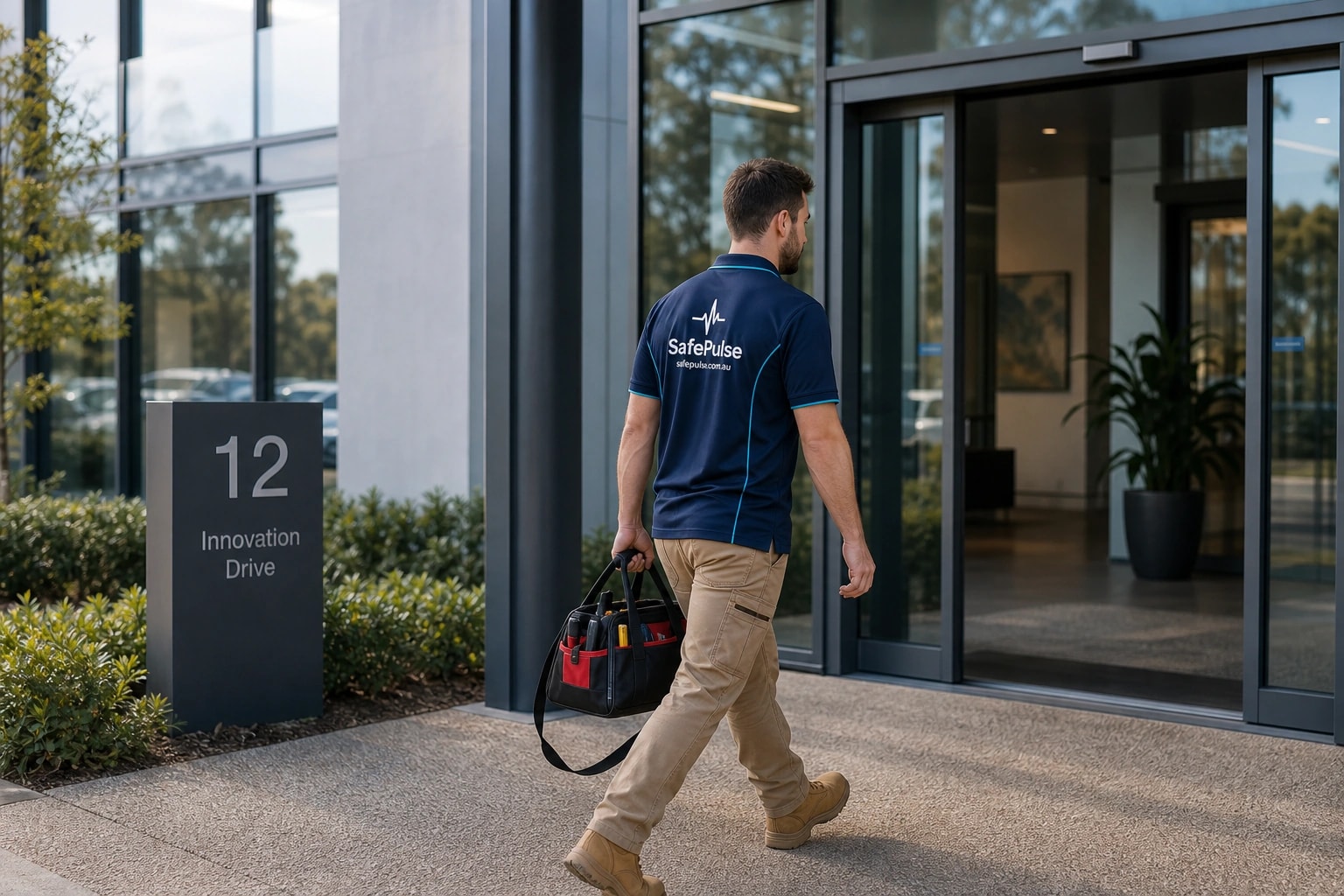
We supply, install and maintain AEDs across Tasmania — Hobart, Launceston, the North-West, the East Coast, the West Coast, the Tasmanian Highlands. We handle the Ambulance Tasmania registration as part of the install. We run six-monthly maintenance visits and replace consumables before expiry.
Regional venues carry the added factor of ambulance distance, covered in Tasmania’s long-distance ambulance reality. For the legal position, there’s do Tasmanian commercial buildings need an AED in 2026, and our Tasmanian AED page.
If you’re a Tasmanian hospitality operator at the “we should sort this out” stage, get in touch via safepulse.com.au/tasmania/ and we’ll walk through the right layout for your venue.