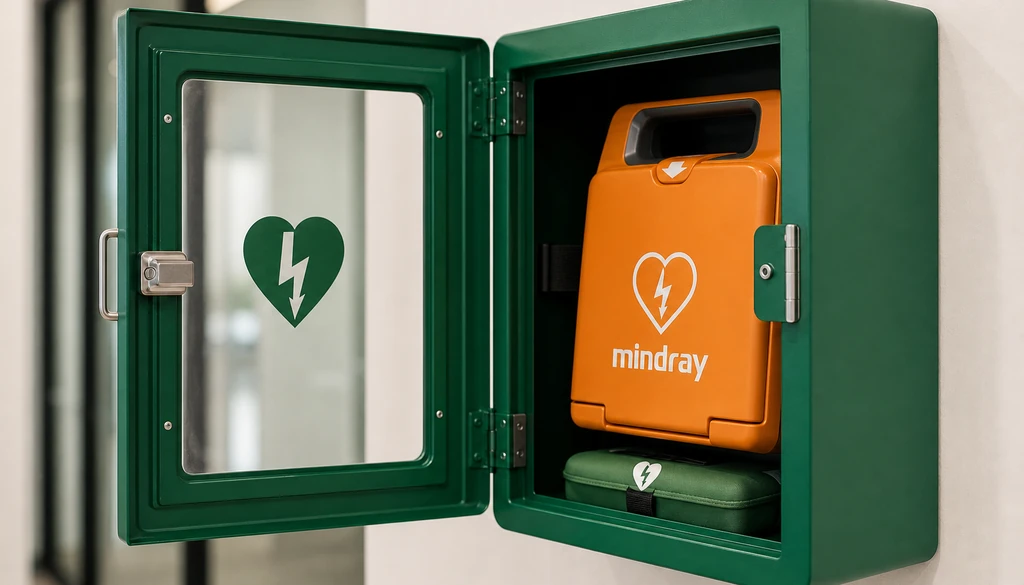
A defibrillator is one of the few pieces of safety equipment that has to work perfectly the first time it’s ever used, operated by someone who’s never touched one. Get the brand wrong and you’ve hung a liability on the wall instead of a lifeline.
We standardise on Mindray AEDs for the Victorian sites we install at, and the reasoning is practical, not promotional. They’re reliable, they carry an untrained person through a cardiac arrest, and they’re sensible to own across the years they’ll sit there. Here’s why, framed for Victoria — where the law doesn’t require an AED, but your OHS duty means you should be asking the question anyway.
Where Victoria actually stands
Victoria has no AED-specific legislation. No Act, no bill has ever been tabled in the Victorian Parliament on the subject, no building-size trigger, and no penalties for not having one. Anyone telling you otherwise is confusing Victoria with South Australia.
What Victorian employers do carry is a duty under the Occupational Health and Safety Act 2004 to provide a workplace that’s safe “so far as is reasonably practicable.” WorkSafe Victoria — the state’s workplace safety regulator — puts it plainly in its Compliance Code: First Aid in the Workplace (November 2021). Employers should “consider whether it is reasonably practicable to have an automated external defibrillator in the workplace as these are not difficult to use and save lives.”
That’s “should consider,” not “must have.” But for a workplace where cardiac arrest is more foreseeable — high foot traffic, an older workforce, physically demanding work, large numbers of staff — the reasonably-practicable test starts to lean toward yes. Once you’ve reached that point, the device you choose is the decision that’s actually in front of you.
What makes Mindray right for a commercial site
Mindray is a global medical equipment manufacturer, and its AEDs are approved by the Therapeutic Goods Administration (TGA) for Australian use. The current public-access range here is built on the BeneHeart line. Three qualities make it a solid fit for the buildings we work in.
It talks a stranger through it
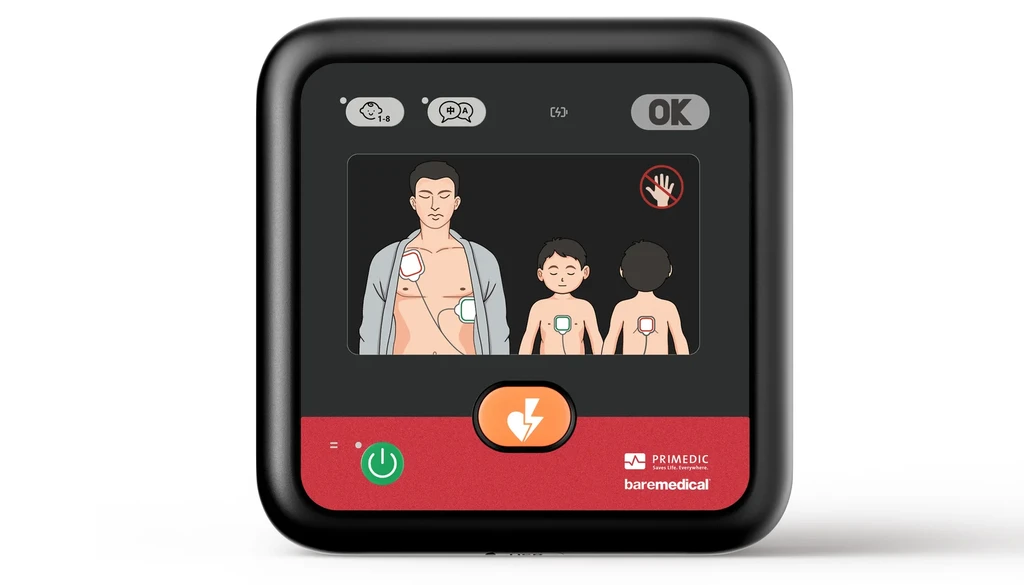
Open the lid and a Mindray AED starts giving instructions — pad placement, when to stand clear, when a shock is warranted. It only allows a shock when the rhythm calls for one, and the pads show where they sit on the chest.
This is the part that counts. As WorkSafe Victoria itself notes, “anyone can use an AED on someone who is suspected of being in cardiac arrest. You do not need specialised AED training.” The device has to make that true in practice, and Mindray’s prompts do the work.
Consumables that stay out of your way
An AED runs on a battery and electrode pads, both with limited lifespans. Mindray’s consumables have a long shelf life, which cuts replacement frequency and keeps the running cost predictable. For anyone overseeing more than one building, that’s fewer service events and a budget you can plan around.
It copes with real conditions
Mindray units run reliably through the temperature and humidity range of Victorian commercial buildings, so you’re free to place the cabinet where it’s useful rather than where it’s climate-controlled. We most often install the 4G-enabled BeneHeart units with active monitoring — they run automatic self-checks and send us a live alert if something’s wrong. On the wireless models, we set the connectivity properly at install so the self-test reporting doesn’t quietly drain the battery, a small detail that’s the difference between a device that’s mounted and one that’s genuinely ready.
How it performs in the moment
When someone goes into sudden cardiac arrest, every minute without defibrillation cuts survival odds by roughly 10%, according to the Australian Resuscitation Council. WorkSafe Victoria makes the same point: “very few people survive a cardiac arrest without immediate assistance.”
Mindray units start reading the heart rhythm within seconds of pad contact. Shockable rhythm, and the device charges itself and prompts the user to press the button. Non-shockable, and it directs them to keep up CPR. The guidance adapts as it goes — if the user stalls or a pad lifts, the device notices and brings them back on track.
Registering it in Victoria — and what you get back
Here’s a genuinely Victorian point worth knowing, because Ambulance Victoria offers more than most people realise.
Registration is free and voluntary — there’s no legal requirement to register an AED in Victoria — but it’s worth doing. Register your device at registermyaed.ambulance.vic.gov.au and its location is shared with Triple Zero call-takers and GoodSAM responders, so it can be found fast when a nearby cardiac arrest is reported.
What sets Victoria apart is the post-use support. If your registered AED is used in a public emergency, Ambulance Victoria arranges the device’s recommissioning, downloads the patient data for the treating hospital, returns the unit within 72 hours, and supplies free replacement electrode pads. That’s a real reason to register beyond good citizenship — it gets your device back in service quickly after the worst has happened. We handle registration for the sites we install at so it doesn’t get forgotten.
What it costs to own across several buildings
The purchase price is only the start. Genuine cost of ownership includes installation, maintenance, pad and battery replacement, and any callouts over the unit’s working life.
Mindray comes in at a lower total cost than several premium brands without trading away the functionality that matters commercially — fast, dependable defibrillation. Across multiple buildings that gap adds up, which is why the clients who get the most out of Mindray are usually running:
- Office buildings with multiple tenancies
- Education campuses spread across several buildings
- Aged care sites with separate wings or blocks
- Shopping centres and business parks with distributed foot traffic
Maintenance: the six-monthly reality
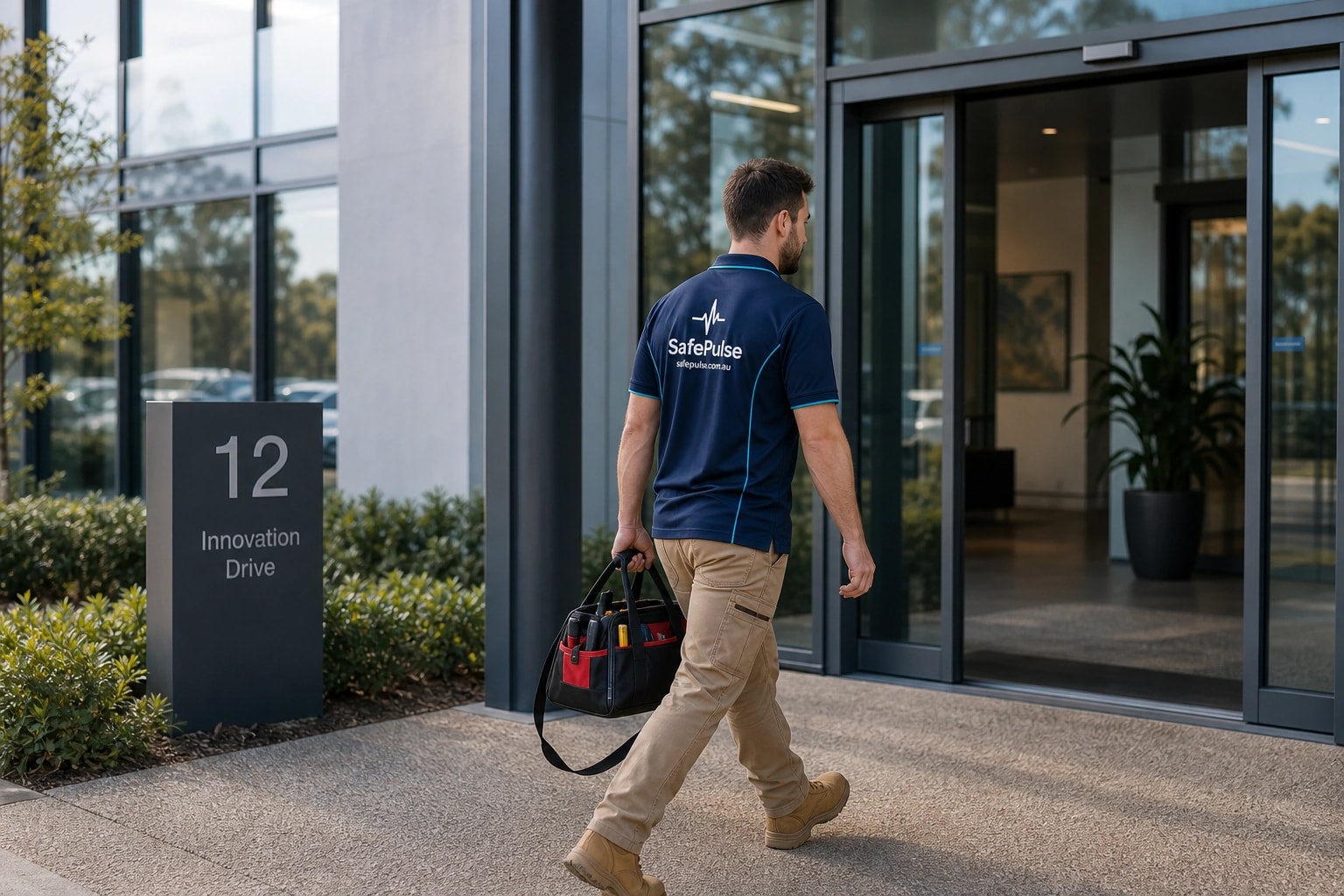
Mindray AEDs need servicing every six months. On each visit our technicians confirm the device functions, check consumable expiry dates, test the battery, inspect the pads, and verify the self-checks are running. You come away with a documented maintenance record — exactly the evidence you’d want if your OHS duty were ever tested after an incident.
Between services the device monitors itself. A red indicator or an alert tone is your signal to call for an unscheduled check. On the Smart-monitoring units the AED reports its own status to us over 4G, so readiness is visible without waiting for the next inspection. We track service dates across every site and prompt before they fall due, and for multi-building clients we run coordinated service days to keep the disruption to one.
The practical approach for a Victorian employer
If your risk assessment says an AED belongs in your workplace, the sequence is simple. Decide how many units and where, based on how far anyone is from the nearest one. Pick a TGA-approved device an untrained person can use. Register it with Ambulance Victoria. Put it on a genuine maintenance schedule and keep the records.
Document the reasoning while you’re at it. The Compliance Code doesn’t create strict liability, but it does create an expectation that the AED question was considered — and a short written note showing you weighed it is worth having. Mindray fits the whole process because it answers what a Victorian employer actually asks: will it work when needed, can an untrained person use it, and does the cost make sense across the sites. For most commercial applications, that’s yes on all three.
We don’t force one device onto every building — some have reasons to go elsewhere, and we’ll tell you. But for typical Victorian commercial work, Mindray is what we install, and we’re glad to talk through whether it suits your site.
If you’re weighing up AEDs for a Victorian commercial property, we offer a free site assessment with no obligation — placement, quantities, and honest pricing for supply, installation and maintenance. Get in touch and we’ll walk the building with you.
Frequently asked questions
Does Victorian law require my workplace to have an AED?
No. There’s no AED-specific law in Victoria and no penalties for not having one. Your duty is under the OHS Act, and WorkSafe Victoria’s Compliance Code says you should “consider whether it is reasonably practicable” to have one — which, for higher-risk workplaces, often points toward yes.
Can an untrained person use a Mindray AED?
Yes. Mindray AEDs are built for untrained bystanders, with voice and visual prompts from the moment the lid opens. WorkSafe Victoria confirms you don’t need specialised training to use one.
Do I have to register my AED in Victoria?
No — it’s voluntary and free. We recommend it anyway. Registering with Ambulance Victoria puts your device on the map for Triple Zero and responders, and it unlocks post-use support including free replacement pads and device recommissioning after an emergency.
Are Mindray AEDs TGA-approved?
Choosing the device follows deciding you need one, which in Victoria comes down to the duty in Victorian OHS duty of care and the guidance in the WorkSafe Victoria Compliance Code. Our Victorian AED page sets out the state position.
Yes. Mindray’s public-access AEDs are listed with the Therapeutic Goods Administration. Always confirm any AED is TGA-approved before it’s installed.