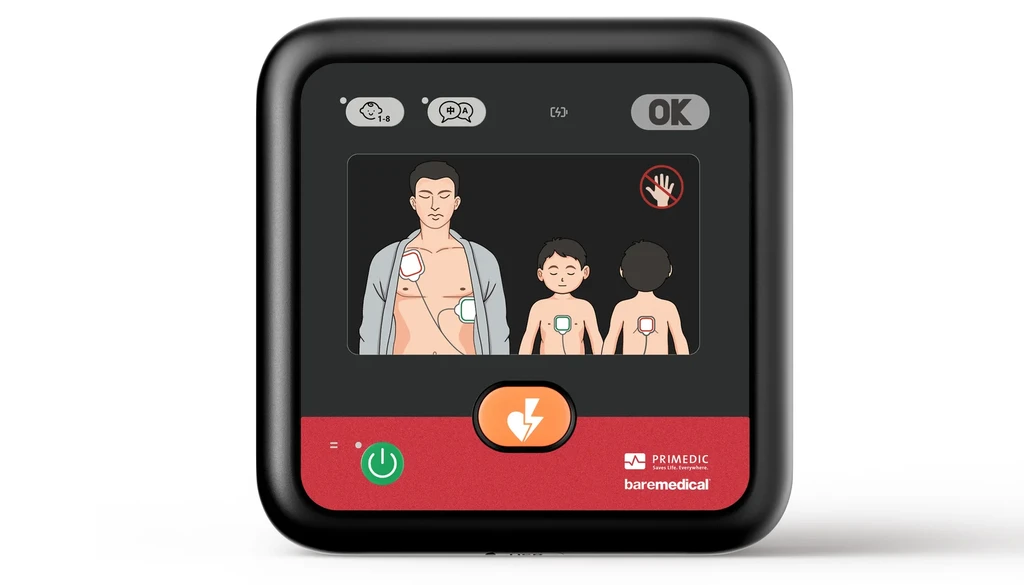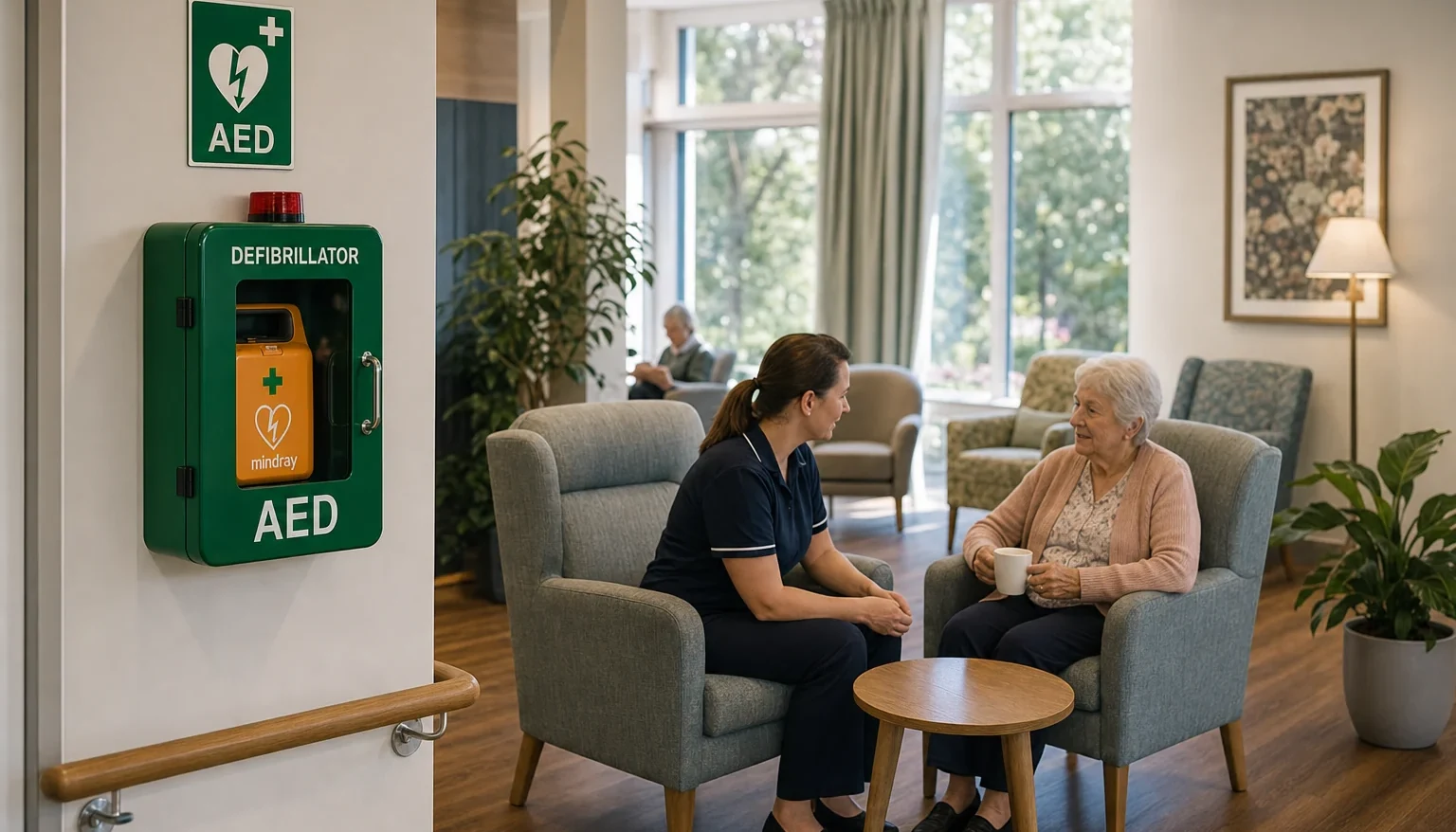
Aged care is one of the clearest cases for an AED anywhere — an older, higher-risk population, often with known heart conditions, in a setting where minutes matter. And yet there’s no single law in Victoria that says an aged care home must have a defibrillator. What there is instead is two layers of obligation pulling in the same direction: a federal regulator that governs how providers deliver clinical care, and a state OHS duty that governs how they keep their workplace safe. Neither names AEDs. Both make a strong case for one.
Here’s how the two regimes fit together, and what it means for a Victorian aged care provider thinking about AED access.
The Victorian state position: no AED law, but a real OHS duty
Victoria has no AED-specific legislation. No Act, and — unlike NSW — no Bill has ever been tabled in the Victorian Parliament on the subject. There’s no minimum building size, no installation deadline, and no penalty for not having a device.
What every Victorian workplace has, aged care homes included, is a general duty under the Occupational Health and Safety Act 2004 (Vic). Section 21 requires an employer to provide and maintain, so far as is reasonably practicable, a working environment that’s safe and without risks to health, including adequate facilities for employee welfare.
WorkSafe Victoria — the state’s workplace safety regulator — gives that duty practical content through its Compliance Code: First Aid in the Workplace (November 2021). On AEDs, the Code’s language is discretionary but pointed. It says employers should “consider whether it is reasonably practicable to have an automated external defibrillator in the workplace as these are not difficult to use and save lives,” and that AEDs “should be installed in well-known, visible and accessible locations” and “should not be locked.”
“Should consider” isn’t “must have”. But the test that sits underneath it — reasonably practicable — is where aged care stands apart. The more foreseeable a cardiac event is in a given setting, the harder it is to argue that providing an AED wasn’t reasonably practicable. In a residential aged care home, a cardiac arrest isn’t a remote possibility. It’s a foreseeable event in the exact population the facility exists to care for. That makes the “should consider” land a lot heavier than it does in, say, a quiet office.
The federal layer: the Aged Care Act 2024 and the strengthened Standards
Aged care providers don’t only answer to WorkSafe. They’re regulated federally by the Aged Care Quality and Safety Commission, and that regime changed substantially on 1 November 2025 when the Aged Care Act 2024 (Cth) commenced, replacing the old 1997 Act. Alongside it came the strengthened Aged Care Quality Standards.
The strengthened standards don’t mention defibrillators by name. What they do — and this is the part that matters — is sharpen the obligation around clinical care and deteriorating residents. Standard 5 (Clinical Care) requires providers to deliver safe, evidence-based clinical care, and that includes having processes to identify, monitor and respond to clinical deterioration and acute change in a resident’s condition.
A cardiac arrest is the most acute clinical deterioration there is. A provider that’s required to recognise and respond to a resident going downhill clinically has to ask what its response to a cardiac arrest actually looks like — and “wait for the ambulance” is a weak answer when defibrillation in the first few minutes is the single biggest determinant of survival. The strengthened standards don’t hand you an AED mandate. They hand you a clinical-governance reason to make sure your emergency response includes one.
Two regimes, one conclusion
So the Victorian aged care provider sits at the intersection of two regulators, neither of which mandates an AED:
- WorkSafe Victoria expects you to consider, under the reasonably-practicable test, whether an AED belongs in your workplace — and in a high-risk-population setting, that test points firmly toward yes.
- The Aged Care Quality and Safety Commission expects you to deliver safe clinical care and respond to acute deterioration — which makes a defibrillator part of a credible emergency response.
Put together, they make the AED question close to rhetorical in aged care. You won’t be fined for not having one. But you’d struggle to explain, to either regulator or to a coroner, why a setting full of high-risk residents didn’t have the one device that meaningfully changes cardiac arrest survival.
That’s the honest framing. Not “the law requires it” — it doesn’t. Rather: “two sets of duties you already carry make it very hard to justify going without.”
Don’t forget the workforce
One point that often gets lost: the OHS duty runs to your staff and visitors, not just your residents. Aged care has an older workforce than most industries, and family members visiting are frequently in the at-risk age bracket themselves. An AED in an aged care home serves residents, staff and visitors alike. The case isn’t built on residents alone — it’s a whole-of-site safety measure.
Practical placement in an aged care setting
A few things are specific to how aged care homes are laid out:
- One central, accessible location at minimum — typically the main nursing station or a central corridor hub that staff pass constantly and can reach quickly from anywhere on the floor.
- Consider multiple devices in larger or multi-wing facilities. If reaching the AED from the far end of a wing takes more than a brisk minute, a second device earns its place. Travel time to the device is travel time the patient doesn’t have.
- Don’t lock it away. The Compliance Code is explicit that AEDs should not be locked. In aged care there’s sometimes a reflex to secure everything; the AED needs to be grabbable in seconds, not behind a key.
- Mount it at 1.2–1.4 m, with the Australian Resuscitation Council AED symbol on the cabinet and clear signage so agency and casual staff who don’t know the building can find it.
- Train broadly. AEDs talk the user through every step and need no certification to use, but in a clinical setting your staff should be confident with the device as part of routine resuscitation training.
Registration
Victoria runs a free, voluntary AED register through Ambulance Victoria, integrated with GoodSAM. Registering your device at registermyaed.ambulance.vic.gov.au means Triple Zero call-takers and nearby responders can see it during an emergency. It’s not legally required, but it’s the right thing to do and takes a few minutes. Ambulance Victoria also provides free replacement pads after a device is used in a public emergency, which is a small but genuine benefit of being on the register.
Where SafePulse fits
We supply, install and maintain AEDs for aged care providers, and we handle the Ambulance Victoria registration and the ongoing maintenance schedule — pads and batteries replaced before they expire, six-monthly checks, the lot. For a multi-wing facility we’ll work through placement so the device is reachable from anywhere on the floor inside the window that matters.
No Victorian law requires a device in aged care, so the case rests on the OHS duty in Victorian OHS duty of care and the expectations in the WorkSafe Victoria Compliance Code. Our Victorian AED page has the wider picture.
If you’re reviewing your clinical emergency response against the strengthened standards and the AED question has come up, we can help you scope it. Get in touch at safepulse.com.au/vic/.