If you manage a commercial building in Brisbane, the Gold Coast, Cairns, Townsville or anywhere else in Queensland, you’ve probably seen the South Australian AED legislation in the news and wondered whether something similar applies in your state. The short answer is no — but that’s not the end of the story.
This piece walks through what Queensland law actually requires of commercial property owners and employers when it comes to AEDs, where the duty-of-care line sits, and what the practical path forward looks like in 2026.
Is an AED legally required in Queensland?
No. Queensland has no AED-specific legislation in force as of May 2026.
South Australia’s Automated External Defibrillators (Public Access) Act 2022 is the only AED Act of its kind currently in force in Australia. Queensland has had no AED-specific Bill before its Parliament — not introduced, not lapsed, nothing currently on the order paper. NSW has had three Bills lapse in the same period, but neither Queensland nor any of the eastern-state governments have moved to follow SA’s lead.
That means a Queensland commercial building in 2026 is not breaking any AED-specific law if it doesn’t have one. But that’s only the start of the analysis.
What workplaces are required to do
Every Queensland workplace sits under the Work Health and Safety Act 2011 (Qld). That Act makes the person running the business or undertaking — the “PCBU” — responsible for ensuring, so far as is reasonably practicable, the health and safety of workers and others.
The companion document is the Work Health and Safety Regulation 2011 (Qld). Regulation 42 is the operative one for first aid: it requires a PCBU to provide first aid equipment and ensure each worker has access to it, provide first aid facilities where appropriate, and ensure an adequate number of trained first aiders.
The detail of how to discharge that duty is set out in the First aid in the workplace Code of Practice 2021, approved under the Act and listed in the Work Health and Safety (Codes of Practice) Notice 2022. WorkSafe Queensland publishes the Code; it’s the document a WorkSafe inspector or a court would refer to in working out whether you’ve done enough.
What the Code says about AEDs
The Code treats AEDs as a risk-based consideration, not a mandatory item. Paraphrased from the published wording:
“You should consider providing an AED if there is a risk to workers at your workplace from electrocution, if there would be a delay in ambulance services arriving at the workplace, or where there are large numbers of members of the public.”
This is the same language used across Australian state Codes of Practice, mirroring the Safe Work Australia model. Three trigger factors:
- Electrocution risk. Workplaces with switchboards, electrical work, plant rooms, manufacturing or trades-heavy environments.
- Ambulance delay. Especially relevant in regional and remote Queensland — Cairns and Townsville hinterland, Far North Queensland, the Outback, mining towns, the Bowen Basin. Even some outer-metro Brisbane sites can sit in a 12-15 minute response window during peak load.
- Large numbers of members of the public. Shopping centres, hospitality venues, gyms, sporting facilities, large offices, hotels.
Failure to install an AED isn’t, in itself, an offence under Queensland WHS law. Failure to discharge the broader duty of care could be — but that’s a fact-based argument, not a specific AED rule.
QAS registration: voluntary, but worth doing
Queensland Ambulance Service (QAS) maintains its own AED location register, accessed via the Queensland Government website. When someone calls Triple Zero (000) reporting a cardiac arrest at a registered property, the Emergency Medical Dispatcher can direct the caller to the on-site AED.
A few things worth knowing about Queensland’s register specifically:
- Registration is voluntary. No Queensland law requires it.
- It’s free. Register via the QAS form at qld.gov.au/emergency/QAS/aed-registration-form.
- It’s property-only. QAS itself flags that AED location details only notify the EMD if the cardiac arrest occurs at your business or property — it doesn’t generate alerts for callers at nearby properties. This is different from the GoodSAM systems used in NSW and Victoria, which do alert nearby volunteer responders to registered AEDs in the wider area.
- There’s no public-facing AED map. Some local councils publish their own community AED lists, but QAS doesn’t run a statewide searchable map.
For a Queensland property owner, registration is still the right thing to do. But the practical effect is narrower than a NSW or Victorian registration.
Industry-specific notes for Queensland
A few sectors warrant particular attention:
Mining and resources
Queensland’s resources sector sits under its own legislative framework — the Mining and Quarrying Safety and Health Act 1999 and Regulation 2017, administered by Resources Safety & Health Queensland. The Regulation’s section 39 requires first aid resources and procedures commensurate with site risk, but doesn’t specifically name AEDs. In practice, most large QLD mining and quarrying operations carry AEDs as part of standard medical kit because of remoteness and on-site population. That’s operator-driven, not legislated.
Construction
No Queensland-specific construction code mandates AEDs. The “electrocution risk” trigger in the general Code is directly relevant though — most construction sites tick it.
Tourism, hospitality, retail
No QLD-specific industry mandate. The Code’s “large numbers of members of the public” trigger applies. Reef and tourism operators with isolated locations also catch the ambulance-delay trigger.
Schools
State schools follow the Department of Education’s first aid procedure, built on the Act and the Code. AEDs are recommended but not universally mandated by state policy. Many state and independent Queensland schools have voluntarily installed them.
Funding pathways for Queensland sporting clubs and community groups
Queensland doesn’t run a dedicated state government AED grant program equivalent to NSW’s Local Sport Defibrillator Grant Program. The Active Clubs program (Department of Sport, Racing and Olympic and Paralympic Games) provides grants of $2,500 to local sport and active recreation organisations, with “equipment” listed as an eligible category — AEDs aren’t specifically named, so eligibility for an AED purchase under that program needs confirming with the Department directly.
Two private partner programs are worth knowing about:
- Alpha Sport Heart Starter Grant ($500) — open to community sporting clubs, with a partnership pathway through Queensland Rugby League. Subsidises an AED package.
- Project Defib — a national program that subsidises Defibtech Lifeline VIEW units to Australian sporting clubs at $1,600 per unit.
Some Queensland local councils also run community grant rounds that have funded AEDs in the past. Worth checking your local council’s grants page if you’re a community club.
Comparison: QLD vs SA vs NSW
| Factor | Queensland | South Australia | New South Wales |
|---|---|---|---|
| AED-specific Act in force | No | Yes (Act 2022, regs 2024) | No (three Bills lapsed) |
| AED-specific Bill before parliament | None identified | N/A — already law | Yes (Ward MP, lapsed three times) |
| Mandatory installation in commercial buildings | No | Yes (>600 m²) | No |
| Compliance deadline | None | 1 January 2026 | None |
| Mandatory registration | No (voluntary, QAS) | Yes (SAAS register, 2 weeks) | No (voluntary, GoodSAM) |
| GoodSAM integration | No (QAS standalone) | No | Yes |
| Mandatory signage | No | Yes | No |
| Mandatory maintenance | No (recommended) | Yes (per manufacturer) | No |
| Penalties tied to AED | None (general WHS) | Yes (under the Act) | None |
| Dedicated state sport AED grant | No | No (Act compels installation) | Yes (Office of Sport) |
Queensland sits in roughly the same position as NSW, Victoria and the other non-SA jurisdictions: WHS duty applies, AED is discretionary, registration is voluntary. The QAS registry’s narrower scope is the genuine Queensland-specific quirk worth flagging.
Where AEDs make most sense in Queensland
Even without legal compulsion, the workplaces and properties where the WHS case is strongest:
- Multi-tenant commercial offices in Brisbane CBD, Fortitude Valley, Gold Coast, Sunshine Coast and major regional centres
- Shopping centres, retail precincts, hospitality and entertainment venues
- Tourism operators in remote areas (Reef, FNQ, Outback, islands)
- Mining, quarrying and resources operations (already largely covered, but worth auditing)
- Sporting clubs, gyms and recreation facilities
- Aged care, retirement villages and disability services
- Schools, universities and TAFEs
- Construction sites
- Industrial and manufacturing workplaces with electrical hazards
Practical approach for Queensland property managers
If you’re working through this for a Queensland building or workplace:
- Run a documented WHS risk assessment. Apply the three trigger factors. If two or more apply, the AED case is strong.
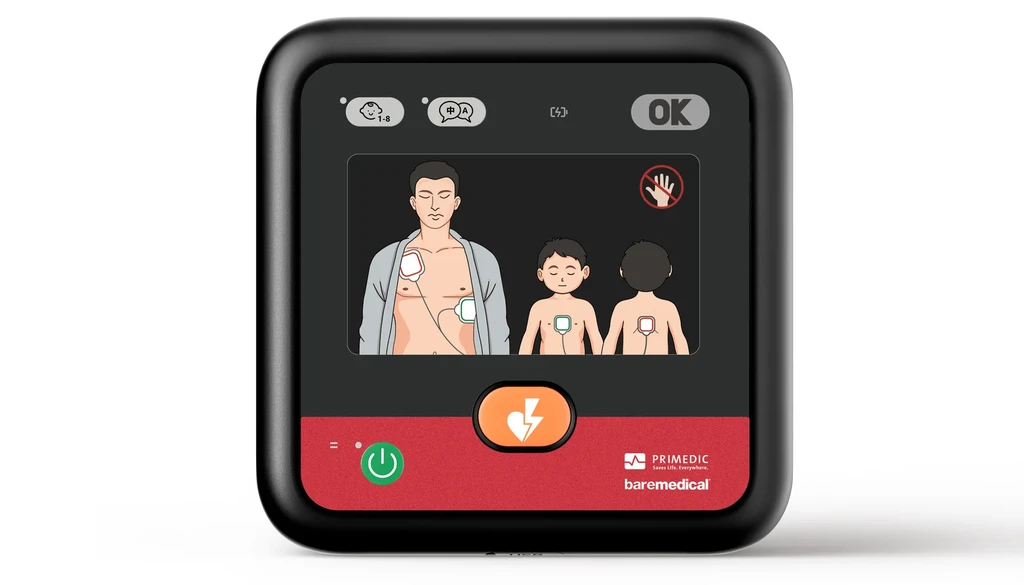
- Pick a TGA-approved unit. Required basis. Look for IP55+ for outdoor settings. Consider Queensland heat and humidity in cabinet selection.
- Place it well. Visible, accessible, unlocked. Foyer, reception or main pedestrian entry. Mount 1.2–1.4 m from floor.
- Register with QAS. Voluntary, free, ten minutes via qld.gov.au/emergency/QAS/aed-registration-form.
- Train responders. Optional, but a 90-minute CPR/AED session for key staff is worth it.
- Maintain per manufacturer. Pads usually two-yearly, battery four-yearly, plus monthly self-test verification.
- Document the decision. Whether you install or not, the documented risk assessment is what protects you if anything goes wrong.
Where SafePulse fits
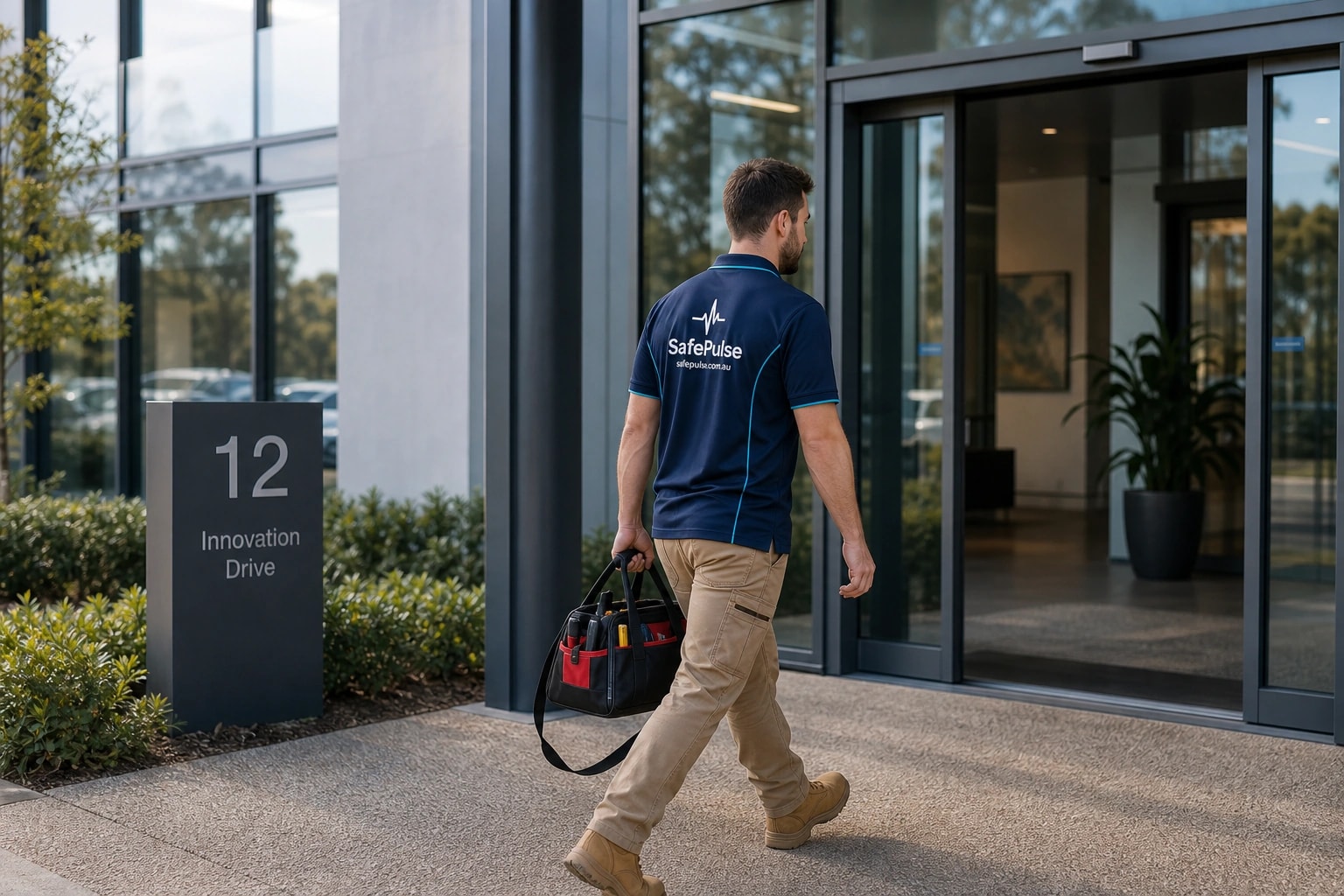
We install AEDs for commercial buildings, sporting clubs, hospitality venues and industrial sites across Queensland. SA-based, but the install package travels — TGA-approved Mindray units, 8-year warranty, signage, QAS registration, ongoing maintenance plan included. We’ve worked with Brisbane property managers, Gold Coast hospitality operators and regional Queensland clubs.
If you’re scoping this for a Queensland property, see our Queensland AED solutions or send us the site details and we’ll come back with a scope.
Where to from here
Queensland’s regulatory position isn’t likely to move quickly. There’s no Bill on the order paper, no public political push from the major parties, and the QAS registry has been the de facto answer for over a decade. That’s unlikely to change in the next two years.
Two Queensland-specific things are worth knowing beyond the legal position: the QAS register works differently to the eastern-states model, explained in QAS registry vs GoodSAM, and the WHS triggers land hardest on trades — see construction and electrical trades in Queensland. More at our Queensland AED page.
What that means for property managers is straightforward: the legal floor is “discharge your WHS first aid duty,” and the practical answer in any workplace ticking the Code’s trigger factors is an AED on the wall, registered, maintained, and ready. If the question hasn’t been asked at your site yet, that’s the gap to close.