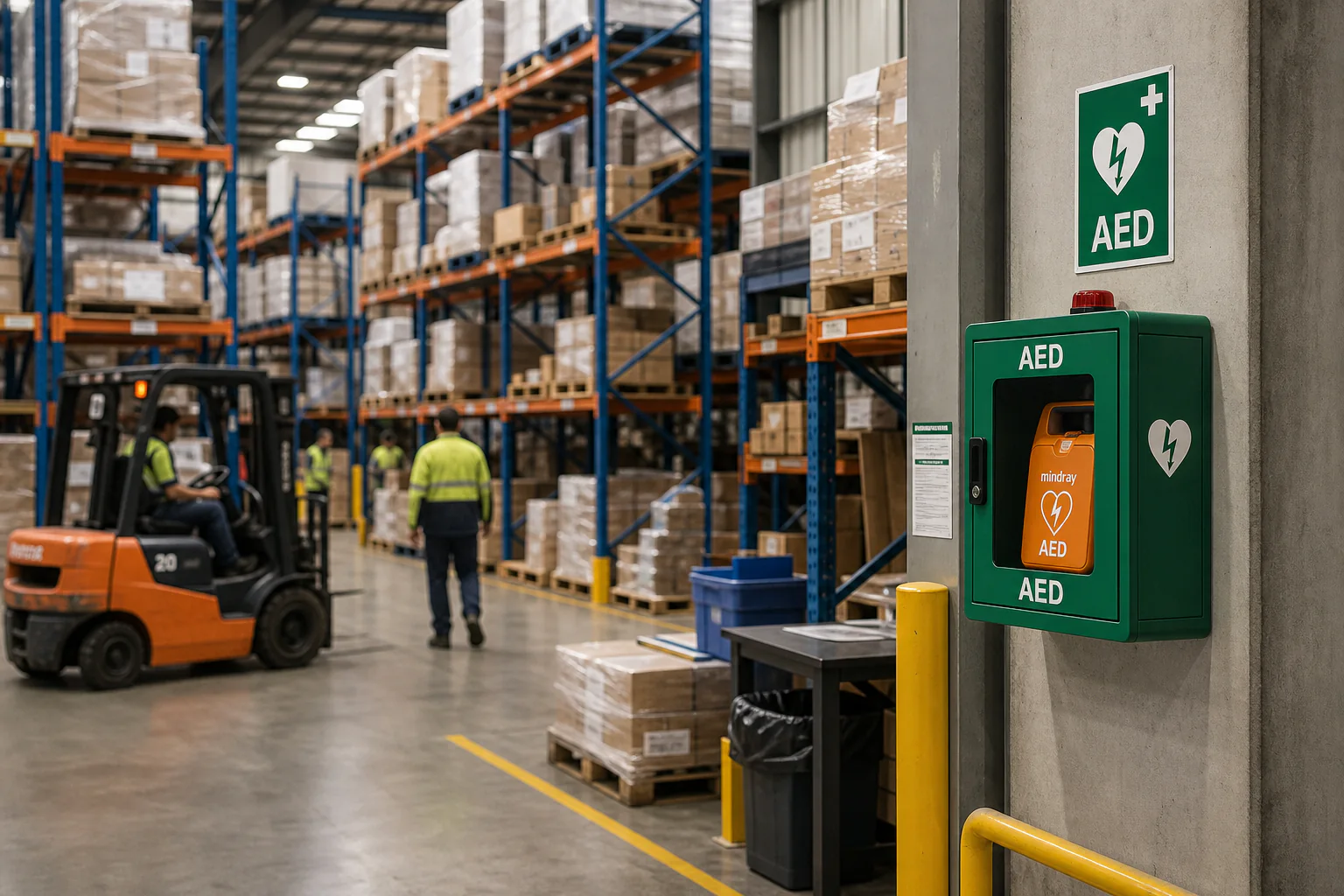
Western Australia is unique on the AED question. It’s the most recent state to adopt the model Work Health and Safety framework — only commencing 31 March 2022. It’s one of only two Australian jurisdictions where the ambulance service is run by a non-government provider (St John WA). And it’s the only state whose AED registry runs through a state-specific app rather than the GoodSAM platform used in the eastern states.
This piece walks through what WA law actually requires of commercial property owners and employers in 2026, the WorkSafe WA position on AEDs, and the practical path forward — whether you’re managing a Perth office tower, a Pilbara mine site, or a regional sporting facility.
Is an AED legally required in WA commercial buildings?
No. WA has no AED-specific legislation in force as of May 2026.
There is no Western Australian equivalent to South Australia’s Automated External Defibrillators (Public Access) Act 2022. A search of the WA legislation register and Hansard shows no AED-specific Bill has ever been tabled in the WA Parliament. South Australia remains the only Australian jurisdiction with an AED Act in force, and there’s no public sign WA is preparing to follow.
That means a WA commercial building in 2026 is not breaking any AED-specific law if it doesn’t have one. The duty of care under WA’s WHS framework still applies — and that’s where the substantive obligation sits.
What WA workplaces are required to do
The governing Act is the Work Health and Safety Act 2020 (WA), supported by the Work Health and Safety (General) Regulations 2022. WA was the last Australian state to adopt the model WHS framework, with both the Act and General Regulations commencing on 31 March 2022, replacing the previous Occupational Safety and Health Act 1984.
Under the Act, a person conducting a business or undertaking (PCBU) must ensure the health and safety of workers and others, so far as is reasonably practicable. For first aid, the practical detail is set out in WorkSafe WA’s First Aid in the Workplace Code of Practice (published 14 July 2022). A separate Health and Safety Bulletin No. 11 — Provision and maintenance of automated external defibrillators at workplaces (published 18 September 2023, last updated 19 November 2024) is currently the most direct WA-government guidance on AEDs in the workplace.
What WorkSafe WA actually says about AEDs
Bulletin No. 11 is the document worth knowing. Key points:
- A PCBU has a primary duty of care to ensure the health and safety of workers and others, so far as is reasonably practicable.
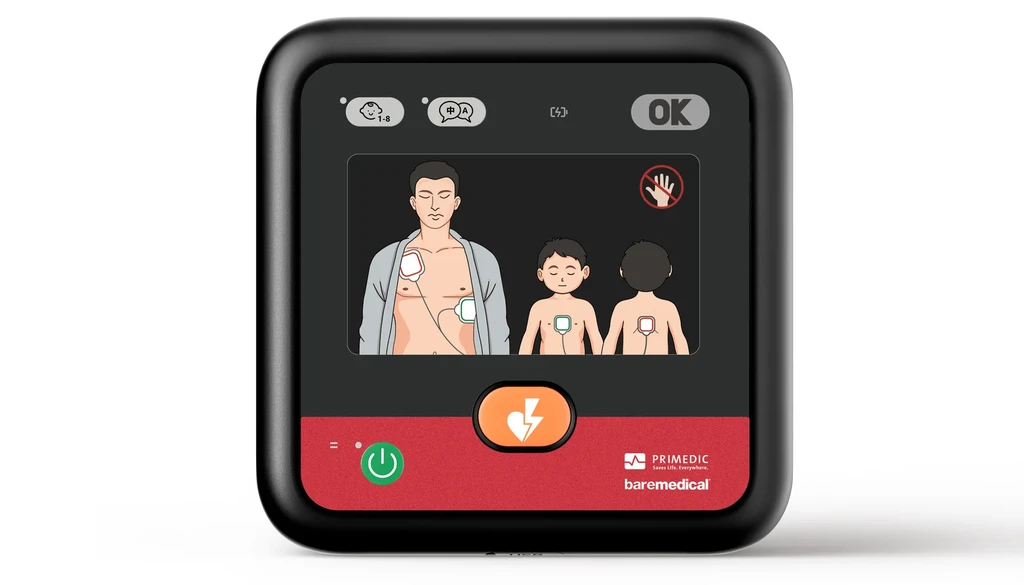
- AEDs are described as “first aid equipment designed to be used by any person, with or without training.”
- AEDs are not mandated. Provision is determined by workplace risk assessment.
- The Bulletin flags the same three trigger factors that appear in every Australian state’s Code of Practice:
- Risk of electrocution to workers
- Likely delay in ambulance arrival
- Large numbers of members of the public present
WorkSafe WA also raises a specific concern about under-maintained AEDs at workplaces — flat batteries, expired pads, devices not visible or accessible — which can cause the device to fail when needed. Verbatim:
“Defibrillation is the only way to restore a heart with a fatal heart rhythm back to normal. As a consequence, if an AED fails to operate when used on a person who is in cardiac arrest, first aid will not be effective or reduce the risk of fatality.”
That maintenance emphasis is more pointed in WA than in some other state guidance. It’s worth taking seriously.
Why WA’s ambulance arrangement matters
This is the single most distinctive thing about AEDs in Western Australia: St John Ambulance (WA) is the contracted ambulance provider for the entire state. Not a state government agency. Not WA Health. St John WA has provided the WA ambulance service since 1922, operating across 2.5 million square kilometres including Christmas Island.
That has practical consequences for the AED conversation:
- The natural “register your AED” pathway in WA is St John WA’s own ecosystem, not a state-government registry.
- WA does not use GoodSAM. St John WA runs its own platform — the St John First Responder app and the State Defib Network.
- When a 000 call comes in, St John WA’s State Operations Centre call-takers either contact a registered Community First Responder via the app, or direct the caller to the nearest registered AED location.
- St John WA reports more than 10,000 defibrillators registered to the State Defib Network — among the highest per-capita in Australia.
Registration is voluntary, free, and worth doing. It’s the pathway that surfaces your AED to anyone responding to a cardiac emergency in your area.
Mining and resources — a particular WA case
WA’s resources industry sits under the Work Health and Safety (Mines) Regulations 2022, which commenced alongside the General Regulations on 31 March 2022. Importantly, the WA First Aid Code of Practice explicitly applies to workplaces under both regulations.
The Mines Regulations don’t specifically mandate AEDs at mine sites. AED provision falls out of the same first-aid risk assessment that applies to all WA workplaces. But two of the three trigger factors flagged in the Code and Bulletin No. 11 — delayed ambulance response and hazard exposure — are particularly acute on remote and isolated mine sites.
The relevant first-aid training unit for remote operations is HLTAID013 — Provide first aid in remote or isolated site. That’s the qualification framework most large WA resources operators build their on-site response around.
For a SafePulse client running a Pilbara, Goldfields or Kimberley operation, the practical AED case is built on:
- A reasonable, risk-assessed component of remote-site first-aid response
- Not legally mandated under the Mines Regulations
- Strongly indicated by WHS first-aid principles given delayed ambulance response and hazard exposure
Funding pathways: the Lotterywest Heart Grant
The single most significant historical AED funding pathway for WA community organisations has been the Lotterywest Heart Grant, delivered through St John WA. It’s funded by Lotterywest (~$1.38 million of a ~$2.24 million project), and at peak distributed approximately 1,001 AEDs to NFP sporting and community groups at $249 per unit — about 12.5% of the then-retail price. Around 40% of those units went to regional WA. Recipients also got a St John Safe Assessment and a $300 first-aid training voucher.
As of last verification, the Heart Grant application round was listed as closed on the St John WA page. Worth checking stjohnwa.com.au/st-john-heart-grant-application before relying on it. Even closed for new applications, it’s evidence that WA has an active community-AED ecosystem worth being part of.
The WA Department of Local Government, Sport and Cultural Industries (DLGSC) administers the broader sport and recreation funding portfolio — CSRFF, KidSport, Club Night Lights, and others. None of these programs are AED-specific. The Lotterywest pathway via St John WA is the closest WA analogue to the eastern states’ direct AED grants.
Comparison: WA vs SA vs NSW
| Factor | Western Australia | South Australia | New South Wales |
|---|---|---|---|
| AED-specific Act in force | No | Yes (Act 2022, regs 2024) | No (three Bills lapsed) |
| AED-specific Bill before parliament | None tabled, ever | N/A — already law | Yes (Ward MP, lapsed three times) |
| Mandatory installation in commercial buildings | No | Yes (>600 m²) | No |
| Compliance deadline | None | 1 January 2026 | None |
| WHS Act commencement | 31 March 2022 (last to adopt) | 1 January 2013 | 1 January 2012 |
| Standalone AED workplace guidance | Yes — WorkSafe WA Bulletin No. 11 | Yes (under the Act) | SafeWork NSW Code only |
| Ambulance provider | Non-government (St John WA) | Government (SA Ambulance Service) | Government (NSW Ambulance) |
| Registry | Voluntary (St John WA State Defib Network) | Mandatory (SAAS register) | Voluntary (NSW Ambulance / GoodSAM) |
| GoodSAM integration | No (custom St John app) | No | Yes |
| Mandatory signage | No | Yes | No |
| Mandatory maintenance | No (Bulletin No. 11 highlights failures) | Yes (per manufacturer) | No |
| Penalties tied to AED | None (general WHS) | Yes (under the Act) | None |
| Sport/community AED grant | Lotterywest Heart Grant (intermittent) | No (Act compels installation) | Yes (Office of Sport) |
WA sits in roughly the same legal position as NSW, Victoria and the other non-SA jurisdictions. The genuine WA-specific quirks worth flagging in any conversation are: the late WHS adoption, the St John WA ambulance arrangement, the State Defib Network rather than GoodSAM, and the Lotterywest funding pathway.
Where AEDs make most sense in WA
Even without legal compulsion, the workplaces and properties where the WHS case is strongest:
- Multi-tenant commercial offices in Perth CBD, West Perth, Subiaco and the major suburban centres
- Mining and resources sites (Pilbara, Goldfields, Kimberley, mid-west) — remote + hazard-exposed
- Agriculture and pastoral operations (isolation, ageing workforce)
- Tourism operators in remote WA (Ningaloo, Margaret River, Kimberley, Rottnest, Christmas Island)
- FIFO accommodation and work camps
- Sporting clubs, gyms and recreation facilities
- Aged care, retirement villages and disability services
- Construction sites (electrocution risk)
- Industrial workplaces with electrical hazards
- Schools, universities and TAFEs
Outdoor and harsh-environment sites in WA need particular attention to cabinet specs — IP55 or above is the minimum, and the manufacturer’s stated operating temperature range matters in the Pilbara, Kimberley and the wheat belt during summer.
Practical approach for WA property managers and employers
- Run a documented WHS risk assessment. Apply the three trigger factors. Document the decision either way.
- Pick a TGA-approved unit. Required basis. Look for IP55+ for outdoor or harsh-environment placement. Consider WA’s climate.
- Place it well. Visible, accessible, unlocked. Foyer, reception or main pedestrian entry. Mount 1.2–1.4 m from floor.
- Register with St John WA. Free, via the CFR Registration Form at stjohnwa.com.au or by emailing first.responder@stjohnwa.com.au.
- Train responders. Optional, but the WA WHS Code values a coordinated emergency response plan.
- Maintain per manufacturer instructions. WorkSafe WA explicitly flags this — under-maintained AEDs are a known failure mode in the state.
- For remote and mining sites: include the AED in the site’s emergency response plan, consider hardened or GPS-monitored cabinets, and align with HLTAID013 training.
Where SafePulse fits
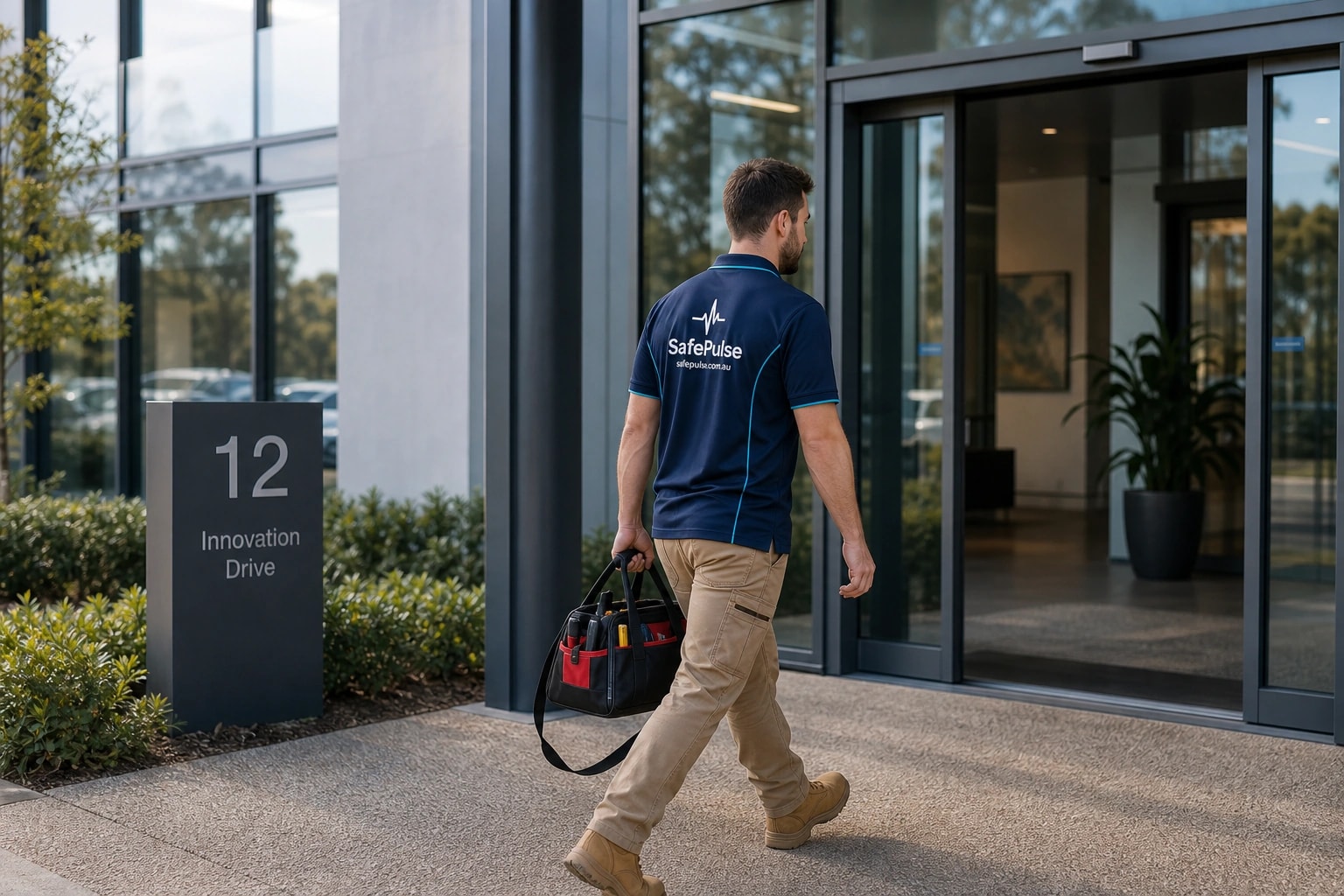
We install AEDs for commercial buildings, sporting clubs, hospitality venues, mining sites and industrial workplaces across Western Australia. SA-based, but the install package travels — TGA-approved Mindray units, 8-year warranty, professional placement, signage, registration with St John WA, and an ongoing maintenance plan included. We’ve worked with Perth CBD property managers, regional WA clubs and resources operators across the state.
If you’re scoping this for a WA site, see our Western Australia AED solutions or send us the site details and we’ll come back with a scope.
Where to from here
WA’s regulatory position is settled for now. No Bill, no public political push, no signal of legislative change in the next two years. The St John WA ecosystem is well-established, and the State Defib Network does most of the work the SA register does, just on a voluntary basis.
Two WA specifics sit alongside the legal position: registration runs through St John rather than GoodSAM, covered in St John WA’s State Defib Network, and the strongest risk case in the state is the resources sector — see AEDs on WA mining sites. More at our Western Australian AED page.
For WA property managers and employers, the question isn’t “is this required?” — it’s “have we discharged the WHS duty, and is the AED on the wall, maintained, and registered if it should be?” If yes, you’re done. If the question hasn’t been asked, that’s the gap.