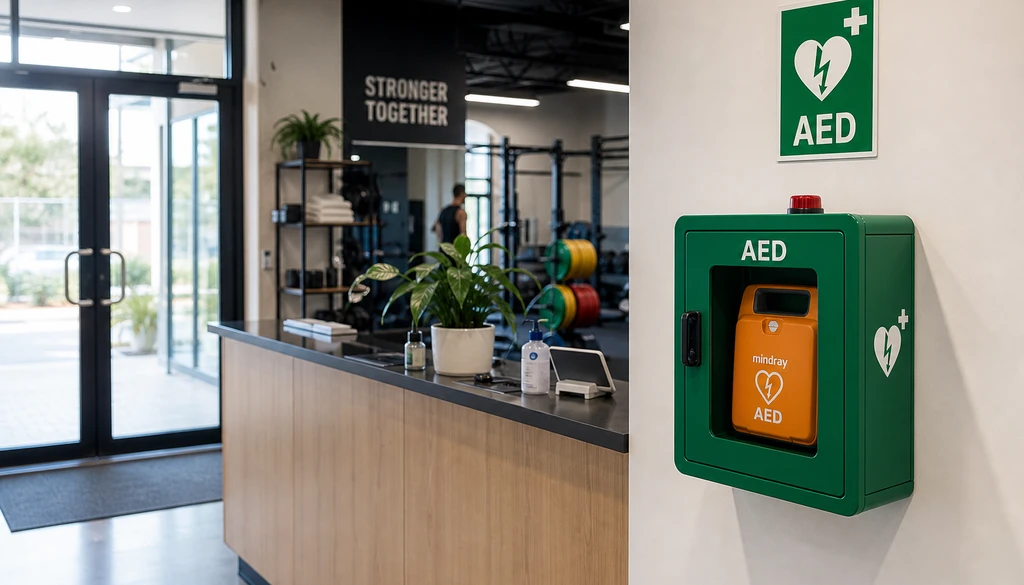
Most of what we install goes on a wall and stays there. A cabinet in a foyer, a sign above it, a service visit twice a year. That model works because most cardiac arrests in commercial buildings happen inside the building.
But a lot of work doesn’t happen inside a building. It happens in a ute, on a job three hours from town, at a weekend event in a park, in a clinic room barely big enough for the chair. For those situations the wall-mounted cabinet is the wrong shape entirely.
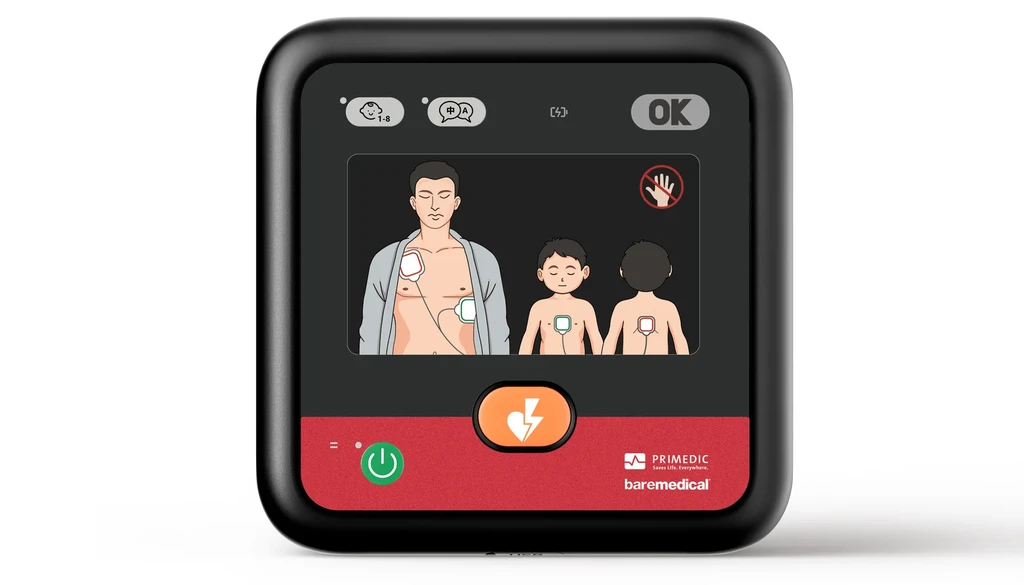
myPAD is our answer to that. It is the smallest defibrillator in the SafePulse range, and it is our own brand, German engineered by Primedic. It is now live in the shop at $1,849, GST free.
What it is
Fifteen centimetres square and 1.1 kilograms. That is small enough for a glovebox, a backpack, a response kit, or a wall bracket in a hallway too narrow for a standard cabinet.
The core specification, straight off the listing:
| Dimensions | 15 x 15 cm |
| Weight | 1.1 kg |
| Display | 4.3 inch colour LCD |
| Shock energy | 150 / 170 / 200 J adult, 50 J child |
| IP rating | IP66 |
| Battery and electrode life | Approximately 5 years |
| Connectivity | Optional LTE or WiFi (myAED Control) |
| Warranty | 8 year manufacturer warranty |
It is TGA approved, which is the baseline any defibrillator sold in Australia has to meet.
The four things worth knowing about how it works
Specifications are easy to list and hard to care about. These are the ones that actually change what happens in the room.
It shows you as well as tells you. The 4.3 inch colour screen runs animated step by step guidance alongside the voice prompts, plus a live ECG readout. Most compact units are audio only. In a noisy environment, or when the person holding it has gone completely blank, having something to look at matters.
It coaches the CPR. There is a built in sensor giving real time feedback on compression depth and rate. Compressions are the part people get wrong under pressure, almost always by not pushing hard enough or fast enough. A device that tells you which one you are getting wrong is doing something useful.
It is fully automatic. When a shock is advised, it delivers it without anyone pressing a button. That removes the moment of hesitation that a semi automatic unit creates, where a frightened bystander has to decide to press the thing that shocks a person. Worth knowing so you can brief your team on what to expect, because a fully automatic unit behaves differently from the ones a lot of people have trained on.
Child mode is a button, not a pad swap. One press drops the energy to 50 J. No hunting for a second set of paediatric pads in a bag under pressure. If your site has kids around, that is a genuine difference.
Where it fits, and where it does not
We would rather be straight about this than sell you the wrong thing.
myPAD is good for:
- Vehicles and mobile workers. Trades, field service, mobile care, anyone whose workplace has wheels.
- Small offices and clinics. Sites where a full commercial cabinet install is more than the space or the situation calls for.
- Homes and tight spaces.
- First responder kits. Where the device travels to the incident rather than waiting at a fixed point.
It is not the answer to a compliance install. If you own a building in South Australia that falls under the Automated External Defibrillators (Public Access) Act 2022, that Act carries requirements about installation, public accessibility, signage and registration with SA Ambulance. Those are handled by our Basic and Smart install packages, with a fixed cabinet, the signage the Act requires and the registration done for you. A device in a bag in the manager’s office does not discharge that duty.
Two different jobs. If you are a South Australian building owner working out which one applies to you, start with what the SA rules actually require, and if the answer is a fixed install then that is the conversation to have. Plenty of operators end up with both, a fixed unit in the building and a portable one in the vehicle.
IP66, and what it means in practice
IP66 means dust tight and protected against powerful water jets. In plain terms, dust does not get in, and heavy water does not either.
That matters for a device that lives in a ute tray, a boat locker, a site box or a response bag. It does not mean you can leave it anywhere in any conditions. Every defibrillator has a stated operating temperature range, and the inside of a closed vehicle on a hot day can go well past what any electronics are rated for. Check the manufacturer’s range and store it accordingly.
We will do a proper piece on what the IP numbers actually mean, because it is one of the most misunderstood specs in the category.
Monitoring, if you want it
There is an optional LTE or WiFi module that connects the unit to myAED Control for remote monitoring, including daily self tests and alerts.
Whether that is worth it depends entirely on how you would otherwise check the thing. A single device in one office that a named person eyeballs every month does not need it. A dozen units spread across vehicles and sites, where nobody is quite sure who last laid eyes on which one, is exactly the situation remote monitoring solves.
That is a decision about your fleet, not about the device. We are happy to talk it through either way.
Consumables and warranty
The rechargeable battery and the SavePads PLUS C electrode pads both run to approximately five years before replacement. That is a long interval by the standards of the category, and it is the main thing that drives the running cost of any defibrillator.
The unit carries an 8 year manufacturer warranty.
Long consumable life does not mean set and forget. Expiry dates still arrive, and the only reliable way to handle them is to write them in a diary the day the unit arrives, or to let the monitoring module tell you.
What is in the box
- The myPAD unit
- SavePads PLUS C electrode pads, adult and child
- A Primedic first aid kit containing scissors, razor, gloves, a face shield and a towel
- A carry bag with a shoulder strap
The first aid kit is not padding. Chest hair and a wet chest are the two most common reasons pads do not stick properly, and the razor and towel are what fix both. Having them in the same bag as the device is the point.
Shipping is free Australia wide on orders over $150, and a flat $19.95 below that.
Why we put our own name on it
We install and maintain defibrillators for a living, so we see which ones come back with problems and which ones do not. Putting our brand on a unit means we are the ones answering the phone if something goes wrong with it, which is a reasonable filter on what we were willing to sell.
myPAD is German engineered by Primedic. We did not build it, and we are not going to pretend otherwise. What we did is pick it, brand it, and stand behind it with our own service.
If you want to look at it properly, it is on the myPAD product page with full specifications and photos. If you are not sure whether a portable unit or a fixed install is the right call for your site, get in touch and we will give you a straight answer rather than a quote for both.
For the wider picture, where to place a defibrillator in a building and what AED maintenance actually requires in Australia are the two guides worth reading before you buy anything.