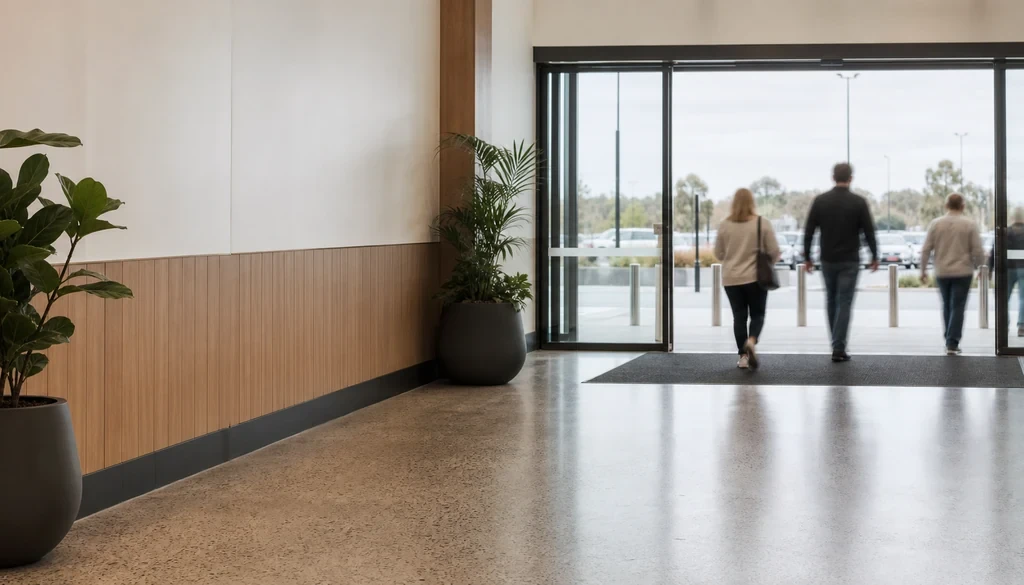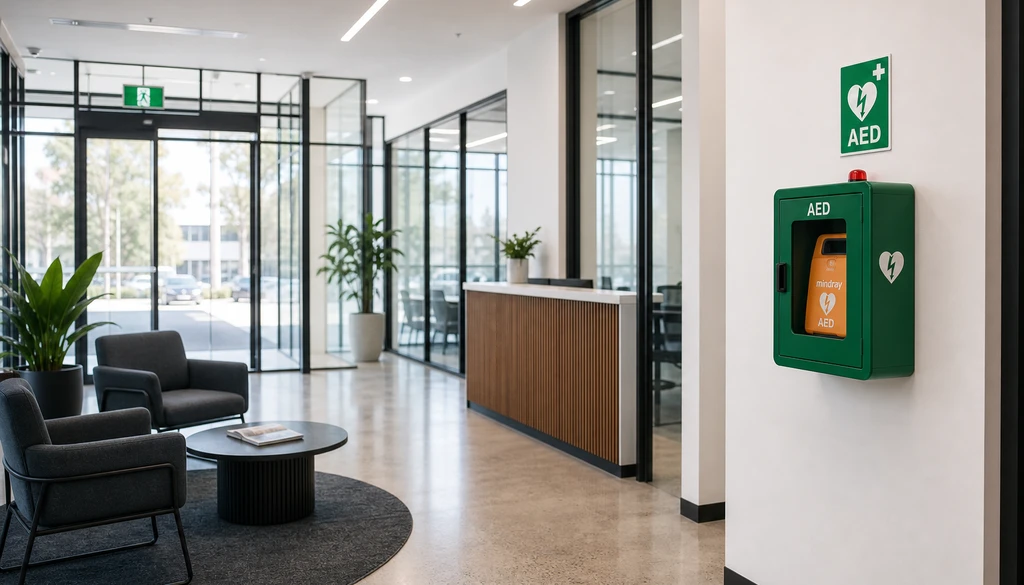
A hotel lobby at check-out on a Sunday. A pub packed for the football. A function room mid-wedding. These are exactly the places where a cardiac arrest is both foreseeable and survivable — plenty of people, an older skew in the crowd on any given night, and precious minutes before an ambulance can get through the door and up to the right floor.
New South Wales doesn’t have a law telling hotels and hospitality venues to install an AED. But “not legally required” and “not worth doing” are two very different statements, and for this sector the gap between them is wide. Here’s the honest position on where NSW law stands, and why the risk case for hospitality is one of the stronger ones going.
First, the legal reality in NSW
There’s no AED-specific legislation in force in New South Wales. Unlike South Australia — which has a genuine Act requiring AEDs in commercial buildings over 600 m² — NSW has never passed anything equivalent. A private member’s Bill was introduced three separate times by the former Member for Kiama, Gareth Ward, and all three lapsed without becoming law. Ward has since left Parliament, and as of mid-2026 there’s no AED Bill before the NSW Parliament and no one carrying one.
So if you run a hotel or a hospitality venue in NSW, there is no compliance deadline, no mandatory AED, and no penalty for not having one under any AED-specific law. Anyone telling you otherwise is either confusing NSW with SA or selling on fear. We don’t do that.
What you do have is a general duty. Under the Work Health and Safety Act 2011 (NSW), you’re a “person conducting a business or undertaking”, and you carry a duty to provide first aid appropriate to the risks in your workplace. That’s where the AED conversation actually lives — not as a tick-box mandate, but as part of a risk assessment.
What the SafeWork NSW Code actually says
The First Aid in the Workplace Code of Practice, in force in NSW since January 2020, is the document that guides that duty. On defibrillators it’s clear and it’s discretionary. It says an AED may be provided to reduce the risk of fatality from cardiac arrest where there’s:
- a risk to workers from electrocution,
- a likely delay in ambulance arrival, or
- large numbers of members of the public at the workplace.
That third trigger is the one that puts hospitality squarely on the list. A hotel, a pub, a club, a function centre — these are, almost by definition, workplaces with large numbers of members of the public passing through. The Code doesn’t say you must install an AED. It says these are the conditions under which a reasonable operator would seriously consider one. For a busy venue, that consideration should land on “yes” more often than not.
Failing to install an AED isn’t, by itself, an offence in NSW. But the broader first-aid duty is real, and “we run a 200-seat venue with a late-night crowd and never thought about cardiac response” is not a comfortable position to be caught in.
Why hospitality is a genuine risk case, not a box-tick
Strip away the legal framing and look at the actual setting. Three things stack up in hospitality that don’t stack up the same way in a quiet office.
The numbers. Sudden cardiac arrest doesn’t only happen to the frail. It strikes seemingly healthy adults, and the more people through your doors, the higher the odds that on some ordinary shift, one of them collapses. Volume is the risk.
The demographic. Hotel guests, club members and function crowds skew older than the general working population, and often there’s alcohol and a big meal in the mix. That’s a higher-risk cross-section than most workplaces gather on a Tuesday, let alone a Saturday night.
The clock. Survival from cardiac arrest falls by roughly ten percent for every minute without defibrillation. In a multi-storey hotel or a sprawling venue, an ambulance crew still has to park, get inside, find the right room or function space and reach the patient. Those minutes are exactly the window an on-site AED is designed to cover. A device by reception or near the main bar, used by a staff member with no medical training, is what bridges the gap until the paramedics arrive.
None of that depends on a law existing. It’s just the shape of the risk.
What good looks like for a NSW venue
If you decide an AED makes sense — and for most sizeable hospitality operations it will — a few practical points from NSW Health’s own guidance are worth following:
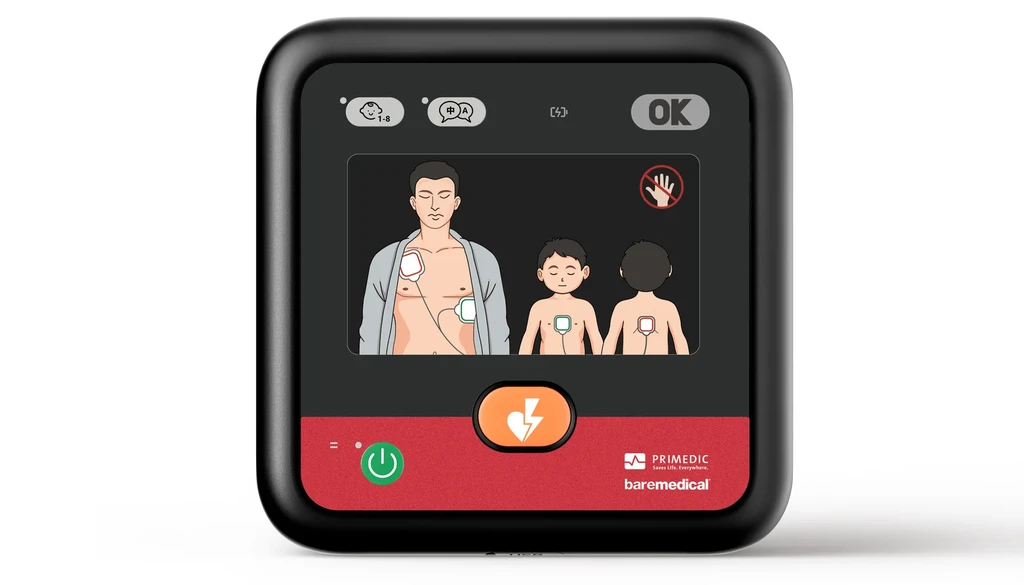
- Pick a TGA-approved unit. Any reputable Australian supplier’s AED is. Modern devices talk the user through every step out loud, so a bartender or duty manager can use one cold.
- Place it where it’s found fast. Reception, near the main bar, or a central circulation point — visible, signed, and not locked in an office. In a larger property, think about whether one device covers your busiest areas or whether a big venue needs more than one.
- Give it an IP rating that suits the spot. Poolside, a beer garden or an outdoor function area needs a higher-rated cabinet (IP55 or above) than an indoor foyer.
- Name a responsible person. Someone owns checking the pads and battery are in date and the unit is passing its self-test. An AED nobody maintains is the one that lets you down on the night.
- Train a few staff. You don’t legally need training to use an AED — that’s the whole point of them — but a handful of confident duty managers changes how fast the device actually gets to the floor.
- Register it, voluntarily, with NSW Ambulance. Registration through the GoodSAM app isn’t mandatory in NSW, but it puts your device on the map Triple Zero call-takers and nearby responders can see. It’s the right thing to do and it costs nothing. Our guide to GoodSAM registration covers the how.
The honest bottom line
No one in New South Wales can hand a hotel or a pub a fine for not having an AED, and we’re not going to pretend otherwise. What we’ll say is that hospitality is close to a textbook fit for the risk the SafeWork Code describes — large numbers of members of the public, an older-skewing crowd, and real time pressure before help arrives. That’s the substance behind your first-aid duty, and it’s the reason so many venues are choosing to put a device on the wall without being told to.
If you want to think it through for your own site, the broader NSW picture — what the duty of care means in practice — is set out in our piece on NSW WHS duty of care and AED obligations, and you can see the full range of NSW settings on our New South Wales page.
Where SafePulse fits
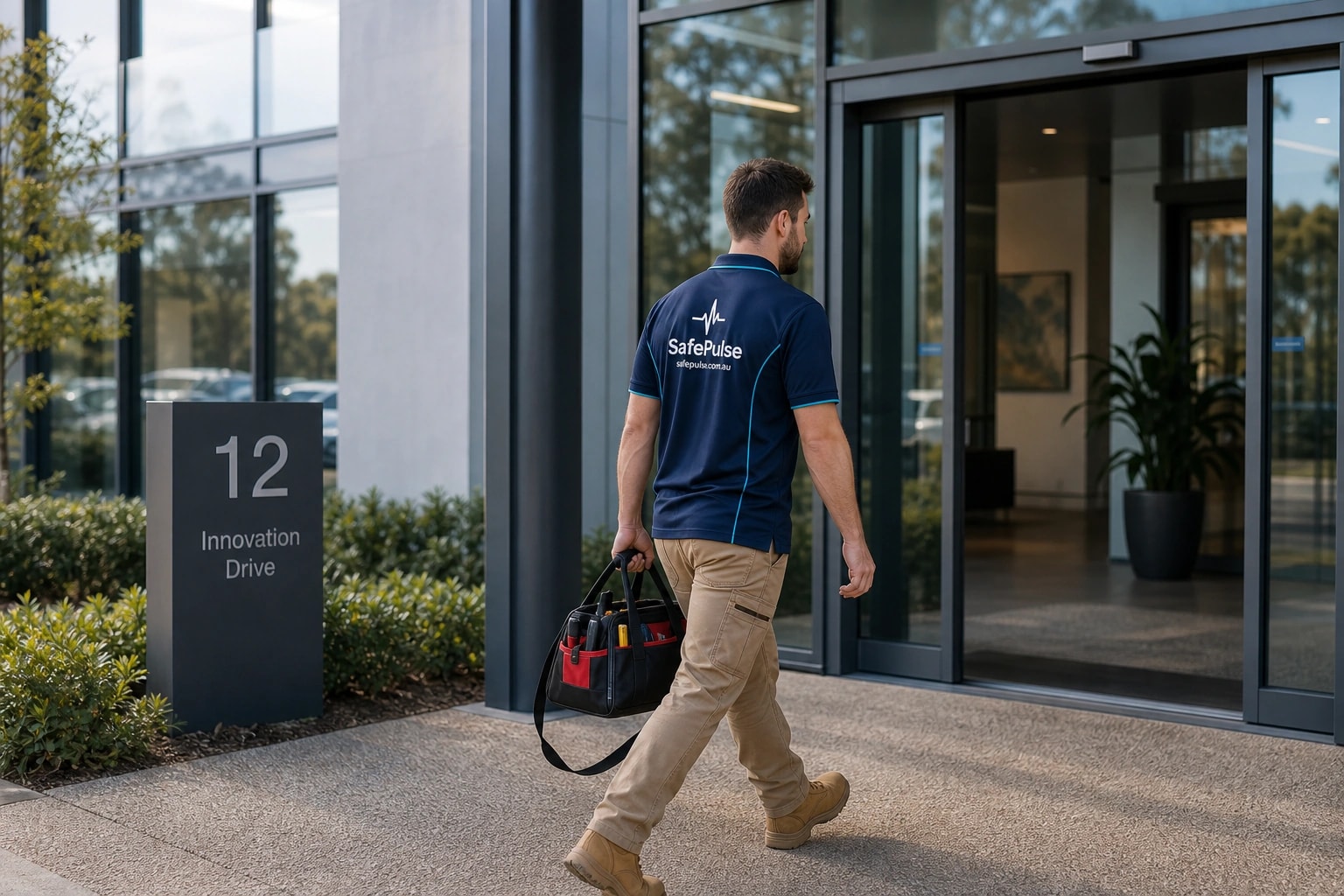
We supply, install and maintain AEDs for commercial premises across the country, and hospitality is a setting we know well — high foot traffic, public-facing placement, and cabinets that have to stand up to the environment they’re in. Every install includes the signage, a maintenance plan that keeps pads and battery current, and help getting the device registered with NSW Ambulance. Our Smart installs add daily monitoring so a fault gets flagged the moment it happens.
Public numbers are one of the SafeWork NSW Code’s triggers; the duty underneath it is explained in NSW WHS duty of care: first aid and AED obligations. Once a device is in the venue, register it with NSW Ambulance via GoodSAM so a Triple Zero caller can be sent to it. More at our New South Wales AED page.
If you run a NSW venue and you’re weighing it up, a quick site assessment is the easiest way to work out whether one device covers you or a larger property needs more.