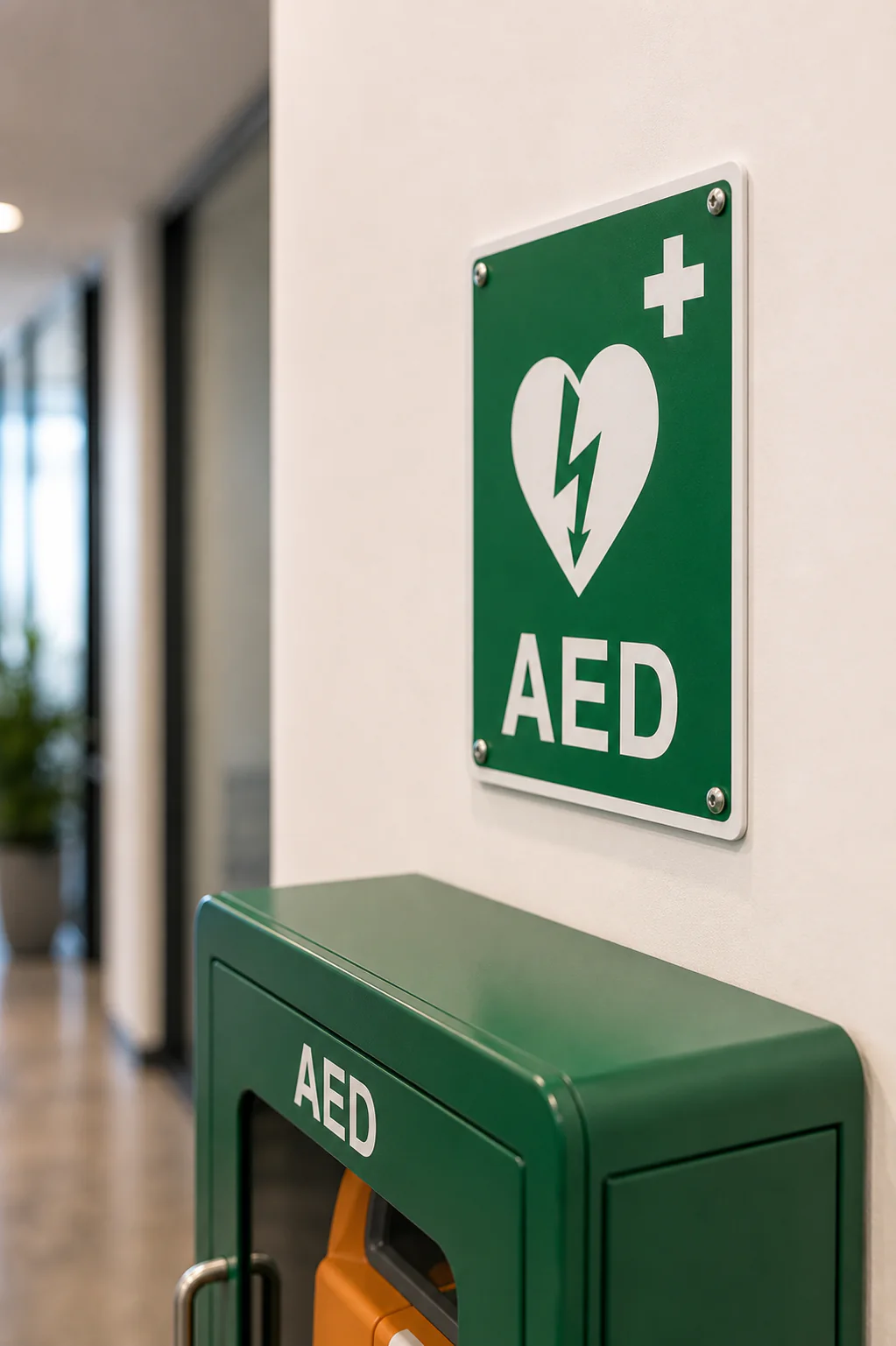
Western Australia does AED registration differently to the eastern states, and the reason is on the side of every ambulance in the state: St John Ambulance WA, not WA Health, runs the service. So when you register an AED in WA, you’re registering with St John — through their own platform, the St John First Responder app — and your device joins the State Defib Network, a WA-only registry of around 10,000 AEDs maintained by St John’s Community First Responder team.
This piece is the practical walkthrough. What the State Defib Network is, how to register, what changes when you do, and where SafePulse clients land in the bigger picture of WA’s AED ecosystem.
Why WA is different — quickly
WA is one of only two Australian jurisdictions where ambulance services are run by a non-government provider. St John Ambulance Australia (WA) Inc. — St John WA — is contracted by WA Health to deliver ambulance services across the state’s 2.5 million square kilometres, including Christmas Island, and has done so since 1922.
That has practical consequences for AEDs. In NSW, Victoria, the ACT and Tasmania, the natural “register your AED” pathway runs through a state ambulance service connected to the GoodSAM platform. In WA, it runs through St John WA’s own purpose-built platform: the St John First Responder app and the State Defib Network sitting behind it. WA isn’t a GoodSAM jurisdiction.
Registration is voluntary in WA, free, and not legally required — there’s no AED-specific legislation in force in Western Australia. But the State Defib Network is the operational layer that connects an AED on a wall to a Triple Zero call coming in from nearby, and not registering means the device is invisible to the system that’s designed to find it.
What the State Defib Network actually does
When a 000 call comes into St John WA’s State Operations Centre and the dispatcher identifies a likely cardiac arrest, two pathways open up:
- Community First Responders (CFRs) within roughly 500 m of the incident are alerted via the St John First Responder app and asked to attend. CFRs are trained first aiders who’ve opted in to respond to nearby cardiac emergencies.
- The dispatcher refers to the State Defib Network to identify the closest registered publicly accessible AED. If a bystander or caller can retrieve that AED while paramedics are en route, that’s the difference between a four-minute and a fifteen-minute response to first shock.
The State Defib Network is the data layer underneath that second pathway. Registered AED locations, their accessibility hours, their maintenance status — all visible to the dispatcher. The unregistered AED on the back wall of a sporting club’s pavilion doesn’t make that pathway work.
How to register an AED on the State Defib Network
There’s one primary entry point: the Community First Responder Registration Form on stjohnwa.com.au. The form is the same one used by individuals who want to become CFRs themselves — but organisations registering an AED can use it to add their device to the network.
The information collected:
- Owner/operator name and contact details
- Device brand, model, serial number
- Pad and battery expiry dates
- Site address and accessibility (hours, whether publicly accessible)
- Whether paediatric pads are available
- Cabinet location specifics
After submission, the Community First Responder team verifies and maintains the AED on the State Defib Network. They may contact the registered party periodically to keep details current.
For larger organisations registering multiple AEDs, or for any registration question, the contact channels are:
- Email: first.responder@stjohnwa.com.au
- Phone: (08) 9334 1418
Registration is free. There’s no annual fee, no membership cost, no premium tier — it’s a public-good infrastructure run by St John WA as part of the contracted ambulance service.
What the St John First Responder app does
The First Responder app is the public-facing layer of the same system:
- Finds nearby AEDs for any member of the public who needs one
- Sends GPS coordinates to St John WA when a 000 call is initiated from inside the app
- Alerts registered CFRs to nearby cardiac emergencies within their response radius
- Provides first aid guidance content for common emergencies
It’s a free download (iOS and Android). It’s not the same product as GoodSAM — different platform, different code base, WA-only. Per St John WA: “If you carry a defibrillator with you, there is no requirement to register it on the app.” Registration is for AEDs at fixed addresses where they can reasonably be retrieved by a third party.
Is registration required by law?
No. There’s no WA law requiring an AED to be registered.
There’s also no WA law requiring an AED to be installed in the first place. WorkSafe WA’s Health and Safety Bulletin No. 11 — Provision and maintenance of automated external defibrillators at workplaces (published 18 September 2023, last updated 19 November 2024) treats AED provision as discretionary, risk-assessed under the Work Health and Safety Act 2020 (WA) and the WA First Aid in the Workplace Code of Practice.
The Bulletin flags three trigger factors consistent with the model Code:
- Risk of electrocution to workers
- Likely delay in ambulance arrival
- Large numbers of members of the public present
The “delayed ambulance arrival” factor matters more in WA than in any other state. WA’s geography means a large share of workplaces sit outside metropolitan ambulance response — pastoral properties, mining and resources sites, regional towns, fly-in-fly-out work camps, agricultural operations. For those workplaces, the WHS case for an AED is materially stronger than the legal one suggests.
How long does registration take to “go live”?
Anecdotally, expect a few business days for verification and listing — St John WA’s Community First Responder team does the verification work manually, and confirms registration via email. There’s no automated turnaround commitment published, but in our experience the process is reliable and direct.
If you’ve installed an AED and not heard back within a fortnight, follow up by phone — (08) 9334 1418 — rather than re-submitting the form. Re-submitting creates duplicate records.
What about commercial AEDs that aren’t publicly accessible?
The First Responder app guidance is clear: AEDs registered on the State Defib Network should be retrievable by a third party. If your AED sits inside a locked office, accessible only during business hours and only via reception, that’s still worth registering — the accessibility hours can be specified, and during business hours the AED is part of the network. The dispatcher will only direct callers to it during the specified hours.
For workplaces that close overnight, that’s a meaningful limitation. The mitigation, where building security allows, is outdoor-rated public-access placement — IP55+ or higher cabinet, externally mounted, accessible 24/7. WA’s heat and dust environment makes the cabinet spec a real decision, particularly in inland and mining-region sites.
Comparison to GoodSAM jurisdictions
| Factor | WA (St John First Responder app) | NSW / Vic / SA / TAS (GoodSAM) |
|---|---|---|
| Operator | St John WA | State ambulance service (or contracted) |
| Registry name | State Defib Network | AED registry / GoodSAM Responder |
| Platform | WA-specific app (iOS + Android) | GoodSAM (international platform) |
| 000 dispatcher alert | Yes | Yes |
| Volunteer responder alert (CFR or equivalent) | Yes (Community First Responders) | Yes (GoodSAM Trusted Responders) |
| Public AED locator | Yes (in-app) | Yes (in-app) |
| Cost | Free | Free |
| Mandatory | No | No |
The functional model is similar — a registry that the dispatcher can query, plus a volunteer responder pool that gets alerted to nearby cardiac arrests. The platform is the difference, and the platform is run by the same organisation (St John WA) that runs the ambulance service. There’s no equivalent split between “the ambulance service” and “the responder pool platform” the way there is in NSW or Victoria.
What the Lotterywest Heart Grant changed
Worth flagging the historical context, because it explains why WA has 10,000+ registered AEDs — well above the proportional share you’d expect for its population.
The Lotterywest Heart Grant, delivered by St John WA, has been the single largest community-AED funding pathway in WA. Lotterywest funded approximately $1.38 million of a $2.24 million project to subsidise AEDs to not-for-profit sporting and community groups at $249 per unit — roughly 12.5% of the then-retail price.
Approximately 1,001 AEDs were distributed through that program, with around 40% going to regional WA. Grant condition: the AED had to be available to the public 24/7. Recipients also received a St John Safe Assessment, a $300 first-aid training voucher, and (for Aboriginal organisations) additional co-contribution subsidies.
As of the most recent review, the Lotterywest Heart Grant application page is listed as closed. Re-verify directly with St John WA before referencing it as currently open — rounds open and close intermittently, and the program’s continuation depends on Lotterywest funding cycles.
Even when closed for new applications, the program’s legacy is the strong WA community-AED network already in place. For most commercial buildings, sporting clubs and businesses still needing AEDs, the practical pathway is purchase through suppliers like SafePulse and registration through the State Defib Network.
Operational standards that pair with State Defib Network registration
Registering doesn’t change the underlying AED operational standards:
- TGA approved. Required as a baseline.
- IP55 or above for outdoor or harsh-environment placement. In WA, lean higher — IP56 or above for sites with sustained dust, sun and heat exposure.
- Two sets of pads, shears, razor in the cabinet.
- Mounting height 1.2 to 1.4 m from the floor.
- Visible, accessible, unlocked. The Bulletin No. 11 framing applies: AEDs should be in publicly visible, accessible locations.
- Signage near the AED and from main entry points.
- Maintenance per manufacturer instructions — WorkSafe WA’s Bulletin No. 11 specifically calls out under-maintained AEDs (flat batteries, expired pads) as a workplace concern.
For sites where the day-to-day inspection responsibility is unclear or shared — sporting clubs with volunteer committees, multi-tenant offices, hospitality venues with high staff turnover — a monitored unit removes the volunteer-checking failure mode. SafePulse’s Smart Install package includes AED Alert 2.0: daily status reporting, live tamper alerts and GPS theft tracking. The maintenance savings ($25/month Smart vs $40/month Basic, $152/year) effectively pay back through reduced manual inspection load.
Practical approach for WA AED owners
- Install a TGA-approved unit with an IP55+ cabinet (higher for harsh outdoor placement). Mount visible, accessible, unlocked.
- Submit the CFR Registration Form at stjohnwa.com.au to add your AED to the State Defib Network.
- Confirm registration via email with St John WA’s Community First Responder team. If you haven’t heard back within a fortnight, call (08) 9334 1418.
- Install signage near the AED and from main entry points.
- Maintain per manufacturer instructions. Pads and batteries on the manufacturer’s schedule. A monitored package removes most of the under-maintenance risk.
- Train responders where the workplace context warrants it. Optional, but builds confidence to deploy the device.
- Download the St John First Responder app — useful for nominated staff who may need to find a nearby AED at short notice.
Where SafePulse fits
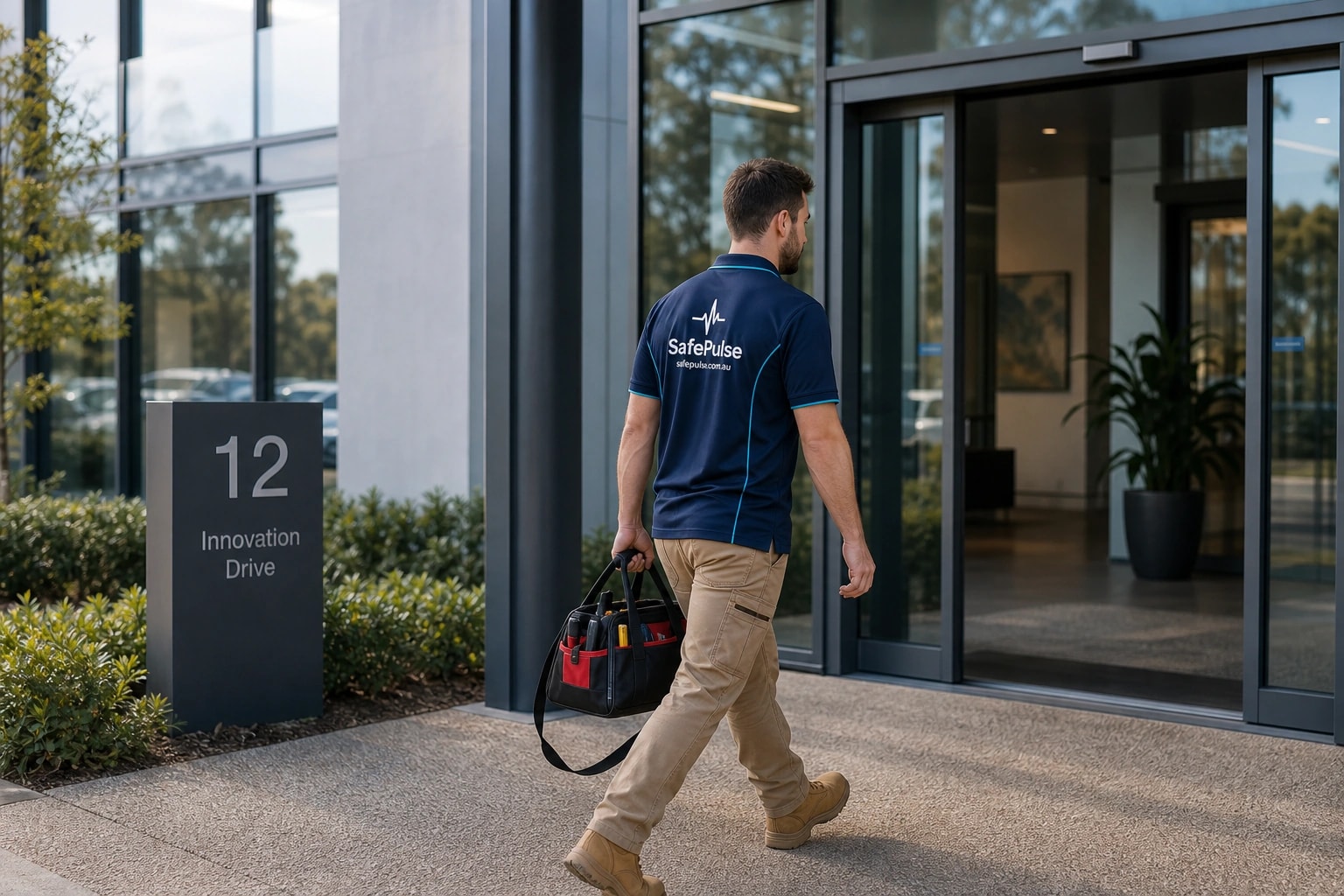
We install AEDs in commercial buildings, sporting clubs, mining and resources sites, hospitality venues and industrial workplaces across Western Australia. Each install is a TGA-approved Mindray unit, IP-rated cabinet, mandatory signage, an 8-year warranty, and registration with the State Defib Network. The Smart Install package adds AED Alert 2.0 monitoring — particularly relevant in WA where the geography and climate make manual inspection more brittle.
If you’re scoping AED provision for a WA site or portfolio, see our Western Australia AED solutions or send us the site details and we’ll come back with a scope.
The bottom line
WA isn’t a GoodSAM jurisdiction. St John WA runs the ambulance service, the responder app, and the State Defib Network — the WA-only AED registry with around 10,000 devices registered. Registration is free, voluntary, and the operational link between an AED on a wall and a Triple Zero call coming in from nearby.
The process is straightforward: submit the CFR Registration Form, wait for verification, follow up by phone if needed. The State Defib Network sits at the core of WA’s AED response model, and not registering means the device is invisible to the system designed to use it.
Registration is voluntary, so it’s worth reading against what WA actually requires — do Western Australian commercial buildings need an AED in 2026. For remote sites where a public register matters less than the device itself, there’s the AED case for FIFO camps and remote work sites. Our Western Australian AED page has more.
For most WA businesses with an AED already on site — register it. For most WA businesses without an AED but with the WHS-trigger factors that come with the territory’s geography — install, register, maintain, and put the device on the dispatcher’s map.