A visitor collapses at a Kakadu campground in build-up season. It’s 38 degrees, the nearest ambulance is a long way off, and the people around them are staff and other travellers. What happens in the next few minutes decides everything — and out there, the only thing that can restore a heart in a fatal rhythm is a defibrillator that’s on site and working.
That’s the reality NT tourism operators plan around. There’s no law telling you to have an AED — the Territory doesn’t mandate one anywhere. But when you stack up remote location, visitor numbers and Top End heat, the case for one is about as strong as it gets in this country. Here’s how it actually reads.
The honest legal position
The Northern Territory has no AED-specific legislation, and no AED bill has been tabled in the Legislative Assembly. No mandate, no deadline, no penalties for not having a device. Any NT tourism content that implies otherwise is wrong.
What you carry is a general first-aid duty under the Work Health and Safety (National Uniform Legislation) Act 2011. The NT First Aid in the Workplace Code of Practice — approved in 2020 — says you “should consider providing an AED if there is a risk to workers at your workplace from electrocution, if there would be a delay in ambulance services arriving at the workplace, or where there are large numbers of members of the public.”
Read that against a remote tourism site and two of the three triggers light up immediately. That’s not a legal requirement to install one. It’s a risk-assessed recommendation — and for most tourism operators outside the Darwin CBD, the assessment lands on yes.
Why remote tourism sites make the strongest case in the country
Ambulance delay isn’t a risk — it’s the baseline
The Code explicitly names delayed ambulance response as a trigger, and adds a line that matters out here: “extra first aid considerations may be necessary for workers in remote or isolated areas … where access is difficult due to travel time, poor roads or weather conditions, arrangements should include aerial evacuation.”
At Kakadu, Litchfield, Uluru-Kata Tjuta, Katherine Gorge or a Top End fishing lodge, help is measured in the tens of minutes at best and often much longer. For the first stretch of a cardiac arrest, there is no ambulance — there’s whoever’s standing there, CPR, and an AED if one’s on site. That’s not a supplement to the emergency response. For those critical minutes, it is the emergency response.
The visitors themselves are the third trigger
Large numbers of members of the public — the Code’s third factor — is exactly what a tourism operation is. Campgrounds, visitor centres, tour departure points, accommodation and cellar-door-style venues cycle through a lot of people, skewing older and often unacclimatised to the heat. More people, an older profile, and physical activity in a demanding climate is the mix cardiac arrest exploits.
The Top End factor: heat will kill your device if you let it
This is the part that’s genuinely different in the NT, and it’s where operators go wrong. The Code says an AED “should be located in an area clearly visible, accessible and not exposed to extreme temperatures.” That’s not a nicety in the Territory — it’s a hard constraint.
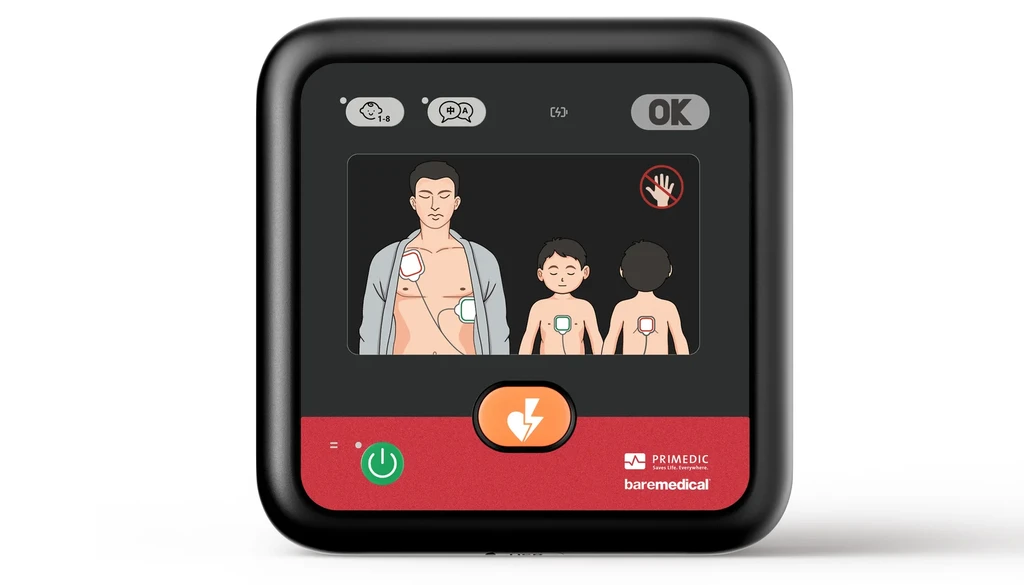
Most consumer-grade AEDs have an operating ceiling around 50°C, and the pad gel degrades under sustained heat. A device bolted to an unshaded wall, left in a hot vehicle, or hung in an unconditioned shed can quietly cook itself out of readiness long before anyone needs it. For NT tourism sites, the outdoor cabinet isn’t an afterthought:
- Specify a properly outdoor-rated enclosure — lean toward IP56 or higher for exposed settings, with thermostatic control where the unit sees direct sun.
- Check the manufacturer’s stated operating temperature against your site’s real conditions, not an average.
- Keep it out of direct sun and out of hot vehicles. A visible, shaded, signed location does two jobs at once — findable and protected.
Get this wrong and you’ve spent good money on a device that fails the moment it’s called on. Get it right and you’ve got cover that holds up in build-up conditions.
Registering it in the NT — the First Responder app, not GoodSAM
Operators moving up from the eastern states assume GoodSAM. The NT doesn’t use it. Like WA, the Territory’s ambulance service is delivered under contract by St John Ambulance (NT) — St John also runs the Darwin and Alice Springs communications centres that answer Triple Zero.
AED registration runs through the St John NT First Responder app (free, iOS and Android). Register your device and, when someone nearby calls 000 through the app, the dispatcher can see registered public-access defibrillators in the area. Registration is voluntary — there’s no NT law requiring it — but for a tourism site it’s genuinely worth doing, because your device is exactly the kind an outside caller might need to find in a hurry. There are around 477 public-access AEDs registered on the app across the Territory; adding yours strengthens the map.
A note on funding — and who it’s actually for
St John NT runs a Heart Grant program, funded by the NT Government Community Benefit Fund, that places AED kits with community groups, not-for-profits and sporting clubs. It’s the first port of call for community organisations. But it’s worth being straight about it: the grant is community-targeted, the most recent 2025 round has closed, and commercial tourism operators are generally outside its scope. If you run a for-profit tourism business, the Heart Grant probably isn’t your pathway — you’re better off treating the AED as the piece of safety infrastructure it is and equipping properly, the same way you would fire equipment or a first aid kit.
The practical approach for a tourism operator
Work the AED question into your site risk assessment rather than leaving it blank because there’s no law. For each site, note where ambulance response genuinely sits, how many people move through, and what the heat does to equipment. On most remote NT tourism sites that reasoning points clearly to having a device — and to specifying the cabinet properly.
Then keep it ready. An AED with expired pads that’s spent a wet season baking on a wall is worse than none, because it reads as cover without being it. Real placement, an outdoor-rated enclosure matched to the climate, a maintenance schedule that actually happens, and registration with St John NT — that’s what turns a device on the wall into something that works when a visitor’s life is on it.
Respectful footnote worth making: public-access defibrillation in remote Indigenous communities is a real need, but it’s best led through community and health-service pathways, not commercial supply. This piece is about tourism operators — accommodation, tours, parks and visitor sites running as businesses.
If you operate a tourism site in the Top End or the Centre and you’re weighing up an AED, we can walk the risk assessment with you, spec hardware that survives NT conditions, register it with St John NT, and keep it serviced so it holds up. Get in touch for a no-obligation assessment.
Frequently asked questions
Is an AED required for NT tourism businesses?
No. The NT has no AED law and no penalties for not having one. Your duty is the general first-aid duty under WHS law, and the Code of Practice says you “should consider” an AED where there’s ambulance delay or large numbers of the public — both of which describe most remote tourism sites.
What cabinet do I need for an outdoor AED in the NT?
An outdoor-rated enclosure — lean toward IP56 or higher for exposed sites, with thermostatic control if it’s in direct sun — and check the AED’s operating temperature against your real conditions. Heat degrades pads and batteries, so this matters more here than anywhere else in the country. These are best-practice specs, not an NT regulation.
How do I register an AED in the Northern Territory?
Through the St John NT First Responder app — the NT doesn’t use GoodSAM. It’s free and voluntary, and it puts your device on the map for Triple Zero callers nearby.
Can I get a grant for a tourism-site AED?
The two NT metro guides cover the same duty in a very different setting — Darwin and Palmerston and Alice Springs. For the cabinet specification that keeps a device alive out there, see AEDs in the heat. More at our Northern Territory AED page.
The St John NT Heart Grant is aimed at community groups, not-for-profits and sporting clubs, and the most recent round has closed — commercial tourism operators are generally outside its scope. For a for-profit site, it’s better to treat the AED as standard safety infrastructure and equip it properly.