A Perth CBD tower might have twenty businesses in it, a building owner who’s never met most of them, a facilities manager who runs the common areas, and a strata or management arrangement layered over the top. So when the question comes up — should there be a defibrillator in this building, and whose job is it to put one in? — the answer isn’t as simple as “the owner does it”. In Western Australia there’s no law that says so, which means the responsibility question is genuinely worth working through.
Here’s how it actually sits, and how to land on a sensible outcome rather than everyone assuming someone else has it covered.
Start with the honest legal position
Western Australia has no AED-specific legislation. There’s no Act requiring a defibrillator in a commercial building, no Bill before Parliament proposing one, and no compliance deadline. WA was actually the last state to adopt the national model work health and safety laws — the Work Health and Safety Act 2020 commenced on 31 March 2022 — and AEDs fall under that general framework, not a standalone rule.
WorkSafe WA’s own guidance is clear on this. Its Health and Safety Bulletin No. 11 treats an AED as a piece of first-aid equipment whose provision is decided by a workplace risk assessment, not mandated. It flags three triggers that point toward installing one: a risk of electrocution to workers, a likely delay in ambulance arrival, and large numbers of members of the public present.
For a CBD office tower, the third trigger is the one that usually does the work — a building with hundreds or thousands of people moving through it each day is exactly the high-occupancy setting the guidance has in mind. So while nobody is legally required to install an AED, a fair risk assessment for a busy Perth tower frequently lands on yes.
The responsibility question: overlapping duties, not one owner
This is where WA differs sharply from South Australia. In SA, the AED Act puts the duty squarely on the building owner. WA has no such rule, so you don’t get a single named party. Instead you get overlapping WHS duties, and working out who acts comes down to who controls what.
Two duties matter here:
- The person with management or control of the workplace. Under the WHS Act, whoever manages or controls a workplace — including common areas like the ground-floor lobby, lift lobbies and shared amenities — owes a duty to ensure, so far as is reasonably practicable, that those areas are safe. In a multi-tenant tower that’s typically the building owner or the facilities manager acting on their behalf. They’re the natural party to provide and maintain a shared AED in the common areas.
- Each tenant’s own primary duty. Every business in the building is a person conducting a business or undertaking in its own right, and owes its own workers and visitors a first-aid duty within its tenancy.
So the realistic picture is layered. The building owner or manager is best placed to put a device in the shared lobby that serves the whole building. Individual tenants — especially larger floors, or ones with their own higher-risk activities — may also choose to put one on their floor. Neither is legally compelled, but both have a duty pointing the same way, and the worst outcome is the common one: everyone assumes the building “must have one somewhere” and nobody has actually checked.
The fix is unglamorous but effective. Someone needs to own the question. If you’re the facilities manager, raise it at the next building management meeting and get a decision recorded. If you’re a tenant, ask the building manager directly whether there’s an AED in the common areas, where it is, and whether it’s maintained — and don’t assume the answer is yes.
Where the device actually goes
Placement in a multi-tenant building is mostly common sense, with a few things worth getting right.
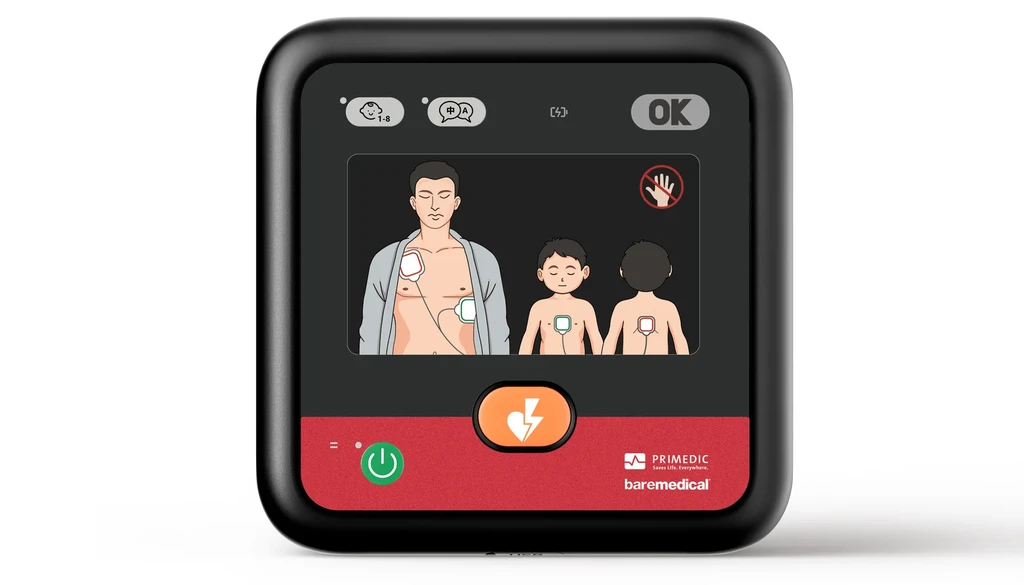
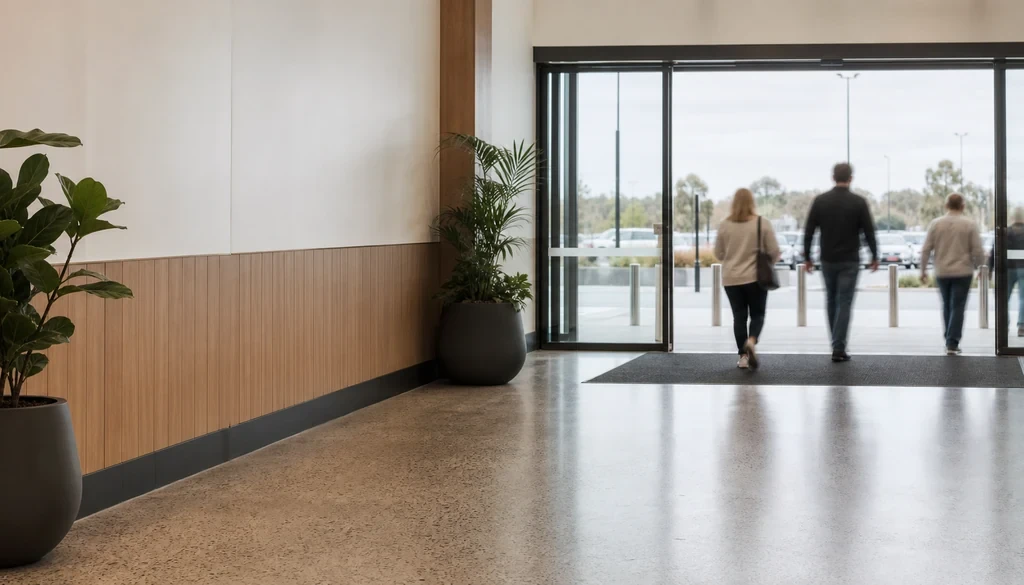
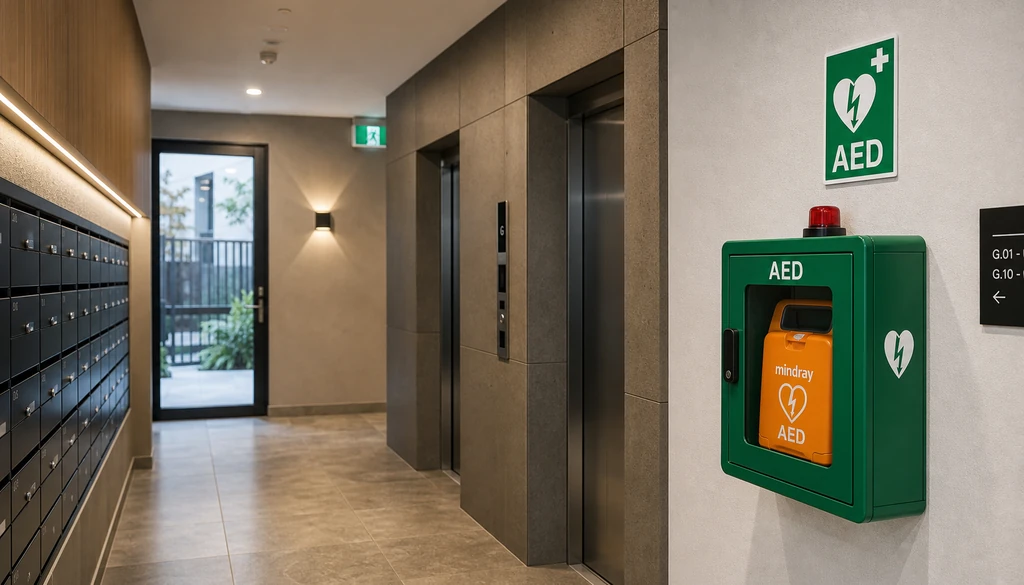
- Ground-floor lobby or main reception is usually the best home for a building-wide device. It’s the one space everyone passes through, it’s typically staffed, and it’s findable for someone arriving to help.
- Tall buildings benefit from more than one. Vertical distance is its own delay — fetching a device from the ground floor to level 18 and back burns the minutes that matter. For a high-rise, a device in the ground-floor lobby plus one on a mid-level floor is a reasonable pattern, and lift lobbies are the obvious spots.
- Keep it visible and accessible, not locked away. WorkSafe’s guidance is that an AED should be in a clearly visible, accessible location and not exposed to extreme temperatures. A wall-mounted cabinet at about 1.2 to 1.4 m off the floor, near the reception desk, is the standard.
- Tell people it’s there. A device nobody knows about doesn’t help. Make sure reception and floor wardens know the location, and consider noting it in the building’s emergency response information.
Register it with St John WA — not GoodSAM
Here’s a WA-specific detail that trips up businesses moving from the eastern states. WA doesn’t use GoodSAM. St John Ambulance WA is the contracted ambulance provider for the whole state — one of only two jurisdictions in the country where ambulance services are run by a non-government provider — and AED registration runs through St John WA’s own system: the St John First Responder app and the State Defib Network.
Registration is free and voluntary. There’s no WA law requiring it. But it’s worth doing: it puts your device on the map that St John WA’s call-takers and nearby community first responders use during a cardiac emergency, so a registered AED in your lobby can be directed to when seconds count. St John WA reports more than 10,000 devices already registered to the network across the state, so a CBD tower’s device joins a system that’s genuinely in use.
If your building has a defibrillator and it’s not registered, that’s the easiest win on this list. Register it through the St John WA First Responder app or the CFR registration form on stjohnwa.com.au.
A practical approach
- Decide who owns the question. In a multi-tenant building, name the party — usually the building owner or facilities manager — responsible for the common-area decision, and record it.
- Run the risk assessment. A high-occupancy CBD tower will usually satisfy the “large numbers of people” trigger. Write it down — that’s your reasonably-practicable case.
- Place a device in the ground-floor lobby, accessible and unlocked, at 1.2–1.4 m, and add one on a mid-level floor for a high-rise.
- Register it with St John WA through the First Responder app or State Defib Network — not GoodSAM.
- Put it on a maintenance plan so pads and battery stay in date and the device is ready.
None of this is forced on you by a WA law. All of it is what a careful building owner or tenant does once they’ve actually looked at the risk.
Where SafePulse fits
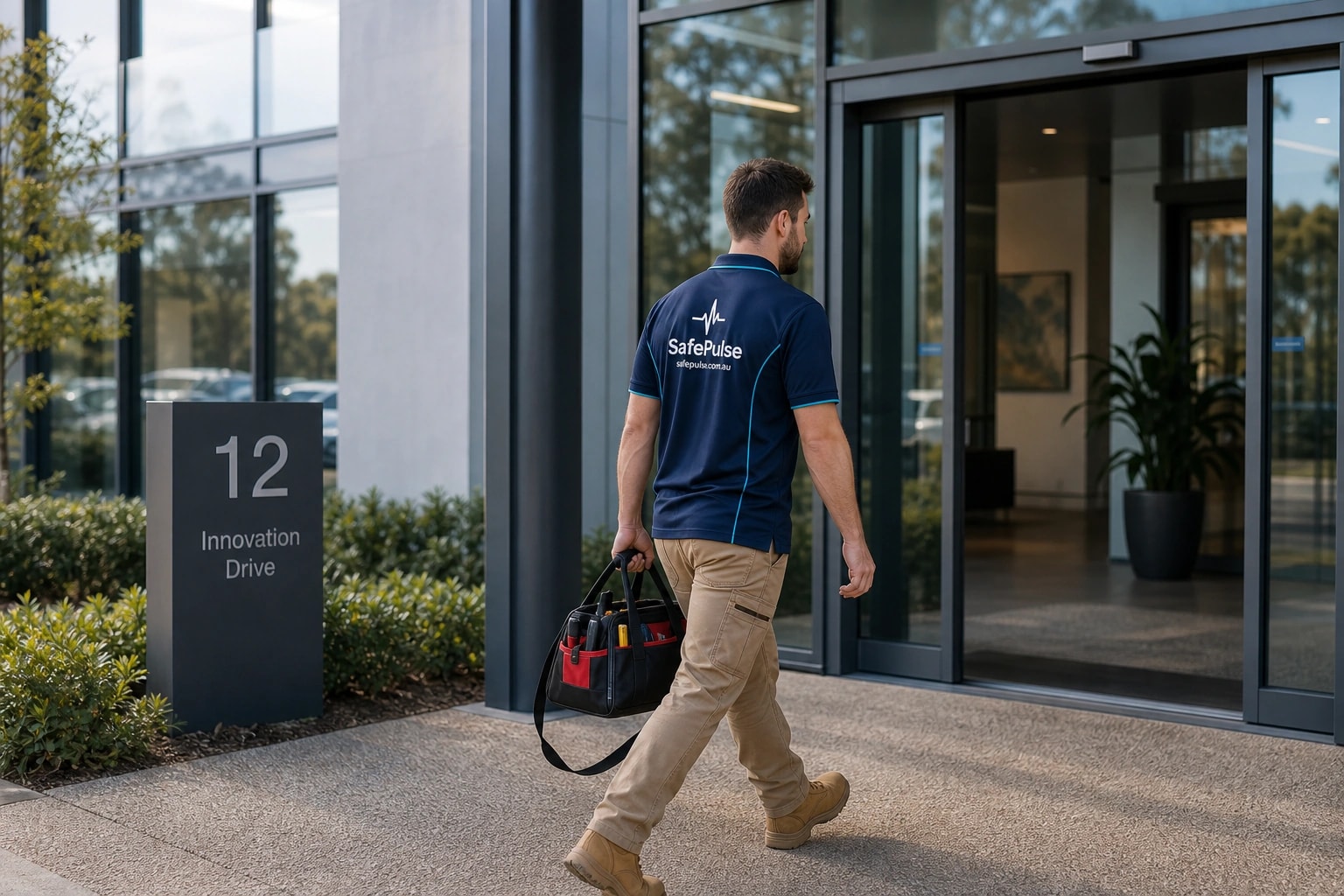
We supply, install and maintain AEDs for Western Australian commercial buildings, including multi-tenant CBD towers where the responsibility question and the placement question both need sorting. We’ll help whoever owns the decision — building manager or tenant — choose the right device, place it where the whole building can reach it, register it with St John WA, and keep it maintained so it works when it counts.
WA has no single named "owner" the way South Australia does, so the duty follows the WHS position set out in do Western Australian commercial buildings need an AED in 2026. For registration, WA uses St John rather than GoodSAM — how the State Defib Network works. More at our Western Australian AED page.
If you manage or lease space in a Perth building and want the AED question handled properly, start with our Western Australia AED page. For the legal baseline, whether WA commercial buildings need an AED in 2026 lays out the WHS framing, and how St John WA’s State Defib Network registration works covers the WA-specific registration path.