If you run a residential aged care facility or a retirement village in South Australia, the AED question is more settled for you than for almost anyone else in the country. Everywhere else, an AED in aged care is a good idea backed by a duty of care. In SA, it’s the law — and it works a little differently to the way it does for a shopping centre or an office block.
Here’s how the SA Act treats aged care, what makes it a special case, and how the state rules sit alongside the federal ones you already answer to.
Aged care is a designated facility — so the size test doesn’t apply
South Australia’s Automated External Defibrillators (Public Access) Act 2022 splits the world into two groups. Most buildings only come into scope if they’re a “relevant building” of 600 m² or more. But the Act also names a list of designated facilities that need at least one AED regardless of their size. Aged care facilities are on that list. So are retirement villages with shared amenities.
That’s the first thing to get straight: your facility isn’t in scope because it’s big enough. It’s in scope because of what it is. A small residential care home with a modest floor plan carries the same baseline obligation as a large one — at least one AED on site. There’s no “we’re under the threshold” exemption for aged care the way there might be for a small standalone office.
For most single-site facilities, that baseline — one AED — is the whole requirement. The additional-AED scaling in the Regulations only kicks in for buildings used for commercial purposes with a large publicly accessible floor area, which isn’t how a typical residential care setting is measured. If you run a genuinely large campus, it’s worth working through the count properly, but the starting point for aged care is simple: one, minimum, whatever your size.
The public-access exception that’s unique to aged care
Here’s where aged care gets its own carve-out, and it’s an important one.
For nearly every other building the Act covers, the AED has to be publicly accessible — a member of the public needs to be able to reach it themselves or ask for it at a desk. Aged care facilities are the exception. Under the Act, the public-accessibility requirement does not apply to a residential aged care facility. Your AED still has to be present, maintained, registered and signed — but it doesn’t have to be reachable by a passing member of the public.
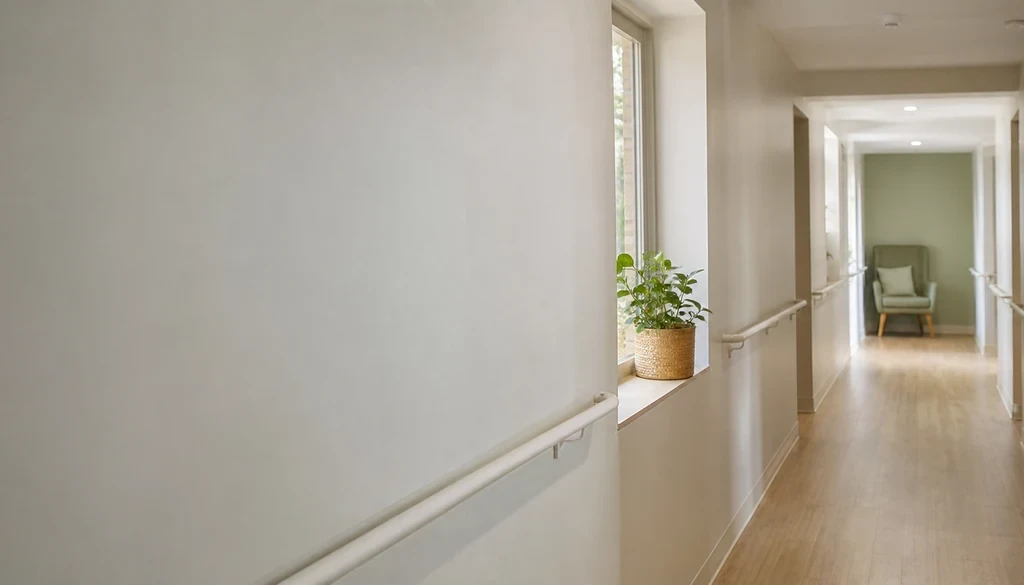
That matters practically. It means you can place the device where it makes clinical sense for your residents and staff — a nursing station, a central corridor, a care hub — without worrying that it also has to sit somewhere a stranger off the street could get to it. In a secure facility with residents living with dementia, that flexibility isn’t a technicality. It lets you site the AED for the people most likely to need it, in a spot your staff can reach in seconds, without compromising the security the rest of your building depends on.
Retirement villages are worth a separate word. A retirement village with shared amenities — the kitchens, dining rooms, gyms and pools residents use in common — is a designated facility in its own right. The village’s shared amenity buildings are what bring it into scope, not the individual dwellings. If your village has those shared facilities, the baseline AED obligation applies.
Who carries the duty — owner, not operator
This one catches people out, so it’s worth stating plainly. Under the SA Act, the obligation sits with the owner of the building or facility — the party holding the estate in fee simple, or the lessee where the land is held from the Crown. It doesn’t automatically sit with the operator running the care service if they’re a separate entity, and it doesn’t sit with the staff.
In aged care that ownership picture can be layered — a facility operated by one organisation in a building owned by another, or a village owned by a body corporate. The legal duty to install, maintain, register and sign the AED follows ownership. The sensible move is to pin down in writing who’s actually doing each piece, because “ready AED, properly registered” is not something you want falling into the gap between owner and operator. We work through that owner-versus-occupier question in more detail in our piece on multi-tenancy AED responsibility in SA.
Where the federal rules come in
Aged care is one of the few settings where you’re answering to two regulators at once, so it’s worth being clear about who governs what.
The SA AED Act is a state law. It’s the thing that makes the AED itself compulsory. Separately, residential aged care providers are regulated federally under the Aged Care Act 2024 (Cth), which commenced on 1 November 2025 and replaced the old 1997 Act. That federal framework brings the strengthened Aged Care Quality Standards, including Standard 5 (Clinical Care), which requires providers to identify, monitor and respond to a resident’s clinical deterioration.
The honest position is this: the federal Quality Standards don’t specifically name AEDs. So the device on your wall is required by the SA Act, not by the Commonwealth. But a defibrillator sits comfortably inside what Standard 5 is asking for — a facility that can respond quickly and effectively when a resident deteriorates. In SA you get both at once: a clear state mandate to have the AED, and a federal clinical-care framework that a working, staff-accessible AED clearly supports. For most providers that’s a reason to treat the AED as core clinical equipment, not a compliance afterthought.
The rest of your obligations don’t disappear
The public-access exemption is the only special treatment aged care gets. Everything else in the Act still applies.
Registration. Your AED has to be registered on the SA Ambulance Service AED register within two weeks of installation, and updated within two weeks if you ever move it or change its accessible hours. Triple Zero call-takers use that register, so it’s worth keeping accurate even in a setting where the public won’t be the ones fetching the device. Our step-by-step guide to the SAAS register walks through it.
Signage. A sign near the AED and a sign at the building entrance are required, so staff and visitors can find it fast.
Maintenance. The device has to be maintained per the manufacturer’s instructions, and failing to maintain it is an offence under the Act — the same as failing to install one. In practice that means keeping pads and battery in date and confirming the unit passes its self-test. Given how quiet a stored AED is until the day it’s needed, a documented routine is the thing that keeps it genuinely ready. We cover what that looks like in our guide to AED maintenance under SA law.
Why the demographic makes this more than a box to tick
The reason aged care is a named designated facility isn’t hard to work out. The people in your building are, on average, at the highest risk of a sudden cardiac arrest of any population you could gather under one roof. When one happens, survival drops with every minute that passes before defibrillation. An on-site AED, reachable by your staff in seconds, is the single piece of equipment that most changes the outcome in the window before an ambulance arrives.
For an aged care provider, that’s the case in a sentence. The SA Act happens to make it compulsory — but even without the Act, this is exactly the setting where an AED earns its place.
Where SafePulse fits
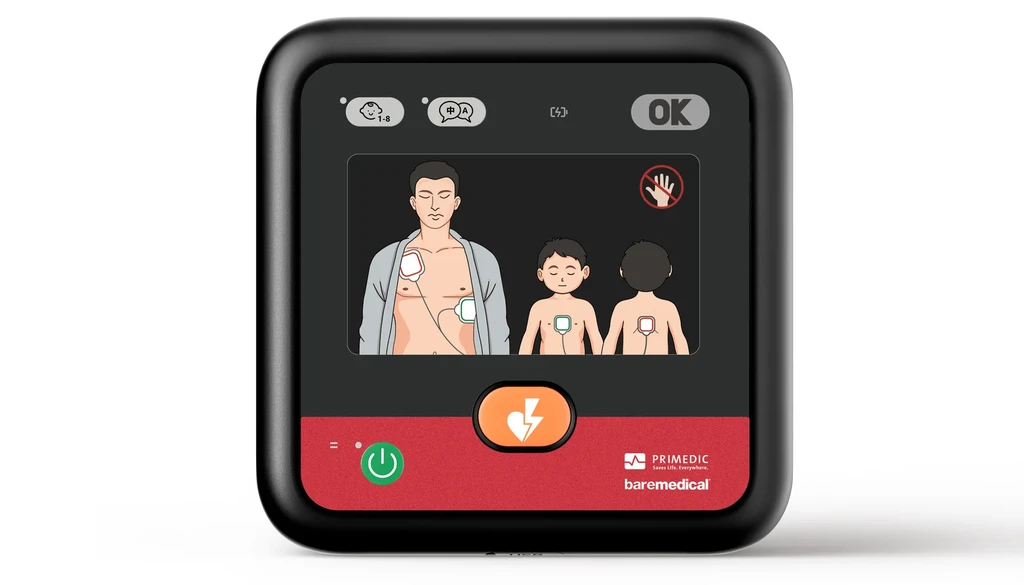
We install AEDs across South Australian aged care facilities and retirement villages, and we handle the parts that are easy to get wrong — siting the device where it’s clinically useful given the public-access exemption, registering it with SA Ambulance, fitting the required signage, and putting it on a maintenance plan so it stays rescue-ready rather than quietly lapsing. Our Smart installs add daily digital monitoring, which flags a flat battery or a fault the moment it appears instead of waiting for someone to notice.
Aged care is a designated facility, so it needs a device regardless of size — the size-scaling rules that apply elsewhere are in how many AEDs your building needs. The other post-install duties still apply: SA Ambulance registration and maintenance under the Act. Start at our South Australian AED compliance overview.
If you’re not certain your facility’s AED arrangements meet what the Act expects, the simplest starting point is a site assessment. For the wider picture of how the SA rules are playing out this year, our overview of SA AED compliance in 2026 is a good companion to this.