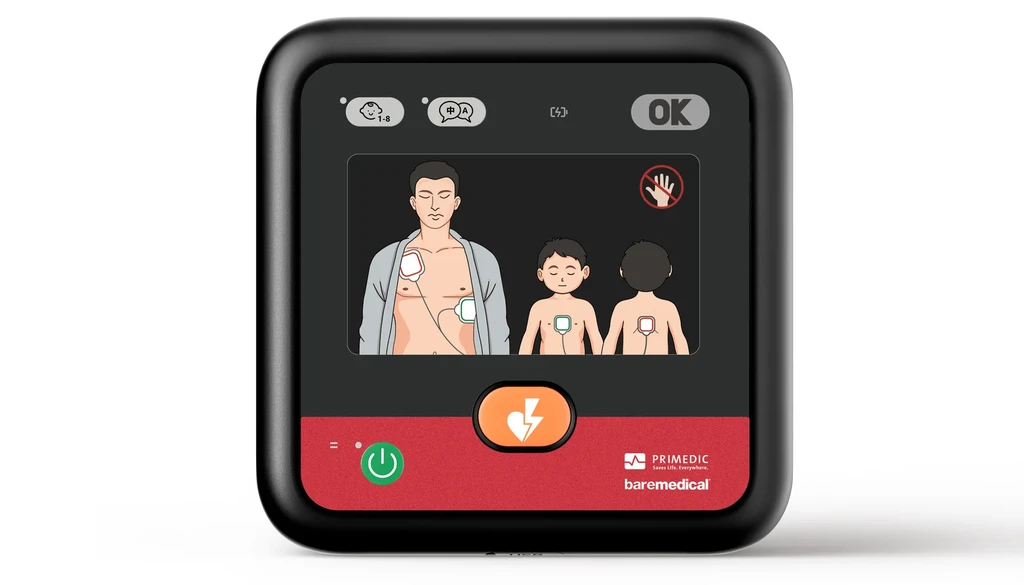
If you run a theatre or a performance venue in South Australia, here’s the part that catches people out: the law names you directly. You don’t get to do a floor-area calculation and decide you’re too small to bother. Theatres and venues for artistic or cultural performances are written into the Act as designated facilities, which means at least one AED, regardless of size, since the private-building deadline passed on 1 January 2026.
This is the practical version of what that means for venue owners and operators — what’s required, where the nuance sits, and how to get it sorted without overthinking it.
Theatres are designated — that’s the whole point
South Australia’s Automated External Defibrillators (Public Access) Act 2022 is the only AED law of its kind in the country. Most buildings come into scope through a size test: a “relevant building” is one with a floor area of 600 m² or more. But the Act also lists a set of building types that are in scope no matter how big or small they are. These are the designated facilities, and theatres and venues used for artistic or cultural performances are on that list.
So the 600 m² question that matters for an office block doesn’t apply to you in the same way. A small black-box theatre, a suburban performing arts space, a community hall that runs a regular performance program — if it’s a venue for artistic or cultural performance, the designation captures it. The minimum is one AED.
That’s the headline. The detail is where it gets interesting, and where a couple of things are worth getting right.
How many you actually need
One AED is the floor, not always the ceiling. The Act steps up the number when two things are both true:
- The building or facility is on land used for commercial purposes, and
- The publicly accessible floor area is more than 1,200 m².
For most performance venues that operate commercially, the second test is the one that decides it. And “publicly accessible floor area” is a specific idea — it’s the space the public can get to without obstruction. Your auditorium, foyer, bar, box office queue and public toilets count. Back-of-house spaces the public can’t reach — dressing rooms, the fly tower, workshops, locked offices, the loading dock — don’t.
SA Health’s own Best Practice Guide works through a theatre example that makes this concrete. A theatre with 3,200 m² of total floor area but 2,500 m² of publicly accessible space needs two AEDs. The count scales from there using the table in the Regulations — two devices from 2,400 m² of public space, three from 3,600 m², and up.
The practical takeaway: measure your front-of-house honestly. A big main auditorium plus a generous foyer and bar can tip a venue over the 1,200 m² public threshold faster than people expect, and that turns one device into two.
The temporary-structure nuance (yes, this means Fringe)
Adelaide runs on its festival calendar, and a lot of “performance venues” in February and March aren’t buildings at all — they’re tents, pop-ups and temporary structures in a park for a few weeks. SA Health’s guidance is clear that temporary structures, including the kind that go up for the Adelaide Fringe, sit outside the Act. A building, in the Act’s terms, is a structure with a roof and walls. A festival marquee isn’t a designated facility under this law.
That’s not a reason to skip the conversation entirely — if you’re running a temporary venue with thousands of people through it, an on-site defibrillator is a sensible thing to have on a risk basis, and many festival operators already do. But it’s an honest distinction, and we’re not going to tell a Fringe operator they’re breaking a law they’re not subject to. The designation bites on permanent venues with a roof and walls.
Who carries the duty — owner, not operator
This one matters in the performing arts more than almost anywhere, because so many venues are leased. A company programs a season in a building it doesn’t own. A council owns the theatre and a separate operator runs it. So who has to install the AED?
Under the Act, the obligation falls on the owner of the building or facility — not the tenant, operator or programming company. If you lease your venue, the legal duty to install sits with your landlord. In practice we’d still suggest you raise it with them rather than assume it’s handled, because it’s your patrons in the room and your event on the night. Get the conversation in writing, confirm the device is installed and registered, and make sure your front-of-house staff know where it is. The duty is the owner’s; the practical readiness is shared.
Where it goes, and the signage that comes with it
Placement under the Act isn’t complicated, but there are a few firm rules.
- It has to be publicly accessible. A member of the public needs to be able to reach the device themselves, or get it immediately from a staffed point like the box office or front-of-house desk.
- It can’t be locked away behind a key or code that stops someone grabbing it in an emergency. A cabinet is fine — a locked cupboard isn’t.
- Best practice is to mount it 1.2 to 1.4 m from the floor, in the highest-traffic visible area closest to the highest-risk area. For a theatre, the foyer near the box office is usually the natural home.
Signage is required, not optional. You need a sign near the AED itself, and a sign outside and near the building entrance indicating an AED is nearby. SA Health publishes templates for both. For a multi-level venue with circle and stalls foyers, adding directional signage on each level — ideally near the stairs and lifts — is sensible even though it’s a recommendation rather than a hard requirement.
Register it, then keep it ready
Once the device is in, it has to be registered on the SA Ambulance Service AED register within two weeks of installation. Registration records where the AED is and the hours it’s accessible, so Triple Zero call-takers can point someone to it during an emergency. If you change its location or your accessible hours change, you update the register within two weeks again.
After that it’s maintenance. The Act requires AEDs to be maintained per the manufacturer’s instructions — in plain terms, pads and a battery that are in date, and a device that’s been checked and is ready. A defibrillator with expired pads is worse than no plan at all, because everyone assumes the one on the wall works. Build a simple inspection routine, or put it on a maintenance plan so someone else owns that.
A practical approach for venue operators
- Confirm you’re designated. If you’re a permanent venue for artistic or cultural performance, you are — one AED minimum, regardless of size.
- Measure your public floor area. Over 1,200 m² of publicly accessible space and operating commercially? You’re likely looking at two or more devices — check the auditorium-plus-foyer total against the table.
- Sort out the owner conversation. If you lease, the install duty is your landlord’s. Confirm it in writing.
- Place it in the foyer, accessible and unlocked, mounted at 1.2–1.4 m, with the required signage at the device and the entrance.
- Register on the SAAS register within two weeks, and put the device on a maintenance schedule so it stays rescue-ready.
Where SafePulse fits
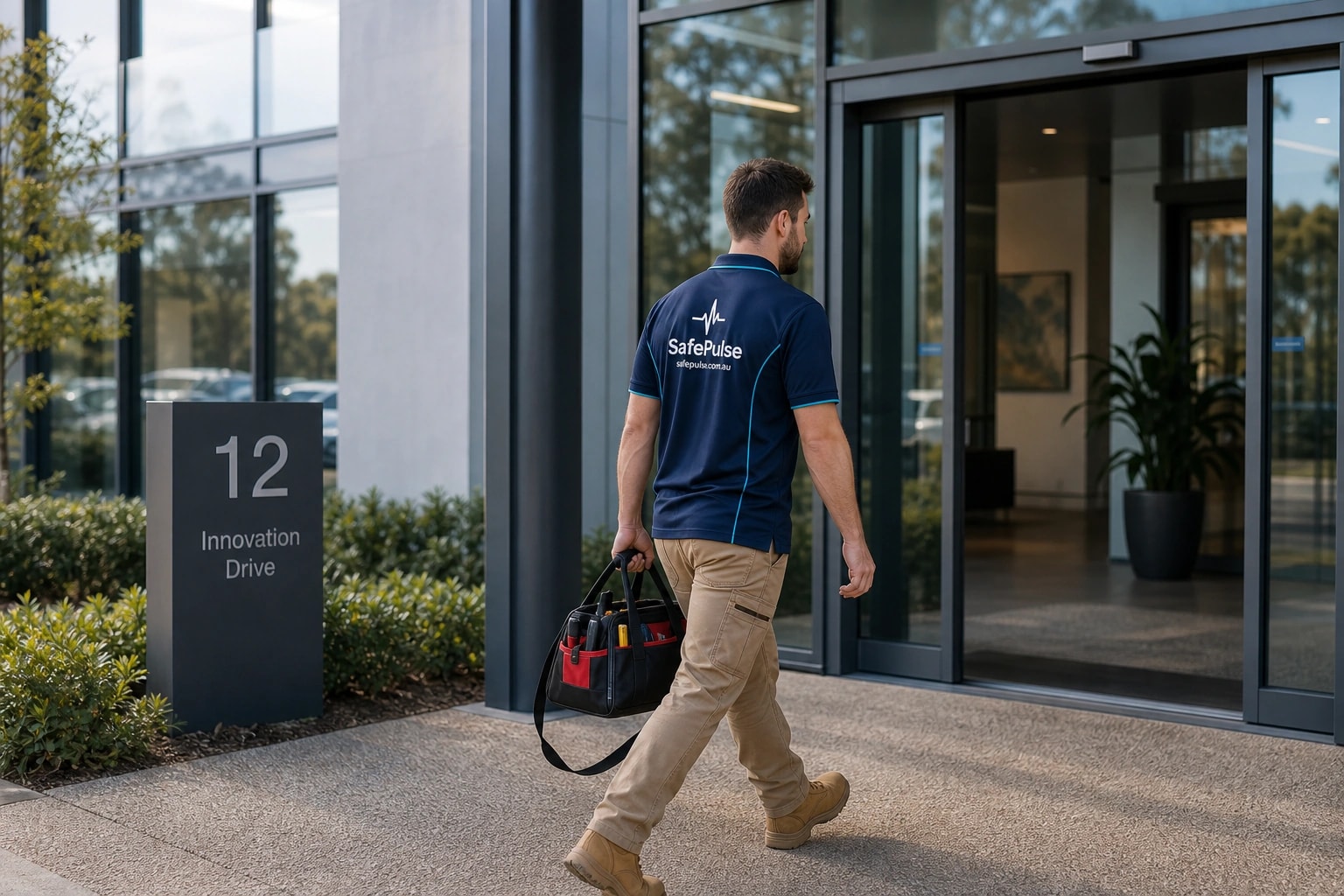
We install and maintain AEDs for South Australian venues, and theatres are a setting where the front-of-house placement and the public-access rules genuinely matter. We’ll help you confirm whether you need one device or more, place it where patrons and staff can reach it, handle the SA Ambulance registration, and keep it maintained so it works the night it’s needed.
Theatres are designated facilities, but the device count still turns on publicly accessible floor area — worked through in the 1,200 m² calculation and how many AEDs your building needs. Our South Australian AED compliance overview covers the rest of the Act.
If you run or own a performance venue and want the compliance side handled cleanly, the quickest start is a site assessment. For the broader picture, our guide to how the SA AED laws are actually playing out covers the legal baseline, calculating publicly accessible floor area walks through the count in detail, and SA AED signage requirements covers what has to go on the wall.