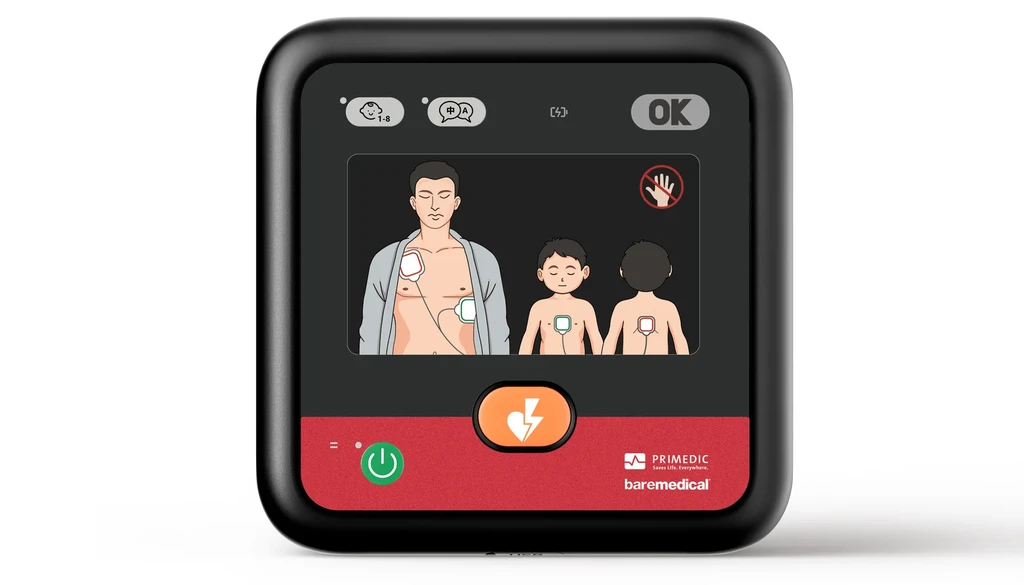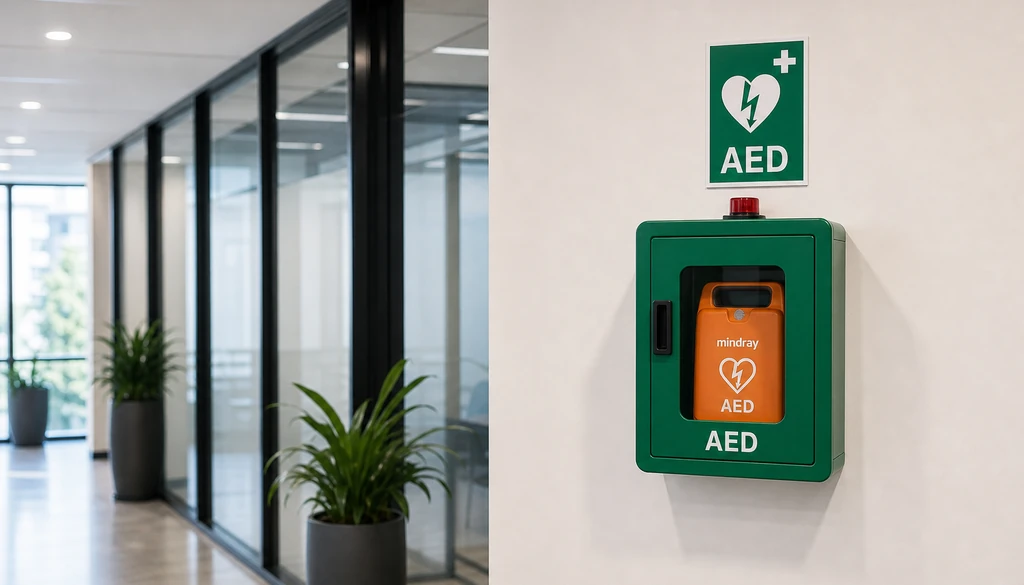
Every few months a Victorian property manager asks us some version of the same question: is Victoria about to bring in an AED law like South Australia’s, and should I get ahead of it? It’s a fair thing to ask. SA’s mandate has had a lot of coverage, and nobody wants to be the one scrambling to comply on a deadline.
So here’s the straight answer, the honest version of where things actually sit in 2026, and the more useful question underneath it — what a Victorian building owner or manager should be doing now, regardless of which way the politics goes.
The short answer: no Bill, no deadline
Victoria has no AED-specific legislation, and — unlike NSW and SA — no Bill has ever been tabled in the Victorian Parliament on the subject. We checked again before writing this. There’s no Act in force, nothing before the Legislative Assembly or Council, no minimum building size that triggers a requirement, no compliance deadline, and no penalty for not having a defibrillator.
That’s worth stating clearly because the SA news cycle has blurred it. South Australia passed the Automated External Defibrillators (Public Access) Act 2022 and switched on commercial compliance from 1 January 2026. That’s a genuine, in-force mandate — but it stops at the SA border. New South Wales went a different way again: three private member’s Bills, all of which lapsed without becoming law. Victoria hasn’t even reached that stage. There is no Victorian equivalent, proposed or passed.
If anyone tells you Victorian buildings are “required” to have an AED, they’re either confusing Victoria with South Australia or selling you something. They’re not, and we’re not going to pretend otherwise.
What’s actually driving the conversation
So why does it keep coming up? Because there’s a visible, organised push for legislation — it just hasn’t translated into a Bill.
St John Ambulance Victoria is the loudest voice. It has publicly campaigned for mandatory workplace defibrillators, arguing that AEDs “should be as widespread and common as fire extinguishers” and pointing to research that only about three in ten Victorian workers even know whether there’s an AED where they work. St John’s own published position is candid about the current gap, too:
“While the Australian Resuscitation Council states having a Defibrillator is good practice, there are no current regulations or guidelines around which businesses or industries should be required to have a Defibrillator.”
That’s the real state of play. There’s advocacy and there’s a good-practice consensus — but no regulation behind it. Advocacy is a signal about where the wind might blow, not a law you can comply with ahead of time. It’s worth watching. It’s not worth pre-empting with a panic purchase.
What Victorian law already requires (and it’s not nothing)
Here’s the part most “is it mandatory?” conversations miss: you already have a duty. It just isn’t an AED-specific one.
Under section 21 of the Occupational Health and Safety Act 2004 (Vic), an employer must ensure, so far as is reasonably practicable, that the workplace is safe and without risks to health. WorkSafe Victoria — the state’s workplace safety regulator — gives that duty practical shape through its Compliance Code: First Aid in the Workplace (November 2021). On defibrillators, the Code’s language is deliberately discretionary. Employers should:
“consider whether it is reasonably practicable to have an automated external defibrillator in the workplace as these are not difficult to use and save lives.”
“Should consider,” not “must have.” That’s the outer edge of the legal requirement in Victoria today. But don’t read “discretionary” as “ignore it.” The Code creates an expectation that you’ve asked the question and can show your reasoning — particularly if your workplace has a profile that makes cardiac arrest more foreseeable: high foot traffic, an older workforce, physically demanding work, or simply a lot of people on site. If a preventable death occurred and no one had even considered an AED, that “reasonably practicable” test is where the scrutiny would land. We dig into this properly in our piece on the Victorian OHS duty of care, and the full Code language is unpacked in what the WorkSafe Victoria Compliance Code says about AEDs.
Why “wait for the law” is the wrong frame
If you’re a property manager, the temptation is to treat this as a binary: it’s mandatory or it isn’t, and until it is, it’s optional. That framing does you a disservice, for three reasons.
First, the duty already exists. The OHS general duty doesn’t wait for an AED-specific Act — it applies now, and a defibrillator is one of the most defensible risk controls you can point to.
Second, if a mandate ever does arrive, it tends to arrive with a deadline. Buildings that already have a device, registered and maintained, simply confirm they’re covered. Buildings that don’t are the ones doing the scramble. Acting on the duty you already have quietly future-proofs you against the law you’re worried about.
Third — and this is the one that actually matters — the clinical case doesn’t care about the legislative timetable. Cardiac arrest survival drops with every minute before defibrillation. A device on the wall works the same whether or not Parliament has gotten around to requiring it.
What to actually watch (and what to do meanwhile)
If you want to keep a genuine watching brief, here’s what’s worth monitoring rather than worrying about:
- A Bill being tabled. This is the real trigger. Until something is introduced in the Victorian Parliament, there’s nothing to comply with. St John’s advocacy is the lead indicator; a Bill would be the actual signal.
- Changes to the WorkSafe Compliance Code. If “should consider” ever firms up, that’s where it would show first.
- What other states do next. SA is in force; NSW keeps trying. Movement interstate often shapes the Victorian conversation.
And while you watch, the sensible position is simple:
- Run the assessment the Code already expects. Look honestly at your site’s foot traffic, workforce age, physical risk and size. Document the call.
- If the case is there, install one — TGA-approved, unlocked, well-signed, somewhere visible and central.
- Register it with Ambulance Victoria. Registration is voluntary and free, and it puts your device on the map Triple Zero call-takers and GoodSAM responders use. There’s no reason not to.
- Maintain it. Pads and battery in date, status checked. An unmaintained AED helps no one.
That’s not getting ahead of a law. It’s discharging the duty you’ve already got — and if the mandate ever lands, you’re already done.
Where SafePulse fits
We install and maintain AEDs for Victorian commercial buildings, and we’ll give you the honest version every time: Victoria doesn’t require a device today, and we won’t tell you it does. What we will do is help you run the “reasonably practicable” assessment the Compliance Code expects, put the right unit in the right place if the case stacks up, register it with Ambulance Victoria, and keep it rescue-ready.
Until something is actually tabled, the obligation that applies today is the OHS duty in Victorian OHS duty of care, given practical shape by the WorkSafe Victoria Compliance Code. Our Victorian AED page sets out where the state stands.
If you’d rather make the decision on the facts than on a headline, that’s exactly the conversation to have. Our Victorian AED page covers how we work across the state, and for the sectors where the duty-of-care case is strongest, our look at AEDs in Melbourne hotels and hospitality is a practical example of the assessment in action.