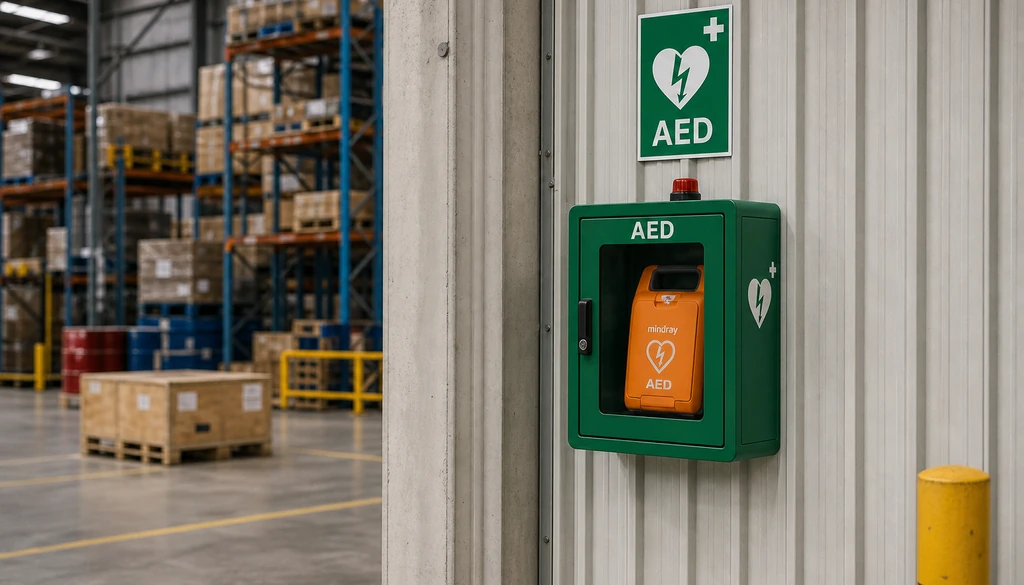
Put a cardiac arrest in a Perth office and paramedics are minutes away. Put the same cardiac arrest at a camp in the Pilbara, and “minutes” isn’t the unit of measurement any more — it’s hours, or an aerial evacuation. That gap is the whole reason to think hard about defibrillators on WA’s remote sites.
This isn’t about a law. Western Australia doesn’t mandate AEDs anywhere, and mine sites are no exception. It’s about the risk that sits in front of a resources workforce and what the WHS duty asks a reasonable operator to do about it. Here’s the honest case for FIFO camps, remote projects and the isolated ends of the resources sector.
No law requires it — here’s what actually applies
There’s no AED-specific legislation in Western Australia. No Act, no bill has been tabled, and no size or industry trigger forces a defibrillator onto any site. WA was the last state to adopt the model Work Health and Safety framework, with the Work Health and Safety Act 2020 commencing on 31 March 2022.
Two points people get wrong about mining specifically:
- The Work Health and Safety (Mines) Regulations 2022 do not mandate AEDs. Provision is risk-assessed under the same first-aid framework as every other WA workplace.
- Failure to install an AED isn’t an offence in its own right. What you carry is the primary duty of care under the WHS Act — to ensure health and safety “so far as is reasonably practicable.”
So the question isn’t “are we required to?” It’s “given this site, does a reasonable risk assessment land on yes?” On remote resources sites, it very often does — and WorkSafe WA’s own guidance tells you why.
What WorkSafe WA says — and why remote sites tick the boxes
WorkSafe WA — the state’s work health and safety regulator — published Health and Safety Bulletin No. 11: Provision and maintenance of automated external defibrillators at workplaces (September 2023, updated November 2024). It’s the most direct WA-government guidance on workplace AEDs, and it flags three trigger factors for considering one:
- Risk of electrocution to workers
- Likely delay in ambulance arrival
- Large numbers of members of the public present
Look at a FIFO camp or a remote project against that list. Trigger two — ambulance delay — isn’t a maybe out there; it’s the defining condition of the site. Trigger one lands squarely on any operation involving electrical work, high-voltage equipment or heavy plant. The third matters less at a closed camp, but two out of three is more than enough for a reasonable assessment to support having a device on site.
The Bulletin also makes a point that’s easy to overlook on a remote site: an AED only helps if it works. WorkSafe explicitly raises under-maintained devices — flat batteries, expired pads, units not visible or accessible — as a failure mode, noting that “if an AED fails to operate when used on a person who is in cardiac arrest, first aid will not be effective or reduce the risk of fatality.” On a site hours from help, a dead battery isn’t an inconvenience. It’s the difference.
Why the resources workforce carries real cardiac risk
Set the geography aside for a second and look at who’s on site. The resources workforce skews older and male, works long shifts, often in heat, sometimes with underlying cardiovascular risk that a pre-employment medical doesn’t fully rule out. Sudden cardiac arrest doesn’t announce itself, and it doesn’t only happen to people who look unwell.
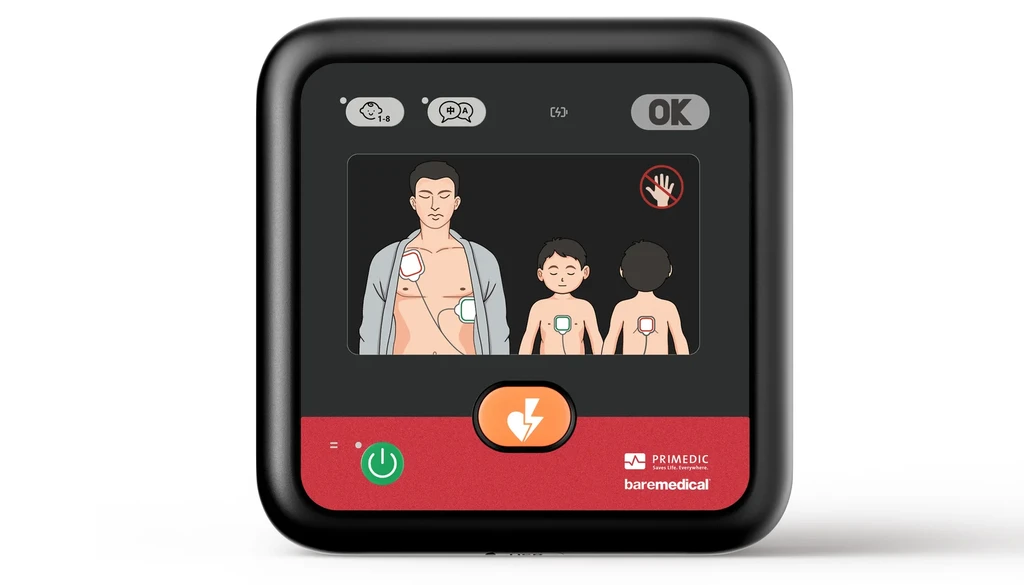
Now put that person hours from a hospital. CPR can keep them alive, but as the guidance is blunt about, defibrillation is the only thing that restores a fatal heart rhythm to normal. Every minute without it costs survival odds. On a remote site, the on-site AED isn’t a backup to the ambulance — for the first stretch, it’s the entire treatment. That’s a materially stronger case than the same device makes in a metro office, and it’s why isolation and workforce profile together tip the scale.
Registering an AED in WA — it’s St John, not GoodSAM
This trips up operators coming from the eastern states, so it’s worth being precise. WA doesn’t use the GoodSAM app that NSW, Victoria and SA run on.
Western Australia is one of only two jurisdictions where the ambulance service is delivered by a contracted non-government provider — St John Ambulance (WA). AED registration runs through St John WA’s own platform: the St John First Responder app and the State Defib Network, maintained by the Community First Responder team. When a Triple Zero call comes in, St John’s operations centre can direct a caller to the nearest registered device or alert a nearby first responder.
Registration is voluntary — there’s no WA law requiring it. For a closed remote camp it matters less than it would for a public-facing site, since the value is mostly in helping outsiders find your device. But registering keeps your unit in the state picture, and it’s free. Register via the CFR Registration Form on stjohnwa.com.au, or call the Community First Responder team on (08) 9334 1418.
Getting the hardware right for remote conditions
A device that’s fine in an air-conditioned office needs more thought on a remote WA site. A few things we’d flag:
- Environment-rated enclosure. Heat, dust and sun are hard on consumables. IP55 is the general outdoor minimum; for exposed or harsh settings, lean higher, and check the manufacturer’s stated operating temperature against your site’s real conditions.
- Visible and accessible placement. The Bulletin’s maintenance concern is partly about devices no one can find. Put it where people expect it — near the muster point, the crib room, the first aid room — and sign it clearly.
- Into the emergency response plan. On a remote site the AED shouldn’t be an orphan on a wall. It belongs in the site ERP, alongside the expected ambulance response time and the aerial evacuation arrangements that time implies. The relevant training unit for remote first responders is HLTAID013 — Provide first aid in remote or isolated site.
- Monitoring, where it earns its keep. On a site you can’t easily walk past every day, a Smart-monitored unit that reports its own readiness saves someone a trip and catches a flat battery before it matters.
The practical approach
If you run camps or remote projects in WA, treat the AED question as a documented part of your first-aid risk assessment rather than a box to leave blank because there’s no law. Work through the three triggers for each site, note where ambulance response genuinely sits, and let that drive the decision on how many devices and where. On most remote resources sites, the reasoning points clearly toward having one — not because you’re compelled, but because the risk and the distance make it the reasonable call.
Then make it a device that stays ready. A defibrillator that’s been sitting in the heat with expired pads is worse than useless — it’s a false sense of security. Real placement, a real maintenance schedule, and hardware matched to the environment are what turn a purchase into cover.
This is exactly the kind of site where a poorly-specified AED lets everyone down quietly. If you’re equipping FIFO accommodation, a remote project or an isolated resources operation in WA, we can walk through the risk assessment with you, spec the right hardware for the conditions, and keep it serviced so it works the day it’s needed. Get in touch for a no-obligation assessment.
Frequently asked questions
Are AEDs mandatory on WA mine sites?
No. The Work Health and Safety (Mines) Regulations 2022 don’t require AEDs, and there’s no WA AED law. Provision is risk-assessed under the general WHS duty — but on remote sites, ambulance delay and hazard exposure usually make the case for having one.
How do I register an AED at a remote WA site?
Through St John WA’s State Defib Network — WA doesn’t use GoodSAM. Use the CFR Registration Form on stjohnwa.com.au or call (08) 9334 1418. It’s voluntary and free.
What IP rating should an AED cabinet have on a remote site?
IP55 is the general outdoor minimum; for exposed or harsh conditions, go higher. Also check the AED’s stated operating temperature against your site’s real heat. These are best-practice specs, not a WA regulation.
Isn’t the ambulance response our real answer?
Operating mine sites face a closely related version of this — AEDs on WA mining sites. For the state legal position, see do Western Australian commercial buildings need an AED in 2026, and for registration, St John WA’s State Defib Network. Our Western Australian AED page has more.
On a remote site, the ambulance is the follow-up, not the first response. For the first stretch — often the difference between survival and not — an on-site AED plus CPR is the treatment. That’s why isolation strengthens the case rather than weakening it.