Aged care is the one setting where the case for a defibrillator barely needs arguing. The residents are, on average, at the highest cardiac risk of any group you’ll find under one roof, and the minutes before an ambulance arrives are exactly the window an on-site AED is built to cover. In Western Australia, though, there’s a wrinkle worth understanding: two different regulators shape the decision, and neither of them, strictly speaking, mandates the device. Here’s how the WA state duty and the federal aged care rules fit together, and what a provider should actually do about it.
The WA position: no AED law, but a real duty
Let’s be clear about the state picture first, because it’s easy to get wrong.
Western Australia has no legislation requiring AEDs in any building, aged care included. There’s no equivalent to South Australia’s AED Act, and no AED-specific Bill has ever been tabled in the WA Parliament. WA was actually the last state in the country to adopt the model Work Health and Safety laws — the Work Health and Safety Act 2020 (WA) only commenced on 31 March 2022. So anyone claiming WA aged care providers are “legally required” to install an AED is mistaken.
What WA does have is a WHS duty. As a person conducting a business or undertaking, an aged care operator has a primary duty of care to protect the health and safety of workers and others, so far as is reasonably practicable. WorkSafe WA has spelled out how AEDs fit that duty in its Health and Safety Bulletin No. 11, which deals specifically with the provision and maintenance of defibrillators at workplaces. The bulletin is plain: AEDs aren’t mandated, and whether to provide one comes down to a workplace risk assessment. It flags three trigger factors — risk of electrocution, likely delay in ambulance arrival, and large numbers of members of the public.
Aged care doesn’t lean on electrocution risk, obviously. But it lands hard on the underlying logic of the duty: a foreseeable, high-likelihood cardiac risk in a population that can’t easily self-rescue. For a WA aged care provider, a risk assessment that concludes “no AED needed” would be a hard one to defend.
The federal layer: the Aged Care Act 2024
Here’s what makes aged care different from a WA office or warehouse — you’re also regulated federally, and that changes the weight of the decision.
Residential aged care providers answer to the Commonwealth under the Aged Care Act 2024, which commenced on 1 November 2025 and replaced the old 1997 Act. It brings the strengthened Aged Care Quality Standards, and the one that matters here is Standard 5 (Clinical Care) — providers must identify, monitor and respond to a resident’s clinical deterioration.
The honest read is that the Quality Standards don’t name AEDs. There’s no line in the federal rules that says “install a defibrillator”. So the device isn’t federally mandated any more than it’s mandated under WA state law. But a working, staff-accessible AED sits right inside what Standard 5 is asking for — the ability to respond quickly and effectively when a resident deteriorates, and a cardiac arrest is deterioration at its most acute. A provider who can show they’ve thought about sudden cardiac arrest and equipped for it is answering the standard, not gaming it.
So the picture in WA aged care is two overlapping expectations that both point the same way without either one issuing an order: a state WHS duty that a risk assessment will almost always resolve in favour of an AED, and a federal clinical-care standard that a defibrillator clearly supports. No mandate — but about as strong a best-practice case as exists.
Regional WA sharpens it further
There’s a WA-specific factor that deserves its own mention: distance.
Plenty of WA aged care sits well outside the metro area, and ambulance response times in regional and remote WA are materially longer than in Perth. That’s not incidental — delayed ambulance arrival is one of the three trigger factors WorkSafe WA names. The further your facility is from a well-resourced ambulance depot, the more an on-site AED shifts from “good idea” to “the thing that determines the outcome”. In the bush, the device on your wall may be the only defibrillation available for the crucial first ten or fifteen minutes. For regional providers, that alone settles the question.
Registering an AED in WA — and why it’s not GoodSAM
One thing to get right, because WA does it differently to the eastern states: registration doesn’t run through GoodSAM.
Western Australia is unusual in that St John Ambulance (WA) is the contracted ambulance provider for the whole state — not a government agency. AED registration runs through St John WA’s own system: the St John First Responder app and the State Defib Network, which is the WA register of defibrillator locations. When a Triple Zero call comes in, St John WA’s operations centre can direct a caller to the nearest registered AED or alert a nearby community first responder using that data.
Registration is voluntary — there’s no WA law requiring it — but it’s worth doing. It puts your device on the map that responders actually use. You register through the St John WA Community First Responder registration form, not through GoodSAM. We cover the WA-specific process in our guide to the St John WA State Defib Network. In a secure aged care setting the public won’t be fetching your AED, but registering it still helps the coordinated emergency response around your facility.
What good looks like for a WA aged care provider
If you’re equipping a facility, the practical shape of it is straightforward:
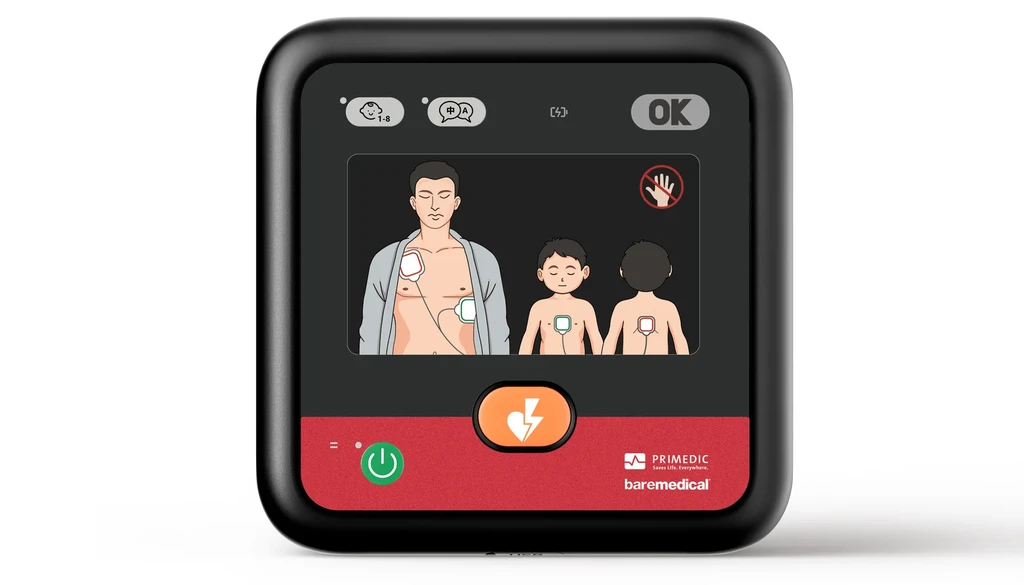
- A TGA-approved AED, placed where staff can reach it in seconds — a nursing station or central care hub — rather than locked in an office. In a large or multi-wing facility, think about whether one device genuinely covers your response times or whether you need more than one.
- A maintenance routine that keeps pads and battery in date and confirms the unit passes its self-test. WorkSafe WA’s Bulletin No. 11 specifically warns about under-maintained AEDs — flat batteries and expired pads that cause the device to fail when it’s finally needed. A documented check schedule is what prevents that.
- A few trained staff. Training isn’t legally required to use an AED — the device talks the user through it — but confident staff act faster.
- Voluntary registration with St John WA so the device is on the State Defib Network.
The bottom line
No law in Western Australia orders an aged care provider to install an AED, and the federal aged care standards don’t name one either. But between a WHS duty that a fair risk assessment resolves one way, a federal clinical-care standard the device plainly supports, and — for regional facilities — ambulance distances that make on-site defibrillation decisive, aged care is close to the clearest best-practice case there is. The absence of a mandate isn’t the same as the absence of a reason.
For the wider WA picture, our foundation piece on whether WA commercial buildings need an AED in 2026 sets out the state framework in full, and you can see the range of WA settings on our Western Australia page.
Where SafePulse fits
We supply, install and maintain AEDs for commercial and care settings across the country. For a WA aged care provider that means siting the device where it’s clinically useful, fitting the signage, putting it on a maintenance plan so it stays genuinely rescue-ready, and helping you register it with St John WA rather than the eastern-state GoodSAM system. Our Smart installs add daily digital monitoring, which flags a flat battery or fault the moment it appears — useful anywhere, and especially on a remote site where nobody’s walking past to check.
Neither WA law nor the federal aged care standards name a defibrillator, leaving the risk-assessed position in do Western Australian commercial buildings need an AED in 2026. If you install one, register it with St John WA rather than looking for GoodSAM. Our Western Australian AED page covers the state position.
If you’d like to work out what your facility needs, a site assessment is the simplest place to start.