A theme park on a school-holiday Saturday. A surf club bistro packed for Sunday lunch. A beachfront resort at full occupancy in peak season. These are exactly the rooms where a sudden cardiac arrest is most likely to happen in front of a crowd — and where the nearest ambulance might be tied up across a region that swells with visitors every summer.
There’s no Queensland law requiring a defibrillator in any of them. But for tourism and hospitality operators on the Gold Coast and Sunshine Coast, the work health and safety case stacks up about as cleanly as it does anywhere in the state. Here’s how to think about it honestly.
First, the legal reality
Let’s clear this up before anything else, because the SA news cycle has muddied it. Queensland has no AED-specific legislation, and no AED Bill is before the Queensland Parliament — we checked again before writing this. There’s no minimum building size that triggers a requirement, no compliance deadline, and no penalty for not having a defibrillator. Anyone telling a Gold Coast venue it’s “legally required” to have an AED is confusing Queensland with South Australia, which is the only state with a mandate in force.
What Queensland venues do have is a general first aid duty. Under the Work Health and Safety Act 2011 (Qld) and regulation 42 of the WHS Regulation, a business must provide first aid equipment and ensure workers can access it. The practical detail sits in WorkSafe Queensland’s First aid in the workplace Code of Practice 2021, and that’s where AEDs come in.
The Code’s three triggers — and why tourism hits them
The Code treats an AED as a risk-based decision, not a mandatory item. It says you should consider providing one where any of three factors apply:
- A risk of electrocution to workers,
- A likely delay in ambulance arrival, or
- Large numbers of members of the public present.
Most office buildings tick maybe one of those. A busy coastal tourism or hospitality operation can tick two of the three without trying — and in peak season, arguably all the way into the territory the Code is pointing at.
Large numbers of the public is the obvious one. Theme parks, resorts, surf clubs, function centres, beachfront pubs, large cafés and tourist attractions move serious volumes of people, and a meaningful share of that crowd is in the older, holidaying demographic where cardiac risk is highest. The more people through your doors, the higher the statistical chance that one day one of them collapses on your floor.
Ambulance delay is the one operators underestimate. It’s easy to assume a Gold Coast or Sunshine Coast address means a fast response — but in peak periods the visitor population balloons, road traffic clogs, and ambulance resources stretch across a region carrying far more people than its residents alone. Add the hinterland venues — wineries, lookouts, hinterland resorts a real drive from the nearest station — and the “delay in ambulance arrival” trigger is genuinely live. The first few minutes of a cardiac arrest are the ones that decide the outcome, and those are minutes you control with an on-site device, not minutes you can outsource to triple-zero.
Put those together and the Code isn’t subtle about where a high-footfall coastal venue lands. The decision is still yours — but it’s a decision you should be able to show you actually made.
Why an on-site AED matters more than the registry here
Queensland’s AED registry runs through the Queensland Ambulance Service, and registering is the right thing to do. But it’s worth understanding its limits, because it changes how you think about your own device.
QAS registration is voluntary, and — unlike the GoodSAM systems used in New South Wales and Victoria — it only helps when the cardiac arrest happens at your registered property. In QAS’s own words, your registration “will not generate an alert for calls from nearby businesses or properties.” There’s no volunteer-responder network being dispatched to your device from down the street. We unpack this properly in our piece on why the QAS registry is different from GoodSAM.
The practical upshot: in Queensland, the AED that matters most to your venue is the one on your wall. You can’t lean on a neighbour’s registered device being brought to you by a stranger with an app. If you want a defibrillator available when someone collapses in your venue, you provide it yourself. Register it with QAS so the call-taker can point your own staff to it — but treat the device as yours to supply.
Getting it right in the coastal climate
If you do put one in, a couple of things matter more up here than they do down south.
Queensland heat and humidity are hard on equipment. Pad gel degrades faster in sustained heat, and electronics don’t love a salt-air, high-humidity environment. For anything outdoors or semi-exposed — a poolside, a beachfront entrance, an outdoor function area — specify an IP55-rated cabinet or better, and check the device’s stated operating temperature range. Indoors and air-conditioned, a standard cabinet is fine; it’s the exposed coastal placements where cabinet quality earns its keep.
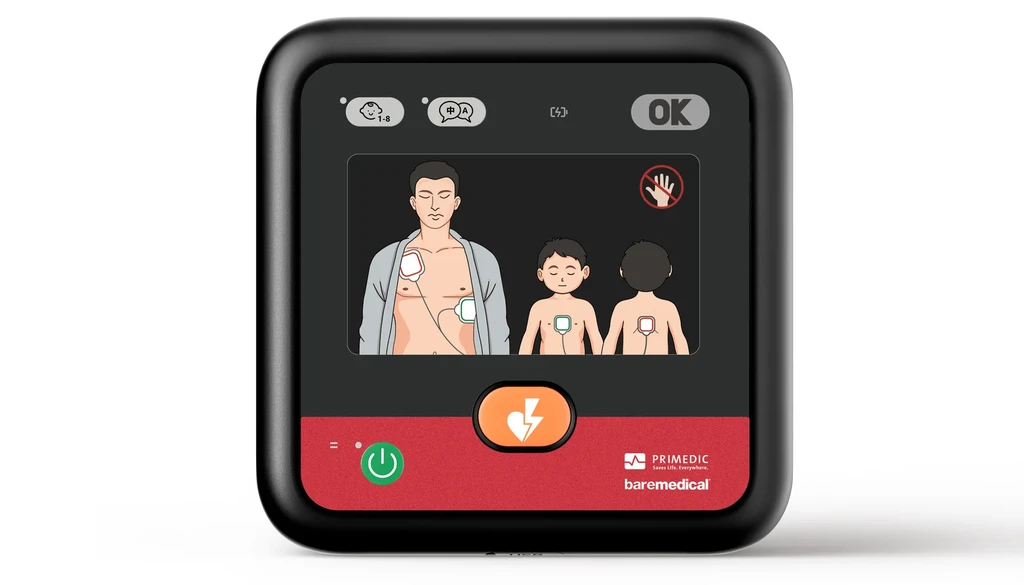
Beyond that, the fundamentals are the same as any commercial AED: TGA-approved unit, mounted somewhere visible and central, unlocked and reachable, clearly signed, and maintained on the manufacturer’s schedule so the pads and battery are always in date. A defibrillator with expired pads is the worst outcome — it looks like a plan while being none.
A practical approach for operators
You don’t need to overthink this. Work it like a risk assessment, because that’s what the Code asks for:
- Count your exposure. Peak-season headcount, the age profile of your visitors, how spread out your site is, and how far you really are from an ambulance when the roads are full.
- Make the call and document it. If two of the three Code triggers apply — and for most high-footfall coastal venues they do — installing an AED is the defensible decision. Write down the reasoning either way.
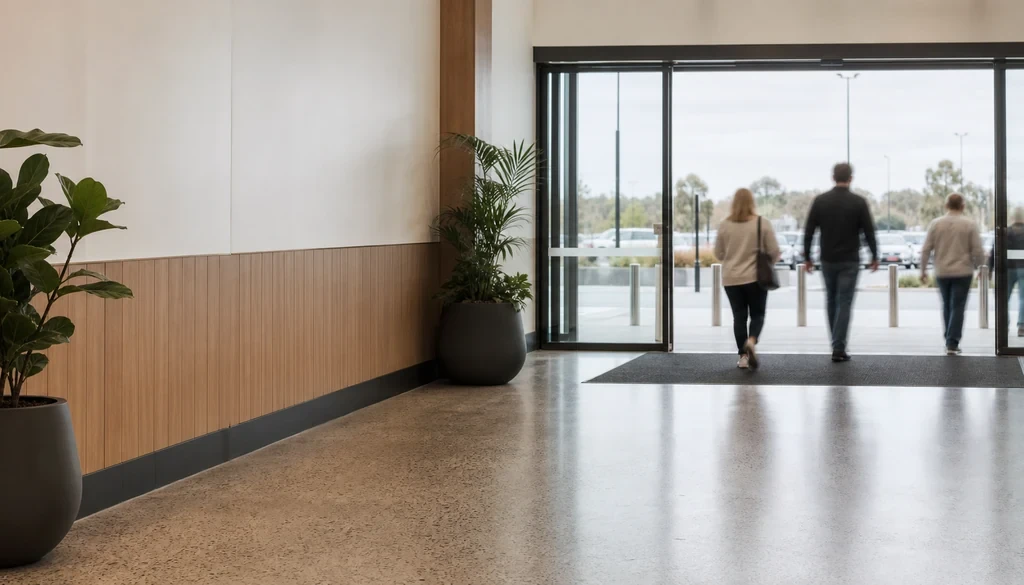
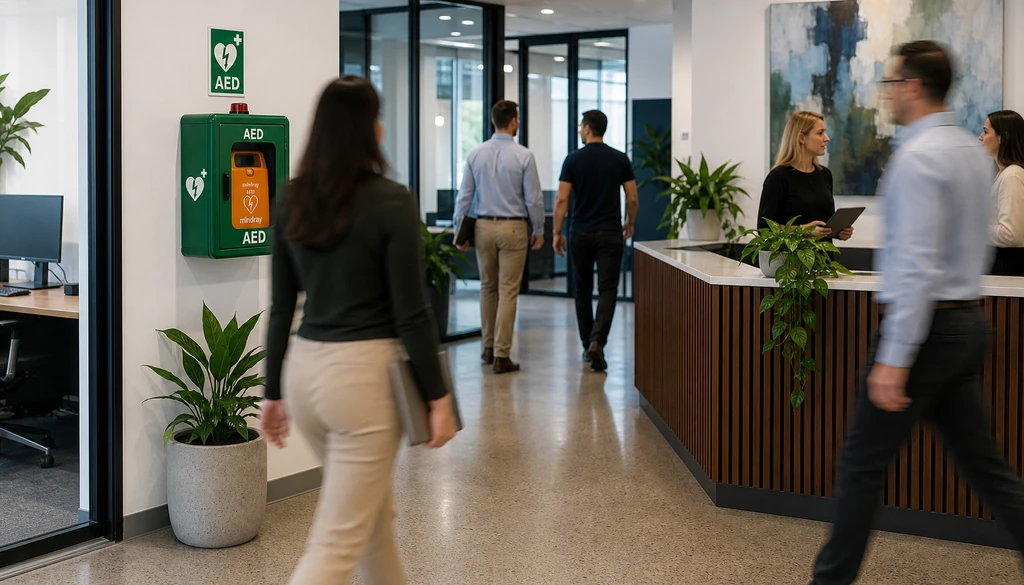
- Place it where the crowd is. Main entrance, reception, near the busiest public area. Mounted at 1.2–1.4 m, unlocked, signed.
- Spec for the climate. IP55+ for anything exposed; check the temperature rating.
- Register with QAS, and maintain it. Voluntary registration plus a real maintenance routine so it’s ready the day it counts.
Where SafePulse fits
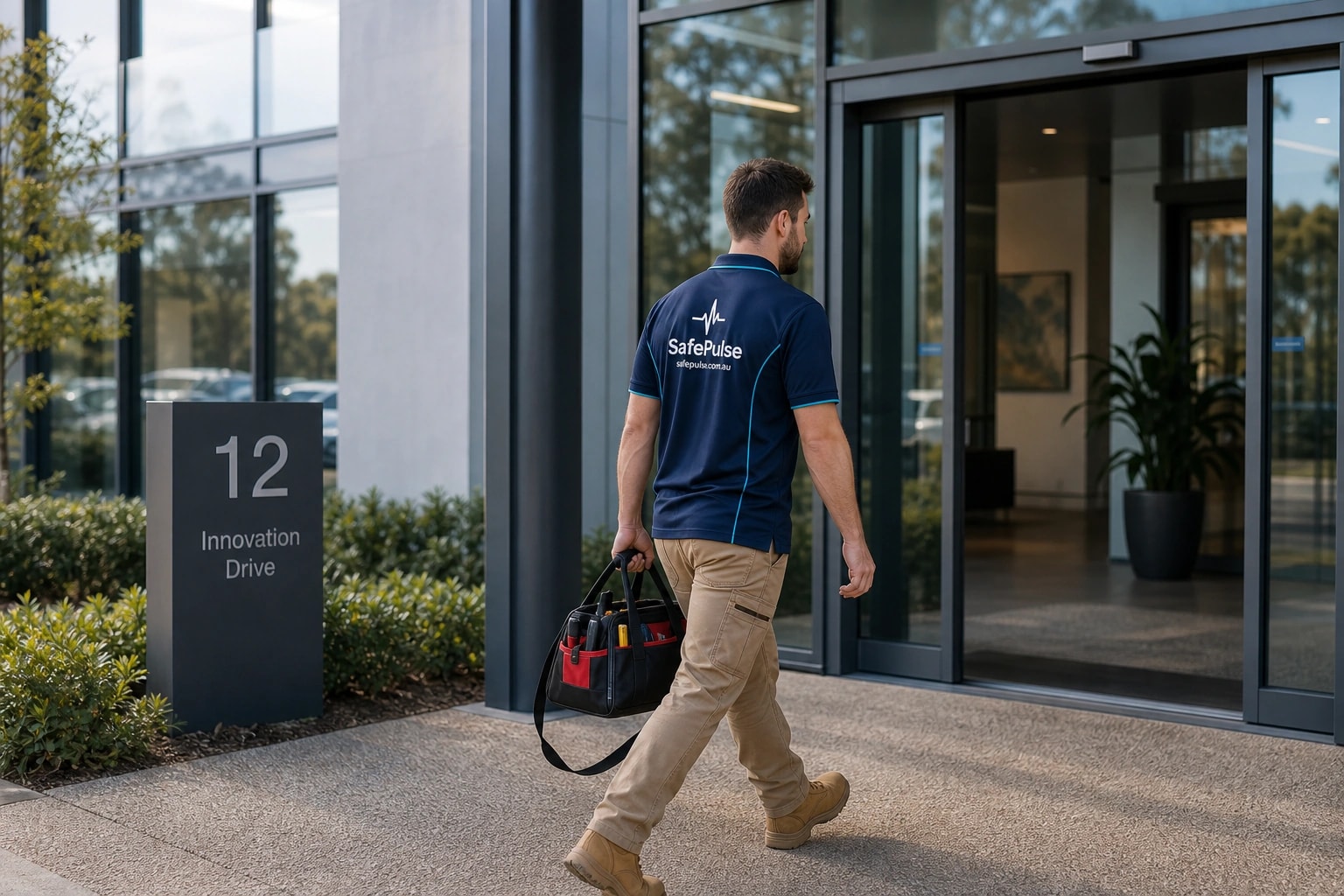
We install and maintain AEDs for Queensland commercial and tourism operators, and we’ll always give you the honest framing: there’s no Queensland law forcing your hand, so this is a duty-of-care decision, not a compliance scramble. What we’ll help with is making that decision properly — assessing your site’s footfall and response-time exposure, choosing a unit and cabinet that handle the coastal climate, placing it where it’ll actually be reached, and keeping it maintained.
Public footfall is one Code trigger; ambulance distance is another, and it bites hardest away from the coast. For the legal position, see do Queensland commercial buildings need an AED in 2026, and for why an on-site device matters more here than interstate, QAS registry vs GoodSAM. Our Queensland AED page has more.
If you run a venue on the Gold Coast or Sunshine Coast and want to work out whether the case is there, that’s a straightforward conversation. Our Queensland AED page covers how we work across the state, our guide to whether Queensland commercial buildings need an AED lays out the legal baseline, and for the office side of the market our Brisbane property manager’s guide is a useful companion.