Queensland is the reason “call an ambulance” means different things in different postcodes. In central Brisbane it means help is close. In a workshop outside Charters Towers, a resort on the Cassowary Coast or a depot west of Mount Isa, it means help is coming — from somewhere, over distance, on roads that may not be cooperating.
For most workplace hazards, distance is an inconvenience. For cardiac arrest, distance is the whole problem, because the treatment window is measured in minutes. That’s why the AED conversation reads differently in regional Queensland than it does in the CBD, even though the law is identical.
The legal position, stated honestly
Queensland has no AED legislation. There’s no Act requiring defibrillators in commercial buildings, no compliance deadline, and no AED-specific penalties. We re-checked the Queensland Parliament Bills register before writing this and found no AED Bill before parliament.
What you carry is the primary duty under the Work Health and Safety Act 2011 (Qld) — to ensure, so far as is reasonably practicable, the health and safety of workers — and the operational first-aid duty at regulation 42 of the Work Health and Safety Regulation 2011 (Qld): provide first aid equipment, make sure workers can get to it, provide first aid facilities where appropriate, and have enough trained people.
The detail sits in WorkSafe Queensland’s First aid in the workplace Code of Practice 2021. It treats AEDs as risk-assessed rather than mandatory, and flags three factors that should push you towards installing one:
- Risk of electrocution to workers
- Likely delay in ambulance services arriving at the workplace
- Large numbers of members of the public present
Failing to install an AED isn’t an offence in Queensland. Failing to discharge the broader first-aid duty could be, but that’s a fact-dependent argument, not a specific AED rule. Anyone telling you regional Queensland businesses are legally required to have a defibrillator is wrong — the foundation piece on that is do Queensland commercial buildings need an AED in 2026.
Why trigger two does the heavy lifting outside the south-east
Of those three factors, ambulance delay is the one that describes regional Queensland as a permanent condition rather than an occasional risk.
Queensland Ambulance Service crews cover an enormous area from a finite number of stations. Response times in regional, remote and outback communities are materially longer than in the south-east corner — not because of any failing, but because of geography, road distance, and in the wet season, roads that stop being roads.
We’ve deliberately not put a number on that. Published response-time data varies by reporting period and definition, and an average flattens the thing that matters — the spread. Do the local calculation instead: for each site, find out where the nearest QAS station actually is and what a realistic arrival window looks like on a bad day rather than an average one. That figure is the input to your risk assessment, and it’s the one an inspector or a coroner would look at.
Here’s what makes the answer uncomfortable. Survival in cardiac arrest falls away quickly with each minute that passes without defibrillation, and defibrillation is the only thing that restores a heart in a shockable rhythm — CPR buys time, it doesn’t fix the rhythm. So where realistic ambulance arrival exceeds the window in which defibrillation is likely to work, an on-site AED isn’t an addition to the emergency response for those first minutes. It is the emergency response.
That reasoning holds whether you run a hardware store in Ayr, a packing shed in the Burdekin, an accommodation business on the Atherton Tablelands or a service depot in the north west.
The Queensland registry limitation matters more out here
This is the part that catches operators who’ve worked interstate.
Queensland Ambulance Service maintains an AED register, and registering is worth doing — when someone calls Triple Zero from a registered property, the Emergency Medical Dispatcher can direct them to the device on site. Registration is voluntary; no Queensland law requires it.
But QAS is explicit about the boundary:
“Your AED location details will only notify the EMD if the suspected cardiac arrest occurs at your business or property. It will not generate an alert for calls from nearby businesses or properties.”
That’s a real difference from NSW, Victoria and Tasmania, which run on GoodSAM and alert nearby registered responders with the location of the closest registered AED. Queensland has no equivalent state-wide responder alerting tied to the register, and QAS doesn’t publish a searchable public AED map — some councils publish lists of council-owned devices, but that’s patchy. We’ve compared the two models in QAS registry vs GoodSAM.
The regional consequence is straightforward. In a dense city, a missing AED at your site might be covered by a device in the building next door, found via a responder app. In a town where the next commercial premises is a paddock away and no responder network reaches you, there is no nearby device and nobody coming to fetch one. Your device or nothing. So register with QAS — and don’t treat the register as a safety net that extends past your fence line.
Sectors where the regional case is strongest
Agriculture, packing and processing. Older operators, physical work, machinery, and often the greatest distance from a station. Sheds and yards are also where an outdoor-rated enclosure earns its keep.
Transport, logistics and service depots. Frequently the only sizeable premises for some distance, which makes a device on site useful well beyond your own staff.
Accommodation and tourism inland and up north. Visitor numbers bring the Code’s third trigger in alongside the delay trigger. That combination is what we worked through for the south-east coast in Gold Coast and Sunshine Coast tourism venues; in the Far North the delay side is considerably heavier.
Electrical and construction trades. Electrocution is the Code’s first trigger, and up here it stacks with delay — covered in construction and electrical trades in Queensland.
Mining, quarrying and resources. Worth being precise. Queensland’s resources sector sits under the Mining and Quarrying Safety and Health Act 1999 and its 2017 Regulation, administered by Resources Safety & Health Queensland, not the general WHS regime. Regulation 39 requires first aid resources determined through a risk management process and contemplates remoteness limiting emergency services. It does not name AEDs. Most substantial operations carry them anyway because the risk assessment lands there — operator-driven, not a rule you can point at.
Specifying for the climate, not the catalogue
Heat and humidity age your consumables. Pad gel degrades and battery life shortens under sustained heat, so a device on an unshaded shed wall or riding around in a ute is ageing faster than the label interval assumes. For outdoor and semi-outdoor placements, specify an enclosure rated IP55 or above, keep it out of direct sun, and check the device’s stated operating temperature against real site conditions rather than an average. IP ratings are industry best practice here, not a Queensland regulation.
Maintenance is on you. Queensland has no legal AED maintenance duty — South Australia is the only state that does. The failure mode is the same everywhere: expired pads and a flat battery in a device nobody’s checked. A monthly look by a nominated person and a real service every six months covers it. Where you are the entire first response, an unmaintained AED is worse than none, because it looks like cover.
Funding, and what’s actually available
There’s no dedicated Queensland Government AED grant. Community sporting clubs can look at the general Active Clubs program ($2,500 for equipment — though AEDs aren’t explicitly named in the published categories, so confirm eligibility with the department first), Alpha Sport’s Heart Starter grant ($500), and the national Project Defib program. Some regional councils and Queensland Country Bank’s community grants have funded devices before.
If you’re a commercial operation, none of these are your pathway — they’re community and not-for-profit oriented. Treat the AED as safety infrastructure and budget it the way you would fire equipment.
The practical approach
Put the AED question into your site risk assessment rather than leaving it blank because no law demands it. For each regional site, write down the realistic ambulance arrival window, the number of people through the premises, the hazards present, and what heat does to equipment there. In most regional Queensland settings that reasoning lands on installing a device — and the reasoning is the record you’d want to have.
Then follow through: visible, unlocked placement, an enclosure matched to the climate, a maintenance schedule that actually happens, staff who know where it is, and a QAS registration.
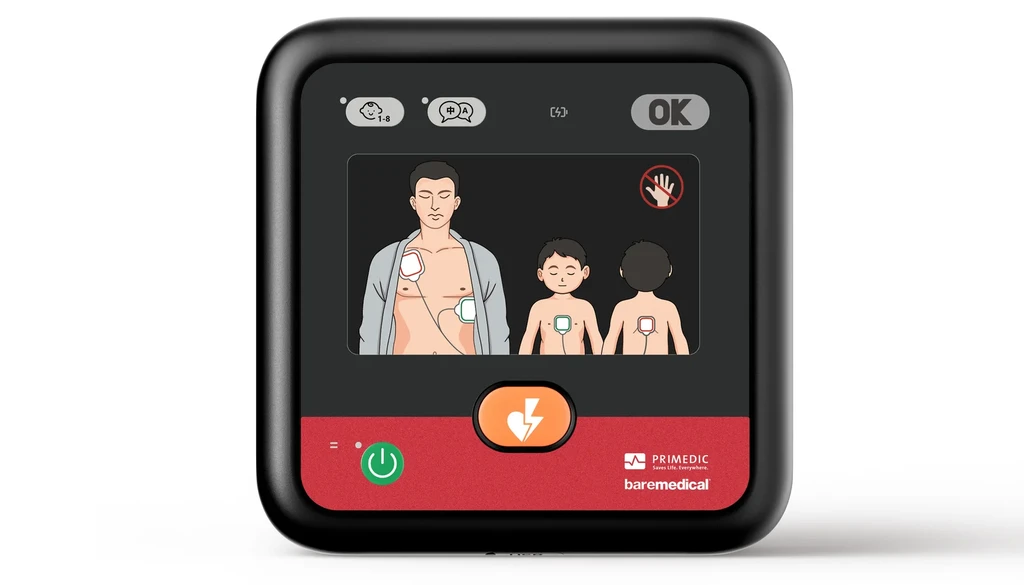
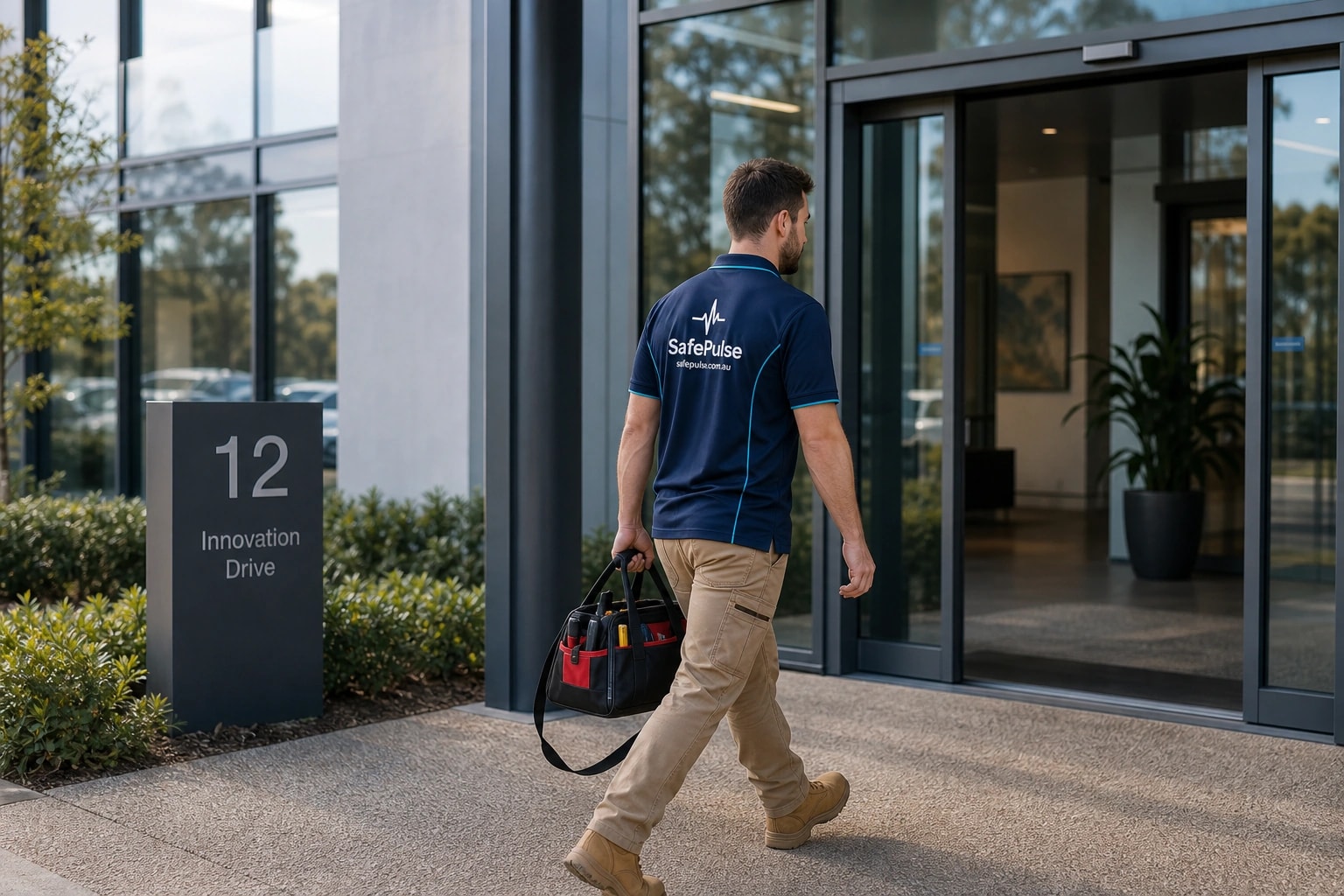
We install and maintain AEDs across Queensland, including regional and remote sites, with maintenance built into the install. Have a look at our Queensland AED page or get in touch for a no-obligation site assessment.
Frequently asked questions
Are AEDs legally required in regional Queensland?
No. Queensland has no AED legislation, no compliance deadline and no AED-specific penalties, and there’s no AED Bill before the Queensland Parliament. The obligation is the general WHS duty plus the First aid in the workplace Code of Practice 2021, which says you should consider an AED where there’s ambulance delay, electrocution risk or large numbers of the public.
Does ambulance response time affect whether I need an AED?
It’s one of the three factors the Queensland Code of Practice flags, and the one that applies most consistently outside the south-east. Work out the realistic arrival window for each site — on a bad day, not an average one — and use it as an input to your risk assessment.
Will registering my AED with QAS help someone at a nearby property?
No. QAS is explicit that registration only notifies the dispatcher if the suspected cardiac arrest happens at your own business or property, unlike the GoodSAM model used in NSW, Victoria and Tasmania. Register anyway — just don’t count on it reaching past your boundary.
What cabinet do I need for an AED in North Queensland?
For outdoor or semi-outdoor placement, an enclosure rated IP55 or above, kept out of direct sun, and checked against your device’s stated operating temperature. Heat and humidity shorten pad and battery life. These are best-practice specs, not a Queensland regulation.
Are mining sites in Queensland required to have AEDs?
Not by name. Queensland mines and quarries sit under the Mining and Quarrying Safety and Health Regulation 2017, which requires first aid resources determined by a risk management process and takes remoteness into account. Most large operations carry AEDs because the risk assessment supports it, not because the Regulation names them.